Eye Strain: What Patients Need to Know

Eye strain often causes tired, sore, burning, or watery eyes, along with headache or blurred vision. Long screen time, poor lighting, glare, dry eyes, and uncorrected glasses prescriptions are common triggers.
Key Takeaways
- Eye strain often causes tired, sore, burning, or watery eyes, along with headache or blurred vision.
- Long screen time, poor lighting, glare, dry eyes, and uncorrected glasses prescriptions are common triggers.
- Eye strain itself is usually not dangerous, but persistent symptoms should be checked by an eye specialist.
- Simple steps such as regular breaks, blinking more often, and improving screen setup can help prevent symptoms.
- Medical care is important if eye discomfort comes with severe pain, sudden vision changes, redness, or symptoms in only one eye.
Eye strain is a common, usually temporary problem that can happen after long periods of reading, screen use, driving, or other close visual work. Most people improve with rest, better visual habits, and correction of underlying issues such as uncorrected vision problems or dry eyes.
Overview
Eye strain is a group of symptoms that develop when the eyes work hard for long periods without enough rest or under less-than-ideal conditions. It is not usually a disease by itself. Instead, it is a sign that the visual system is being overused or that another issue, such as dry eye or an outdated glasses prescription, may be making visual tasks harder.
Many people notice eye strain after using digital devices, reading small print, driving for long stretches, or doing detailed work. This is why the term digital eye strain is often used for symptoms linked to phones, tablets, laptops, and desktop screens. Although the discomfort can feel frustrating, it is commonly temporary and often improves once the eyes are rested and the triggering factors are addressed.
Eye strain can affect adults and children. In children and teenagers, increasing educational screen use and recreational screen time can make symptoms more noticeable. In adults, working conditions, contact lens use, age-related dryness, and the need for updated vision correction are common contributors.
Because eye strain can overlap with other eye problems, it is important not to assume every symptom is harmless. If symptoms keep returning, become severe, or are accompanied by vision changes, an eye examination can help identify whether simple lifestyle adjustments are enough or whether a specific eye condition needs treatment.
Symptoms of Eye Strain
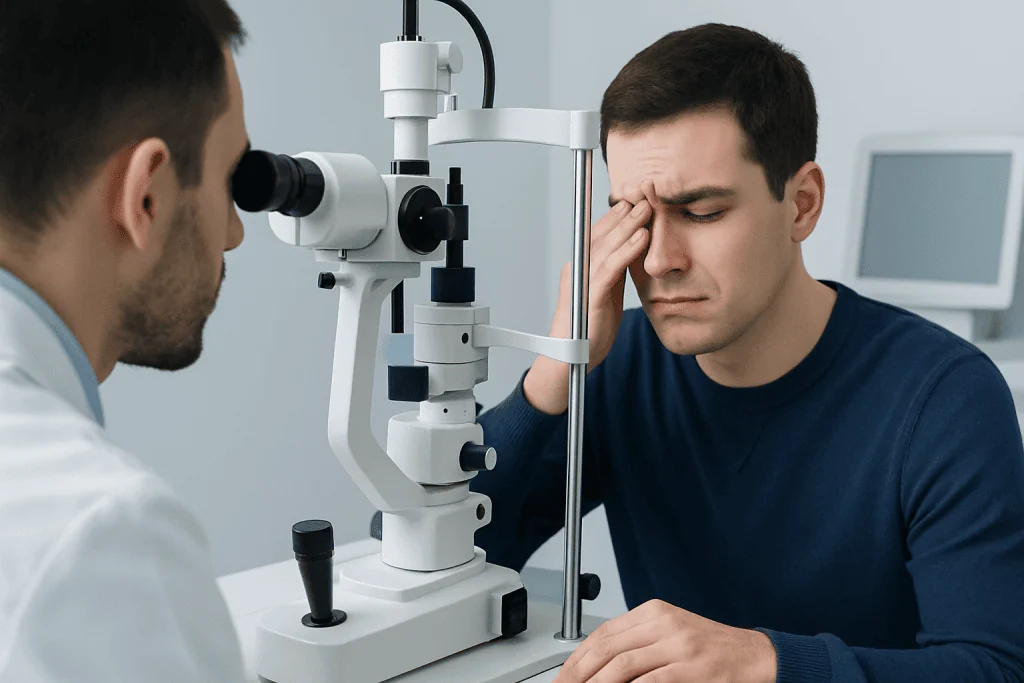
Eye strain symptoms can vary from mild fatigue to more distracting discomfort. The eyes may feel tired, sore, heavy, itchy, burning, or watery. Some people describe a sense that their eyes are working too hard to focus, especially late in the day or after prolonged computer use.
Visual symptoms are also common. These may include blurred vision, trouble focusing when looking from near to far, sensitivity to light, and the feeling that text is harder to read after a period of concentration. Headaches, especially around the forehead or temples, often happen alongside eye strain and may improve after a break.
Eye strain does not always stay limited to the eyes. Tension in the neck, shoulders, and upper back can develop when a person leans toward a screen, squints, or maintains poor posture during long periods of visual concentration. In this way, eye strain is often part of a wider pattern of visual and ergonomic fatigue.
- Tired or aching eyes
- Burning, dryness, or watering
- Blurred or fluctuating vision
- Headache after reading or screen use
- Light sensitivity
- Difficulty concentrating on visual tasks
- Neck and shoulder discomfort
Common Causes and Risk Factors

The most frequent cause of eye strain is prolonged visual effort without enough breaks. Looking at a screen for hours, reading continuously, or doing detailed tasks such as sewing or drawing can all place extra demand on the eye muscles and focusing system. Screens add another challenge because people tend to blink less often while using them, which can dry the surface of the eyes and make irritation worse.
Environment matters as well. Glare from windows or overhead lights, low contrast on a screen, poor room lighting, or text that is too small can all increase the effort needed to see clearly. Viewing a screen too closely or too far away may also contribute. In some cases, the problem is not the task itself but the setup around it.
Underlying eye issues are another important factor. A glasses prescription that is no longer correct, uncorrected farsightedness or astigmatism, and difficulty coordinating the eyes can all make the visual system work harder. Dry eye disease is especially common and can strongly overlap with eye strain symptoms. Readers who want to understand this related condition may find dry eye helpful.
Other possible contributors include contact lens discomfort, poor sleep, stress, some medications that can worsen dryness, and health conditions that affect tear production or vision. Less commonly, symptoms attributed to eye strain may actually reflect a different eye problem, which is why recurring discomfort should not be ignored.
How Eye Strain Is Diagnosed
Diagnosis starts with a careful review of symptoms and daily habits. A doctor or eye specialist may ask when symptoms appear, how long they last, whether they are linked to screens or reading, and whether there are related problems such as headaches, dry eyes, or trouble seeing at certain distances. Information about work setup, contact lens use, and current glasses can also be very useful.
An eye examination helps rule out other causes and identify contributing factors. This may include checking visual acuity, refraction to see whether glasses need updating, eye alignment, focusing ability, and the health of the eye surface. If dryness is suspected, the clinician may assess the tear film and eyelids. In some patients, evaluation by specialists in ophthalmology care is the best way to clarify the reason for ongoing symptoms.
Testing is usually straightforward and noninvasive. In many cases, the examination confirms that the symptoms fit with eye strain and highlights practical changes that can help. In others, the visit identifies a treatable condition such as dry eye, binocular vision problems, or age-related focusing changes.
Persistent or unexplained eye discomfort should not be self-diagnosed for too long. Prompt assessment is especially important if symptoms are new, markedly worse than usual, or associated with redness, one-sided pain, or changes in vision.
Treatment Options and Symptom Relief
Treatment for eye strain focuses on reducing the stress placed on the eyes and addressing any contributing medical issue. For many people, the first steps are practical ones: taking short visual breaks, adjusting screen distance and height, reducing glare, enlarging text, and using proper room lighting. The commonly used 20-20-20 rule can help: every 20 minutes, look at something about 20 feet away for 20 seconds.
If dryness is part of the problem, blinking more often, improving indoor humidity, and using lubricating eye drops recommended by a clinician may relieve symptoms. People who wear contact lenses may need to shorten wearing time, improve lens care, or discuss whether a different lens type is more suitable. If an eye exam shows that prescription glasses need updating, correction often improves strain significantly.
When symptoms are linked to an underlying condition, treatment is directed there. Examples include management for refractive errors, dry eye care, or other eye-surface problems. Some patients may benefit from tailored approaches such as laser eye surgery if a specialist determines it is appropriate for their visual needs, although this is not a routine treatment for simple eye strain alone.
In people whose symptoms are tied to the way the eyes work together, vision-specific recommendations or further ophthalmic evaluation may be advised. Near the end of the care pathway, if symptoms remain difficult to control or there are signs of another eye condition, additional assessment can help make sure nothing more serious is being missed.
Prevention and Self-Care in Daily Life
Preventing eye strain usually starts with changing visual habits. Regular breaks are one of the most effective tools. During screen work, it helps to pause often, look into the distance, and relax the focusing muscles. Conscious blinking can also reduce dryness, especially during concentrated computer tasks.
Screen setup is important. The monitor should usually sit at a comfortable viewing distance, slightly below eye level, with text large enough to read without leaning forward. Glare from bright lights or windows should be minimized, and room lighting should not be dramatically brighter or darker than the screen. For reading, good task lighting can reduce the effort needed to focus.
General wellness supports eye comfort too. Staying hydrated, getting enough sleep, and managing indoor air that is overly dry may make symptoms less likely. Children benefit from balanced routines that include outdoor time and breaks from near work. Adults who work long hours at computers may find that posture, chair support, and desk arrangement reduce both eye and muscle tension.
Routine eye examinations remain an important part of prevention, even when symptoms seem minor. Up-to-date glasses or contact lens prescriptions can reduce unnecessary strain. Near the end of a patient’s care journey, multidisciplinary specialists at Acibadem International and its JCI-accredited hospitals can evaluate persistent eye complaints and support international patients who need diagnosis or treatment.
When to Seek Medical Care
Eye strain is commonly manageable, but some situations deserve medical attention. A patient should arrange an eye examination if symptoms keep returning, interfere with work or reading, or do not improve with rest and simple changes at home. Ongoing headaches, worsening blur, or the need to squint frequently may suggest that the eyes need a closer evaluation.
Urgent assessment is important when eye discomfort is accompanied by sudden vision loss, flashes of light, new floaters, marked redness, severe pain, nausea, or symptoms affecting only one eye. These features are not typical of ordinary eye strain and may point to a different eye problem that needs prompt care.
Medical advice is also sensible for children who rub their eyes often, avoid reading, sit very close to screens, or complain of headaches after schoolwork. In adults, a clinician can help distinguish ordinary strain from conditions such as migraine, dry eye disease, focusing problems, or other visual disorders.
If symptoms are persistent or complex, further evaluation through a comprehensive eye examination can guide the next steps and help protect long-term visual comfort.
Frequently asked questions
What is eye strain?
Eye strain is discomfort that happens when the eyes work hard for a long time, especially during reading, driving, or screen use. It is usually temporary and often improves with rest, better visual habits, and correction of any underlying eye problem.
Can screens cause eye strain?
Yes. Long periods of screen use commonly contribute to eye strain because people blink less often and may focus at the same distance for extended periods. Glare, poor lighting, and text that is too small can make symptoms worse.
How can someone relieve eye strain at home?
Helpful steps include taking regular breaks, looking into the distance every 20 minutes, adjusting screen position, and using comfortable lighting. If dryness is part of the problem, blinking more often and asking a clinician about lubricating eye drops may help.
Is eye strain harmful to vision?
Eye strain itself does not usually cause permanent eye damage. However, recurring symptoms can reduce comfort and productivity, and sometimes they point to an issue such as dry eye or a need for updated glasses.
When should eye strain be checked by a doctor?
Medical review is recommended if symptoms are persistent, getting worse, or interfering with daily activities. Urgent care is important if there is severe pain, sudden vision change, marked redness, flashes, floaters, or symptoms in one eye only.
Do glasses help eye strain?
They can, if the symptoms are related to an uncorrected or outdated prescription. An eye exam can show whether regular glasses, reading glasses, or other visual correction may reduce the strain.
References
- American Academy of Ophthalmology
- National Eye Institute
- American Optometric Association
- Mayo Clinic
- World Health Organization
This article is for general information only and is not a substitute for professional medical advice. Please consult a qualified doctor about your individual situation.
Explore treatments in Turkey — costs, top hospitals & a free quote
JCI-accredited · board-certified surgeons · reply within 24h
Add us as a Preferred Source to see more of our trusted health content across Google Search, AI Overviews and Discover.

More from the Health Library

Overnight Oats: What Patients Need to Know

Uric Acid Crystals in Urine: What Patients Need to Know

Contacts and Red Eyes: A Complete Medical Overview

Summer Cold: An Evidence-Based Guide for Patients

Overpronation: What Patients Need to Know