Eyelid Cyst Removal: Procedure, Recovery and Results

Most eyelid cysts are chalazia, caused by blockage of an oil gland in the eyelid rather than an infection. Removal may be considered when a cyst persists, recurs, affects vision, or causes significant discomfort.
Key Takeaways
- Most eyelid cysts are chalazia, caused by blockage of an oil gland in the eyelid rather than an infection.
- Removal may be considered when a cyst persists, recurs, affects vision, or causes significant discomfort.
- The procedure is usually performed from the inside of the eyelid under local anaesthetic, so an external scar is often avoided.
- Mild tenderness, swelling and bruising are expected after treatment; many people resume light activities within one to two days.
- Increasing pain, spreading redness, reduced vision or fever should be assessed promptly by an eye specialist.
Eyelid cyst removal is usually a short outpatient procedure used when a chalazion or similar lump does not settle with warm compresses and time. It is commonly performed with local anaesthetic, and recovery generally involves mild swelling or bruising that improves over several days to two weeks.
Overview: What Is Eyelid Cyst Removal?
Eyelid cyst removal is a minor eye procedure that treats a persistent lump in the eyelid, most often a chalazion. A chalazion develops when a small oil-producing gland becomes blocked. Many clear with warm compresses and time, but a clinician may recommend drainage or removal if the lump remains for weeks, is large, repeatedly returns, distorts the eyelid or affects vision.
The procedure is often called incision and curettage (I&C), which is the usual eyelid cyst removal surgery name. It involves making a small opening and gently removing the retained material. In selected cases, a clinician may discuss a steroid injection instead. The best approach depends on the size, location, duration and appearance of the lump, as well as the person’s medical history.
Not every eyelid lump is a cyst. Styes are usually painful, inflamed infections near an eyelash follicle, whereas chalazia are often firmer and less tender. An ophthalmologist can examine the eyelid and identify the likely cause before recommending treatment.
How It Works and Who May Be a Candidate
Conservative care is usually the first step for a suspected chalazion. Warm compresses applied to the closed eyelid and gentle lid hygiene can encourage natural drainage. A clinician may suggest removal when these measures have not worked, when the cyst is particularly large or when it presses on the eye and causes blurred or distorted vision.
People may also be candidates if the cyst is recurrent, causes ongoing cosmetic concern or needs diagnosis because its features are unusual. A lump that returns in the same place, bleeds, has an irregular surface or is associated with eyelash loss should be examined carefully. Occasionally, tissue removed during the procedure may be sent for laboratory assessment to rule out less common conditions.
Before treatment, the eye specialist reviews medications, allergies, bleeding risks, use of blood thinners and relevant health conditions. People should not stop prescribed medicines without advice from the clinician who manages them. Children and people unable to remain still may require a different anaesthetic plan, sometimes in an operating-room setting.
Specialists may also assess contributing eyelid conditions, such as blepharitis, rosacea or meibomian gland dysfunction, because managing these can reduce future episodes. Persistent dry eye symptoms or repeated eyelid inflammation may need separate evaluation and treatment.
Eyelid Cyst Removal Surgery: Step by Step

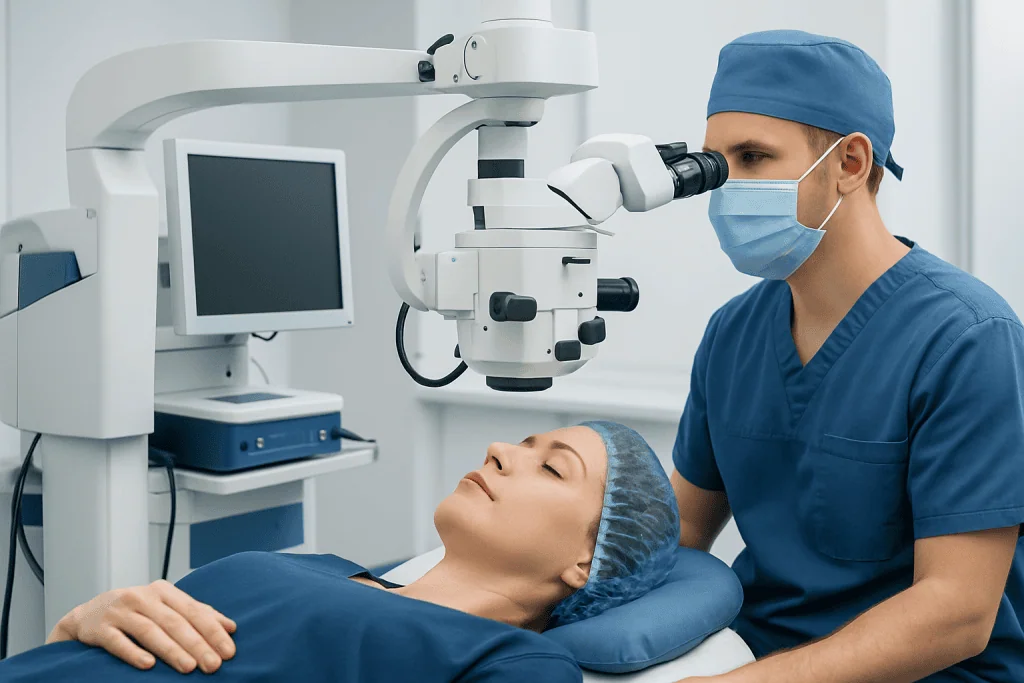
Eyelid cyst removal surgery is generally an outpatient procedure. The clinician first confirms the treatment area and may use anaesthetic eye drops. A small injection of local anaesthetic then numbs the eyelid. The injection can cause a brief sting or pressure, but the eyelid should be numb during the removal itself.
A small instrument may gently hold the eyelid in position. For many chalazia, the eyelid is turned outward and the incision is made on its inner surface. This approach usually avoids a visible skin incision. The clinician opens the cyst and carefully removes its contents and surrounding inflammatory tissue with a small curette. Stitches are often unnecessary.
Afterward, pressure may be applied briefly to control minor bleeding, and an antibiotic ointment or eye pad may be used depending on the clinician’s routine and the individual situation. The procedure itself often takes only a short time, although the appointment includes preparation, consent, assessment and aftercare instructions.
For people considering specialist care, eyelid surgery assessment and treatment can help determine whether a lump needs conservative treatment, drainage, removal or further investigation. The exact plan should be individualized by an ophthalmologist or appropriately trained eyelid specialist.
Does Eyelid Cyst Removal Hurt?
Most people do not feel sharp pain during eyelid cyst removal because the area is numbed with local anaesthetic. They may notice pressure, movement or mild pulling while the clinician works. The numbing injection is commonly the most uncomfortable part, but it is brief.
Once the anaesthetic wears off, mild soreness, a scratchy feeling, swelling or tenderness can occur. These symptoms are usually manageable with the aftercare plan provided by the clinician. Some people are advised to use a cool compress during the first day, while others may be advised to resume warm compresses later; instructions vary according to the procedure and eye findings.
Severe or worsening pain is not expected and should not be ignored. It can indicate infection, pressure-related problems or another complication requiring review. People should contact their treating team urgently if pain is accompanied by worsening redness, discharge, fever, reduced vision or difficulty opening the eye.
How Long Does It Take to Recover From a Cyst Removal From the Eyelid?
The eyelid cyst removal recovery time varies with the size and location of the cyst, the amount of inflammation present and the person’s healing response. Many people can return to desk work, reading and other light activities within one or two days. Swelling, redness or bruising can be most noticeable during the first few days and commonly improve over one to two weeks.
For the first 24 hours, vision may be temporarily blurred from ointment, watering or the eye pad. Driving should be avoided until vision is clear and the person feels comfortable and safe. Contact lenses, eye makeup, swimming and strenuous exercise may need to be paused for a period advised by the clinician.
Although the surface incision often heals quickly, the eyelid can take several weeks to fully settle. A small firm area may remain temporarily as inflammation resolves. The eye cyst removal surgery recovery time can be longer when there was significant swelling before the procedure or when an external incision was needed.
Following the prescribed aftercare, attending follow-up if arranged and continuing eyelid hygiene can support recovery. A clinician may recommend ongoing warm compresses after the initial healing phase to help keep the eyelid oil glands functioning well.
How Painful Is Blepharoplasty Recovery?
Blepharoplasty is different from eyelid cyst removal. Blepharoplasty is eyelid surgery that removes or repositions excess skin, fat or tissue for functional or cosmetic reasons, while chalazion removal treats a blocked eyelid gland. The operations, recovery expectations and aftercare instructions should not be assumed to be the same.
Blepharoplasty recovery is commonly described as more uncomfortable than severely painful. People may experience tightness, dryness, watering, bruising, swelling and mild tenderness, especially during the first week. Their surgeon may recommend cold compresses, lubricating drops or ointment, head elevation and pain relief that is appropriate for their medical history.
After either procedure, pain that becomes intense rather than gradually improving needs urgent medical assessment, particularly if there is reduced vision, marked swelling, nausea, severe headache or difficulty moving the eye. These symptoms are uncommon but should be treated as important.
People interested in the differences between procedures can discuss them during blepharoplasty consultation, where the clinician can explain whether surgery is intended to address an eyelid cyst, eyelid structure, vision-related concerns or appearance.
How Long Do You Have to Sleep Sitting Up After Eyelid Surgery?
After eyelid cyst removal, many clinicians recommend sleeping with the head elevated for the first few nights, often using extra pillows or a reclining position. This may help limit swelling and throbbing. It is usually not necessary to sleep fully upright unless the treating clinician has given that specific instruction.
After blepharoplasty or more extensive eyelid surgery, head elevation is often advised for longer, commonly around one week, but the duration depends on the operation and the surgeon’s protocol. Sleeping on the back can also help avoid pressure on the eyelids. The patient should follow the instructions provided for their own procedure rather than relying on a general timeline.
It is helpful to avoid rubbing the eyes during recovery. If there is an eye shield, dressing or ointment regimen, it should be used exactly as advised. A person who struggles to sleep because of discomfort, swelling or anxiety should contact the clinical team for safe, individualized guidance.
Risks, Benefits and When to Seek Medical Care
The main benefit of eyelid cyst removal is relief of a persistent lump and its associated pressure, irritation or vision interference. It can also allow a clinician to assess tissue when the diagnosis is uncertain. However, a cyst can recur because the underlying oil glands may remain prone to blockage.
Possible risks include temporary bruising, swelling, bleeding, infection, scarring, incomplete removal, recurrence and irritation from ointment or anaesthetic. Rarely, the eyelid contour may change slightly, or the procedure may not resolve symptoms if the lump has a different cause. An experienced clinician can explain relevant risks before consent.
When to seek medical care: prompt assessment is appropriate for an eyelid lump that is enlarging, repeatedly returns, persists despite several weeks of conservative care, interferes with vision or is associated with eyelash loss. Urgent eye care is needed for rapidly worsening redness or swelling, severe pain, fever, inability to open the eye, double vision or any new reduction in vision.
Acibadem International’s multidisciplinary specialists and JCI-accredited hospitals assess and treat eyelid conditions for international patients. An ophthalmology consultation can clarify the cause of an eyelid lump and provide a suitable treatment and follow-up plan.
Frequently asked questions
What is the name of eyelid cyst removal surgery?
The usual procedure for a persistent chalazion is called incision and curettage, often shortened to I&C. The clinician makes a small opening, commonly on the inner surface of the eyelid, and removes the blocked material. Some cysts may instead be treated with a steroid injection or continued conservative care.
How long does it take to recover from a cyst removal from the eyelid?
Many people resume light daily activities within one or two days. Swelling and bruising usually improve over several days and may take one to two weeks to settle noticeably. Complete resolution of residual firmness can take longer in some cases.
Does eyelid cyst removal hurt?
Local anaesthetic is used, so sharp pain should not be felt during the procedure. Brief stinging from the numbing injection and pressure during treatment are possible. Mild soreness afterward is common, but severe or worsening pain should be assessed promptly.
How painful is blepharoplasty recovery?
Blepharoplasty recovery typically causes tightness, swelling, bruising, dryness and mild to moderate discomfort rather than severe pain. It is a different operation from chalazion removal, so recovery needs may be greater and can last longer. Severe pain or vision changes after any eyelid surgery require urgent medical advice.
How long do you have to sleep sitting up after eyelid surgery?
For eyelid cyst removal, elevating the head for the first few nights is commonly advised to help reduce swelling. After more extensive eyelid surgery, such as blepharoplasty, elevation may be recommended for about a week or as directed by the surgeon. It is best to follow the specific aftercare instructions provided.
Can an eyelid cyst come back after removal?
Yes, a chalazion can recur, especially when eyelid oil glands remain blocked or when blepharitis, rosacea or related conditions are present. Regular lid hygiene and warm compresses may help reduce recurrence for some people. A recurrent lump in the same location should be examined by an eye specialist.
References
- American Academy of Ophthalmology
- National Health Service
- Mayo Clinic
- Merck Manual Consumer Version
This article is for general information only and is not a substitute for professional medical advice. Please consult a qualified doctor about your individual situation.
Explore treatments in Turkey — costs, top hospitals & a free quote
JCI-accredited · board-certified surgeons · reply within 24h
Add us as a Preferred Source to see more of our trusted health content across Google Search, AI Overviews and Discover.