Female Fertility Testing: What to Expect at Your First Evaluation

The first fertility evaluation usually begins with a conversation about menstrual cycles, past pregnancies, health conditions, and lifestyle factors. Testing may include blood work, ultrasound, ovulation assessment, and imaging of the uterus and fallopian tubes.
Key Takeaways
- The first fertility evaluation usually begins with a conversation about menstrual cycles, past pregnancies, health conditions, and lifestyle factors.
- Testing may include blood work, ultrasound, ovulation assessment, and imaging of the uterus and fallopian tubes.
- Not every person needs every test; doctors tailor fertility testing to age, symptoms, and medical history.
- Fertility testing often evaluates both partners because pregnancy depends on more than one factor.
- Early assessment can help identify treatable problems and support a clearer care plan.
Female fertility testing is a step-by-step medical evaluation used to understand why pregnancy has not happened and what care may help next. A first fertility visit usually includes a detailed history, physical exam, and targeted tests of ovulation, hormones, and reproductive anatomy.
Overview: What female fertility testing is
Female fertility testing is a medical evaluation used to look for possible reasons pregnancy has not occurred. It does not focus on one single test. Instead, it combines a careful review of menstrual patterns, reproductive history, hormone function, and the health of the ovaries, uterus, cervix, and fallopian tubes.
For many people, the first appointment is mainly about gathering information and planning the right tests. The doctor may ask how long pregnancy has been attempted, whether menstrual periods are regular, and whether there have been miscarriages, pelvic infections, endometriosis symptoms, or previous gynecologic surgeries. This first step is important because fertility concerns can have different causes, and the most useful testing depends on the individual situation.
In general, evaluation is considered when pregnancy has not occurred after 12 months of regular unprotected intercourse for people under 35, or after 6 months for those 35 and older. Testing may also begin earlier if periods are very irregular, if ovulation problems are suspected, or if there is a known condition that can affect fertility.
What to expect at the first fertility appointment
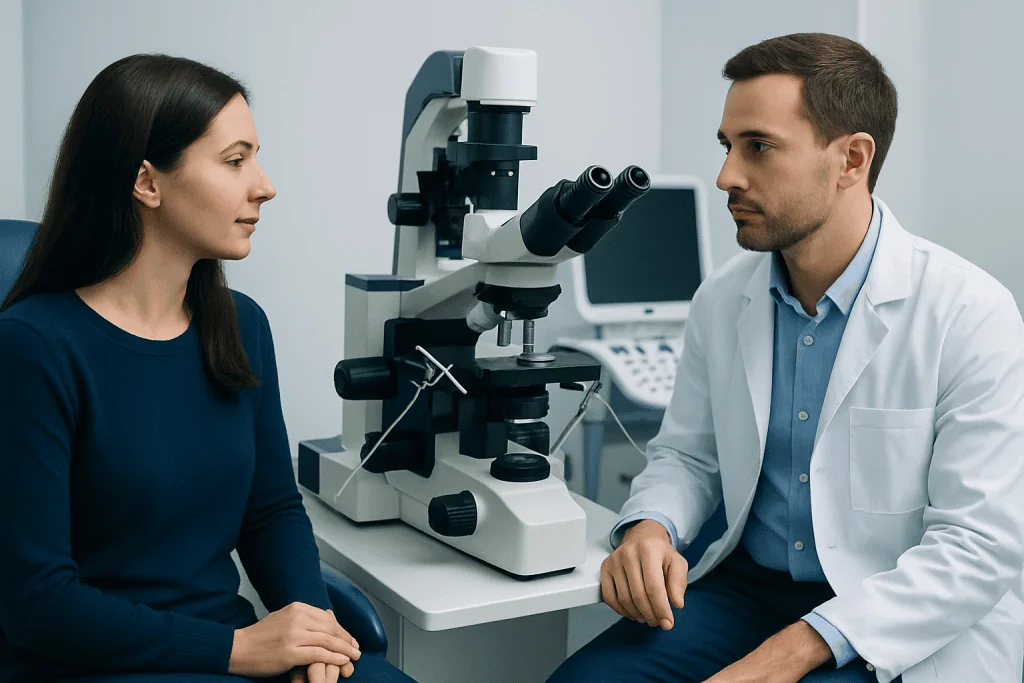
The first fertility visit usually starts with a detailed conversation. The doctor may ask about age, menstrual cycle length, pain with periods, bleeding between periods, prior pregnancies, contraception history, sexually transmitted infections, medical conditions, medications, and family history of early menopause or reproductive disorders. Lifestyle topics such as weight changes, exercise, smoking, alcohol use, and stress may also be discussed because they can influence fertility.
A general physical exam and pelvic exam may be part of the visit. These can help identify signs of hormone imbalance, thyroid problems, pelvic tenderness, uterine enlargement, or other gynecologic concerns. If a pelvic exam is not done at the first visit, it may be scheduled later depending on the person’s symptoms and comfort.
The doctor often explains that fertility evaluation usually includes both partners. Even when a woman is being assessed first, it is common to recommend semen analysis for the male partner early in the process. This can help avoid delays and gives a more complete picture of the couple’s fertility.
At the end of the appointment, a testing plan is usually made. Some tests are timed to specific days of the menstrual cycle, so the doctor may provide instructions about when to schedule blood work or imaging.
Common tests used in female fertility testing

One of the main goals of female fertility testing is to confirm whether ovulation is happening regularly. This may be assessed through menstrual history, blood tests, home ovulation predictor kits, or ultrasound monitoring. Blood tests may measure hormones involved in ovulation and ovarian function, such as follicle-stimulating hormone, luteinizing hormone, estradiol, progesterone, anti-Mullerian hormone, thyroid hormones, and prolactin.
Pelvic ultrasound is commonly used because it gives useful information without surgery. It can show the ovaries, count visible follicles, and look for ovarian cysts, fibroids, or signs of conditions such as endometriosis or polycystic ovarian morphology. It can also help evaluate the shape and lining of the uterus.
Another common test is imaging of the uterus and fallopian tubes, often with a hysterosalpingography study. In this test, contrast material is used to show whether the fallopian tubes are open and whether the uterine cavity has an abnormal shape. In some cases, saline sonography or hysteroscopy may be recommended to examine the inside of the uterus more closely.
Not everyone needs advanced testing. Depending on symptoms, the doctor may also recommend tests for ovarian reserve, infections, genetic concerns, or conditions that affect implantation. The purpose is not to order as many tests as possible, but to choose the tests most likely to provide useful answers.
What doctors look for: common causes and risk factors
Female fertility testing is designed to identify common factors that can make conception harder. These include problems with ovulation, reduced ovarian reserve, blocked fallopian tubes, uterine abnormalities, thyroid disease, elevated prolactin levels, and pelvic disorders such as polycystic ovary syndrome or endometriosis. Some women have more than one contributing factor, and in some cases no clear cause is found at first.
Age is one of the most important fertility factors because both egg number and egg quality decline over time. This does not mean pregnancy is impossible, but it does affect how evaluation and treatment are planned. Menstrual irregularity, prior pelvic surgery, chemotherapy, severe pelvic infections, and a history of ectopic pregnancy can also guide testing.
Lifestyle and general health can matter as well. Significant underweight or overweight, intense exercise, poorly controlled chronic conditions, smoking, and heavy alcohol use may affect ovulation or overall reproductive health. Doctors usually discuss these issues in a practical, nonjudgmental way because small changes can sometimes improve the chances of conception.
- Irregular or absent periods may suggest ovulation problems.
- Pelvic pain or very painful periods may point to endometriosis.
- Past pelvic infection can raise concern for tubal damage.
- Previous uterine surgery may increase the need to assess the uterine cavity.
Understanding the results and next steps
After testing, the doctor reviews the findings and explains what they mean in everyday language. Some results may be clearly normal or clearly abnormal, while others need to be interpreted together rather than alone. For example, one hormone level rarely gives the full picture without menstrual history, age, and ultrasound findings.
If testing shows an ovulation disorder, the next step may focus on restoring regular ovulation or treating an underlying hormonal issue. If the main concern is a uterine polyp, fibroid, adhesions, or a tubal problem, treatment may involve further imaging or procedures. When ovarian reserve appears reduced, the doctor may discuss timing and treatment options more urgently, while still tailoring care to the individual’s goals.
Sometimes the evaluation does not reveal a specific cause. This can be frustrating, but it is a recognized situation in fertility care. Even when no single explanation is found, doctors can still recommend evidence-based options based on age, duration of infertility, and the results that are available.
Treatment options that may follow fertility testing
Treatment after female fertility testing depends on the cause identified. Some people need only cycle tracking, lifestyle support, or treatment for a hormone imbalance such as thyroid disease. Others may benefit from medications that help trigger ovulation, especially when irregular ovulation is the main issue.
When the uterus or fallopian tubes need more detailed assessment or treatment, procedures may be recommended. In selected cases, doctors may use hysteroscopy to examine and treat problems inside the uterus, such as polyps or scar tissue. If there is concern for pelvic disease, adhesions, or endometriosis, laparoscopy may be considered for diagnosis or treatment in appropriate patients.
Assisted reproductive treatments can also be part of the plan. Depending on age, diagnosis, and previous attempts to conceive, options may include ovulation induction, intrauterine insemination, or in vitro fertilization (IVF). When treatment involves fertility preservation or difficulty related to eggs, specialized approaches such as egg freezing may be discussed in selected situations.
Near the end of the process, some patients may seek care in centers with multidisciplinary fertility teams. Acibadem International’s JCI-accredited hospitals support international patients with coordinated diagnosis and treatment for fertility concerns.
How to prepare for fertility testing and support reproductive health
Preparation can make the first evaluation smoother. It helps to bring menstrual records, prior lab or imaging results, a medication list, and information about any previous pregnancies or surgeries. If available, dates of menstrual cycles over the last several months are especially useful because they help the doctor assess ovulation patterns.
Many doctors also encourage steps that support general reproductive health while testing is underway. These may include aiming for a balanced body weight, managing chronic conditions, avoiding tobacco, limiting alcohol, and starting a prenatal vitamin with folic acid if pregnancy is being planned. Good sleep and stress management are also helpful, even though stress alone is usually not the sole cause of infertility.
Because fertility is a shared process, it is often helpful for both partners to attend visits when possible. This can improve understanding, reduce confusion about test timing, and support shared decision-making throughout evaluation and treatment.
When to see a doctor
A doctor should be consulted if pregnancy has not happened after a year of regular unprotected intercourse, or after six months if the woman is 35 or older. Earlier evaluation is also reasonable when menstrual periods are absent or very irregular, when there is known endometriosis or a history of pelvic inflammatory disease, or when previous cancer treatment may have affected fertility.
Medical advice should also be sought sooner if there have been repeated miscarriages, severe pelvic pain, known uterine fibroids, or previous surgery involving the ovaries, uterus, or fallopian tubes. These situations do not always mean infertility is present, but they can influence which tests are most useful and how quickly care should move forward.
Prompt assessment can be reassuring because it replaces uncertainty with a plan. Even when treatment is not needed immediately, a fertility evaluation can help clarify timing, identify preventable issues, and support informed choices about the next steps.
Frequently asked questions
When should female fertility testing begin?
Female fertility testing often begins after 12 months of trying to conceive if a woman is under 35. If she is 35 or older, evaluation is commonly recommended after 6 months. Testing may start earlier if periods are irregular, there is known pelvic disease, or there has been prior treatment that could affect fertility.
Is the first fertility appointment painful?
Most of the first fertility appointment is a discussion about medical history and planning. A physical or pelvic exam may cause mild discomfort, but many parts of the evaluation are not painful. Some imaging tests done later, such as tubal studies, can cause temporary cramping.
What blood tests are commonly done in female fertility testing?
Doctors may check hormones related to ovulation and ovarian function, including progesterone, follicle-stimulating hormone, estradiol, anti-Mullerian hormone, prolactin, and thyroid hormones. The exact tests depend on cycle pattern, age, and symptoms. Some blood tests must be done on specific days of the menstrual cycle.
Does a normal menstrual cycle mean fertility is normal?
Not always. Regular periods often suggest that ovulation may be occurring, but they do not confirm that the fallopian tubes are open or that the uterus is normal. A normal cycle also does not rule out age-related fertility decline or male factor infertility.
Will every woman need all fertility tests?
No. Fertility testing is usually tailored to the person's age, history, symptoms, and how long pregnancy has been attempted. A doctor chooses tests that are most likely to answer the key questions rather than ordering every possible investigation.
Should the male partner be tested too?
Yes, in many cases both partners are evaluated early. Pregnancy depends on several factors, and semen analysis is a simple and important part of the overall assessment. Testing both partners can save time and help guide the best treatment plan.
References
- American College of Obstetricians and Gynecologists
- American Society for Reproductive Medicine
- Centers for Disease Control and Prevention
- National Institute for Health and Care Excellence
- World Health Organization
This article is for general information only and is not a substitute for professional medical advice. Please consult a qualified doctor about your individual situation.
IVF & fertility treatment in Turkey — success rates and costs
JCI-accredited · board-certified surgeons · reply within 24h
Add us as a Preferred Source to see more of our trusted health content across Google Search, AI Overviews and Discover.
Check your numbers in seconds
BMI, calories, due date, blood pressure and 30+ more clinical calculators — free, instant, doctor-reviewed ranges.