

Fertility Awareness Methods: How Cycle Tracking Works and Its Limits

Fertility awareness methods estimate the fertile window by tracking menstrual cycle patterns and body signs such as cervical mucus and basal body temperature. These methods can be used either to try to conceive or to avoid pregnancy, but effectiveness depends heavily on correct and consistent use.
Key Takeaways
- Fertility awareness methods estimate the fertile window by tracking menstrual cycle patterns and body signs such as cervical mucus and basal body temperature.
- These methods can be used either to try to conceive or to avoid pregnancy, but effectiveness depends heavily on correct and consistent use.
- Cycle tracking apps and calendar methods alone may miss important variation, especially if cycles are irregular.
- Illness, stress, sleep changes, breastfeeding, and hormone-related conditions can affect ovulation and make tracking less predictable.
- A doctor or fertility specialist can help if cycles are hard to interpret, pregnancy is not happening, or a more reliable contraceptive option is needed.
Fertility awareness methods use body signs and cycle patterns to estimate when pregnancy is more or less likely. They can help with family planning, but they are not equally reliable for everyone and work best when used correctly and consistently.
Overview
Fertility awareness methods are ways of identifying the days in a menstrual cycle when pregnancy is more likely. They do this by tracking signs linked to ovulation, the time when an ovary releases an egg. Some people use these methods to try to become pregnant, while others use them to avoid pregnancy without hormonal contraception.
These methods are sometimes called natural family planning or cycle tracking. Common approaches include the calendar method, basal body temperature tracking, cervical mucus observation, and combined methods that use more than one sign together. Digital apps and wearable devices may also be used, but they are tools rather than methods on their own.
Fertility awareness can increase understanding of the menstrual cycle and reproductive health. However, it is important to know that the fertile window is an estimate, not a guarantee. Ovulation does not always happen on the same day each month, and many everyday factors can change the cycle.
For people avoiding pregnancy, fertility awareness methods generally require careful daily attention and planning. They may involve avoiding intercourse or using a barrier method during fertile days. For people trying to conceive, timing intercourse during the fertile window may improve the chance of pregnancy.
How cycle tracking works
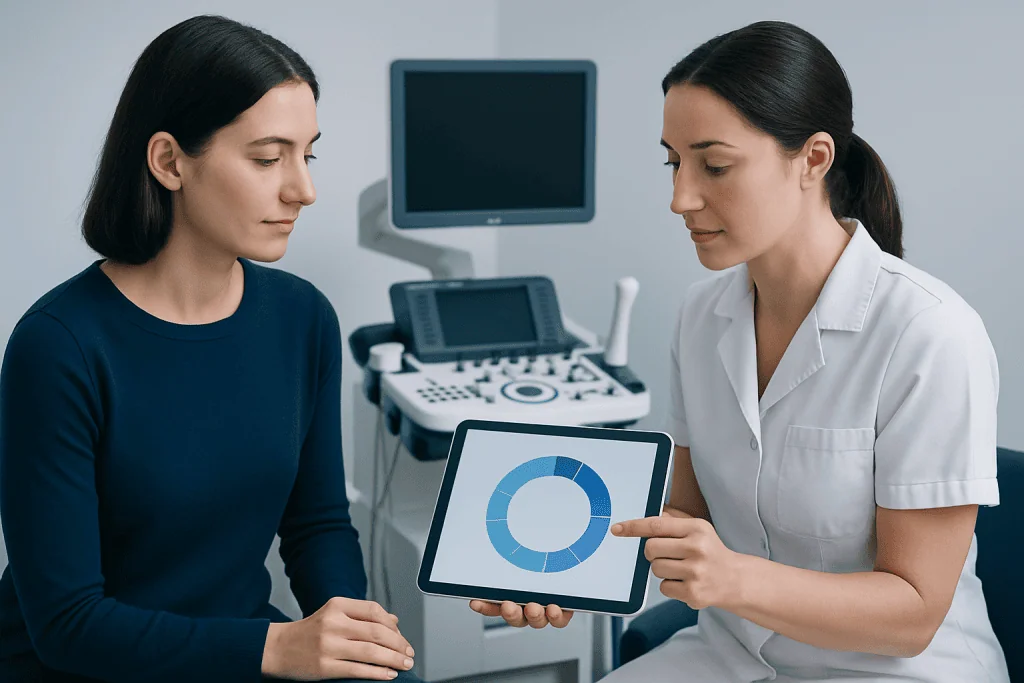
The menstrual cycle begins on the first day of a period and ends the day before the next period starts. Ovulation usually happens around the middle of the cycle, but the exact day varies from person to person and from cycle to cycle. Because sperm can survive in the reproductive tract for several days and the egg lives for a short time after ovulation, pregnancy is most likely during the few days before ovulation and the day of ovulation itself.
The calendar method estimates fertile days based on previous cycle lengths. A person records cycle start dates over several months and uses this pattern to predict future fertile days. This method is simple, but it is less dependable when cycles are irregular or when ovulation shifts unexpectedly.
Basal body temperature tracking involves measuring body temperature each morning before getting out of bed. After ovulation, progesterone causes a small rise in resting temperature. This can help confirm that ovulation has already happened, which is useful for understanding the cycle but less helpful for predicting ovulation in advance.
Cervical mucus changes through the cycle because of hormone levels. As ovulation approaches, mucus often becomes clearer, wetter, more slippery, and stretchy, which can signal increasing fertility. Some people use a symptothermal method that combines mucus, temperature, and cycle dates because using multiple signs may give a fuller picture than one sign alone.
What fertility awareness methods can and cannot do

When used carefully, fertility awareness methods can help people recognize their fertile window and better understand their bodies. They may be helpful for those trying to conceive, for those who prefer a non-hormonal family planning approach, or for those who want to notice cycle changes that might deserve medical attention.
At the same time, these methods have clear limits. They do not directly confirm the exact moment ovulation will happen before it occurs. They rely on interpretation, routine, and consistency. Even people with regular periods may ovulate earlier or later in some cycles.
Cycle tracking is also not the same as protection from sexually transmitted infections. Fertility awareness methods do not prevent infections, so barrier protection may still be important depending on a person’s situation.
For people whose main goal is to avoid pregnancy, understanding the difference between perfect use and typical use matters. Missing temperature checks, misreading mucus changes, relying only on an app prediction, or having irregular cycles can reduce reliability. A healthcare professional can help review whether a fertility awareness approach fits a person’s needs and lifestyle.
Factors that affect accuracy and reliability
Several common factors can make the fertile window harder to predict. Stress, travel, shift work, poor sleep, illness, fever, and major changes in exercise or weight can affect hormone patterns and the timing of ovulation. These changes may make cycle signs less consistent from month to month.
Life stages also matter. Fertility awareness methods can be more difficult to use during adolescence, after childbirth, while breastfeeding, and during perimenopause because cycles are often less predictable. Recently stopping hormonal contraception may also lead to temporary cycle variation while the body’s natural pattern becomes clearer again.
Some medical conditions can influence ovulation and menstrual regularity. Examples include thyroid disorders, polycystic ovary syndrome, eating disorders, and high prolactin levels. Painful periods, very heavy bleeding, or long gaps between periods may also suggest an underlying issue that needs evaluation, such as polycystic ovary syndrome.
Certain tracking methods have their own limitations. Basal body temperature can be affected by alcohol use, disrupted sleep, and fever. Cervical mucus may be harder to interpret during vaginal infections, after intercourse, or with some medications. For some people, especially those with irregular cycles or fertility concerns, more formal fertility evaluation and treatment may be more appropriate than relying on cycle tracking alone.
When fertility awareness may be useful
For people trying to get pregnant, fertility awareness methods may help identify the days when intercourse is most likely to lead to conception. Tracking can also provide useful information to discuss with a doctor, such as cycle length, bleeding patterns, and signs that suggest ovulation may or may not be happening.
For people avoiding pregnancy, these methods may appeal to those who prefer a non-hormonal option for personal, medical, or religious reasons. However, they usually require commitment, education, and willingness to avoid unprotected intercourse during fertile days. Some couples choose to combine cycle tracking with condoms or another barrier method during that time.
Fertility awareness can also support broader menstrual health awareness. Unexpected changes in cycle timing, bleeding, pain, or mucus patterns can sometimes be early clues to a hormonal or reproductive health issue. If concerns arise, a gynecology visit and appropriate testing may help clarify the cause.
In some situations, cycle tracking becomes one part of a larger fertility workup rather than the whole plan. If conception is delayed, specialists may assess ovulation, sperm health, the uterus, and the fallopian tubes. Depending on the results, options may include ovulation support, intrauterine insemination or other treatments tailored to the couple’s needs.
Diagnosis and medical evaluation when cycles are hard to track
If cycles are irregular, very painful, absent, or difficult to interpret, a medical evaluation may help. A doctor will usually ask about cycle history, symptoms, sexual health, medications, weight changes, stress, and reproductive goals. This history often provides important clues about whether ovulation is regular.
Testing may include a physical examination, hormone blood tests, and sometimes pelvic ultrasound. These tests can look for causes of irregular ovulation, such as thyroid problems, ovarian cyst patterns, or other reproductive conditions. In some cases, evaluation may also include checking for anemia if bleeding is heavy.
When pregnancy is not happening, the assessment generally looks at more than the menstrual cycle alone. A partner’s sperm analysis and tests of the uterus and fallopian tubes may also be important. This broader approach is often necessary because infertility can have more than one cause.
If there is concern about blocked tubes, prior pelvic infection, endometriosis, or unexplained infertility, a specialist may discuss additional testing or treatment. Depending on the findings, care may range from lifestyle guidance to fertility preservation counseling or advanced reproductive options. The aim is to match care to the individual’s health status and goals.
Self-care, practical tips, and when to see a doctor
People who want to use fertility awareness methods can improve accuracy by learning one evidence-based method well and using it consistently. Daily charting, recording cycle start dates, noting cervical mucus changes, and taking temperature under the same conditions each morning may help. Relying on an app alone is usually less dependable than combining app records with body signs.
It is also helpful to understand that no method based on cycle tracking can remove uncertainty completely. If avoiding pregnancy is very important, a person may wish to discuss more reliable contraception with a clinician. If trying to conceive, regular intercourse during the fertile window may be recommended, but it is best to avoid self-blame if timing does not lead to pregnancy quickly.
A doctor should be consulted if periods are consistently irregular, absent, unusually painful, or very heavy; if there is bleeding between periods; or if cycle changes appear suddenly. Medical advice is also important if there are signs of infection, persistent pelvic pain, or concern about hormonal imbalance. People trying to conceive may benefit from evaluation sooner if they are older, have known reproductive health issues, or have a history suggesting reduced fertility.
Near the end of the care pathway, some people may need specialist support beyond tracking alone. Acibadem International’s multidisciplinary specialists in JCI-accredited hospitals evaluate fertility and menstrual health concerns for international patients, helping determine whether cycle-based planning, medical treatment, or assisted reproduction is the most suitable next step.
- Track cycles for several months to look for patterns.
- Use the same method consistently rather than switching often.
- Seek professional guidance if signs are confusing or cycles are irregular.
- Remember that fertility awareness does not protect against sexually transmitted infections.
Frequently asked questions
Are fertility awareness methods the same as using a period app?
No. A period app may help record dates, but fertility awareness methods usually involve observing body signs such as cervical mucus and basal body temperature as well. An app prediction based only on past cycle dates may be less reliable, especially if ovulation varies.
Can fertility awareness methods be used to avoid pregnancy?
They can be used for that purpose, but success depends on careful, consistent use and understanding of the method. They are generally less forgiving of mistakes than some other contraceptive methods. People who strongly want to avoid pregnancy should discuss the most reliable options with a healthcare professional.
Do fertility awareness methods help people get pregnant?
They may help by identifying the days when intercourse is most likely to lead to conception. This can be useful for people with fairly trackable cycles and clear fertility signs. If pregnancy is not happening after a reasonable period of trying, medical evaluation is important.
What if periods are irregular?
Irregular periods can make fertility awareness methods harder to interpret because ovulation may not happen at the same time each cycle. In some cases, irregularity may point to a hormone-related or gynecologic condition. A doctor can help identify the cause and recommend the safest and most effective next steps.
Is basal body temperature enough on its own?
Basal body temperature can confirm that ovulation likely happened, but it usually does so after the temperature shift occurs. For many people, it works better when combined with other signs, especially cervical mucus and cycle records. Sleep disruption, fever, and alcohol can affect the readings.
Do fertility awareness methods protect against sexually transmitted infections?
No. These methods are used to estimate fertile days, not to prevent infections. If infection protection is needed, barrier methods such as condoms are still important.
References
- World Health Organization
- American College of Obstetricians and Gynecologists
- Centers for Disease Control and Prevention
- National Institute for Health and Care Excellence
- Office on Women's Health
This article is for general information only and is not a substitute for professional medical advice. Please consult a qualified doctor about your individual situation.
IVF & fertility treatment in Turkey — success rates and costs
JCI-accredited · board-certified surgeons · reply within 24h
Add us as a Preferred Source to see more of our trusted health content across Google Search, AI Overviews and Discover.
Check your numbers in seconds
BMI, calories, due date, blood pressure and 30+ more clinical calculators — free, instant, doctor-reviewed ranges.

More from the Health Library



Related Specialists

Asst. Prof. Dr. Zeynep Güral
Radiation Oncology
Assoc. Prof. Dr. Özge Begüm Comba
Ophthalmology
Dr. Ulduz Jafarova
Gynecology & Obstetrics
Dr. Süreyya Menteş
Gynecology & Obstetrics