Flashing Lights in Eye: A Complete Medical Overview

Flashing lights in eye can be harmless, but sudden new flashes should not be ignored. The most common cause is vitreous change, especially posterior vitreous detachment.
Key Takeaways
- Flashing lights in eye can be harmless, but sudden new flashes should not be ignored.
- The most common cause is vitreous change, especially posterior vitreous detachment.
- Flashes with many new floaters, a curtain-like shadow, or reduced vision need urgent assessment.
- Diagnosis usually requires a dilated eye exam to check the retina carefully.
- Treatment depends on the cause and may range from observation to urgent retinal repair.
Flashing lights in eye usually happen when the gel inside the eye tugs on the retina, and they are often linked to normal age-related changes. However, new or sudden flashes can sometimes be a sign of a retinal tear or detachment, so a timely eye examination is important.
Overview: What flashing lights in eye usually mean
Flashing lights in eye are brief visual sensations that may look like sparks, streaks, zigzags, shimmering arcs, or lightning-like flickers. They are often most noticeable in dim light or when the eyes move. Many people notice them in only one eye, although it can sometimes be hard to tell whether the symptom comes from one eye or both.
In many cases, flashes are caused by changes in the vitreous, the clear gel that fills the eye. As people age, the vitreous becomes more liquid and may pull slightly on the retina, the light-sensitive tissue lining the back of the eye. This can create the sensation of light even when no external light source is present.
Most flashes are not an emergency, but the symptom matters because it can occasionally be the first warning sign of a retinal tear or retinal detachment. These conditions require prompt evaluation to protect vision. For that reason, sudden or new flashes deserve medical attention, especially if they appear with floaters or vision changes.
How flashes look and what symptoms may come with them
People describe eye flashes in different ways. Some see quick bursts at the edge of vision, while others notice curved streaks, flickering dots, or a camera-flash effect. Flashes may happen when looking side to side, standing up, or entering a dark room. They can last seconds at a time and may recur over days or weeks.
Flashes are often discussed together with floaters. Floaters are small moving specks, cobwebs, rings, or shadows that drift across vision. A few longstanding floaters are common and often harmless, but a sudden shower of new floaters can be more concerning when it happens with flashes.
Other symptoms can help point to the cause. Warning signs include blurred vision, loss of side vision, a gray curtain or shadow across part of vision, or a sudden drop in visual clarity. Headache, nausea, or shimmering patterns in both eyes may suggest migraine-related visual symptoms rather than an eye problem, but only an examination can confirm the difference.
- Common descriptions: sparks, streaks, flickers, zigzags, arcs
- Often noticed more in darkness or with eye movement
- May occur alone or with floaters
- Needs urgent attention if paired with shadowing or vision loss
Common causes and risk factors

The most common reason for flashing lights in eye is posterior vitreous detachment, often shortened to PVD. This happens when the vitreous gel naturally shrinks and separates from the retina over time. PVD becomes more common with age and often does not threaten sight on its own, but it can sometimes create enough traction to cause a retinal tear.
Retinal tear and retinal detachment are the most important causes to rule out. A tear can occur if the vitreous pulls firmly on the retina. Fluid can then pass through the tear and lift the retina away from the back of the eye, which is a vision-threatening condition. Flashes may be an early symptom before major vision loss occurs.
Other causes are also possible. Ocular migraine may create flashing, shimmering, or zigzag visual phenomena, sometimes with or without headache. Eye injury, severe nearsightedness, previous eye surgery, inflammation inside the eye, and diabetic eye disease can increase the chance of flashes or retinal complications. Less often, visual symptoms can come from neurological causes rather than the eye itself.
Risk factors that make a retinal problem more likely include older age, high myopia, prior retinal tear or detachment, a family history of retinal detachment, recent trauma, and previous cataract surgery. Anyone with these risk factors should be especially cautious about new flashes, even if the symptom seems mild at first.
How doctors diagnose the cause
Diagnosis begins with a careful history. A doctor will ask when the flashes started, whether they affect one eye or both, whether there are floaters, whether vision has become blurred or shadowed, and whether there has been any recent injury, surgery, or migraine history. These details help narrow the possible causes, but they do not replace an eye examination.
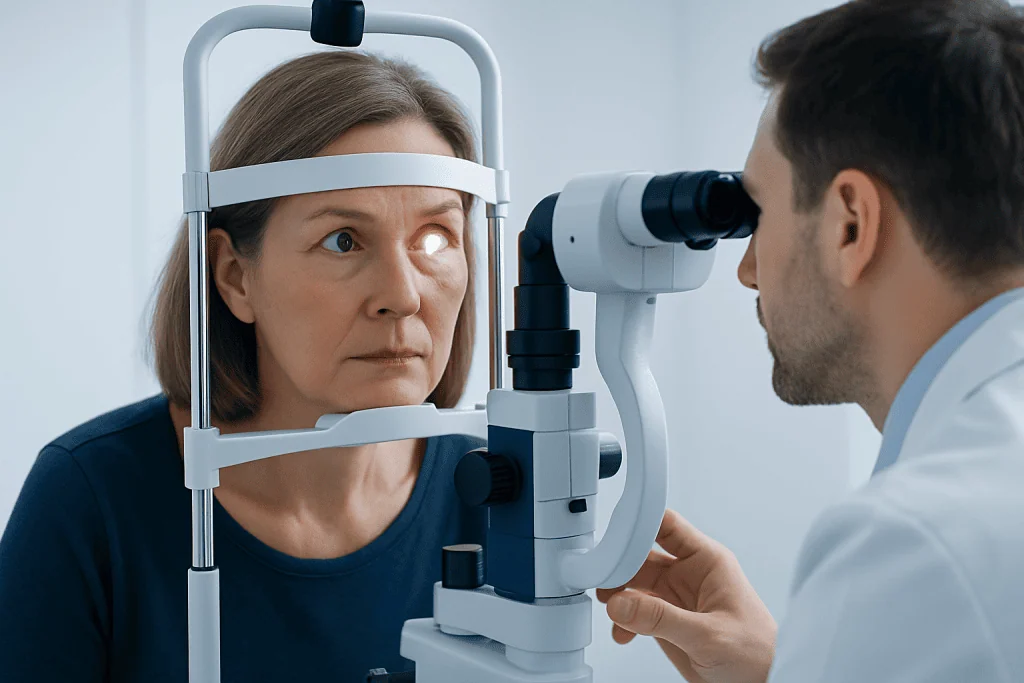
The key test is usually a dilated eye exam. Dilating drops widen the pupil so the ophthalmologist can look at the vitreous, retina, and optic nerve in detail. This is the best way to check for retinal tears, bleeding, detachment, or other structural changes inside the eye.
If the retina cannot be seen clearly, imaging may be used. Ocular ultrasound can help when bleeding or other opacity blocks the view. In some settings, a comprehensive eye examination may also include retinal imaging or optical coherence tomography when appropriate. If symptoms suggest migraine or a neurological cause, additional assessment may be recommended.
Because retinal problems can begin subtly, self-diagnosis is not reliable. A person may feel well and still have a tear that needs treatment. Prompt professional evaluation is the safest approach whenever flashes are new, frequent, or changing.
Treatment options depend on the underlying cause
Treatment for flashing lights in eye is not one-size-fits-all. If a dilated exam shows an uncomplicated posterior vitreous detachment without a tear, the doctor may recommend observation and follow-up. In many people, flashes become less noticeable over time as the vitreous settles and the brain adapts.
If a retinal tear is found, treatment is usually done promptly to prevent detachment. The most common options are laser therapy or freezing treatment to seal the tear. When the retina has already detached, more advanced care may be needed, such as retinal detachment surgery. The choice depends on the location and extent of the detachment.
If the cause is migraine, care focuses on identifying triggers and managing migraine itself. If inflammation, diabetic eye disease, or another medical condition is involved, treatment is directed at that problem. In some cases, doctors may recommend further retinal evaluation and procedures through services such as retina treatment.
The outlook is generally good when the cause is identified early. This is especially true for retinal tears, which can often be treated before major vision loss happens. Delays matter most when a retinal detachment is developing, which is why timely assessment is so important.
Prevention and self-care
Not every cause of flashes can be prevented, especially age-related vitreous changes. Still, protecting eye health can lower the risk of some complications. Regular eye checkups are useful, especially for people with high myopia, diabetes, a history of eye surgery, or a family history of retinal disease.
Eye safety also matters. Wearing protective eyewear during sports, home repairs, or work that carries an injury risk can help prevent trauma-related retinal problems. Good control of chronic conditions such as diabetes and high blood pressure supports overall eye health as well.
At home, it helps to pay attention to changes rather than trying to ignore them. A person who already has occasional floaters should note whether there is a sudden increase, new flashes, or any patch of missing vision. These patterns are more meaningful than a single mild episode that does not return.
There is no proven home remedy that can treat retinal tears or detachment. Resting the eyes, drinking water, or changing screen habits may relieve general eye strain, but they do not address retinal traction. New or changing symptoms should be assessed by a qualified eye specialist.
When to seek medical care
Medical care is recommended promptly for new flashing lights in eye, especially if they start suddenly or become frequent. An urgent eye evaluation is particularly important when flashes are accompanied by many new floaters, a dark curtain or shadow, blurred vision, or loss of side vision. These symptoms can suggest a retinal tear or detachment.
Same-day or emergency care is appropriate after an eye injury, after recent eye surgery if flashes suddenly appear, or if one eye develops a rapid change in vision. Even if the symptom turns out to be benign, it is safer to have the retina checked than to wait and risk missing a treatable problem.
If flashes occur in both eyes with shimmering patterns that spread over several minutes and are followed by headache, the cause may be migraine-related. Even then, a medical assessment may still be sensible if the symptom is new, unusually severe, or different from previous migraine episodes.
Near the end of the care pathway, some patients may benefit from a multidisciplinary setting that combines ophthalmology, retinal care, and imaging. Acibadem International’s multidisciplinary specialists in JCI-accredited hospitals diagnose and treat eye conditions for international patients when advanced assessment or treatment is needed.
Frequently asked questions
Are flashing lights in eye always serious?
No. Many cases are caused by age-related changes in the vitreous gel and do not threaten vision. However, because flashes can also signal a retinal tear or detachment, new or sudden symptoms should be assessed by an eye doctor.
What is the difference between flashes and floaters?
Flashes are brief sensations of light, such as sparks or streaks, even though no real light is entering the eye. Floaters are moving specks, threads, or cobweb-like shadows drifting across vision. They often occur together when the vitreous changes.
Can migraines cause flashing lights in eye?
Yes. Migraine can cause shimmering, zigzag, or flashing visual symptoms, sometimes even without a headache. These effects often involve both eyes and develop over several minutes, but a doctor may still be needed to distinguish migraine from an eye problem.
How quickly should someone be checked if flashes start suddenly?
A sudden onset of flashes should be evaluated promptly, ideally the same day or within 24 hours if possible. This is especially important if there are many new floaters, blurred vision, or a shadow across vision, which can point to a retinal problem.
Do flashing lights in eye go away on their own?
They sometimes do. In uncomplicated posterior vitreous detachment, flashes often become less frequent over time. Even so, the first episode or any worsening symptoms should still be checked to make sure the retina is intact.
Can screen time cause flashing lights in eye?
Screen use may contribute to eye strain, dryness, or headache, but it is not a typical direct cause of retinal flashes. If a person notices true flashes of light, especially in one eye, it is important not to assume screens are the reason without medical advice.
This article is for general information only and is not a substitute for professional medical advice. Please consult a qualified doctor about your individual situation.
Explore treatments in Turkey — costs, top hospitals & a free quote
JCI-accredited · board-certified surgeons · reply within 24h
Add us as a Preferred Source to see more of our trusted health content across Google Search, AI Overviews and Discover.

More from the Health Library

Puffy Tongue Causes — Explained by Medical Evidence, Not Myths

Arteria Dorsalis Pedis Pulse — Explained by Medical Evidence, Not Myths

Venogram: An Evidence-Based Guide for Patients

Dry Skin Around Eyes: What Patients Need to Know

Trimethoprim Drugs: A Complete Medical Overview