Fluoride Toothpaste: An Evidence-Based Guide for Patients

Fluoride toothpaste helps repair early enamel damage and lowers the risk of tooth decay. Most people benefit from brushing twice a day with fluoride toothpaste.
Key Takeaways
- Fluoride toothpaste helps repair early enamel damage and lowers the risk of tooth decay.
- Most people benefit from brushing twice a day with fluoride toothpaste.
- Age-appropriate amounts matter, especially for young children who may swallow toothpaste.
- Fluoride toothpaste supports oral health best when combined with daily flossing, healthy diet habits, and dental checkups.
- Persistent pain, swelling, bleeding, or white and brown spots on teeth should be assessed by a dentist or doctor.
Fluoride toothpaste is a proven way to help prevent cavities and strengthen tooth enamel. For most children and adults, it is safe and effective when used in the right amount and as part of regular oral hygiene.
What fluoride toothpaste does and why it is recommended
Fluoride toothpaste helps prevent cavities by strengthening the outer layer of the teeth, called enamel. It works at the tooth surface every time a person brushes, making enamel more resistant to acids produced by bacteria in dental plaque and acids from food and drinks. It can also support the repair of very early enamel damage before a cavity fully forms.
This is why fluoride toothpaste is widely recommended by dental organizations for both children and adults. It is one of the simplest and most evidence-based ways to reduce tooth decay at home. Regular brushing with fluoride toothpaste is especially helpful for people who snack often, drink sugary or acidic beverages, have dry mouth, or have had cavities before.
Fluoride toothpaste is not a substitute for professional dental care, but it is a cornerstone of prevention. Used consistently, it supports healthier teeth across the lifespan and can lower the need for more complex dental treatment later.
How fluoride protects enamel
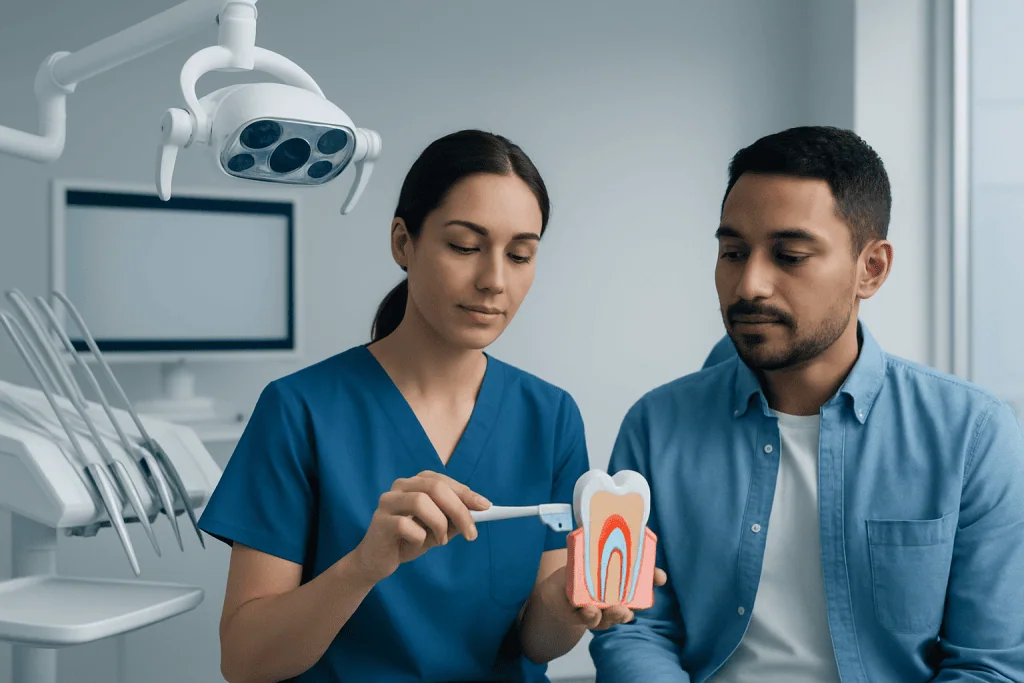
Teeth are constantly going through two opposite processes: mineral loss and mineral repair. After eating or drinking, especially sugary or acidic items, acids can pull minerals out of enamel. This early weakening is called demineralization. Saliva naturally helps replace some of those minerals, and fluoride improves that repair process, known as remineralization.
When fluoride is present in toothpaste, it becomes available directly on the teeth during brushing. It helps form a stronger, more acid-resistant enamel surface. This is particularly useful in the earliest stages of decay, when a chalky white area may still be reversible with good care rather than requiring a filling.
Fluoride also affects cavity-causing bacteria indirectly by reducing how effectively they produce acid from sugars. In practical terms, this means fluoride toothpaste supports the teeth from several angles at once: it strengthens enamel, helps reverse very early damage, and makes the mouth environment less favorable for decay.
Who should use fluoride toothpaste and how much to use

Most adults and children benefit from fluoride toothpaste, but the amount should match the person’s age and ability to spit it out. For adults and older children, a pea-sized amount is commonly appropriate. For very young children, only a very small smear is usually recommended until they can reliably spit after brushing. Parents or caregivers should supervise brushing in younger children to reduce swallowing.
Brushing twice a day is generally advised, especially before bedtime. After brushing, many dental professionals suggest spitting out the excess toothpaste rather than rinsing thoroughly with large amounts of water, because this leaves more fluoride on the teeth for a short time. A clinician may sometimes advise a higher-fluoride toothpaste for people at increased risk of decay, but this should be based on professional guidance.
People with braces, frequent cavities, gum recession, dry mouth, or certain medical conditions may benefit especially from fluoride exposure. If someone has questions about which toothpaste is best for their age, dental history, or pregnancy, a dentist can provide individualized advice.
Safety, side effects, and common concerns
For most people, fluoride toothpaste is safe when used as directed. The main concern is swallowing too much toothpaste, especially in small children. This is why only a small amount should be used and why adults should supervise brushing in early childhood. Routine, age-appropriate use does not mean the toothpaste is harmful.
A common question is whether fluoride is “natural” or necessary. Fluoride is a mineral found naturally in water, soil, and some foods. In toothpaste, it is included because strong evidence shows it helps prevent tooth decay. People who do not use fluoride toothpaste may still clean plaque from teeth, but they lose an important layer of protection against enamel damage.
Another concern is dental fluorosis, which can happen when developing teeth are exposed to too much fluoride over time in early childhood. In mild cases, this may appear as faint white lines or spots on the teeth. The risk can be reduced by using only the recommended amount of toothpaste for children and by discussing all fluoride sources with a dentist if there are concerns.
Some people develop mouth irritation from flavoring agents, foaming agents, or other ingredients rather than from fluoride itself. If brushing causes burning, peeling, or persistent irritation, switching products and seeking professional advice may help.
How to choose and use fluoride toothpaste effectively
When choosing a fluoride toothpaste, the most important point is that it contains fluoride and is suitable for the person’s age. Many products also target specific concerns such as sensitivity, whitening, tartar control, or gum care. These added features may be useful, but they do not replace the main anticavity benefit of fluoride.
Technique matters as much as the product. Brushing should cover all tooth surfaces for about two minutes, twice a day, with a soft-bristled toothbrush. The toothbrush should be angled gently toward the gumline, and scrubbing too hard should be avoided because this may irritate gums or wear tooth surfaces over time.
Fluoride toothpaste works best as part of a broader oral care routine. Helpful habits include flossing or cleaning between teeth daily, limiting frequent sugary snacks and drinks, and attending regular dental checkups. If a person already has pain, visible holes, or signs of infection, preventive products alone may not be enough and evaluation is important for possible dental treatment.
People with tooth sensitivity may benefit from a toothpaste designed for sensitive teeth while still containing fluoride. If sensitivity persists, it may be related to worn enamel, exposed roots, decay, or gum problems that need assessment. In some cases, untreated tooth decay or inflammation around the gums may be the cause.
What fluoride toothpaste cannot do
Fluoride toothpaste is excellent for prevention and for supporting early enamel repair, but it cannot reverse advanced cavities, repair broken teeth, or treat dental infections. Once decay creates a true hole in the tooth structure, a person usually needs professional treatment rather than home care alone.
It also does not remove all causes of bad breath, gum bleeding, or jaw pain. These symptoms may be linked to plaque buildup, gum disease, dry mouth, teeth grinding, infection, or medical conditions affecting the mouth. If symptoms continue despite good brushing habits, a dental examination is important.
In short, fluoride toothpaste is a strong preventive tool, not a complete solution for every oral health problem. It works best when it is used consistently and combined with professional care when needed.
When to seek medical or dental care
A person should seek dental care if they have ongoing tooth pain, sensitivity that does not improve, swelling of the gums or face, pus, fever, bleeding gums, loose teeth, or visible dark, brown, or chalky white spots on the teeth. These can be signs of decay, infection, gum disease, or other conditions that need professional attention. Prompt care can often prevent more extensive treatment later.
Parents should speak with a dentist or pediatrician if a child frequently swallows toothpaste, has unusual staining on teeth, or has repeated cavities despite regular brushing. Evaluation may help identify issues such as brushing technique, diet, dry mouth, developmental concerns, or a need for different preventive measures.
People with significant dental anxiety, special care needs, complex dental history, or symptoms affecting chewing and sleep may benefit from a more comprehensive assessment. Depending on the problem, treatment may involve preventive care, fillings, periodontal care, or oral and dental health services tailored to the individual.
For international patients who need multidisciplinary evaluation, Acibadem International’s JCI-accredited hospitals and specialists provide diagnosis and treatment for a wide range of oral and dental conditions.
Frequently asked questions
Is fluoride toothpaste safe to use every day?
Yes. For most children and adults, fluoride toothpaste is safe for daily use when used in the recommended amount. Young children should be supervised so they do not swallow too much.
Does fluoride toothpaste really prevent cavities?
Yes. Fluoride toothpaste is supported by strong evidence showing that it reduces the risk of cavities by strengthening enamel and helping repair early mineral loss. It is considered a standard part of cavity prevention.
How much fluoride toothpaste should a child use?
The amount should match the child’s age and ability to spit. Very young children usually need only a small smear, while older children commonly use a pea-sized amount, with adult supervision as needed.
Should a person rinse after brushing with fluoride toothpaste?
Many dental professionals advise spitting out the excess toothpaste and avoiding a full rinse with lots of water right away. This can help leave fluoride on the teeth for a short time so it can continue working.
Can fluoride toothpaste fix an existing cavity?
It can help support remineralization in the earliest stage of enamel damage before a cavity fully forms. However, it cannot repair a cavity that has already created a hole in the tooth, which usually needs dental treatment.
What if fluoride toothpaste irritates the mouth?
Some people react to flavorings, foaming agents, or other ingredients rather than fluoride itself. If irritation continues, it is sensible to stop the product and ask a dentist or doctor which alternative may be better.
This article is for general information only and is not a substitute for professional medical advice. Please consult a qualified doctor about your individual situation.
Explore treatments in Turkey — costs, top hospitals & a free quote
JCI-accredited · board-certified surgeons · reply within 24h
Add us as a Preferred Source to see more of our trusted health content across Google Search, AI Overviews and Discover.

More from the Health Library

Guilt — Explained by Medical Evidence, Not Myths

Seasonal Depression: A Complete Medical Overview

Coronary Artery Spasm: What Patients Need to Know

Good Skin Mask — Explained by Medical Evidence, Not Myths

Black Cohosh — Explained by Medical Evidence, Not Myths

Psychedelic: An Evidence-Based Guide for Patients
Infectious Diseases & Clinical Microbiology Specialists at Acibadem

Prof. Dr. Süda Tekin
Infectious Diseases & Clinical Microbiology
Prof. Dr. A. Çağrı Büke
Infectious Diseases & Clinical Microbiology
Dr. Ahmad Nejat Ghaffarı
Infectious Diseases & Clinical Microbiology
Assoc. Prof. Dr. Aslıhan Demirel
Infectious Diseases & Clinical Microbiology