Foot Surgery: Types, Recovery, and When It’s Needed

Foot surgery is usually considered after rest, footwear changes, orthotics, medicine, or physical therapy have not provided enough relief. Procedures range from bunion correction and tendon repair to fracture fixation, joint fusion, and joint replacement.
Key Takeaways
- Foot surgery is usually considered after rest, footwear changes, orthotics, medicine, or physical therapy have not provided enough relief.
- Procedures range from bunion correction and tendon repair to fracture fixation, joint fusion, and joint replacement.
- Recovery time depends on the surgery and may include a period of limited weight-bearing, rehabilitation, and gradual return to activity.
- A careful diagnosis with examination and imaging helps surgeons choose the safest and most effective treatment plan.
- Good wound care, smoking avoidance, and following weight-bearing instructions support healing and lower complication risk.
Foot surgery may be recommended when pain, deformity, instability, or limited movement does not improve with non-surgical treatment. The right procedure depends on the cause, and recovery varies based on the part of the foot involved and the type of repair performed.
Overview
Foot surgery includes a wide range of procedures used to treat pain, deformity, injury, arthritis, and problems with tendons, ligaments, nerves, or bones. The goal is to improve comfort, stability, alignment, and function so that walking and daily activities become easier. Surgery is not the first step for most foot problems, but it can be helpful when symptoms continue despite appropriate conservative care.
The foot is a complex structure made up of many bones, joints, tendons, ligaments, muscles, and nerves. Because each part has a specific role in balance and movement, treatment must be tailored to the exact problem. One person may need a small soft-tissue procedure, while another may require bone realignment, internal fixation, or fusion of a painful joint.
Orthopedic and foot-and-ankle surgeons consider several factors before recommending an operation. These include the diagnosis, severity of symptoms, effect on mobility, age, activity level, overall health, bone quality, and personal goals. The decision is usually made after a full discussion of expected benefits, possible risks, and the recovery process.
When Foot Surgery May Be Needed
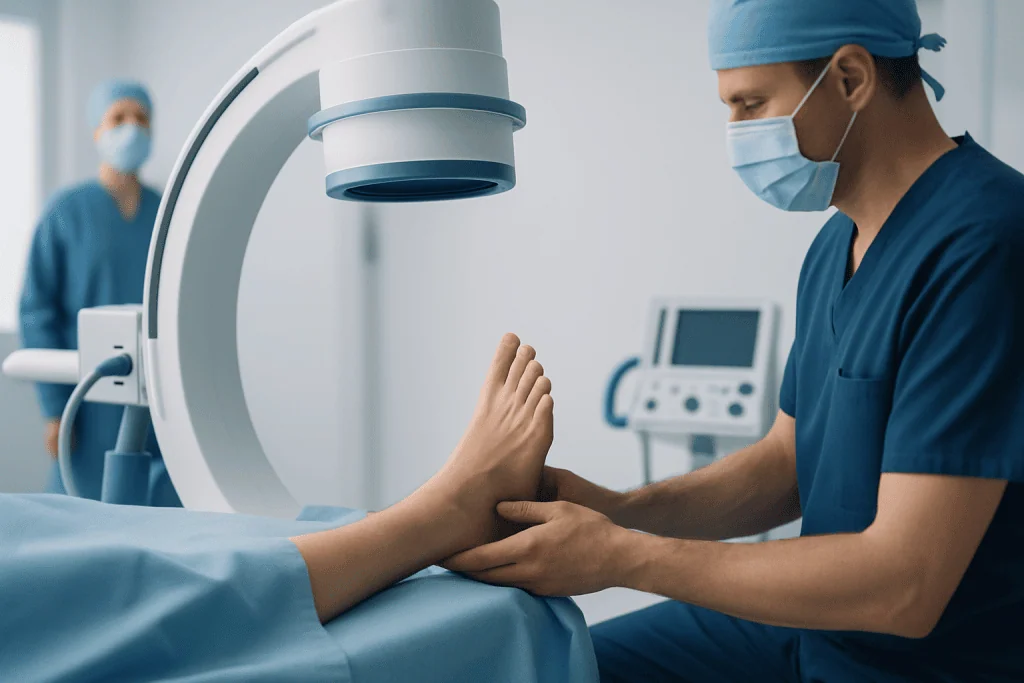
Foot surgery may be needed when pain is persistent, walking becomes difficult, a deformity progresses, or a structural problem cannot heal properly on its own. It is often considered after non-surgical options such as rest, supportive shoes, orthotics, anti-inflammatory medicines, splints, injections, or physical therapy have not provided enough improvement.
Common reasons for surgery include severe bunions, hammertoes, unstable or displaced fractures, tendon tears, chronic ligament injuries, advanced arthritis, nerve compression, and complications from diabetes or previous trauma. Surgery may also be advised if the foot shape is causing pressure sores, repeated skin breakdown, or major difficulty with footwear.
In some situations, surgery is more urgent. Examples include certain open fractures, severe infections, major tendon ruptures, rapidly progressing deformity, or loss of circulation requiring specialist assessment. The timing depends on whether the issue is elective, semi-urgent, or urgent, and this is determined by clinical examination and imaging.
- Persistent pain that limits daily activities
- Failure of non-surgical treatment
- Progressive deformity or instability
- Fractures that are displaced or not healing well
- Arthritis causing severe stiffness and pain
- Tendon, ligament, or nerve problems affecting function
Common Types of Foot Surgery

There is no single operation called foot surgery. Instead, the procedure is chosen according to the underlying problem. For example, bunion surgery aims to correct alignment of the big toe and first metatarsal, while hammertoe surgery addresses toe contractures. Fracture surgery may use screws, plates, pins, or other fixation methods to hold bones in the right position while they heal.
Joint-preserving procedures may be used when the surgeon can restore alignment or repair soft tissue without sacrificing movement. In other cases, a damaged joint may need fusion to relieve pain and improve stability, especially in severe arthritis or deformity. Selected patients with major joint degeneration may be candidates for replacement in certain parts of the foot or ankle, though this is less common than fusion in many foot conditions.
Soft-tissue procedures include tendon repair or reconstruction, plantar fascia surgery in carefully selected cases, nerve release for compression syndromes, and wound-related operations when tissue coverage is needed. Some surgeries can be performed through smaller incisions, while others require open techniques for more complex reconstruction. Patients who need specialist evaluation for advanced problems may also be assessed through services related to orthopedic care or robotic orthopedic surgery when appropriate for planning and precision.
Examples of procedures include:
- Bunion correction
- Hammertoe correction
- Fracture fixation
- Tendon repair or reconstruction
- Ligament stabilization
- Joint fusion for arthritis or deformity
- Nerve decompression
- Wound or ulcer-related reconstructive procedures
Conditions Treated With Foot Surgery
Many conditions can lead to a discussion about surgery. One of the most familiar is a bunion, a bony prominence at the base of the big toe that can cause pain and crowding of the toes. When footwear changes and orthotics are no longer enough, surgery may be considered for selected patients with bunions that interfere with walking or quality of life.
Another common reason is arthritis. Wear-and-tear changes, inflammatory disease, or previous injury can damage the joints in the foot and lead to pain, stiffness, and loss of mobility. In people with severe degeneration, specialists may discuss procedures for arthritis such as fusion or other reconstructive options depending on which joint is affected.
Foot surgery is also used for sports injuries, tendon ruptures, deformities present from birth or that develop over time, and problems related to diabetes. In diabetic patients, surgery may sometimes help address structural pressure points, deformity, or complications involving infection or tissue damage, but it requires especially careful planning because healing can be slower and infection risk can be higher. Every treatment plan should balance symptom relief with safety and long-term foot function.
Diagnosis and Pre-Surgical Evaluation
Before recommending foot surgery, the surgeon first confirms the diagnosis and identifies the exact structure causing symptoms. This starts with a detailed medical history, including where the pain is felt, what makes it worse, previous injuries, footwear habits, medical conditions, and prior treatments. A physical examination checks alignment, swelling, range of motion, strength, nerve function, skin condition, circulation, and walking pattern.
Imaging helps guide planning. Standard X-rays are commonly used to show bone alignment, arthritis, fractures, and deformity. Ultrasound may help assess some tendon or soft-tissue problems, while MRI can provide a more detailed view of cartilage, ligaments, tendons, and hidden bone injury. CT scans may be useful in complex fractures or when precise bone anatomy needs to be evaluated before reconstruction.
Pre-surgical assessment also considers the patient’s general health. The team may review blood sugar control, circulation, smoking status, medications such as blood thinners, and any conditions that could affect anesthesia or wound healing. It is important for patients to understand what the surgery can realistically achieve, how long recovery may take, and whether they will need crutches, a boot, a cast, or temporary help at home.
Treatment, Anesthesia, and Hospital Stay
The exact treatment plan depends on the operation and the patient’s needs. Some foot procedures are done as day surgery, while others require a short hospital stay, especially when reconstruction is more complex or when there are important medical conditions to monitor. Surgery may be performed under general anesthesia, regional anesthesia, or a combination of methods that also help with pain control after the operation.
During surgery, the surgeon may remove inflamed tissue, realign bones, repair tendons, release compressed nerves, or stabilize joints using screws, plates, pins, or sutures. In selected cases involving advanced joint disease or severe damage, reconstructive approaches may overlap with broader ankle replacement or joint replacement planning if the problem extends beyond the foot alone. The aim is always to restore the best possible function while preserving healthy tissue.
After the procedure, the foot is usually protected with a dressing, surgical shoe, boot, splint, or cast. The surgeon explains whether weight-bearing is allowed right away or needs to be limited for a period of time. Pain management commonly includes a combination of medications, elevation, icing if advised, and rest during the early phase of healing.
Recovery and Rehabilitation
Foot surgery recovery varies widely. Minor procedures may allow a faster return to normal shoes and daily routines, while more complex bone or joint operations can require several weeks of protection and a gradual increase in activity. Swelling often lasts longer than patients expect, sometimes for months, especially after standing or walking for long periods.
Following post-operative instructions is one of the most important parts of recovery. Patients may need to keep weight off the foot, use crutches or a walker, elevate the leg above heart level, care for the wound carefully, and attend follow-up appointments for dressing changes, stitches, or repeat X-rays. Trying to do too much too soon can delay healing or affect the result.
Rehabilitation may include exercises to restore movement, strength, and balance, and some patients benefit from formal physical therapy. Comfortable, supportive footwear is often part of long-term management even after successful surgery. People should ask when it is safe to drive, return to work, resume sports, or travel, because the answer depends on the exact procedure and which foot was operated on.
- Keep the dressing and wound clean and dry as instructed
- Follow weight-bearing restrictions exactly
- Elevate the foot to help reduce swelling
- Attend all follow-up visits
- Report increasing pain, redness, drainage, fever, or numbness promptly
Risks, Prevention, and When to See a Doctor
Like all operations, foot surgery has potential risks. These may include infection, bleeding, blood clots, delayed bone healing, stiffness, nerve irritation, ongoing swelling, scar sensitivity, recurrence of deformity, or persistent pain. The level of risk depends on the type of surgery, the patient’s circulation, bone quality, smoking status, diabetes control, and whether post-operative instructions are followed closely.
Not every foot problem can be prevented, but some steps may reduce the chance of needing surgery or improve outcomes if surgery becomes necessary. Wearing properly fitted supportive shoes, managing body weight, treating injuries early, controlling diabetes, avoiding smoking, and strengthening the lower limbs may help support foot health. People with bunions, flat feet, or arthritis may benefit from earlier assessment before symptoms become severe.
Medical review is important if foot pain lasts more than a few weeks, there is visible deformity, swelling persists, walking becomes difficult, or an injury may involve a fracture or tendon tear. Urgent care is needed for signs such as an open wound, severe infection, sudden inability to bear weight, loss of feeling, poor circulation, or fever with worsening redness. For international patients who need specialist evaluation, Acibadem International’s multidisciplinary teams in JCI-accredited hospitals diagnose and treat foot conditions with individualized planning and follow-up support.
Frequently asked questions
Is foot surgery always necessary for foot pain?
No. Many foot problems improve with rest, activity changes, better footwear, orthotics, medication, or physical therapy. Surgery is usually considered when symptoms persist, the condition worsens, or there is a structural problem that is unlikely to improve without an operation.
How long does foot surgery recovery take?
Recovery depends on the procedure, the part of the foot involved, and a person’s general health. Some surgeries allow a relatively quick return to daily activities, while others need several weeks of limited weight-bearing and a longer period of rehabilitation.
Will a person be able to walk after foot surgery?
Most people can walk again after foot surgery, but the timing varies. Some may walk in a special shoe or boot soon after the procedure, while others need crutches, a cast, or no weight on the foot for a period of time.
What is the most common reason for foot surgery?
Common reasons include bunions, fractures, tendon problems, arthritis, and toe deformities such as hammertoes. The most common reason in one clinic may differ from another because foot surgery covers many different conditions.
Is foot surgery painful?
Some pain and swelling are expected after surgery, especially in the first days. However, pain is usually managed with a planned approach that may include medication, rest, elevation, and sometimes regional anesthesia techniques.
Can foot problems come back after surgery?
Sometimes they can, depending on the original condition, healing, footwear, foot mechanics, and activity level. Following the surgeon’s advice and using supportive shoes or orthotics when recommended can help reduce the chance of recurrence.
References
- American Academy of Orthopaedic Surgeons
- National Institute for Health and Care Excellence
- American Orthopaedic Foot & Ankle Society
- National Health Service
- Mayo Clinic
This article is for general information only and is not a substitute for professional medical advice. Please consult a qualified doctor about your individual situation.
Foot Surgery in Turkey — costs, top hospitals & a free quote
JCI-accredited · board-certified surgeons · reply within 24h
Add us as a Preferred Source to see more of our trusted health content across Google Search, AI Overviews and Discover.

Orthopedics & Spine
Care for bones, joints and the musculoskeletal system, including joint replacement, sports injuries and trauma.
125 specialists in this unitMore from the Health Library



Related Specialists

Dr. Emre Çakır
Ophthalmology
Prof. Dr. Sefa Müezzinoğlu
Orthopedic Surgery & Traumatology
Alperen Mustafa Oğuz
Physical Medicine & Rehabilitation
Dr. Cezmi Karaca
General Surgery