Frontal: What Patients Need to Know

The frontal lobe helps control planning, attention, movement, speech, personality, and behavior. Frontal symptoms can include headaches, weakness, speech changes, mood or behavior changes, and difficulty concentrating.
Key Takeaways
- The frontal lobe helps control planning, attention, movement, speech, personality, and behavior.
- Frontal symptoms can include headaches, weakness, speech changes, mood or behavior changes, and difficulty concentrating.
- Frontal problems can have many causes, from tension headaches to stroke, trauma, seizures, or brain tumors.
- Diagnosis often involves a medical history, neurological examination, and sometimes brain imaging such as CT or MRI.
- Sudden weakness, confusion, severe headache, or speech difficulty needs urgent medical attention.
Frontal most often refers to the frontal lobe of the brain or the frontal area of the head. Depending on the context, it may describe normal brain function, a headache location, or symptoms linked to injury, stroke, tumor, infection, or other neurological conditions.
What does “frontal” mean in medicine?
In medicine, the word frontal usually refers to the front part of the body or head. Most often, patients hear it in relation to the frontal lobe of the brain or a frontal headache, meaning pain felt across the forehead. The exact meaning depends on the conversation, the symptoms, and the tests being discussed.
The frontal lobe is the large front section of the brain behind the forehead. It plays a central role in daily life, including attention, planning, decision-making, emotional regulation, movement, and aspects of speech. Because it supports so many functions, changes in this area can show up in very different ways from one person to another.
Sometimes “frontal” is used in imaging reports, such as “frontal lesion,” “frontal sinus,” or “frontal region.” In those cases, the term simply describes location rather than a diagnosis by itself. A doctor interprets the term together with symptoms, examination findings, and scans.
For patients, the most helpful point is that “frontal” is a descriptive word, not one single disease. It may relate to something common and manageable, such as a tension-type headache, or to a condition that needs neurological evaluation. Understanding the context helps clarify what the term means for the individual patient.
How the frontal lobe affects everyday function
The frontal lobe supports many of the skills people use throughout the day without thinking about them. It helps with organizing tasks, setting goals, solving problems, controlling impulses, and shifting attention from one activity to another. It also contributes to motivation, judgment, and social behavior.
Another major role of the frontal lobe is movement. The primary motor cortex, located in the frontal region, helps initiate voluntary movement in different parts of the body. Nearby areas contribute to speech production, especially on the dominant side of the brain, which for many people is the left side.
Because these functions are broad, frontal lobe problems can sometimes look subtle at first. Family members may notice personality changes, loss of initiative, poor concentration, or unusual behavior before the patient recognizes any physical symptom. In other cases, symptoms are more direct, such as weakness in an arm or leg, difficulty speaking, or repeated falls.
Doctors usually consider frontal lobe involvement when changes affect a mix of thinking, mood, movement, or language. Conditions such as brain tumors or stroke may involve the frontal region, but many other medical and non-medical causes are also possible.
Common frontal symptoms patients may notice

Frontal symptoms depend on whether the issue involves the brain, the forehead region, or the frontal sinuses. A person may experience a dull or pressing headache across the forehead, trouble focusing, forgetfulness, or feeling mentally slowed. Others may notice changes in mood, irritability, apathy, or reduced self-control.
When the frontal lobe itself is affected, symptoms can include weakness on one side of the body, speech production problems, difficulty planning simple tasks, imbalance, or unusual behavior. Seizures can also occur in some frontal brain conditions. In children and older adults, symptoms may be less specific and can overlap with other neurological or medical problems.
Symptoms that sometimes prompt further evaluation include:
- Persistent or worsening frontal headache
- New difficulty speaking or understanding language
- Weakness, numbness, or clumsiness
- Changes in personality, judgment, or motivation
- Confusion, memory problems, or reduced attention
- Episodes of staring, shaking, or possible seizures
- Vision changes or repeated falls
It is important not to assume that every forehead headache or concentration problem comes from the frontal lobe. Sleep problems, stress, dehydration, infection, medication effects, migraine, and sinus disease can all produce symptoms in the frontal area. A careful evaluation helps separate common causes from conditions that need urgent treatment.
Possible causes and risk factors
There is no single cause of “frontal” symptoms. Some problems arise from the brain itself, while others come from structures around the forehead. Neurological causes include stroke, head injury, seizures, infections affecting the brain, inflammatory disorders, and tumors. Headache disorders, especially tension-type headaches and some migraines, commonly cause pain in the frontal region without damaging the brain.
In some patients, frontal symptoms develop after trauma such as a fall, sports injury, or road traffic accident. Even a mild concussion can affect concentration, attention, mood, and executive function for a period of time. In older adults, blood vessel disease and neurodegenerative conditions may also affect frontal lobe function.
Risk factors vary by cause, but may include:
- High blood pressure, diabetes, smoking, or high cholesterol for vascular causes such as stroke
- Recent head injury
- A personal or family history of seizures or migraine
- Known cancer, which can rarely spread to the brain
- Infections, immune suppression, or severe systemic illness
- Age-related brain or blood vessel changes
Clinicians also look at timing. Sudden symptoms raise concern for urgent causes such as stroke, bleeding, or seizure-related events. Slowly progressive changes over weeks or months may point toward a mass, inflammatory process, or degenerative condition. This pattern often guides which tests are needed first.
How doctors diagnose frontal problems
Diagnosis starts with a detailed history. Doctors ask what “frontal” means in the patient’s case: headache in the forehead, changes in behavior, memory concerns, weakness, speech problems, or findings on a scan. They also ask when symptoms began, whether they were sudden or gradual, and what other symptoms came with them.
A neurological examination helps assess attention, language, memory, strength, reflexes, coordination, walking, and behavior. Sometimes the pattern of findings strongly suggests frontal lobe involvement. For example, weakness on one side together with speech difficulty or impaired planning can help guide the next steps.
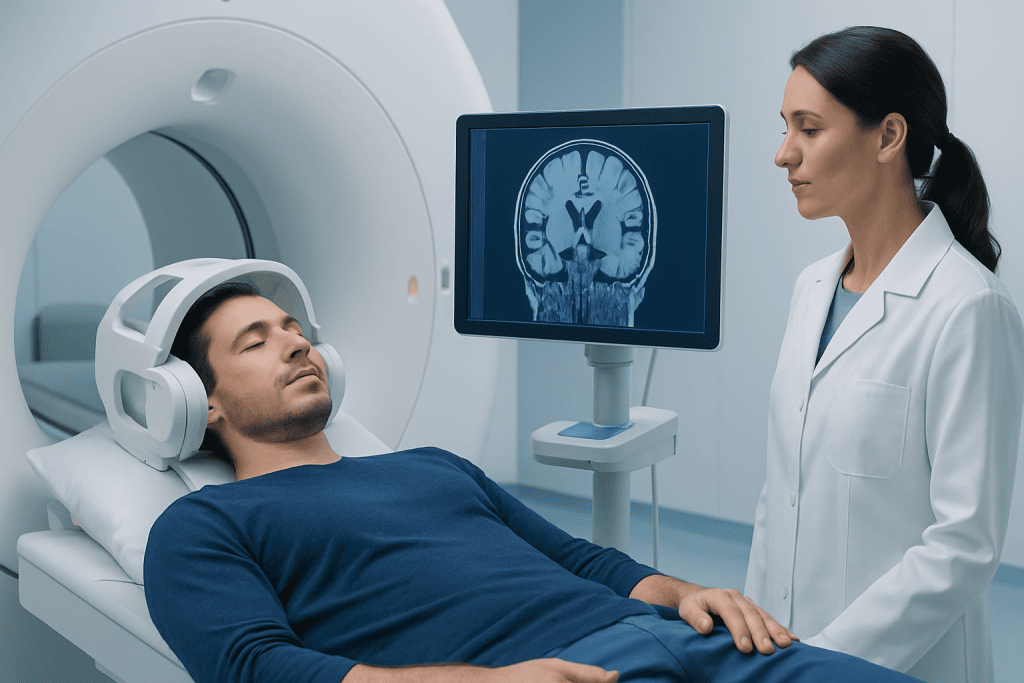
Tests depend on the situation. Brain imaging may include a CT scan in urgent settings or an MRI for a more detailed look at brain tissue. Blood tests can help look for infection, inflammation, metabolic problems, or medication-related causes. If seizures are suspected, an EEG may be used. If headache is the main complaint, evaluation may focus first on common primary headache disorders while watching for warning signs.
When a structural cause is found, the care team may refer the patient for specialized management, such as MRI imaging for diagnosis or neurosurgery when a lesion, bleeding problem, or pressure effect needs procedural treatment. The diagnosis is based on the overall picture rather than on the word “frontal” alone.
Treatment options depend on the cause
Treatment for frontal symptoms is guided by the underlying diagnosis. If the issue is a tension-type headache, care may involve hydration, rest, stress reduction, posture changes, sleep improvement, and appropriate medical advice on pain relief. Migraine, sinus-related symptoms, and medication-related headaches are managed differently, so an accurate diagnosis matters.
When frontal symptoms come from neurological disease, treatment may involve several specialists. Stroke care may require urgent imaging and time-sensitive treatment. Seizures are often managed with anti-seizure medication and follow-up. Brain infections and inflammatory conditions require targeted medical therapy. Rehabilitation may help if a patient has ongoing problems with speech, movement, attention, or planning.
If imaging shows a mass or another structural problem in the frontal lobe, doctors discuss options based on the size, location, and nature of the finding. This may include monitoring, medication, surgery, or other therapies such as radiation oncology in selected cases. Patients with complex diagnoses may also benefit from neurology care as part of a broader treatment plan.
Near the end of the evaluation and treatment process, patients often need practical guidance on recovery, work, driving, and cognitive function. In selected cases, Acibadem International’s multidisciplinary specialists in JCI-accredited hospitals diagnose and treat frontal brain and headache-related conditions for international patients. Ongoing follow-up is important, especially if symptoms are changing or affect daily independence.
Self-care, monitoring, and when to seek medical care
Self-care can support recovery when symptoms are mild and a doctor has ruled out urgent causes. Helpful steps may include regular sleep, adequate hydration, balanced meals, stress management, limiting alcohol, and avoiding head injury. For headaches, keeping a symptom diary can help identify patterns related to sleep, screens, skipped meals, or stress.
Patients who have had a concussion, seizure, stroke, or frontal lobe disorder may need a gradual return to work, school, or exercise. It can also help to use reminders, calendars, and simplified routines while attention and planning improve. Family input is often useful because behavior or judgment changes may be easier for others to notice.
When to seek medical care: A person should seek urgent care for sudden weakness, facial droop, confusion, severe or unusual headache, seizure, fainting, speech difficulty, sudden behavior change, or loss of vision. Prompt medical attention is also important for symptoms after a head injury, headaches with fever or neck stiffness, or progressive problems with memory, personality, or walking.
Even when symptoms seem mild, a medical review is sensible if frontal headaches keep returning, concentration problems affect daily life, or family members notice clear changes in mood or behavior. Early assessment can reassure the patient when the cause is benign and can speed treatment when a more serious condition is present.
Frequently asked questions
What does frontal mean in a medical report?
Frontal usually means the front part of the head or brain. In many reports, it refers to the frontal lobe, frontal region, or frontal sinus, depending on the test and the symptoms being discussed.
Is a frontal headache always related to the brain?
No. A frontal headache is often caused by common problems such as tension-type headache, migraine, eye strain, or sinus-related symptoms. Brain causes are less common but may need evaluation if the headache is sudden, severe, or linked with neurological symptoms.
What are signs of frontal lobe problems?
Possible signs include personality or behavior changes, trouble planning tasks, poor concentration, speech difficulty, weakness, and sometimes seizures. The exact pattern depends on which part of the frontal lobe is affected and what is causing it.
Can frontal lobe symptoms be subtle?
Yes. Some people first show reduced motivation, impaired judgment, or changes in social behavior rather than obvious physical symptoms. That is why family observations can be helpful during medical assessment.
How are frontal lobe conditions diagnosed?
Doctors usually combine a medical history with a neurological examination. Depending on the situation, they may order imaging such as CT or MRI, blood tests, and sometimes an EEG if seizures are suspected.
When should a person worry about frontal symptoms?
Urgent symptoms include sudden weakness, trouble speaking, confusion, seizure, a severe new headache, or symptoms after a head injury. Progressive memory, behavior, or walking changes also deserve prompt medical review.
References
- National Institute of Neurological Disorders and Stroke
- Mayo Clinic
- Cleveland Clinic
- Merck Manual Consumer Version
- World Health Organization
This article is for general information only and is not a substitute for professional medical advice. Please consult a qualified doctor about your individual situation.
Oncology care in Turkey — second opinion and treatment plan
JCI-accredited · board-certified surgeons · reply within 24h
Add us as a Preferred Source to see more of our trusted health content across Google Search, AI Overviews and Discover.