Fuchs Dystrophy: An Evidence-Based Guide for Patients

Fuchs dystrophy affects corneal endothelial cells, which normally remove excess fluid from the cornea. Vision is often blurrier in the morning and may gradually worsen over time.
Key Takeaways
- Fuchs dystrophy affects corneal endothelial cells, which normally remove excess fluid from the cornea.
- Vision is often blurrier in the morning and may gradually worsen over time.
- Eye examinations can usually diagnose the condition before symptoms become severe.
- Treatment ranges from lubricating drops and salt solutions to corneal procedures in advanced cases.
- Prompt evaluation is important if vision changes suddenly, pain develops, or glare becomes disabling.
Fuchs dystrophy is a progressive eye condition that affects the inner layer of the cornea, making it harder for the eye to keep the cornea clear. Over time, this can lead to blurry vision, light sensitivity, and discomfort, but careful monitoring and modern treatments can help protect sight.
Overview
Fuchs dystrophy is a disease of the cornea, the clear front window of the eye. It mainly affects the endothelial cells, a thin layer of cells on the inner surface of the cornea that helps keep the cornea clear by pumping out excess fluid. When these cells gradually decline, fluid can build up in the cornea and vision may become cloudy or blurred.
This condition usually develops slowly over many years. Many people notice few or no symptoms early on, while others first become aware of blur in the morning that improves during the day. As the disease progresses, symptoms can become more persistent and may interfere with reading, driving, screen use, or other daily tasks.
Fuchs dystrophy is often age-related and can run in families. It is not contagious, and it is not caused by poor hygiene or eye strain. Early diagnosis matters because regular follow-up helps an eye specialist track changes and recommend treatment at the right time.
How Fuchs Dystrophy Affects Vision
The cornea needs to stay relatively dehydrated to remain transparent. Endothelial cells act like tiny pumps that move extra fluid out of the cornea. In fuchs dystrophy, these cells become less effective and some are lost over time, so the cornea begins to swell.
At first, the swelling may be mild and mostly noticeable after sleep, when the closed eyelid reduces evaporation from the eye surface. This is why some people experience blurry vision in the morning that improves as the day goes on. Later, the swelling may persist throughout the day and affect clarity more continuously.
In more advanced disease, small blisters can form on the corneal surface because of excess fluid. These can cause discomfort, foreign-body sensation, and sensitivity to light. Severe swelling can also reduce contrast, increase glare and halos, and make fine visual tasks harder.
Because changes often happen gradually, some patients adapt without realizing how much their vision has shifted. Routine eye examinations are therefore important, especially for anyone with a family history of corneal disease or ongoing unexplained blur.
Symptoms and Stages

Symptoms of fuchs dystrophy vary by stage. In early disease, there may be no clear symptoms at all, and the condition may be found during a routine eye examination. Over time, symptoms tend to become more noticeable and may affect one eye before the other, although both eyes are often involved.
Common symptoms include:
- Blurred or hazy vision, often worse in the morning
- Glare and halos around lights
- Sensitivity to bright light
- Reduced contrast or difficulty seeing fine details
- A gritty, irritated, or foreign-body sensation
- Fluctuating vision during the day
- Eye discomfort if corneal swelling becomes advanced
Symptoms are not always unique to this condition. They can overlap with other eye problems such as cataracts, dry eye, or other forms of corneal disease. That is one reason a full eye evaluation is important instead of assuming the cause based only on symptoms.
Not everyone progresses at the same pace. Some people remain stable for years with mild symptoms, while others develop increasing corneal edema and more significant visual impairment that may eventually require a procedure to restore clarity.
Causes and Risk Factors
Fuchs dystrophy develops when endothelial cells in the cornea are damaged or gradually lost faster than the eye can compensate. The exact mechanism can involve inherited factors, age-related cellular stress, and changes in the corneal tissue over time. In many patients, a family history suggests a genetic component.
Known risk factors include older age and having close relatives with the condition. It is often identified in adulthood, and symptoms may become more noticeable later in life. Some people learn they have it only when being assessed for another eye problem, such as cataracts.
Eye surgery does not usually cause fuchs dystrophy, but procedures involving the cornea or lens can be more complex when the condition is already present because the remaining endothelial cells are more vulnerable. For this reason, people who have been told they have endothelial disease should mention it before any planned eye surgery, including cataract surgery.
Fuchs dystrophy is not caused by reading in dim light, screen use, or wearing glasses. It also cannot be prevented simply through lifestyle changes. However, timely follow-up and avoiding delay in care can help reduce complications and support better visual outcomes.
Diagnosis and Monitoring
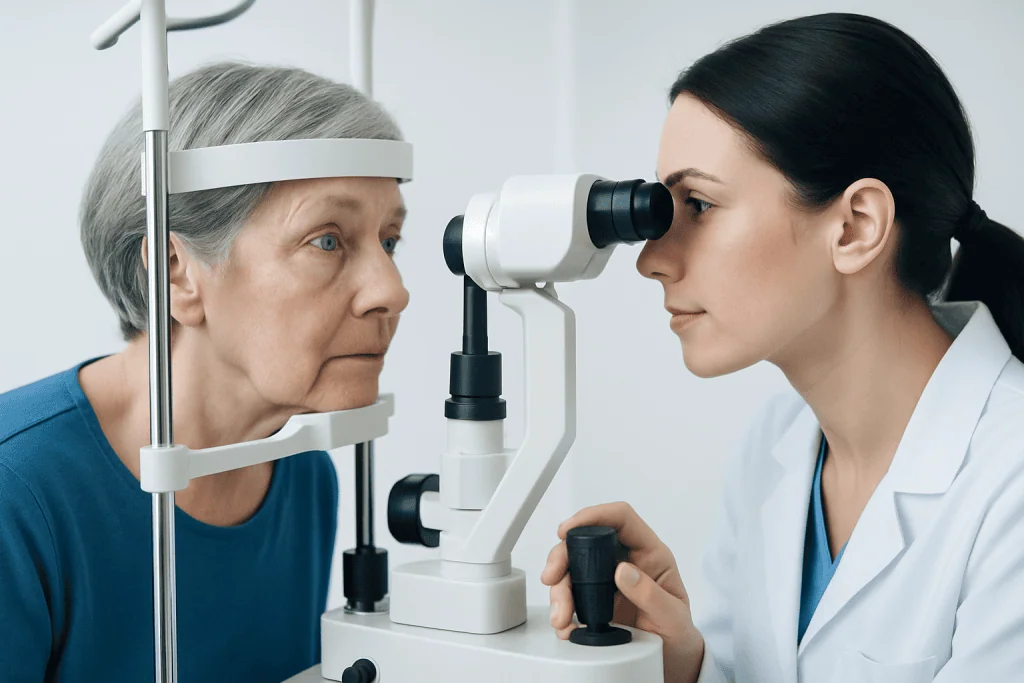
An eye doctor diagnoses fuchs dystrophy through a detailed eye examination. This usually includes checking vision, examining the cornea with a slit-lamp microscope, and looking for characteristic changes such as guttae, which are small bumps on the inner corneal layer. These findings can appear before major symptoms begin.
Additional tests may help assess severity and monitor progression. Corneal thickness measurements can show whether swelling is increasing, while imaging or endothelial cell analysis may help evaluate the health of the inner corneal layer. The doctor may also check for cataracts or other conditions that could be contributing to visual changes.
Diagnosis is not based on one symptom alone. Morning blur can occur for other reasons, and glare may also come from lens changes or dry eye. The goal of evaluation is to identify the true cause of symptoms and estimate how much the cornea is affecting sight at that moment.
Follow-up intervals depend on symptoms and examination findings. Some patients only need periodic monitoring, while others need closer review if the cornea is becoming thicker, vision is worsening, or a surgical decision may be approaching.
Treatment Options
Treatment depends on how much the condition is affecting vision and comfort. In mild cases, care may focus on symptom relief and observation. Doctors may suggest lubricating drops, ointments, or hypertonic saline drops or ointment to help draw fluid out of the cornea. Some people also find that gentle air circulation, such as from a hair dryer held at a safe distance on a cool setting, may help morning blur, but this should only be used if an eye doctor recommends it.
When visual function is more significantly affected, surgery may be considered. The type of procedure depends on which parts of the eye are involved and how advanced the endothelial damage is. Modern corneal surgery often replaces only the diseased inner corneal layer rather than the full cornea, which can support a more targeted recovery in appropriate patients. This may be discussed as part of cornea transplant care.
If cataracts are also present, treatment planning may need to address both conditions. In some cases, cataract surgery alone may be appropriate; in others, the cornea also needs treatment. Decision-making is individualized and based on examination findings, visual needs, and the estimated reserve of endothelial cells.
Patients should not feel that surgery is the only path. Many people do well for long periods with monitoring and medical management. When surgery is needed, the aim is to reduce corneal swelling, improve vision, and make day-to-day activities more comfortable and reliable.
Self-care, Daily Management, and Outlook
Living with fuchs dystrophy often involves practical adjustments. Good lighting, anti-glare lenses if recommended, sunglasses outdoors, and pacing visually demanding tasks for times of day when vision is clearest can all help. Keeping the eye surface comfortable may also improve day-to-day visual quality when dryness is present alongside corneal changes.
It is important to use eye drops only as directed by a qualified clinician. Over-the-counter products can soothe irritation, but they do not replace proper diagnosis. Contact lens use, if any, should be discussed with an eye specialist because swelling or surface changes can affect lens tolerance and safety.
The outlook varies, but many patients maintain functional vision for years, especially with regular monitoring. Even when the disease progresses, treatment options are available and have advanced considerably. The key is ongoing care rather than waiting until symptoms become severe.
For international patients who need assessment or treatment, Acibadem International’s multidisciplinary specialists and JCI-accredited hospitals diagnose and manage complex eye conditions, including Fuchs dystrophy and related eye surgery needs.
When to Seek Medical Care
A routine eye appointment is appropriate for gradually increasing morning blur, glare, or trouble seeing clearly in bright light. These symptoms do not always mean fuchs dystrophy, but they deserve professional evaluation, especially if they persist or interfere with daily activities.
Medical care should be sought sooner if vision suddenly worsens, eye pain develops, the eye becomes very light-sensitive, or there is marked redness. These symptoms may suggest significant corneal swelling or another eye problem that needs prompt attention.
People who have been told they have fuchs dystrophy should also check in before any planned eye operation, including cataract procedures. Early discussion helps the surgical team plan safely and choose the most appropriate approach.
Frequently asked questions
Is Fuchs dystrophy the same as cataracts?
No. Fuchs dystrophy affects the cornea, while cataracts affect the eye’s natural lens. Both can cause blurry vision and glare, and some people may have both conditions at the same time.
Does Fuchs dystrophy always lead to blindness?
No, it does not always lead to blindness. Many people have mild or slowly progressive disease, and effective treatments are available when vision becomes significantly affected. Regular monitoring helps guide the right timing for treatment.
Why is vision often worse in the morning?
Vision may be worse in the morning because the cornea can collect more fluid during sleep, when the eyes are closed. As the day goes on, some of that fluid may evaporate or be managed better, so the cornea can temporarily clear somewhat.
Can eye drops cure Fuchs dystrophy?
Eye drops do not cure the underlying loss of endothelial cells. However, certain prescribed or recommended drops may reduce corneal swelling or improve comfort, especially in earlier stages. An eye doctor can advise which options are appropriate.
Is Fuchs dystrophy hereditary?
It can be. A family history is common in some patients, which suggests a genetic contribution. Still, not everyone with the condition knows of an affected relative.
When is surgery considered for Fuchs dystrophy?
Surgery is usually considered when corneal swelling causes persistent vision problems or discomfort that no longer responds well to conservative care. The decision depends on symptoms, examination findings, and how much the condition affects daily life.
This article is for general information only and is not a substitute for professional medical advice. Please consult a qualified doctor about your individual situation.
Explore treatments in Turkey — costs, top hospitals & a free quote
JCI-accredited · board-certified surgeons · reply within 24h
Add us as a Preferred Source to see more of our trusted health content across Google Search, AI Overviews and Discover.

More from the Health Library

Bed Bug Bites: What Patients Need to Know

Fluticasone — Explained by Medical Evidence, Not Myths

Turmeric Face Mask: A Complete Medical Overview

Norwood Scale: An Evidence-Based Guide for Patients

Proform Treadmill — Explained by Medical Evidence, Not Myths