

Gastric Bypass vs Gastric Banding: How the Procedures Compare

Gastric bypass usually leads to greater weight loss and stronger metabolic effects than gastric banding. Gastric banding is adjustable and removable, but it often requires more device-related follow-up.
Key Takeaways
- Gastric bypass usually leads to greater weight loss and stronger metabolic effects than gastric banding.
- Gastric banding is adjustable and removable, but it often requires more device-related follow-up.
- Both procedures work best when combined with long-term nutrition, exercise, and behavioral changes.
- Procedure choice depends on body weight, medical conditions, eating habits, and personal preferences.
- Regular follow-up and vitamin monitoring are important after any bariatric procedure.
Gastric bypass and gastric banding are both bariatric procedures designed to support long-term weight loss, but they work in different ways and suit different patients. Understanding how each procedure affects the stomach, recovery, expected results, and follow-up needs can help patients have a more informed discussion with their doctor.
Overview
Gastric bypass and gastric banding are two types of weight loss surgery used to help people with obesity lose weight when lifestyle measures alone have not been enough. Both are forms of bariatric surgery, but they differ in how they change the digestive system and how much follow-up they usually require.
Gastric bypass creates a small stomach pouch and reroutes part of the small intestine. This means the patient eats less at one time and absorbs fewer calories and nutrients than before. It can also improve hormones linked to hunger, blood sugar control, and fullness. Gastric bypass is often considered for people who need substantial weight loss or who also have obesity-related conditions such as type 2 diabetes.
Gastric banding, sometimes called adjustable gastric band surgery, places a silicone band around the upper part of the stomach to create a small pouch. The band limits how much food the stomach can hold at one time, helping the person feel full sooner. Unlike bypass, it does not reroute the intestines. Gastric banding is adjustable and can be removed, but it generally leads to slower and less pronounced weight loss than bypass.
How the Procedures Work
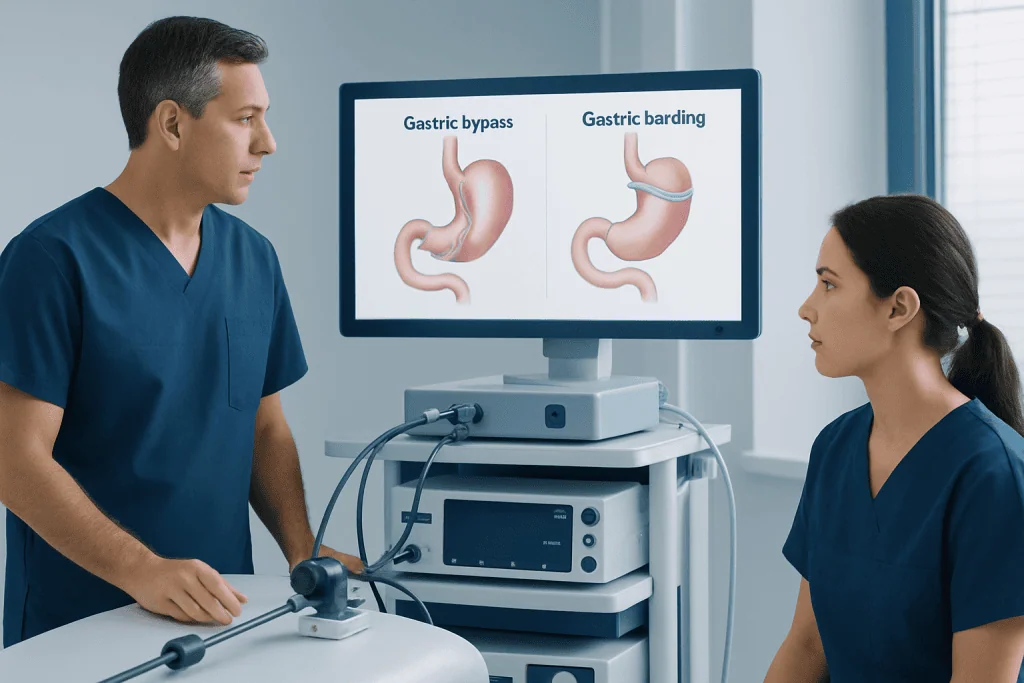
In gastric bypass, the surgeon divides the stomach to create a much smaller pouch at the top. This pouch is then connected directly to part of the small intestine, so food bypasses most of the stomach and the first section of the intestine. As a result, meals are smaller, digestion changes, and fewer calories are absorbed. The operation is usually performed using minimally invasive techniques such as laparoscopic surgery, depending on the patient’s situation.
In gastric banding, an inflatable band is placed around the upper stomach. This creates a narrow opening between the small upper pouch and the rest of the stomach. The band can be tightened or loosened later by adding or removing fluid through a small port under the skin. This adjustment feature can help tailor restriction over time, but it also means the patient usually needs more office visits.
Because the procedures work differently, their effects are not the same. Bypass has both restrictive and metabolic effects, which is one reason it may improve blood sugar control quickly. Banding is mainly restrictive, so success depends heavily on eating habits, meal structure, and careful long-term follow-up.
Who May Be a Candidate

Candidates for either procedure are usually adults with obesity who have not achieved enough weight loss through diet, physical activity, and medical support alone. Doctors often consider body mass index, weight-related medical conditions, previous attempts at weight management, and readiness for long-term lifestyle change. In some people with morbid obesity, surgery may offer meaningful health benefits when performed as part of a structured treatment plan.
Gastric bypass may be recommended for patients who have severe reflux, type 2 diabetes, or a need for greater average weight loss. It may also be a good option for those who can commit to lifelong vitamin supplementation and regular medical monitoring. Because it changes nutrient absorption, it requires careful follow-up.
Gastric banding may be considered for selected patients who prefer a reversible option and want to avoid intestinal rerouting. However, it is not ideal for everyone. It may be less suitable for people with certain eating patterns, such as frequent high-calorie liquid intake, because liquid calories can pass through the band more easily. A bariatric team helps match the procedure to the patient’s health profile, expectations, and daily habits.
Benefits and Possible Drawbacks
The main benefit of gastric bypass is that it usually produces more substantial and more durable weight loss than gastric banding. It also has a stronger effect on obesity-related conditions, especially type 2 diabetes, high blood pressure, and sleep apnea. Many patients also notice reduced hunger and improved fullness after smaller meals. For people seeking a broader metabolic effect, this can be an important advantage.
The main drawbacks of bypass are that it is more complex surgery and carries risks related to intestinal rerouting. Possible issues include dumping symptoms after certain sugary meals, ulcers, bowel blockage, or nutritional deficiencies if vitamins and minerals are not replaced appropriately. Although many patients do very well, the operation is not reversible in the same simple way as a band.
Gastric banding offers some advantages of its own. It is adjustable, does not involve cutting the intestines, and is generally considered removable. Nutrient malabsorption is less of a concern than with bypass. However, the trade-off is that weight loss tends to be slower and often less than with bypass, and some patients eventually need band removal or revision due to slipping, erosion, intolerance, reflux, or insufficient results. Patients comparing options may also wish to ask about alternatives such as gastric sleeve surgery, which is now commonly performed in many centers.
Risks, Recovery, and Long-Term Follow-Up
All surgery carries some risk, including bleeding, infection, blood clots, anesthesia-related problems, and complications during healing. For gastric bypass, additional concerns can include leakage at connection points, narrowing, internal hernia, or vitamin and mineral deficiency over time. For gastric banding, risks can include band slippage, device malfunction, port problems, swallowing difficulty, and ongoing reflux or vomiting if the band is too tight.
Recovery time varies by person and procedure. Many bariatric operations are performed with minimally invasive techniques, which can shorten hospital stay and help patients return to light daily activity sooner. Even so, recovery is not only about wound healing. Patients also need to adjust gradually to a staged diet, beginning with liquids and slowly progressing to soft and then solid foods under clinical guidance.
Long-term follow-up is essential with both procedures. After bypass, routine blood tests help check for low iron, vitamin B12, folate, calcium, vitamin D, and other deficiencies. After banding, regular visits are needed to assess satiety, tolerance, weight progress, and whether the band needs adjustment. In both cases, follow-up with a surgeon, dietitian, and sometimes a psychologist supports safer, more sustainable outcomes.
How Doctors Decide Between Gastric Bypass and Gastric Banding
There is no single best operation for everyone. Doctors choose between gastric bypass and gastric banding by looking at the patient’s overall health, body weight, age, medications, eating behaviors, previous abdominal surgery, and willingness to attend regular follow-up visits. Personal priorities also matter, such as whether reversibility is important or whether the patient is seeking the strongest possible metabolic effect.
For example, a person with type 2 diabetes or significant reflux may be guided more often toward gastric bypass because of its broader metabolic benefits. A person who strongly prefers an adjustable device and accepts the possibility of more office-based maintenance may ask about gastric banding. In many practices, banding is now selected less often than in the past because long-term outcomes and reoperation rates have shifted preferences toward other procedures.
Preoperative assessment often includes blood tests, nutritional review, psychological evaluation, and screening for conditions that may affect surgery planning. Some patients may also be assessed for abdominal wall issues, especially if they have had prior surgery or significant weight changes. For instance, a clinician may identify an unrelated problem such as an incisional hernia that needs to be considered during treatment planning.
Nutrition, Lifestyle, and Self-Care After Surgery
Neither gastric bypass nor gastric banding is a stand-alone cure for obesity. Surgery works best when patients adopt long-term habits that support weight loss and overall health. These usually include structured meals, attention to protein intake, avoiding frequent high-sugar foods and drinks, staying hydrated, and building regular physical activity into daily life.
After bypass, patients usually need lifelong vitamin and mineral supplements because the body may absorb less from food. After banding, supplements may still be advised, but the nutritional concerns are often different. In both cases, eating too quickly, not chewing well, or ignoring fullness can lead to discomfort. Learning to eat slowly and stop at the first signs of fullness is a key part of recovery and long-term success.
Emotional and behavioral support can also make a major difference. Stress eating, grazing, poor sleep, and unrealistic expectations can all affect outcomes. Ongoing guidance from a multidisciplinary team helps patients manage setbacks, maintain motivation, and understand that weight loss usually happens over months rather than days. Near the end of the care pathway, some international patients may explore treatment through Acibadem International, where multidisciplinary specialists at JCI-accredited hospitals diagnose and treat obesity-related conditions and provide surgical follow-up when appropriate.
When to See a Doctor
A doctor should be consulted when excess weight is affecting health, mobility, sleep, fertility, or quality of life, especially if structured diet and exercise efforts have not brought lasting results. People with type 2 diabetes, high blood pressure, fatty liver disease, joint pain, or sleep apnea may benefit from a conversation with a bariatric specialist about whether surgery is appropriate.
Patients who have already had gastric bypass or banding should seek medical advice if they develop persistent vomiting, trouble swallowing, severe reflux, dehydration, abdominal pain, black stools, fever, or signs of nutritional deficiency such as unusual fatigue, hair thinning, numbness, or weakness. These symptoms do not always mean a serious complication, but they do deserve prompt assessment.
It is also wise to ask for help if weight loss stops early, significant weight regain occurs, or eating becomes difficult to manage. Sometimes the issue relates to nutrition habits, but sometimes it may involve the procedure itself. Regular follow-up makes it easier to identify concerns early and discuss whether dietary treatment, medication, device adjustment, or another approach may help.
Frequently asked questions
Which procedure usually leads to more weight loss: gastric bypass or gastric banding?
Gastric bypass usually leads to greater average weight loss than gastric banding. It also tends to have stronger effects on blood sugar and other obesity-related conditions. Individual results still depend on long-term eating habits, activity, and medical follow-up.
Is gastric banding safer because it is reversible?
Reversibility is one advantage of gastric banding, but it does not automatically mean it is the better or safer choice for every patient. Banding can still cause problems such as slippage, reflux, or device-related issues that may require another procedure. A doctor weighs these factors against the benefits and risks of bypass.
Can type 2 diabetes improve after gastric bypass or gastric banding?
Yes, both procedures may improve type 2 diabetes, but gastric bypass often has a stronger and faster effect. This is partly because it changes digestive hormones as well as food intake. Some patients need less diabetes medication after surgery, but treatment decisions should always be made by a doctor.
Will vitamins be needed after surgery?
Most patients need vitamin and mineral supplementation after gastric bypass, often for life, because nutrient absorption changes. Supplements may also be recommended after gastric banding, depending on diet and blood test results. Regular monitoring helps detect deficiencies early.
How long is recovery after these procedures?
Recovery varies, but many patients return to light activities within a few weeks, depending on the procedure and their overall health. The early recovery period includes gradual diet progression and close attention to hydration. Full adjustment to new eating patterns usually takes longer than wound healing alone.
Can a gastric band be removed or changed to another procedure later?
Yes, a gastric band can often be removed, and in some cases patients later have a different bariatric procedure. This may happen if weight loss is not enough or if complications develop. The timing and options depend on the person's health and the condition of the stomach and esophagus.
References
- World Health Organization
- National Institute of Diabetes and Digestive and Kidney Diseases
- American Society for Metabolic and Bariatric Surgery
- National Health Service
- Mayo Clinic
This article is for general information only and is not a substitute for professional medical advice. Please consult a qualified doctor about your individual situation.
Gastric Banding in Turkey — costs, top hospitals & a free quote
JCI-accredited · board-certified surgeons · reply within 24h
Add us as a Preferred Source to see more of our trusted health content across Google Search, AI Overviews and Discover.
Check your numbers in seconds
BMI, calories, due date, blood pressure and 30+ more clinical calculators — free, instant, doctor-reviewed ranges.

Bariatric & Metabolic Surgery
Surgical and endoscopic treatments for obesity and metabolic conditions.
Related Treatments
Related Conditions
More from the Health Library



Related Specialists

Prof. Dr. Tayfun Karahasanoğlu
General Surgery
Prof. Dr. Güralp Onur Ceyhan
General Surgery
Prof. Dr. Volkan Özben
General Surgery
Assoc. Prof. Dr. Halil Kara
General Surgery