Genetic Disorder Achondroplasia: Symptoms, Causes, and Treatment Options

Achondroplasia is a genetic bone growth disorder that mainly affects the arms, legs, and spine. Most people with achondroplasia have average intelligence and can lead full, active lives.
Key Takeaways
- Achondroplasia is a genetic bone growth disorder that mainly affects the arms, legs, and spine.
- Most people with achondroplasia have average intelligence and can lead full, active lives.
- Diagnosis may be suspected before birth or confirmed after birth with examination and genetic testing.
- Treatment focuses on monitoring growth, preventing complications, and addressing orthopedic, neurologic, or breathing concerns when needed.
- Regular follow-up with pediatric and adult specialists is important throughout life.
Genetic disorder achondroplasia is the most common form of disproportionate short stature. It is caused by a change in the FGFR3 gene that affects bone growth, and while it cannot be reversed, careful monitoring and treatment can help manage complications and support healthy development.
Overview of genetic disorder achondroplasia
Genetic disorder achondroplasia is a condition that affects how bone develops, especially in the long bones of the arms and legs. It leads to disproportionate short stature, meaning the limbs are shorter in relation to the trunk. The condition is present from birth and is caused by a change in a gene involved in bone growth.
Achondroplasia primarily affects the growth plate cartilage that normally turns into bone during development. Because this process is altered, people with the condition often have a typical-sized trunk, shorter upper arms and thighs, a larger head size, and characteristic facial features such as a prominent forehead. These physical traits vary from person to person.
Importantly, achondroplasia is not a disease that affects intelligence in most cases. Children and adults with achondroplasia can attend school, work, build families, and participate in daily life. What matters most is timely medical follow-up to identify any complications involving breathing, the spine, ears, or limb alignment so they can be managed early and safely.
Symptoms and physical features
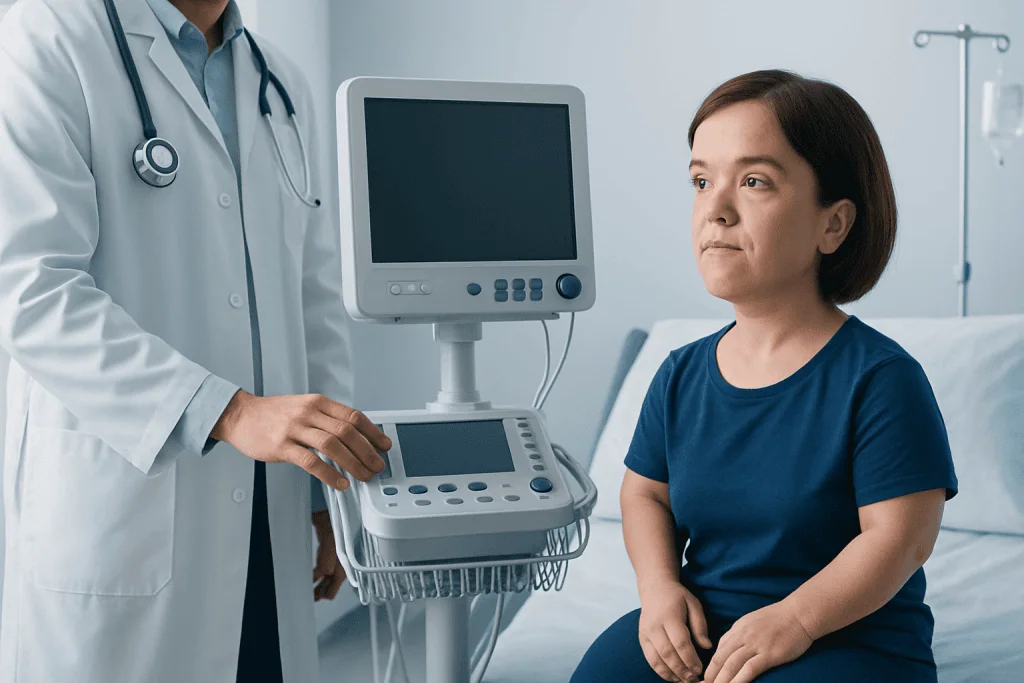
The signs of achondroplasia are often noticeable at birth or in early infancy. The most familiar feature is short stature with shortened arms and legs, particularly in the upper segments of the limbs. The hands may appear broad, and there may be a space between the middle and ring fingers, sometimes described as a trident hand appearance.
Other common physical findings include a relatively large head, a prominent forehead, and a flattened bridge of the nose. Infants may have low muscle tone, delayed sitting or walking, and a tendency toward ear infections. Curving of the spine or leg bowing may also become more visible as a child grows.
Symptoms do not affect everyone in the same way. Some children mainly need routine observation, while others develop medical concerns that need active treatment. Possible complications can include sleep-disordered breathing, recurrent middle ear problems, narrowing of the spinal canal, dental crowding, or pressure at the base of the skull. These issues are the reason regular specialist follow-up is recommended.
- Shortened arms and legs
- Disproportionate short stature
- Larger head size with frontal prominence
- Broad hands and short fingers
- Delayed motor milestones
- Bowed legs or spinal curvature
- Frequent ear infections or snoring
Causes, inheritance, and risk factors
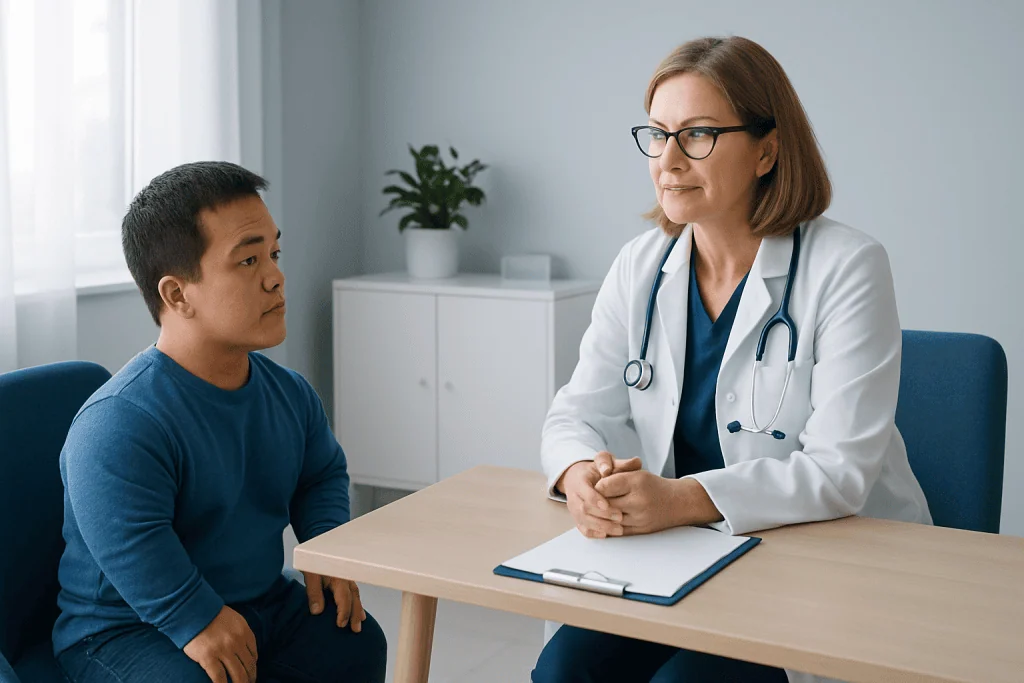
Achondroplasia is caused by a change, also called a mutation, in the FGFR3 gene. This gene helps regulate bone growth. In achondroplasia, the altered gene slows the normal conversion of cartilage into bone, especially in the long bones. The result is the characteristic growth pattern seen in the condition.
The condition follows an autosomal dominant inheritance pattern. This means that a child can develop achondroplasia if they inherit one altered copy of the gene. However, many cases happen for the first time in a family and are not inherited from either parent. In those cases, the gene change arises spontaneously around the time of conception.
If one parent has achondroplasia, there is a chance of passing the condition to a child. If both parents have achondroplasia, the genetic possibilities are more complex, and genetic counseling is especially important. Families often benefit from meeting a genetics specialist to understand inheritance, future pregnancy planning, and what test results mean in practical terms.
Achondroplasia belongs to a wider group of inherited skeletal conditions sometimes discussed alongside skeletal dysplasia. Although the term is broad, achondroplasia has its own well-recognized genetic cause and clinical pattern, which helps doctors distinguish it from other growth and bone disorders.
How achondroplasia is diagnosed
Diagnosis may begin before birth if prenatal ultrasound shows shortened long bones or body proportions suggestive of achondroplasia. After birth, doctors usually rely on a physical examination, growth measurements, family history, and imaging findings. X-rays can show typical bone features that support the diagnosis.
Genetic testing can confirm the FGFR3 mutation and may be especially helpful when the diagnosis is uncertain, when another skeletal condition is being considered, or when families want clearer information about inheritance. In some cases, doctors also recommend neurologic assessment, hearing evaluation, or sleep studies to look for early complications.
Because body proportions and growth patterns differ from average, children with achondroplasia are best followed with condition-specific growth charts and developmental guidance. Standard growth charts can be misleading. A multidisciplinary team may include pediatrics, genetics, orthopedics, neurology, ENT, pulmonology, and rehabilitation specialists, depending on the child’s needs.
Imaging may also be used to evaluate concerns such as spinal narrowing, curvature, or compression around the head and neck. When needed, doctors may request detailed assessment with MRI to better understand the spinal cord, foramen magnum area, or other structures that cannot be fully assessed on routine X-rays.
Treatment options and long-term management
There is no single cure that changes all aspects of achondroplasia, so treatment focuses on healthy development, comfort, function, and prevention of complications. Care plans vary by age and symptoms. Some children mainly need monitoring, while others may need targeted treatment for breathing issues, recurrent ear infections, spinal problems, or limb alignment.
Supportive management may include physical therapy, hearing checks, sleep assessment, and orthopedic follow-up. Ear tube placement can be helpful in children with repeated middle ear infections or hearing concerns. Weight management, safe physical activity, and home adjustments can also improve mobility and independence.
In selected patients, medicines that target bone growth pathways may be considered under specialist supervision. These treatments are not suitable for everyone and require careful evaluation of expected benefits, risks, and long-term monitoring. When symptoms suggest nerve compression or severe spinal narrowing, surgery may sometimes be necessary to protect neurologic function or relieve pain.
Depending on the individual situation, treatment may involve pediatric orthopedics for limb alignment and growth-related bone concerns, or neurosurgery when there is significant compression at the skull base or in the spine. Some children and adults may also require sleep-related evaluation and support if breathing problems occur during sleep, especially when snoring, pauses in breathing, or daytime fatigue are present.
Daily life, prevention of complications, and self-care
Achondroplasia cannot be prevented once the genetic change is present, but many complications can be reduced through planned follow-up and practical self-care. Families are often advised to attend regular growth, hearing, and developmental checks in infancy and childhood. Monitoring the head and neck region early in life is especially important because some infants are at risk of narrowing around the foramen magnum.
At home, supportive positioning and age-appropriate handling can help avoid strain on the spine in infants. As children grow, doctors may advise avoiding activities that place repeated impact or extreme stress on the neck and back. Encouraging healthy movement, good posture, and appropriate seating or adaptive equipment can improve comfort and participation in school and daily activities.
Adults with achondroplasia may also need ongoing care, especially for back pain, spinal stenosis, leg alignment issues, weight control, and sleep apnea. Psychosocial support can be valuable at any age. A respectful environment, realistic accommodations, and access to knowledgeable specialists often make a major difference in quality of life.
Because spinal changes can overlap with problems seen in other conditions such as spinal stenosis, new numbness, weakness, balance changes, or persistent back and leg symptoms should be assessed rather than assumed to be routine. Early evaluation helps guide the right treatment and can prevent avoidable complications.
When to seek medical care
Medical review is important whenever achondroplasia is suspected in a newborn or child, especially if growth appears disproportionate or there is a family history of the condition. Early diagnosis allows doctors to monitor breathing, hearing, neurologic development, and bone growth more effectively.
Prompt medical attention is recommended if a baby has poor feeding, weak muscle tone, pauses in breathing, unusual sleepiness, or delayed development. In children or adults, warning signs include persistent snoring, frequent ear infections, worsening back pain, numbness, weakness, trouble walking, loss of bladder control, or severe headaches. These symptoms do not always mean a serious problem, but they should be checked by a qualified doctor.
Families may also seek care when they want guidance on genetic testing, pregnancy counseling, mobility, school accommodations, or symptom-specific treatment. In experienced centers, multidisciplinary care can help bring these needs together in one plan. Acibadem International’s multidisciplinary specialists and JCI-accredited hospitals diagnose and treat achondroplasia for international patients when coordinated specialist care is needed.
Frequently asked questions
Is achondroplasia a genetic disorder?
Yes. Achondroplasia is a genetic disorder caused by a change in the FGFR3 gene, which affects normal bone growth. It may be inherited from a parent or occur for the first time in a child with no family history.
Can achondroplasia be detected before birth?
Sometimes. Prenatal ultrasound may suggest achondroplasia if limb shortening or characteristic body proportions are seen, and genetic testing may help confirm it in selected cases. However, the timing and clarity of prenatal findings can vary.
Does achondroplasia affect intelligence?
In most cases, no. People with achondroplasia usually have typical intelligence and normal cognitive development. Medical care mainly focuses on bone growth, breathing, hearing, spine health, and related complications.
What is the treatment for achondroplasia?
Treatment depends on age, symptoms, and complications. It may include regular monitoring, physical therapy, hearing care, sleep evaluation, orthopedic management, and sometimes surgery or newer targeted medicines under specialist supervision.
Can adults with achondroplasia have health problems later in life?
Yes, some adults may develop back pain, spinal stenosis, leg alignment concerns, joint strain, or sleep apnea. Regular medical follow-up can help identify these issues early and guide treatment that supports mobility and daily function.
If one parent has achondroplasia, will the child have it too?
There is a possibility because achondroplasia is usually inherited in an autosomal dominant pattern. That means one altered copy of the gene can cause the condition. A genetics professional can explain the chances more clearly for an individual family.
References
- National Institute of Arthritis and Musculoskeletal and Skin Diseases
- MedlinePlus Genetics
- American Academy of Pediatrics
- National Organization for Rare Disorders
- Orphanet
This article is for general information only and is not a substitute for professional medical advice. Please consult a qualified doctor about your individual situation.
Explore treatments in Turkey — costs, top hospitals & a free quote
JCI-accredited · board-certified surgeons · reply within 24h
Add us as a Preferred Source to see more of our trusted health content across Google Search, AI Overviews and Discover.