Ghost Lashes: A Complete Medical Overview

Ghost lashes is not a formal medical diagnosis; it may describe extra, faint, misdirected, or inward-growing eyelashes. An extra row of lashes arising near the eyelid gland openings may be a condition called distichiasis.
Key Takeaways
- Ghost lashes is not a formal medical diagnosis; it may describe extra, faint, misdirected, or inward-growing eyelashes.
- An extra row of lashes arising near the eyelid gland openings may be a condition called distichiasis.
- Lashes rubbing against the eye can cause tearing, redness, pain, light sensitivity, and damage to the cornea if untreated.
- Temporary lash removal may relieve symptoms, but recurring lashes often need specialist treatment to reduce regrowth.
- Persistent eye discomfort, reduced vision, or significant redness warrants prompt assessment by an ophthalmologist.
Ghost lashes is an informal term often used for very fine, pale, hidden, or unusually positioned eyelashes. Some are harmless, but lashes that touch the eye can cause irritation and should be assessed by an eye care professional.
What Are Ghost Lashes?
“Ghost lashes” is a non-medical term commonly used to describe eyelashes that are difficult to see, unexpectedly located, very fine, pale, or growing in an unusual direction. People may notice them only when they cause a scratching sensation, appear in a close-up photograph, or are found during an eye examination. The term can also be used for small lashes growing behind the usual lash line.
In many cases, a single fine or light-colored lash is simply a normal variation. However, the term may sometimes refer to an eyelash that turns inward and touches the surface of the eye, or to extra lashes emerging from the inner edge of the eyelid. These situations can cause irritation and deserve professional assessment, especially when symptoms recur.
Ghost lashes should not be confused with ordinary eyelash shedding. Eyelashes normally grow, rest, and shed in cycles, so occasional loss and regrowth is expected. The important issue is not whether a lash looks unusual, but whether it repeatedly rubs the eye or is associated with eyelid inflammation, injury, or vision symptoms.
Why Do Some Lashes Seem Hidden or Unusual?
The eyelid margin is a small, complex area containing eyelashes, oil glands, sweat glands, and delicate skin. A lash may appear hidden when it is very short, fine, lightly pigmented, or trapped among thicker lashes. It may also emerge at a slightly different angle from neighboring lashes, making it noticeable only when the eyelid is examined closely.
Some people have an additional row of lashes or isolated extra lashes. When lashes grow from the openings of the meibomian glands, which normally release oil into the tear film, the condition is called distichiasis. These lashes can be soft and barely visible, yet they may still contact the eye. Distichiasis may be present from birth or develop later in life.
Another possible explanation is trichiasis, in which otherwise normally placed eyelashes grow or turn toward the eye. This can happen after chronic eyelid irritation, injury, surgery, infection, or scarring. Unlike distichiasis, trichiasis does not necessarily involve an extra row of lashes; rather, lashes from the normal row become misdirected.
Symptoms and Effects on the Eye
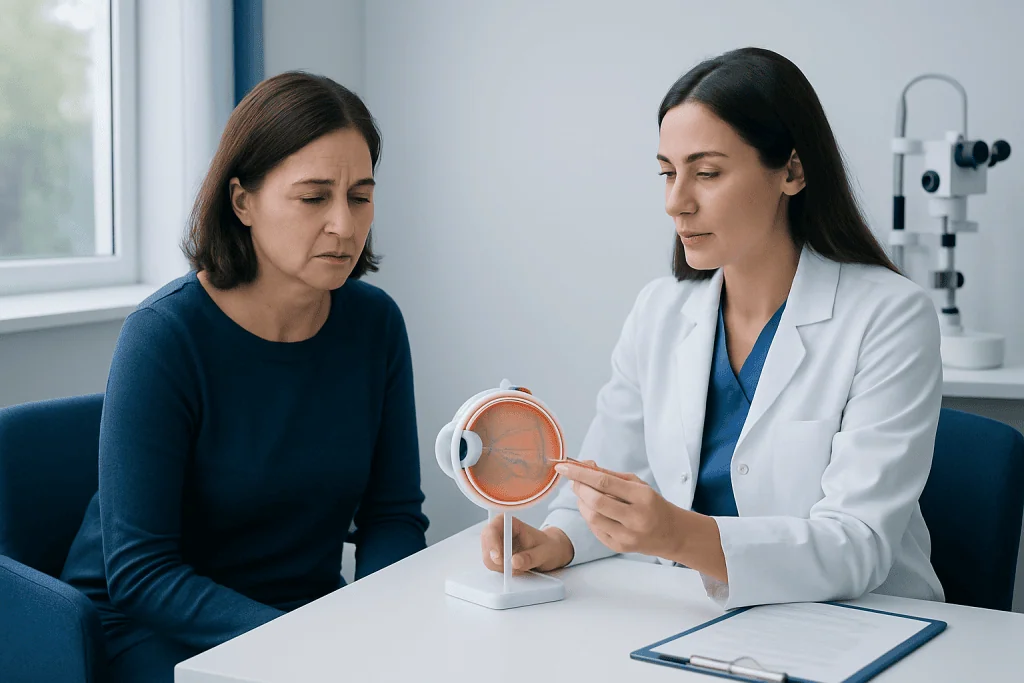
A ghost lash that does not touch the eye may cause no symptoms at all. When a lash brushes the conjunctiva, the clear membrane covering the white of the eye, or the cornea, the clear front surface of the eye, it can feel like a grain of sand is trapped in the eye. Symptoms may come and go because blinking can temporarily move the lash away from the surface.
Possible symptoms include tearing, redness, itching, burning, a foreign-body sensation, frequent blinking, crusting around the lid, and sensitivity to light. Some people rub their eyes repeatedly because of the discomfort. Contact lenses can make symptoms more noticeable, as a lash may interfere with lens comfort or move against the surface of the eye.
Repeated friction from an inward-growing lash can cause small scratches on the cornea. In more significant cases, this may lead to persistent pain, blurred vision, inflammation, or infection risk. Children and people with reduced eye sensation may not describe discomfort clearly, so persistent rubbing, tearing, or avoidance of light should be taken seriously.
Causes and Risk Factors
Extra or misdirected eyelashes can be congenital, meaning present from birth, or acquired later. Congenital distichiasis is uncommon and may occur on its own or, rarely, as part of an inherited condition affecting the lymphatic system. An ophthalmologist can consider a person’s medical and family history when extra lashes are found in childhood or alongside leg swelling or other unusual symptoms.
Acquired eyelash changes are more often linked to inflammation or scarring of the eyelid margin. Long-term blepharitis, an inflammation around the lashes and eyelid glands, may alter the direction of lashes. Other contributors can include previous eyelid injury, burns, eye surgery, certain infections, and inflammatory skin or eye conditions that affect the eyelids.
Age-related changes in eyelid position can also contribute. For example, the eyelid may turn inward, a condition known as entropion, directing lashes toward the eye. Cosmetic products do not usually cause true distichiasis, but irritation from eye makeup, adhesives, or harsh cleansing practices can worsen eyelid inflammation and make existing lash problems more uncomfortable.
How Ghost Lashes Are Diagnosed
An optometrist or ophthalmologist usually diagnoses the cause of ghost lashes through a detailed eye and eyelid examination. The clinician will ask about symptoms, how long they have been present, prior eye procedures or injuries, use of contact lenses, and any history of recurrent eyelid inflammation. They will also look for associated skin changes, gland blockage, and eyelid position problems.
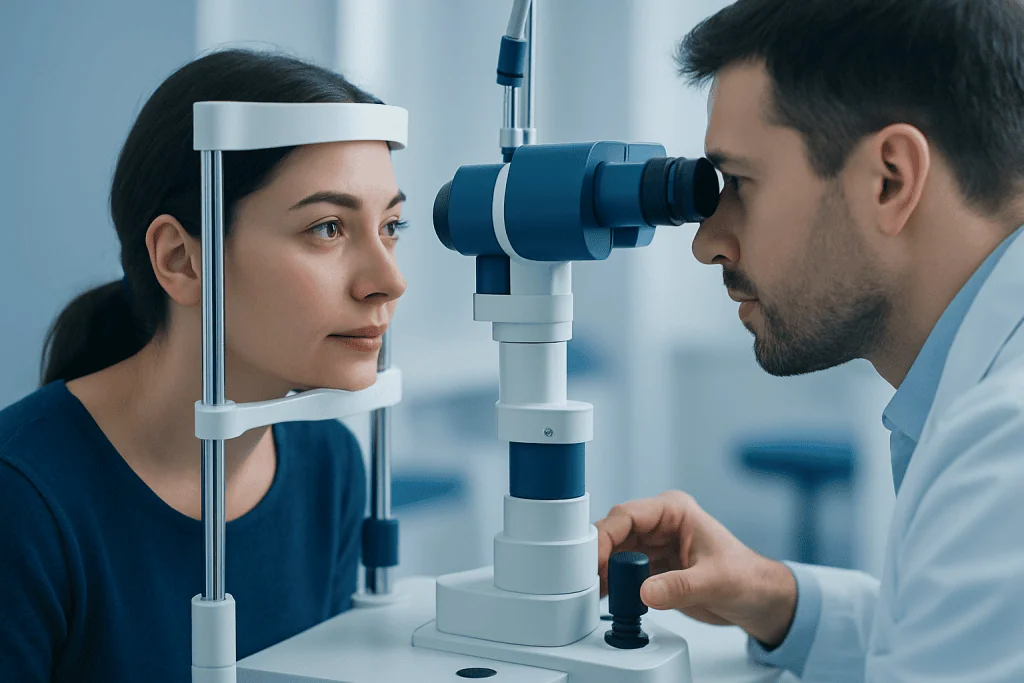
During the examination, the eyelid margin is viewed under magnification, often with a slit lamp. This allows the clinician to identify very fine lashes, determine whether they arise from the normal lash line or from gland openings, and check whether they touch the cornea. A dye may be placed in the eye to reveal superficial scratches or areas of irritation on the corneal surface.
Because a lash can be difficult to see or may shift position, symptoms should be described clearly even if the lash cannot be found immediately. Taking a well-lit photograph can sometimes help document a visible lash, but it does not replace an examination. A clinician will also rule out other causes of a gritty or painful eye, including dry eye disease, allergy, infection, and a retained foreign body.
Treatment Options and Everyday Care
Treatment depends on whether the lash is causing eye contact, how often it regrows, and whether an underlying eyelid condition is present. If a single lash is irritating the eye, an eye care professional may remove it with sterile forceps. This provides short-term relief, but a plucked lash can grow back within weeks, so repeated removal may be needed.
For recurrent or numerous problematic lashes, an ophthalmologist may discuss longer-lasting options. These can include electrolysis, radiofrequency treatment, laser treatment, or cryotherapy, depending on the number, location, and type of lashes. If eyelid scarring or inward turning of the lid is the cause, eyelid surgery may be considered to correct the underlying anatomy rather than repeatedly treating individual lashes.
Until an assessment takes place, people should avoid trying to pull deeply embedded or hard-to-see lashes out at home. Tweezers can injure the eyelid or eye, particularly if the person moves suddenly. Avoid rubbing the eye, pause contact lens use if the eye is painful or red, and use only eye drops recommended by a pharmacist or clinician. Good eyelid hygiene may be useful when blepharitis is present, but it will not permanently correct an inward-growing lash.
When to Seek Medical Care
Medical assessment is appropriate when a suspected ghost lash causes repeated discomfort, tearing, redness, or the feeling that something is in the eye. An appointment with an optometrist or ophthalmologist is particularly important if symptoms return after a lash has been removed, if several lashes appear abnormal, or if the eyelid looks inflamed, swollen, scarred, or turned inward.
Urgent eye care is needed for severe eye pain, new blurred or reduced vision, marked sensitivity to light, a red eye that is worsening, pus-like discharge, or an eye injury. These symptoms may indicate corneal involvement or another eye problem requiring prompt treatment. People who wear contact lenses should seek timely advice for a painful red eye because contact lens-related infections can become serious.
Acibadem International’s multidisciplinary specialists and JCI-accredited hospitals can assess eyelid and eye-surface concerns for international patients. A qualified eye specialist can determine whether an unusual lash is harmless, whether it represents distichiasis or trichiasis, and which management approach is appropriate.
Frequently asked questions
Are ghost lashes real?
Ghost lashes is a real-world descriptive term, but it is not an official medical diagnosis. It may refer to a faint lash, an extra lash, or a lash that is hidden along the eyelid margin. An eye examination can clarify whether it is a normal variation or a lash problem requiring treatment.
Can ghost lashes damage the eye?
A lash that does not touch the eye is unlikely to cause harm. However, a lash that repeatedly rubs the cornea can cause irritation and small surface scratches. Persistent rubbing should be evaluated to protect the eye surface and vision.
What is the difference between distichiasis and trichiasis?
Distichiasis means an extra row of eyelashes grows from the inner eyelid margin, often near oil gland openings. Trichiasis means lashes from the usual lash line are directed toward the eye. Both conditions can cause similar symptoms, but the underlying cause and treatment approach may differ.
Can a person remove a ghost lash at home?
A clearly visible, loose lash may sometimes come away naturally with blinking or gentle rinsing. It is best not to use tweezers near the eye to remove a deeply placed, inward-growing, or difficult-to-see lash. Professional removal is safer and helps confirm whether the lash is likely to regrow.
Do ghost lashes grow back after plucking?
They can. Plucking removes the visible lash but usually does not destroy the hair follicle, so regrowth is common. If the same lash repeatedly causes symptoms, an ophthalmologist may discuss treatments intended to reduce or prevent regrowth.
Can eyelid inflammation cause lashes to turn inward?
Yes. Long-standing eyelid inflammation or scarring can alter the direction of eyelashes and sometimes the shape of the eyelid. Managing the underlying inflammation and having the eyelids examined can help guide treatment and reduce ongoing eye irritation.
This article is for general information only and is not a substitute for professional medical advice. Please consult a qualified doctor about your individual situation.
Explore treatments in Turkey — costs, top hospitals & a free quote
JCI-accredited · board-certified surgeons · reply within 24h
Add us as a Preferred Source to see more of our trusted health content across Google Search, AI Overviews and Discover.

More from the Health Library

Comminuted Fracture: An Evidence-Based Guide for Patients

Rales: A Complete Medical Overview

Insulin Pen: What Patients Need to Know

Proform Treadmill — Explained by Medical Evidence, Not Myths

Amla Juice: What Patients Need to Know