Glans Penis — Explained by Medical Evidence, Not Myths

The glans penis is the sensitive head of the penis and contains the urethral opening. Its appearance varies naturally from person to person, including color, size, and whether it is covered by foreskin.
Key Takeaways
- The glans penis is the sensitive head of the penis and contains the urethral opening.
- Its appearance varies naturally from person to person, including color, size, and whether it is covered by foreskin.
- Common problems affecting the glans include irritation, balanitis, infections, skin conditions, and trauma.
- Persistent redness, pain, discharge, ulcers, or trouble urinating should be assessed by a doctor.
- Good hygiene, avoiding irritants, safer sex practices, and management of underlying conditions can reduce risk.
The glans penis is the rounded tip, or head, of the penis. It is a normal anatomical structure involved in sensation, sexual function, and the passage of urine, but symptoms such as pain, rash, swelling, discharge, or sores can signal irritation, infection, skin disease, or another medical condition that should be evaluated.
Overview: what the glans penis is and why it matters
The glans penis is the rounded tip of the penis, often called the head of the penis. It is a normal part of male anatomy and contains the external opening of the urethra, where urine and semen leave the body. The glans also has many nerve endings, which is why it is usually more sensitive than other nearby skin.
Its appearance can vary widely without meaning anything is wrong. The glans may look pink, reddish, brown, or purplish depending on natural skin tone, temperature, blood flow, and whether the person is circumcised. In uncircumcised people, it is partly or fully covered by the foreskin when the penis is not erect; in circumcised people, it is exposed all the time.
Most questions about the glans penis are about whether a change is normal or a sign of disease. Mild temporary dryness, friction-related sensitivity, or color changes after sexual activity can happen. However, persistent pain, itching, sores, discharge, swelling, or a new lump deserve medical attention because they may point to infection, inflammation, a skin disorder, or, less commonly, a more serious condition.
Normal anatomy and common variations
The glans is made of specialized tissue that is softer and more delicate than ordinary skin. At its tip is the urethral opening, also called the meatus. On the underside, the glans connects to the shaft through the frenulum, a small elastic band of tissue that can be especially sensitive.
Natural differences are common. Some people have a smoother glans, while others notice small visible glands, tiny pale spots, or a more textured surface. Pearly penile papules, for example, are small harmless bumps that can appear around the rim of the glans and are not a sexually transmitted infection.
Because the glans is exposed to urine, moisture, friction, and body products, it can become irritated more easily than many other body areas. In uncircumcised people, a substance called smegma can collect under the foreskin if hygiene is poor; this is not dangerous in itself but can contribute to odor and inflammation if it builds up. Understanding these normal features can help separate harmless variation from changes that should be checked by a clinician.
Symptoms and changes that may affect the glans
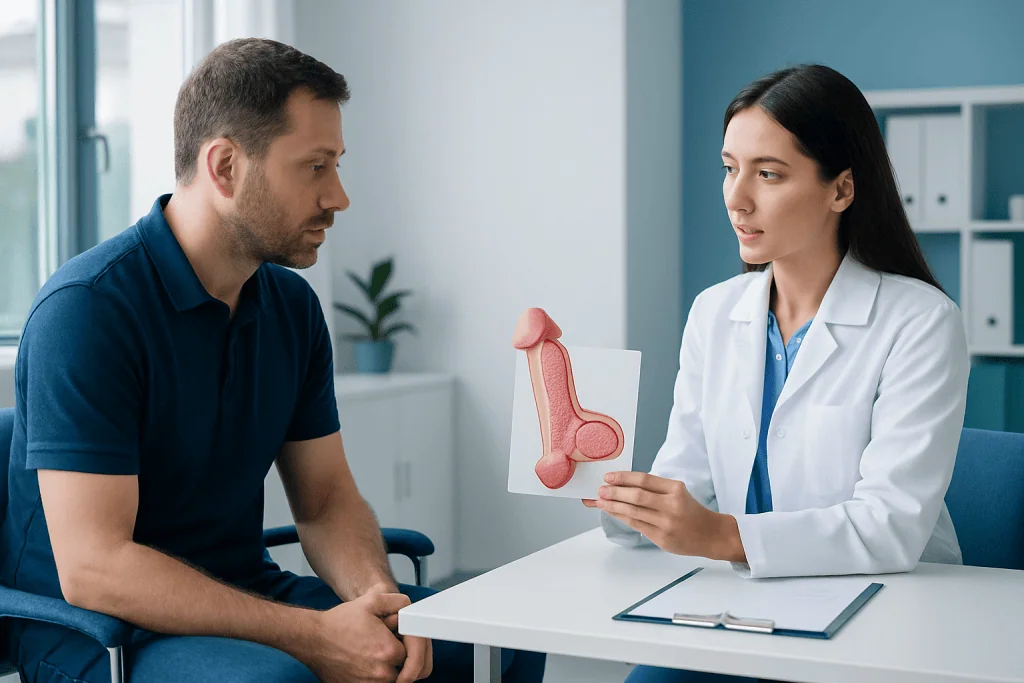
Symptoms involving the glans penis can range from mild irritation to clear signs of illness. Common complaints include redness, burning, itching, tenderness, dryness, cracking, swelling, unpleasant odor, or pain during urination or sexual activity. Some people notice a rash, white patches, blisters, ulcers, or discharge from the urethral opening.
Symptoms may appear suddenly after friction, exposure to a new soap, condom, or lubricant, or after sexual contact. In other cases they develop gradually and come and go, which can happen with eczema, psoriasis, fungal infection, or chronic inflammation. Trouble retracting the foreskin, pain with retraction, or a tight foreskin can also affect the glans and may suggest phimosis.
It is also important to note what is not usually normal. A sore that does not heal, bleeding without clear injury, a new hard area, persistent swelling, or ongoing pain should not be ignored. These findings do not automatically mean something serious, but they do need proper assessment by a qualified doctor.
- Redness, itching, or burning
- Rash, scaling, or white patches
- Blisters, ulcers, or crusting
- Discharge or foul odor
- Pain with urination or sex
- Swelling, tight foreskin, or difficulty retracting foreskin
Causes: irritation, infection, inflammation, and other conditions
Many glans penis symptoms are caused by simple irritation. Friction from sexual activity or masturbation, harsh soaps, scented body washes, latex, spermicides, or residues from detergents can lead to contact dermatitis. Dry skin and minor trauma can make the area sting or become more sensitive for a short time.
Inflammation of the glans is called balanitis. It can be triggered by poor hygiene, trapped moisture, fungal overgrowth such as Candida, bacterial infection, diabetes, skin disorders, or irritation from products. When the foreskin is also inflamed, the term balanoposthitis is often used. Recurrent balanitis may need evaluation for contributing problems such as elevated blood sugar or a tight foreskin.
Sexually transmitted infections can also affect the glans. Herpes may cause painful blisters or ulcers, syphilis may cause a painless sore, and gonorrhea or chlamydia can cause urethral discharge and discomfort. Non-sexually transmitted skin conditions such as psoriasis, lichen sclerosus, lichen planus, and eczema may involve the glans as well. In a small number of cases, persistent abnormal lesions may represent precancerous changes or penile cancer, so long-lasting or unusual symptoms should be examined promptly.
Some structural or functional problems can contribute too. A foreskin that is too tight can trap moisture and make cleaning difficult, increasing the risk of irritation and infection. Conditions affecting urination, recurring infections, or pain may overlap with broader urologic conditions and benefit from specialist care.
How doctors diagnose glans penis problems
Diagnosis starts with a medical history and physical examination. The doctor will usually ask when symptoms began, whether they are painful or itchy, whether there has been new sexual contact, and whether any new products, medications, or injuries could have triggered the problem. Hygiene habits, diabetes, skin conditions, and circumcision status may also be relevant.
The examination focuses on the glans, foreskin if present, urethral opening, and nearby skin. In many cases, the appearance alone gives useful clues. A doctor may identify balanitis, contact dermatitis, a fungal infection, a sexually transmitted infection, or a harmless normal variant such as pearly penile papules without extensive testing.
If needed, tests may include a urine test, urethral swab, swab of a lesion, fungal or bacterial culture, or blood tests for sexually transmitted infections. When a rash or lesion is persistent, atypical, or suspicious, referral to a urologist or dermatologist may be advised, and occasionally a biopsy is needed. Imaging is not usually required for common surface symptoms.
Treatment options and what care may involve
Treatment depends on the cause, so self-treating with random creams is not always the best approach. If irritation is the main problem, doctors often advise avoiding fragranced products, reducing friction for a short time, and using gentle cleansing with water or a mild non-irritating cleanser. A bland moisturizer may help if dryness is contributing.
When infection is present, treatment may involve antifungal, antibacterial, or antiviral medication depending on the diagnosis. Inflammatory skin conditions may be treated with carefully selected topical medicines under medical guidance, since the skin of the glans is delicate. If there is an underlying sexually transmitted infection, testing and treatment of partners may also be important.
For recurrent balanitis, persistent foreskin tightness, or repeated infections, doctors may discuss treatment for the foreskin problem itself. In selected cases, circumcision may reduce repeated inflammation or improve hygiene. When symptoms are related to difficult urination, urinary tract issues, or another structural concern, evaluation by a specialist in urology care can help define the next steps.
If a suspicious lesion is found, prompt specialist evaluation is important so the exact cause can be identified and treated early. Near the end of the care pathway, some patients may need coordinated assessment by urology, dermatology, pathology, or infectious disease teams. Acibadem International’s multidisciplinary specialists and JCI-accredited hospitals diagnose and treat these conditions for international patients when advanced evaluation is needed.
Prevention and self-care
Prevention begins with gentle hygiene. The glans should be washed with lukewarm water; if a cleanser is used, it should be mild and fragrance-free. In uncircumcised people, the foreskin should be retracted gently for cleaning only if it moves comfortably, then returned to its normal position afterward. Forced retraction should be avoided.
It also helps to keep the area dry and reduce contact with irritants. Scented soaps, deodorants, antiseptics, and harsh scrubbing can worsen symptoms rather than improve them. Wearing breathable underwear and changing out of sweaty clothing promptly may reduce moisture buildup.
Safer sex practices matter as well. Condoms can lower the risk of sexually transmitted infections, although some people are sensitive to latex or lubricants and may need alternatives. Good control of diabetes and other chronic conditions is also important, since high blood sugar can increase infection risk and make balanitis more likely.
- Clean gently; avoid over-washing
- Use fragrance-free products
- Avoid friction during active irritation
- Practice safer sex and consider STI testing when appropriate
- Seek medical review for recurrent episodes
When to seek medical care
Medical care is appropriate if glans penis symptoms last more than a few days, keep returning, or do not improve with basic self-care. It is especially important to be assessed if there is significant pain, swelling, fever, discharge, a bad smell, or pain when passing urine. These features may suggest infection or a condition that needs prescription treatment.
Urgent assessment is needed for a spreading rash, a painful inability to retract or reposition the foreskin, severe swelling, urinary retention, or a new ulcer or sore after sexual exposure. A non-healing lesion, bleeding, or a lump should also be checked promptly because these symptoms need a clear diagnosis rather than observation alone.
People with diabetes, weakened immunity, or repeated episodes of balanitis should arrange medical review even if symptoms seem mild. Early evaluation usually makes treatment simpler and can help prevent complications.
Frequently asked questions
Is the glans penis just the tip of the penis?
Yes. The glans penis is the head or rounded tip of the penis, and it contains the urethral opening. It is normally more sensitive than the shaft because it has a rich nerve supply.
What color should the glans penis be?
There is no single normal color. The glans may appear pink, red, brown, or purplish depending on a person's skin tone, temperature, and blood flow. A sudden or persistent color change with pain, swelling, or sores should be checked by a doctor.
Why is the glans penis red or irritated?
Common reasons include friction, harsh soaps, moisture, fungal overgrowth, bacterial infection, or inflammatory skin conditions. Sexually transmitted infections can also be a cause. If redness is persistent, painful, or associated with discharge or ulcers, medical evaluation is recommended.
What is balanitis?
Balanitis means inflammation of the glans penis. It can cause redness, itching, soreness, swelling, and sometimes discharge or odor. Treatment depends on the underlying cause, which may be irritation, infection, poor hygiene, diabetes, or a skin disorder.
Are bumps on the glans penis always an STI?
No. Some bumps are harmless normal variants, such as pearly penile papules, while others may be due to irritation, cysts, skin conditions, or infections. Because appearances can overlap, new or changing bumps should be assessed by a clinician rather than self-diagnosed.
Can poor hygiene cause problems with the glans penis?
Yes, especially in uncircumcised people if moisture and secretions collect under the foreskin. This can irritate the skin and increase the risk of balanitis or infection. Gentle regular cleaning is helpful, but over-washing with harsh products can also cause irritation.
This article is for general information only and is not a substitute for professional medical advice. Please consult a qualified doctor about your individual situation.
Explore treatments in Turkey — costs, top hospitals & a free quote
JCI-accredited · board-certified surgeons · reply within 24h
Add us as a Preferred Source to see more of our trusted health content across Google Search, AI Overviews and Discover.

More from the Health Library

Tibialis Anterior Exercises: An Evidence-Based Guide for Patients

Lingual Tonsils: What Patients Need to Know

Nerve Glides: An Evidence-Based Guide for Patients

Crown Lengthening: A Complete Medical Overview

Edible Mushrooms: What Patients Need to Know