

Glaucoma Surgery: Candidacy, Procedure Steps, and Recovery Timeline

Glaucoma surgery aims to lower intraocular pressure to slow or prevent further vision loss. Candidacy depends on the type and severity of glaucoma, current eye pressure, and response to other treatments.
Key Takeaways
- Glaucoma surgery aims to lower intraocular pressure to slow or prevent further vision loss.
- Candidacy depends on the type and severity of glaucoma, current eye pressure, and response to other treatments.
- Several procedures are available, including minimally invasive glaucoma surgery, trabeculectomy, drainage devices, and surgery for angle-closure glaucoma.
- Recovery time varies by procedure, with quicker healing after MIGS and closer follow-up after traditional filtering surgery.
- All glaucoma surgery has potential risks and benefits, so decisions should be individualized with an eye specialist.
Glaucoma surgery is used to lower eye pressure and help protect the optic nerve when medicines or laser treatment do not control glaucoma well enough. The right procedure depends on the type of glaucoma, how advanced it is, and the person’s overall eye health and treatment goals.
Overview: what glaucoma surgery is and when it is used
Glaucoma surgery is a group of procedures designed to lower pressure inside the eye, also called intraocular pressure. It is usually recommended when glaucoma medicines, laser treatment, or both are not enough to protect the optic nerve. The goal is not to restore vision already lost, but to reduce the risk of further damage and help preserve remaining sight.
Glaucoma is not a single condition, so surgery is not a single operation. Some procedures improve the eye’s natural drainage, some create a new pathway for fluid to leave the eye, and others reduce fluid production. A specialist chooses the approach based on the type of glaucoma, the shape of the drainage angle, the amount of pressure reduction needed, and whether the person also has cataracts or other eye conditions.
For many people, surgery becomes part of a longer treatment plan rather than a one-time cure. Even after a successful operation, some patients still need eye drops, regular pressure checks, and ongoing monitoring of the optic nerve and visual field. That is why treatment planning usually focuses on long-term pressure control rather than a single procedure alone.
Who may be a candidate for glaucoma surgery
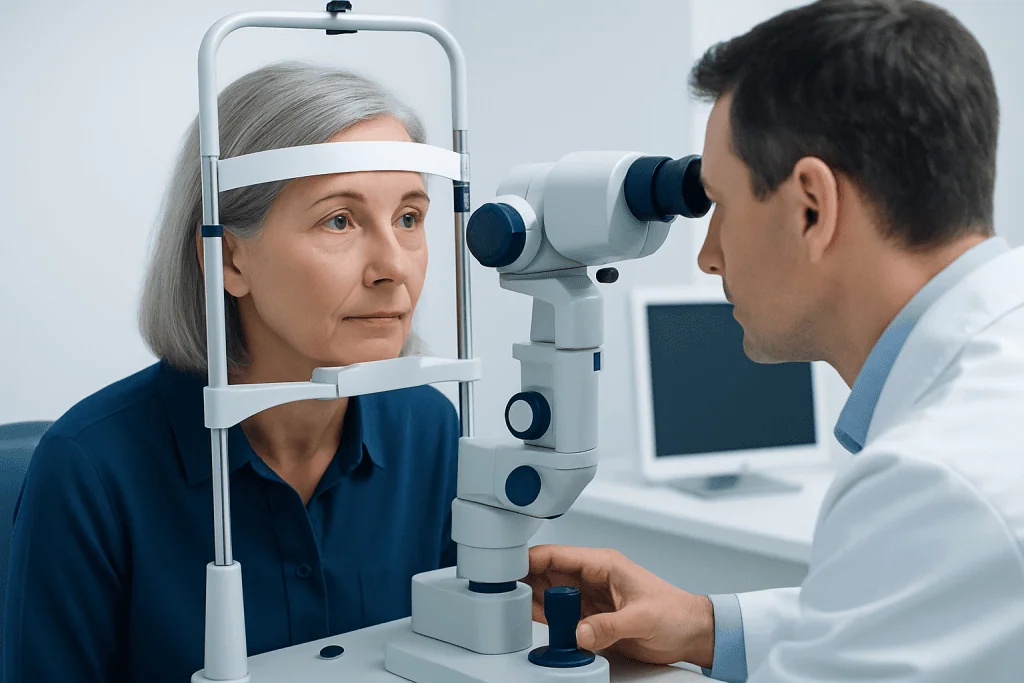
A person may be considered for glaucoma surgery if eye pressure remains too high despite prescribed eye drops, if medications cause troublesome side effects, or if glaucoma continues to worsen on scans or visual field testing. Surgery may also be advised when a person has difficulty using drops regularly, or when quick pressure reduction is needed to protect vision.
Candidacy depends on more than the pressure number alone. Ophthalmologists consider the type of glaucoma, how much optic nerve damage is already present, age, previous eye surgeries, corneal health, and whether cataract surgery is also needed. People with mild to moderate open-angle glaucoma may be candidates for less invasive procedures, while advanced glaucoma often requires stronger pressure-lowering surgery.
Some situations need urgent or specially tailored care. Angle-closure glaucoma, secondary glaucoma caused by inflammation or trauma, and glaucoma in children can require different surgical strategies than primary open-angle glaucoma. In these cases, an eye specialist may discuss options after a detailed eye examination and may also review related conditions such as glaucoma and coexisting lens problems like cataract.
- Pressure remains above the target despite treatment
- Visual field or optic nerve damage is progressing
- Eye drops are not tolerated or are difficult to use consistently
- Laser treatment has not worked well enough or is not suitable
- There is a need to combine glaucoma treatment with another eye surgery
How glaucoma surgery works: main types of procedures
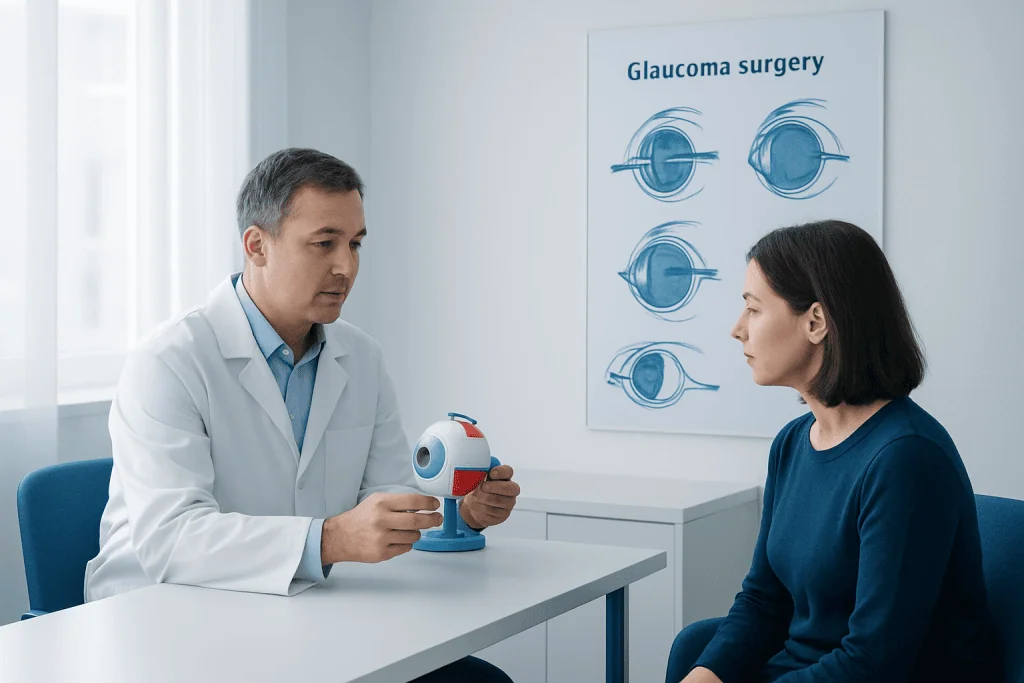
All glaucoma operations aim to lower pressure, but they do so in different ways. The eye constantly makes a clear fluid called aqueous humor. If this fluid cannot drain well, pressure rises and can damage the optic nerve. Surgery helps by improving outflow, creating a new drainage route, or reducing fluid production.
Minimally invasive glaucoma surgery, often called MIGS, uses very small devices or techniques to improve drainage with less tissue disruption. MIGS is often used in people with mild to moderate open-angle glaucoma, especially when combined with cataract surgery. Recovery is usually quicker, but the pressure-lowering effect may be more modest than with traditional filtering procedures.
Trabeculectomy is a more established operation that creates a new channel for fluid to leave the eye under a small flap in the sclera, the white part of the eye. A drainage bleb forms under the upper eyelid area, allowing fluid to be absorbed. This procedure can lower pressure more strongly and is often used in more advanced disease, but it needs close follow-up because healing can affect the result.
Glaucoma drainage devices, also called tube shunts or implants, place a small tube in the eye to direct fluid to a plate positioned on the eye’s surface under the conjunctiva. These may be considered in complex glaucoma or after previous surgeries. Other procedures, such as laser-based or incisional treatment for angle closure, may be used when the anatomy of the iris and drainage angle is part of the problem. A specialist may review options within broader eye surgery planning when multiple eye conditions are present.
What happens before and during the procedure
Preparation usually begins with a detailed eye assessment. The ophthalmologist measures eye pressure, examines the optic nerve, checks the drainage angle, and reviews current eye drops and general medications. In some cases, certain blood-thinning medicines or eye drops may need to be adjusted before surgery, but this should only be done under medical guidance.
Most glaucoma procedures are done as day surgery with local anesthesia and light sedation, although some patients may need general anesthesia. Before the operation, the eye is cleaned carefully, numbing medicine is given, and the area is kept sterile. The exact steps then depend on the chosen procedure.
In MIGS, the surgeon usually makes tiny incisions and uses a microscope and delicate instruments to place a micro-stent or open part of the eye’s drainage pathway. In trabeculectomy, the surgeon creates a controlled drainage channel and often uses medicines during surgery to reduce scarring. In tube shunt surgery, a small implant is positioned and the tube is inserted into the eye to guide fluid outward in a controlled way.
At the end of surgery, the eye is typically covered with a protective shield. The person receives instructions about eye drops, activity restrictions, and follow-up visits. Because early healing strongly influences the final result, the first days and weeks after surgery are an important part of the treatment itself.
Recovery timeline after glaucoma surgery
Recovery depends on the procedure performed. After MIGS, many people resume light daily activities within a few days, though vision may be blurry for a short time and heavy exertion is usually limited for at least a short period. Traditional filtering surgery, such as trabeculectomy or tube shunt placement, often requires a longer healing phase and more frequent postoperative visits.
In the first 24 to 48 hours, mild discomfort, a scratchy feeling, redness, watering, and blurred vision can be expected. These symptoms should gradually improve. Patients are usually asked to use prescribed eye drops, avoid rubbing the eye, wear an eye shield as advised, and avoid swimming, heavy lifting, or straining until the surgeon confirms it is safe.
During the first few weeks, the ophthalmologist checks pressure, healing, and signs of inflammation or scarring. Some people need temporary medication changes, stitch adjustment, or additional office-based treatments to help the new drainage pathway function properly. This is especially common after trabeculectomy, where the balance between healing and drainage is delicate.
Longer-term recovery may continue for several weeks to a few months, depending on the surgery. Vision can fluctuate during this period. Some patients can reduce their glaucoma drops after healing, while others still need medication to reach a safe target pressure. When surgery is part of broader glaucoma treatment, long-term follow-up remains essential even if early results are good.
Benefits, risks, and possible complications
The main benefit of glaucoma surgery is lowering eye pressure to reduce the risk of further optic nerve damage. In some people, surgery can also reduce dependence on daily eye drops or simplify treatment routines. This may improve comfort and treatment adherence, especially when multiple medications have been needed.
However, no glaucoma surgery is risk-free, and no procedure guarantees that vision loss will stop completely. Risks vary by technique but can include infection, bleeding, inflammation, very low eye pressure, scarring that reduces the effect of surgery, changes in vision, cataract progression, or the need for another procedure later. In tube and filtering surgeries, the early healing phase needs particularly careful monitoring.
It is also important to understand that surgery protects vision mainly by preventing or slowing additional loss, not by reversing established optic nerve damage. Expectations are usually best when the person understands the treatment goal clearly and attends all follow-up visits. The choice of surgery is therefore a balance between the amount of pressure lowering needed and the safety profile most appropriate for that eye.
Self-care after surgery and long-term eye health
Careful self-management after glaucoma surgery supports healing and helps reduce complications. Patients should use all drops exactly as prescribed, keep follow-up appointments, and tell their doctor about pain, worsening redness, discharge, or sudden changes in vision. It is also wise to bring an updated medication list to appointments and mention any new medical conditions.
General measures can also help protect eye health. These include controlling conditions such as diabetes or high blood pressure when present, wearing eye protection during activities that could cause injury, and having regular eye examinations even if symptoms are absent. Family members may also benefit from screening because some forms of glaucoma run in families.
For international patients seeking evaluation or treatment, Acibadem International’s multidisciplinary specialists and JCI-accredited hospitals diagnose and treat glaucoma and related eye conditions with individualized surgical planning and follow-up care.
When to seek medical care
A person should seek medical care promptly if they have ongoing blurred vision, eye pain, halos around lights, severe headache with nausea, or a sudden decline in sight. These symptoms do not always mean glaucoma, but they need urgent assessment because rapid pressure rise or other eye emergencies can threaten vision.
After glaucoma surgery, urgent medical attention is important if there is increasing eye pain, marked redness, pus-like discharge, fever, worsening light sensitivity, or sudden vision loss. Patients should also contact their eye team if they are unsure whether a postoperative symptom is normal. Early review can often identify a problem before it becomes more serious.
Frequently asked questions
Is glaucoma surgery a cure for glaucoma?
No. Glaucoma surgery is used to lower eye pressure and help protect the optic nerve, but it does not cure glaucoma or reverse vision already lost. Most people still need lifelong monitoring, and some may continue using eye drops after surgery.
How long does it take to recover from glaucoma surgery?
Recovery varies by procedure. Minimally invasive glaucoma surgery often has a shorter recovery, while trabeculectomy and tube shunt surgery may require several weeks to months of healing and close follow-up. Vision may be blurry at first and can fluctuate during recovery.
Will glaucoma surgery improve vision?
The main purpose of glaucoma surgery is to prevent further vision loss by lowering eye pressure. It does not usually improve sight that has already been damaged by glaucoma. If surgery is combined with cataract removal, some people may notice clearer vision from the cataract treatment itself.
Is glaucoma surgery painful?
Most procedures are performed with local anesthesia, so significant pain during surgery is not expected. Afterward, mild discomfort, irritation, or a scratchy feeling can occur for a short time. Severe or worsening pain should be reported to a doctor promptly.
Can glaucoma come back after surgery?
Glaucoma is a chronic disease, so pressure can rise again over time even after a successful operation. Scar tissue can affect how well some procedures continue to work. That is why regular follow-up remains important long after surgery.
Which glaucoma surgery is best?
There is no single best procedure for everyone. The best choice depends on the type of glaucoma, the amount of pressure reduction needed, previous eye history, and whether cataract surgery is also planned. An ophthalmologist recommends the option that best matches the eye’s anatomy and treatment goals.
References
- American Academy of Ophthalmology
- National Eye Institute
- National Health Service
- European Glaucoma Society
- Centers for Disease Control and Prevention
This article is for general information only and is not a substitute for professional medical advice. Please consult a qualified doctor about your individual situation.
Glaucoma Surgery in Turkey — costs, top hospitals & a free quote
JCI-accredited · board-certified surgeons · reply within 24h
Add us as a Preferred Source to see more of our trusted health content across Google Search, AI Overviews and Discover.

Ophthalmology
Comprehensive eye care from laser vision correction to retina, cornea and cataract surgery.
75 specialists in this unitMore from the Health Library



Related Specialists

Dr. Berna Yayla Özker
Otorhinolaryngology
Prof. Dr. Ahmet Tayyar
Gynecology & Obstetrics
Dt. Ece Büyükbaşaran
Dentistry
Prof. Dr. Meral Bayramoğlu
Physical Medicine & Rehabilitation