Gout in Heel — Explained by Medical Evidence, Not Myths

Gout can affect the ankle, subtalar joint, Achilles tendon area, or other structures close to the heel, not only the big toe. A gout flare often begins suddenly and may cause marked pain, redness, warmth, and swelling.
Key Takeaways
- Gout can affect the ankle, subtalar joint, Achilles tendon area, or other structures close to the heel, not only the big toe.
- A gout flare often begins suddenly and may cause marked pain, redness, warmth, and swelling.
- Heel pain is not always gout; plantar fasciitis, tendon problems, injury, infection, and arthritis may need to be ruled out.
- A clinician may use symptoms, blood tests, imaging, and sometimes joint-fluid analysis to confirm the cause.
- Anti-inflammatory treatment can help a flare, while long-term urate-lowering care may prevent recurrent attacks and joint damage.
Gout in heel is a possible cause of sudden, intense heel pain, swelling, warmth, and tenderness. It occurs when urate crystals trigger inflammation in a joint or soft tissue near the heel, but other conditions can cause similar symptoms, so a medical assessment is important.
Overview: Can Gout Cause Heel Pain?
Yes. Gout in heel can cause abrupt and very painful inflammation around the back, side, or underside of the heel. Gout develops when monosodium urate crystals form in and around joints after uric acid levels in the body have remained high enough for crystals to accumulate. The immune system reacts to these crystals, producing the intense inflammation known as a gout flare.
Although gout is classically associated with the base of the big toe, it may affect the ankle and joints near the heel, including the subtalar joint. Crystal deposits can also develop in soft tissues, such as around the Achilles tendon. A heel flare can make standing, walking, wearing shoes, or allowing bedcovers to touch the area uncomfortable.
Not all heel pain is gout. Plantar fasciitis, Achilles tendinopathy, bursitis, stress injury, osteoarthritis, inflammatory arthritis, and infection can produce overlapping symptoms. The timing of pain, visible inflammation, medical history, and appropriate testing help a clinician distinguish gout from these conditions.
What Does Gout in the Heel Feel Like?
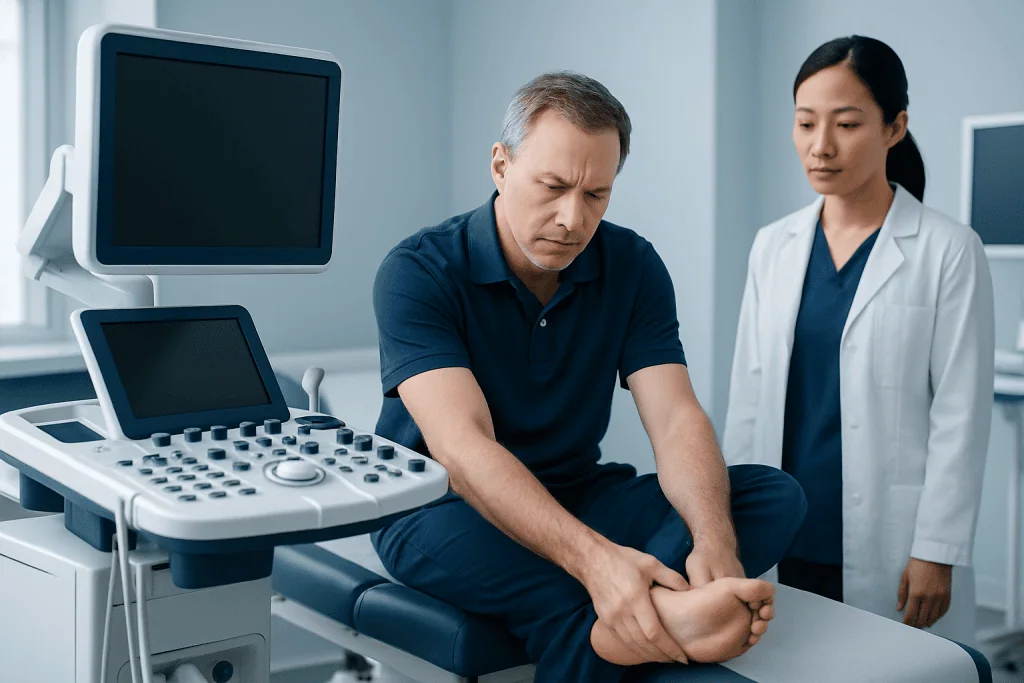
A gout flare in the heel usually causes pain that becomes severe over a short period, often within hours. The pain may start overnight or in the early morning, although it can occur at any time. People commonly describe throbbing, burning, or exquisite tenderness that makes putting weight on the foot difficult.
Inflammation may cause warmth, swelling, skin redness, and a shiny appearance around the heel or ankle. When the area near the Achilles tendon is involved, pain may be more noticeable at the back of the heel. When a joint below or beside the ankle is affected, swelling and pain may extend around the side of the foot and ankle.
After the most intense stage settles, discomfort, stiffness, and mild swelling can continue for days to weeks. Repeated untreated flares may eventually lead to persistent joint symptoms, reduced movement, and firm deposits called tophi. Tophi can occur around the feet, ankles, fingers, ears, and other areas in longstanding gout.
- Sudden onset of severe heel or ankle pain
- Warmth, redness, and swelling around the painful area
- Tenderness even with light touch or pressure from footwear
- Difficulty walking or bearing weight
- Previous similar attacks in the big toe, ankle, knee, or other joints
Why Gout May Affect the Heel
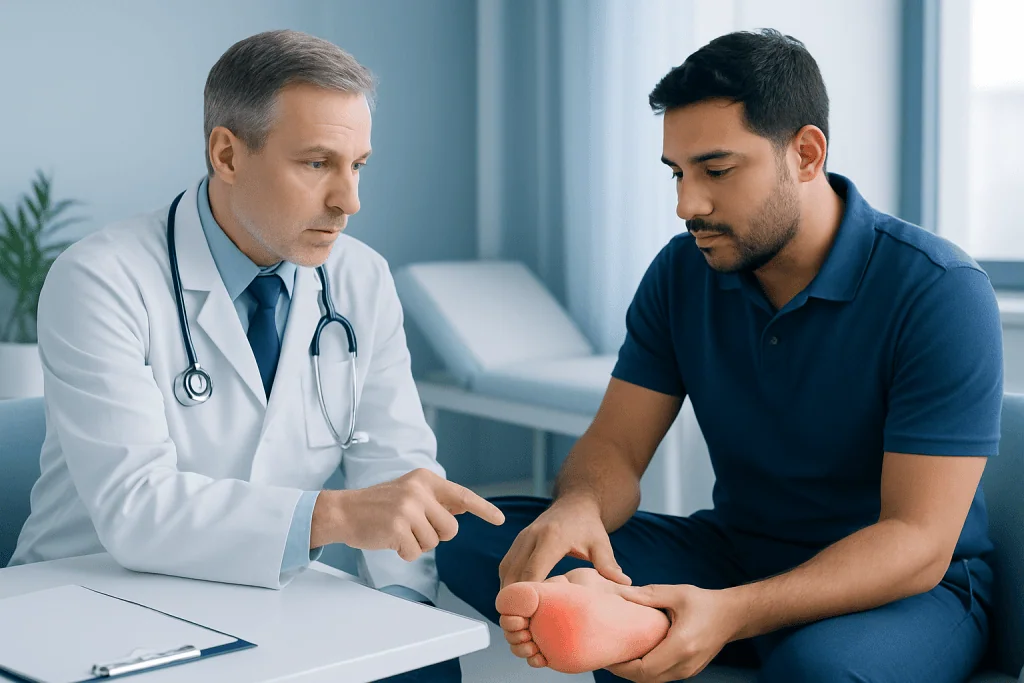
Uric acid is a natural waste product created when the body breaks down purines, substances found naturally in cells and in some foods and drinks. The kidneys usually remove uric acid through urine. If the body makes too much uric acid, removes too little, or both, blood urate levels may rise. Over time, crystals can form in cooler peripheral tissues and joints, including those in the foot and ankle.
A flare can be triggered when crystals shift or are exposed to the immune system. Potential triggers include dehydration, acute illness, surgery, injury, heavy alcohol intake, and large meals rich in purines. Starting or changing certain medicines can also influence urate levels. However, a flare may occur without an obvious trigger, and it should not be viewed as a personal failure.
Factors that increase the likelihood of gout include a family history of the condition, chronic kidney disease, high blood pressure, insulin resistance, obesity, psoriasis, and use of some diuretics or low-dose aspirin. Diet can contribute to urate levels, but gout is a metabolic and inflammatory disease with genetic, kidney-related, and medical factors—not simply a result of food choices.
How Heel Gout Is Diagnosed
Diagnosis begins with a clinical evaluation. A doctor will ask when the heel pain began, whether it appeared suddenly, which areas are painful, whether similar episodes have happened before, and what medicines and health conditions are present. The examination looks for inflammation, tenderness, joint movement, tendon involvement, skin changes, and signs that point to other causes of heel pain.
A blood test for serum urate can support the assessment, but it cannot confirm or exclude gout by itself. Uric acid may be within the usual range during an acute flare, while some people with high urate levels never develop gout. Kidney function and other laboratory tests may also be considered when planning safe treatment.
When the diagnosis is uncertain, the most definitive test is analysis of fluid taken from an inflamed joint or bursa. Identifying urate crystals under a microscope confirms gout and can help exclude infection. Ultrasound or dual-energy CT may show crystal deposits in some cases, while X-rays may be useful for evaluating long-term joint changes or alternative diagnoses. Prompt evaluation is particularly important if infection is a possibility.
Treatment During a Heel Gout Flare
The goals of treatment during an acute flare are to control pain and inflammation, protect the affected area, and restore comfortable movement. A clinician may recommend anti-inflammatory medicines such as nonsteroidal anti-inflammatory drugs, colchicine, or corticosteroids, depending on the person’s medical history, kidney function, other medicines, and the timing and severity of symptoms. These treatments should be selected by a qualified clinician because they are not suitable for everyone.
Resting the foot, avoiding pressure from tight shoes, elevating it when possible, and applying a cool pack wrapped in cloth for short periods may ease discomfort. Ice should not be placed directly on the skin. Maintaining hydration is generally sensible unless a clinician has advised fluid restriction for another health condition.
It is important not to start, stop, or alter long-term urate-lowering medication without medical advice during a flare. For people who already take urate-lowering treatment, clinicians often advise continuing it, but individual circumstances vary. If recurrent attacks occur, long-term management can lower urate levels and reduce the risk of future flares, tophi, and joint damage.
Preventing Future Flares and Protecting Heel Health
Long-term gout care focuses on lowering and maintaining serum urate at a target set by the treating clinician. Medicines that lower urate may be recommended for people with recurrent flares, tophi, gout-related joint damage, kidney stones, or certain other risk factors. Because urate levels and treatment needs differ, regular follow-up and blood monitoring are useful.
Lifestyle measures can support, but do not replace, medical care. Regular hydration, gradual weight management where appropriate, balanced meals, and limiting alcohol—especially beer and spirits—may reduce flare risk for some people. Reducing frequent intake of organ meats, certain shellfish, and large portions of red meat may also help. Low-fat dairy foods, vegetables, whole grains, and other nutrient-dense foods can fit well within an overall gout-friendly eating pattern.
For heel comfort, well-fitting cushioned footwear may reduce pressure while symptoms recover. People should avoid returning too quickly to high-impact activity after a painful flare. A doctor, physiotherapist, or podiatry professional can advise on a gradual return to activity and identify whether another heel condition is contributing to ongoing pain.
When to Seek Medical Care
Medical assessment is advisable for new, sudden, or severe heel pain, especially when the area is swollen, red, or warm. A first suspected gout flare should not be self-diagnosed because infection and other conditions can look similar and may need different treatment. Early evaluation can also help relieve symptoms sooner and establish an appropriate long-term plan if gout is confirmed.
Urgent medical care is needed if heel or ankle pain occurs with fever, chills, feeling unwell, rapidly spreading redness, an open wound, numbness, or inability to bear weight. These symptoms may indicate an infection or another problem requiring prompt attention. People with diabetes, weakened immune systems, kidney disease, or poor circulation should seek advice promptly for a hot, swollen foot.
Acibadem International’s multidisciplinary specialists and JCI-accredited hospitals diagnose and treat gout and other causes of heel pain for international patients. A clinician can assess both the immediate flare and the factors that may be raising urate levels, helping create a safe, individualized care plan.
Frequently asked questions
Can gout cause pain at the back of the heel?
Yes. Gout can affect joints near the heel and, less commonly, tissues around the Achilles tendon. Pain at the back of the heel can also result from Achilles tendinopathy, bursitis, or injury, so a clinical assessment is needed to identify the cause.
How can someone tell the difference between gout and plantar fasciitis?
Gout often begins suddenly and causes marked warmth, swelling, redness, and tenderness, sometimes over hours. Plantar fasciitis more often causes pain under the heel with the first steps after rest and is not usually associated with prominent redness or heat. Symptoms can overlap, so a doctor may need to examine the foot and arrange tests.
Can gout in the heel go away on its own?
An untreated gout flare can gradually improve, but pain and inflammation may last days or longer. Treatment can reduce discomfort and may shorten the flare. Repeated flares should be reviewed because ongoing urate crystal deposition can lead to joint damage over time.
Should a person walk on a heel affected by gout?
During a severe flare, limiting weight-bearing and resting the foot can help reduce pain. Once symptoms improve, gentle movement and a gradual return to usual activity are often appropriate. Persistent inability to walk or bear weight should be medically assessed.
What foods should be avoided with gout in the heel?
No single food causes all gout flares, but limiting alcohol, organ meats, and frequent large portions of red meat or certain seafood may help lower risk. Dietary changes work best alongside prescribed urate-lowering treatment when it is indicated. A clinician or dietitian can tailor advice to kidney health, diabetes, and other individual needs.
Can a normal uric acid blood test rule out heel gout?
No. Serum urate can fall into the usual range during an acute gout flare, so a single normal result does not rule out gout. Doctors interpret the result alongside symptoms, examination findings, repeat testing when appropriate, and sometimes joint-fluid analysis or imaging.
References
- American College of Rheumatology
- National Institute of Arthritis and Musculoskeletal and Skin Diseases
- National Health Service
- Mayo Clinic
- European Alliance of Associations for Rheumatology
This article is for general information only and is not a substitute for professional medical advice. Please consult a qualified doctor about your individual situation.
Gout in Turkey — costs, top hospitals & a free quote
JCI-accredited · board-certified surgeons · reply within 24h
Add us as a Preferred Source to see more of our trusted health content across Google Search, AI Overviews and Discover.
Check your numbers in seconds
BMI, calories, due date, blood pressure and 30+ more clinical calculators — free, instant, doctor-reviewed ranges.

More from the Health Library

J Pouch: A Complete Medical Overview

Lactose Free Milk — Explained by Medical Evidence, Not Myths

Average height for men: Charts, Averages, and What’s Normal

Best Exercises for Legs: What Patients Need to Know

Raw Pumpkin Seeds: An Evidence-Based Guide for Patients