Groin Pain Women: Common Causes, Related Conditions, and When to See a Doctor

Groin pain in women has many possible causes, including muscle strain, hip joint problems, hernia, urinary conditions, and gynecologic disorders. The exact location, timing, and triggers of pain help doctors narrow down the cause.
Key Takeaways
- Groin pain in women has many possible causes, including muscle strain, hip joint problems, hernia, urinary conditions, and gynecologic disorders.
- The exact location, timing, and triggers of pain help doctors narrow down the cause.
- Urgent assessment is needed for sudden severe pain, fever, vomiting, a new lump, inability to bear weight, or possible pregnancy-related pain.
- Diagnosis may involve a physical exam, urine or blood tests, and imaging such as ultrasound or MRI.
- Treatment depends on the cause and may include rest, physical therapy, medicines, or targeted specialist care.
Groin pain women experience is a symptom rather than a diagnosis, and it can come from muscles, joints, nerves, urinary organs, or reproductive organs. Mild pain may follow strain or overuse, but ongoing, severe, or sudden pain should be evaluated to identify the cause and guide treatment.
Overview: what groin pain in women can mean
Groin pain women experience can start in the upper inner thigh, the crease where the abdomen meets the leg, or nearby areas such as the hip, lower abdomen, pelvis, or pubic bone. Because several body systems meet in this region, the same symptom can have very different explanations. In many cases the cause is not dangerous, such as a pulled muscle after exercise, but persistent or intense pain deserves medical attention.
Doctors usually think about groin pain by asking where it is felt, whether it is on one side or both, how quickly it began, and what makes it better or worse. Pain linked to walking, climbing stairs, turning in bed, coughing, urinating, or the menstrual cycle may point toward different causes. This symptom-based approach can help identify whether the source is musculoskeletal, urinary, digestive, neurologic, or gynecologic.
For some women, groin pain is short-lived and improves with rest. For others, it may be related to a condition that needs targeted evaluation, such as hip disease, an infection, a hernia, ovarian cysts, or endometriosis. A clear diagnosis matters because treatment varies widely depending on the source of pain.
Symptoms and patterns that help identify the cause
Groin pain can feel sharp, dull, burning, throbbing, cramping, or aching. It may stay in one place or radiate to the inner thigh, lower back, buttock, or lower abdomen. Some women notice pain only with movement, while others have discomfort at rest or at night. Keeping track of when the pain started and what activities or symptoms accompany it can be very helpful.
Associated symptoms often offer clues. A musculoskeletal cause may bring stiffness, reduced range of motion, limping, tenderness, or pain during exercise. Urinary causes may include burning with urination, frequent urination, blood in the urine, or flank pain. Gynecologic causes may occur with pelvic pressure, abnormal bleeding, painful periods, pain during sex, or changes tied to the menstrual cycle.
Other features can change how urgently the symptom should be assessed. Sudden, severe pain; fever; nausea or vomiting; a visible groin lump; swelling; inability to put weight on the leg; or pain during pregnancy all warrant prompt medical review. These symptoms can signal conditions that should not be treated as a simple strain.
- Muscle or tendon pain often worsens with activity and improves with rest.
- Hip joint pain may feel deeper and can radiate to the front of the thigh.
- Nerve-related pain may burn, tingle, or feel numb.
- Pelvic or ovarian pain may come and go with the menstrual cycle.
Common causes and related conditions

One of the most common explanations for groin pain is a muscle, tendon, or ligament strain. This can happen after sports, sudden twisting, overuse, heavy lifting, or even an awkward step. Adductor strains, hip flexor strains, and irritation around the pubic bone can all produce pain in the groin area. Some women also develop groin pain from poor movement patterns, weak core muscles, or overtraining.
Hip conditions are another important group of causes. Problems such as labral tears, osteoarthritis, impingement, bursitis, or referred pain from the lower back can all be felt in the groin. Although many people think hip pain is only on the outside of the hip, pain deep in the front of the hip or groin often points toward the hip joint itself. In some cases, doctors may investigate hip joint disease when symptoms are chronic and mobility is limited.
Groin pain may also arise from the urinary or digestive system. Urinary tract infection, kidney stones, or bladder irritation can cause pain that spreads toward the groin. Less commonly, appendicitis, bowel inflammation, constipation, or a hernia may be responsible. A hernia can cause aching, pressure, or a noticeable bulge, especially when coughing or lifting.
Gynecologic causes are especially relevant when the pain sits lower in the pelvis or changes with the menstrual cycle. Possible causes include ovarian cysts, pelvic inflammatory disease, fibroids, ovulation pain, or endometriosis. During pregnancy, stretching of ligaments, pelvic girdle pain, and less commonly more serious conditions may contribute. Because these causes overlap in symptoms, an examination is often needed to distinguish them.
How doctors diagnose groin pain
Diagnosis begins with a careful medical history. The doctor may ask when the pain started, whether there was an injury, where the pain is located, whether it comes and goes, and whether it relates to exercise, urination, bowel movements, or menstruation. Pregnancy status, fever, urinary symptoms, recent infections, and previous hip or pelvic conditions are also important parts of the discussion.
A physical examination helps narrow the possibilities. Depending on the symptoms, the doctor may examine the hip and lower back, check range of motion, feel for tenderness or swelling, and look for signs of a hernia. If a urinary or gynecologic cause is suspected, the assessment may include urine testing, blood tests, or a pelvic examination when appropriate.
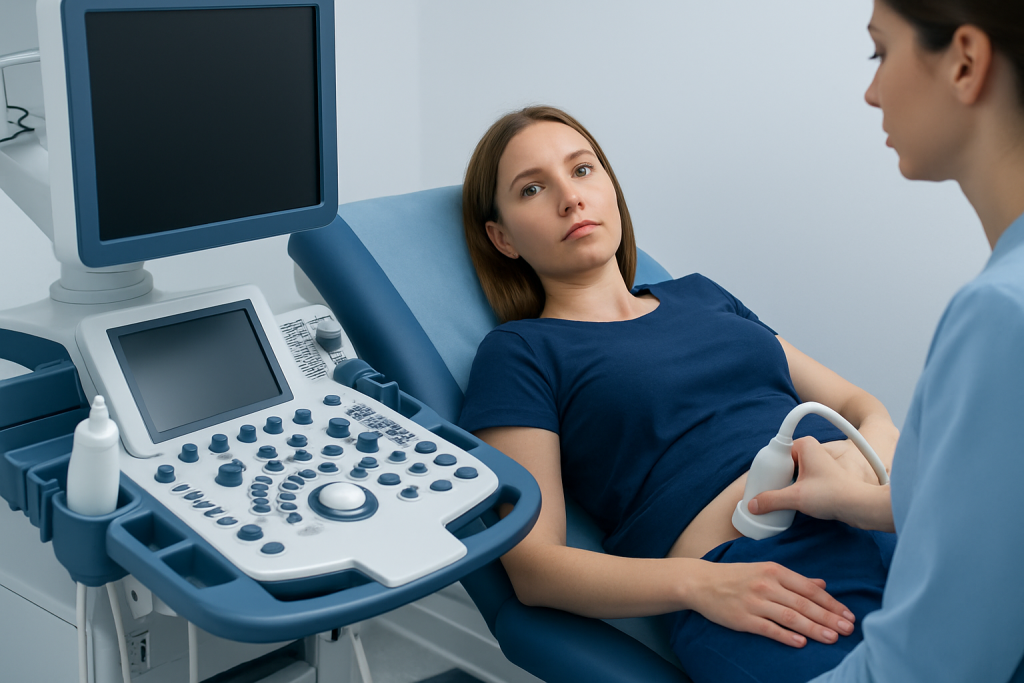
Imaging is used when symptoms are severe, prolonged, recurrent, or unclear. Ultrasound may help assess ovarian cysts, pelvic structures, or hernias. X-rays can evaluate the hip and pelvis, while MRI may be useful for muscle tears, stress injuries, and some joint problems. In selected cases, CT scans or additional specialist tests may be recommended to rule out causes that need specific treatment.
Treatment options based on the cause
Treatment for groin pain in women depends entirely on the diagnosis. If the cause is a mild muscle strain, the first steps often include relative rest, avoiding aggravating movements, gentle stretching when appropriate, and a gradual return to normal activity. A doctor may advise pain-relieving or anti-inflammatory medicines if they are suitable for the individual. Physical therapy can be especially helpful when weakness, poor biomechanics, or recurrent strain is part of the problem.
When the source is the hip joint or surrounding structures, treatment may include targeted exercises, posture and gait training, medicines, and imaging-guided evaluation if symptoms persist. Some women benefit from a personalized physical therapy and rehabilitation plan to improve strength, flexibility, and movement patterns. If pain is related to advanced joint disease, options such as hip replacement may be considered after specialist assessment.
Urinary infections, kidney stones, hernias, and gynecologic disorders each need more specific management. Infections may require medication, while hernias sometimes need hernia surgery if they are symptomatic or at risk of complications. Ovarian or pelvic conditions may be managed with observation, medication, or procedures depending on the diagnosis and the woman’s age, symptoms, and reproductive plans.
If surgery is ever needed, it is usually reserved for clearly identified problems such as a significant hernia, severe joint disease, or certain gynecologic conditions. The goal is not simply to reduce pain, but to treat the underlying cause safely and appropriately.
Self-care, prevention, and daily management
Not every episode of groin pain can be prevented, but some steps may reduce the risk of strain and recurrence. Warming up before exercise, increasing training gradually, and strengthening the core, hips, and inner thigh muscles can support the groin area. Good footwear and attention to movement technique may also help, especially for runners and people who play sports involving kicking or sudden changes of direction.
At home, women with mild musculoskeletal pain often do best by reducing high-impact activity for a short period while staying gently mobile. Ice or heat may be soothing for some people, though preferences vary. It is usually best to avoid forcing stretches or returning to sport too quickly, as this can prolong recovery.
For recurrent symptoms, a broader review of health factors may be worthwhile. Hydration can help lower the risk of some urinary problems, and pelvic floor or postpartum concerns may improve with guided rehabilitation. Tracking pain in relation to the menstrual cycle can also help identify patterns worth discussing with a clinician.
Any self-care plan should be guided by symptoms. Home management is reasonable only when pain is mild, improving, and not accompanied by warning signs such as fever, swelling, a new lump, heavy bleeding, or severe difficulty walking.
When to seek medical care
Medical assessment is recommended if groin pain lasts more than a few days, keeps returning, interferes with walking or daily activities, or is not improving with simple self-care. It is also a good idea to seek advice if the pain is linked to urinary symptoms, abnormal vaginal bleeding, painful periods that are worsening, or a history of hip, pelvic, or hernia problems.
Urgent care is needed for sudden severe pain, fever, fainting, vomiting, a hard or tender groin bulge, inability to bear weight, or pain during pregnancy. These symptoms can be associated with conditions that need prompt treatment, such as an incarcerated hernia, infection, kidney stone, ovarian torsion, or fracture.
Because groin pain can sit at the overlap of orthopedics, gynecology, general surgery, and urology, some women benefit from multidisciplinary evaluation. Near the end of the diagnostic pathway, Acibadem International’s multidisciplinary specialists and JCI-accredited hospitals assess and treat groin pain causes for international patients when specialist care is needed.
Frequently asked questions
Is groin pain in women usually muscular?
It can be, especially after exercise, sudden twisting, heavy lifting, or overuse. However, groin pain in women is not always muscular and may also come from the hip joint, urinary tract, hernia, nerves, or gynecologic organs.
Can ovulation or periods cause groin pain?
Yes. Some women feel one-sided pelvic or groin pain around ovulation, and conditions such as endometriosis or ovarian cysts can also cause pain that seems to sit in the groin area. If the pain is severe, persistent, or associated with abnormal bleeding, it should be evaluated.
When is groin pain an emergency?
Urgent assessment is important if the pain is sudden and severe, comes with fever or vomiting, happens during pregnancy, or is linked to a new lump, fainting, or inability to walk. These features may suggest a condition that needs prompt treatment.
How do doctors tell whether groin pain is from the hip or the pelvis?
They use the history, physical examination, and sometimes imaging to identify the source. Pain worsened by hip movement may suggest a joint problem, while symptoms tied to menstruation, urination, or pelvic pressure may point toward pelvic or urinary causes.
What tests might be needed for groin pain in women?
The choice of tests depends on the symptoms. A doctor may request urine tests, blood tests, ultrasound, X-rays, or MRI to look for infection, hip problems, hernia, or gynecologic causes.
Can groin pain go away on its own?
Mild groin pain from a minor strain may improve with rest and gradual return to normal activity. Pain that persists, gets worse, or repeatedly returns should be checked to make sure an underlying condition is not being missed.
References
- American College of Obstetricians and Gynecologists
- National Institute of Arthritis and Musculoskeletal and Skin Diseases
- National Institute of Diabetes and Digestive and Kidney Diseases
- American Academy of Orthopaedic Surgeons
- Mayo Clinic
This article is for general information only and is not a substitute for professional medical advice. Please consult a qualified doctor about your individual situation.
Joint and spine care in Turkey — expert assessment & treatment
JCI-accredited · board-certified surgeons · reply within 24h
Add us as a Preferred Source to see more of our trusted health content across Google Search, AI Overviews and Discover.
Check your numbers in seconds
BMI, calories, due date, blood pressure and 30+ more clinical calculators — free, instant, doctor-reviewed ranges.

More from the Health Library



Related Specialists

Prof. Dr. Halil Koyuncu
Physical Medicine & Rehabilitation
Prof. Dr. Dilaver Özturan
Otorhinolaryngology
Prof. Dr. M. Özcan Erdemli
Anesthesiology
Prof. Dr. Mert İlker Hayıroğlu
Cardiology