Guttate Psoriasis — Explained by Medical Evidence, Not Myths

Guttate psoriasis usually appears as many small, pink-red, scaly spots that develop quickly. A recent streptococcal throat infection is a well-known trigger, especially in children and young adults.
Key Takeaways
- Guttate psoriasis usually appears as many small, pink-red, scaly spots that develop quickly.
- A recent streptococcal throat infection is a well-known trigger, especially in children and young adults.
- Diagnosis is often clinical, but throat testing or a skin biopsy may sometimes be needed.
- Treatment may include treating triggers, topical medicines, phototherapy, and follow-up with a dermatologist.
- The condition is not contagious, even when the rash is widespread.
- Medical review is important if the rash is sudden, extensive, painful, or linked with fever or throat symptoms.
Guttate psoriasis is a form of psoriasis that causes many small, drop-like, scaly spots to appear suddenly, often on the trunk, arms, or legs. It is commonly triggered by an infection such as strep throat, and a clinician can usually diagnose it by examining the skin and reviewing recent symptoms.
Overview: what guttate psoriasis is
Guttate psoriasis is a type of psoriasis that causes a sudden eruption of many small, round or teardrop-shaped, scaly spots on the skin. The name comes from the Latin word for “drop,” which describes the shape of the lesions. These spots are usually pink to red and may have a fine, silvery scale on top.
Unlike plaque psoriasis, which tends to form thicker, larger patches, guttate psoriasis usually appears as numerous smaller spots spread across the trunk and limbs. It can happen at any age, but it is seen more often in children, teenagers, and young adults. In some people it is the first form of psoriasis they ever develop.
Guttate psoriasis is an immune-mediated inflammatory skin condition. It is not caused by poor hygiene, and it is not contagious. Although it can look dramatic when it appears suddenly, many cases improve with appropriate treatment and by addressing triggers such as infection.
How guttate psoriasis looks and feels
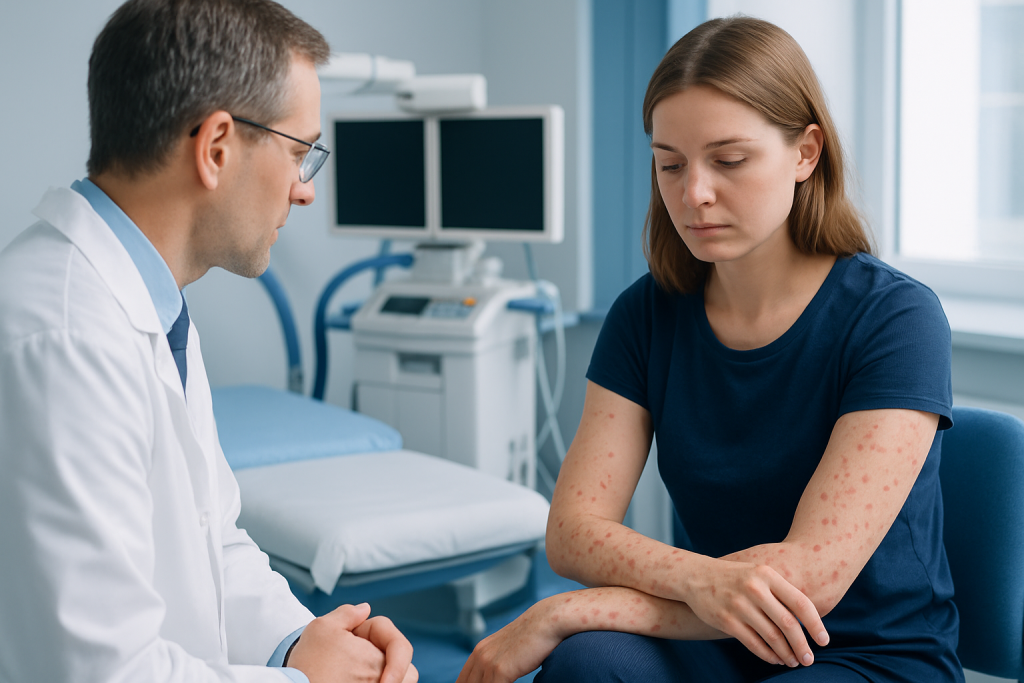
The rash often starts abruptly over days rather than slowly over months. People may notice dozens or even hundreds of small spots on the chest, back, abdomen, arms, and thighs. The face, scalp, and ears can also be involved, while the palms and soles are less commonly affected.
The spots are usually less than 1 centimeter across and may feel dry, rough, or mildly raised. Some people have itching, burning, or skin sensitivity, while others are more bothered by the visible change than by physical discomfort. The amount of itching varies widely from person to person.
Common features include:
- Small drop-like pink, red, or salmon-colored spots
- Fine scale on the surface of the spots
- Rapid onset, often over 1 to 3 weeks
- Distribution over the trunk and upper arms or legs
- Possible itching or irritation
In some cases, guttate psoriasis fades over weeks to months. In others, it may recur after infections or evolve into chronic plaque psoriasis. Because several rashes can resemble this condition, a professional skin assessment is important.
Causes and risk factors

The best-known trigger for guttate psoriasis is a recent streptococcal infection, especially strep throat. The skin eruption often develops 1 to 3 weeks after the infection begins. Experts believe the immune response to the infection may trigger inflammation in people who are genetically prone to psoriasis.
Not every case is linked to strep, and some people have other triggers. Viral infections, skin injury, emotional stress, and certain medicines may contribute in some individuals. Family history also matters, because psoriasis tends to run in families.
Risk factors and triggers may include:
- Recent sore throat or confirmed streptococcal infection
- Personal or family history of psoriasis
- Young age, especially childhood through early adulthood
- Recent upper respiratory infection
- Stress or other immune system triggers
- Some medications, depending on the clinical context
It is important to separate triggers from myths. Guttate psoriasis is not caused by an allergy to a single food, poor skin care, or infection spread from another person’s rash. It is also not simply “dry skin.” It is a recognized inflammatory disease that may need medical treatment and follow-up.
How doctors diagnose it
Doctors often diagnose guttate psoriasis by examining the skin and taking a medical history. The pattern of many small scaly spots, along with a recent sore throat or fever, can strongly suggest the diagnosis. A clinician may also ask whether the person or close relatives have had psoriasis before.
Because several conditions can look similar, the doctor may consider other possibilities such as pityriasis rosea, eczema, a drug eruption, fungal infection, or viral rashes. If symptoms point to a recent throat infection, a throat swab, rapid strep test, or blood tests for prior streptococcal exposure may be considered.
Sometimes a dermatologist performs a skin biopsy if the diagnosis is uncertain. This means taking a very small sample of skin to examine under a microscope. When psoriasis is confirmed and symptoms are recurrent, the doctor may also assess for other psoriasis patterns such as psoriasis and ask about joint pain that could suggest related inflammatory disease.
Early evaluation helps guide the right treatment. It can also prevent unnecessary use of antifungal creams, antibiotics, or home remedies that may not help and could delay relief.
Treatment options based on severity
Treatment depends on how widespread the rash is, how uncomfortable it feels, whether a trigger such as strep is still present, and whether the person has had psoriasis before. Mild cases may improve with moisturizers, gentle skin care, and prescription creams or ointments that reduce inflammation and scaling.
If testing suggests an active streptococcal infection, the doctor may prescribe antibiotics to treat the infection. Treating the infection does not instantly clear the rash in every case, but it is important when strep is present. For more extensive skin involvement, dermatologists often consider light-based therapy such as phototherapy, which can help calm inflammation across larger areas of skin.
Common medical treatments may include:
- Regular emollients to reduce dryness and scaling
- Topical corticosteroids or other anti-inflammatory prescription creams
- Phototherapy for widespread or persistent lesions
- Treatment of a confirmed bacterial throat infection
- Occasionally other systemic treatments in selected cases under specialist care
People with repeated flares, difficult-to-control disease, or uncertainty about the diagnosis may benefit from evaluation in a dermatology service. If symptoms later change into thicker, more persistent plaques, management may be adjusted in line with broader skin diseases assessment and follow-up.
Self-care, recovery, and flare prevention
Self-care does not replace medical treatment, but it can make the skin more comfortable and support recovery. Thick, fragrance-free moisturizers can help reduce dryness and itch. Gentle cleansers, lukewarm showers, and avoiding aggressive scrubbing may also help protect the skin barrier.
Because infections can act as triggers, it is sensible to seek medical advice for sore throat symptoms, fever, or repeated throat infections. Managing stress, getting enough sleep, and avoiding skin injury such as harsh scratching may also reduce the chance of a flare in some people. Smoking and heavy alcohol use can worsen psoriasis overall, so reducing these may be beneficial for long-term skin health.
Helpful habits include:
- Moisturizing at least once or twice daily
- Avoiding very hot water and irritating skin products
- Not picking or scratching lesions
- Following the treatment plan exactly as prescribed
- Watching for infection symptoms or new triggers
Some people improve completely after one episode, while others have future flares. Follow-up matters if spots persist, return often, or begin to resemble chronic plaque psoriasis. Near the end of the care journey, some international patients choose review at Acibadem International, where multidisciplinary specialists in JCI-accredited hospitals diagnose and treat psoriasis-related conditions.
When to seek medical care
A new widespread scaly rash should be assessed by a doctor, especially if it appears suddenly or follows a sore throat, fever, or other infection symptoms. Medical review is also important if the diagnosis is unclear, over-the-counter products are not helping, or the rash is causing significant itching, discomfort, or emotional distress.
Prompt care is particularly important if there are signs of active infection, such as high fever, severe sore throat, swollen glands, or feeling generally unwell. People should also seek medical advice if the rash involves the eyes, genitals, or large body areas, or if there is swelling, warmth, pus, or crusting that could suggest a secondary infection.
Anyone with psoriasis-like skin changes and joint pain, morning stiffness, or swollen fingers should mention these symptoms to a clinician. Although guttate psoriasis affects the skin, psoriasis in some people can be associated with joint inflammation that needs separate evaluation and treatment.
Frequently asked questions
Is guttate psoriasis contagious?
No. Guttate psoriasis is not contagious and cannot be passed from one person to another through touch, sharing towels, or close contact. If it follows a strep infection, the infection itself may be contagious, but the skin rash is not.
Does guttate psoriasis always come after strep throat?
No. Strep throat is a classic trigger, but not every case is linked to a streptococcal infection. Other infections, stress, and individual immune factors may also play a role.
How long does guttate psoriasis last?
The course varies. Some episodes improve within weeks to a few months, while others persist longer or return after future triggers. A dermatologist can help monitor whether it is resolving or changing into another psoriasis pattern.
Can guttate psoriasis turn into plaque psoriasis?
Yes, it can in some people. A person may first develop guttate psoriasis and later have the more persistent, larger patches seen in plaque psoriasis. This is one reason follow-up can be useful if the rash does not fully clear.
What is the best treatment for guttate psoriasis?
There is no single best treatment for every person. The choice depends on how extensive the rash is, whether there is a current infection, and how severe symptoms are. Doctors may recommend moisturizers, prescription topical medicines, treatment of strep if present, or phototherapy.
Should a child with guttate psoriasis see a doctor?
Yes. Because guttate psoriasis often affects children and young adults and may follow strep throat, medical assessment is important. A doctor can confirm the diagnosis, check for infection, and recommend age-appropriate treatment.
This article is for general information only and is not a substitute for professional medical advice. Please consult a qualified doctor about your individual situation.
Explore treatments in Turkey — costs, top hospitals & a free quote
JCI-accredited · board-certified surgeons · reply within 24h
Add us as a Preferred Source to see more of our trusted health content across Google Search, AI Overviews and Discover.

More from the Health Library

Serosanguineous Drainage: What Patients Need to Know

Yaz Birth Control: A Complete Medical Overview

Coconut Rum: An Evidence-Based Guide for Patients

De Calcium: What Patients Need to Know

Free Radicals: A Complete Medical Overview