Hair Transplant Istanbul: Procedure, Recovery and Results

Hair transplantation redistributes a person's own permanent donor hair; it does not create new follicles. FUE and FUT are established techniques, with the best option depending on hair loss pattern, donor supply and individual goals.
Key Takeaways
- Hair transplantation redistributes a person's own permanent donor hair; it does not create new follicles.
- FUE and FUT are established techniques, with the best option depending on hair loss pattern, donor supply and individual goals.
- Transplanted hairs commonly shed in the first weeks before new growth becomes noticeable several months later.
- Hair loss can continue in untreated areas, so medical treatment and long-term planning may be recommended.
- A qualified hair restoration specialist should assess the cause of hair loss before surgery.
A hair transplant in Istanbul is a surgical procedure that relocates healthy hair follicles, usually from the back or sides of the scalp, to areas affected by permanent thinning. The right technique, realistic planning and diligent aftercare are important for a natural-looking, lasting result.
Hair Transplant Istanbul: What the Procedure Involves
A hair transplant is a minor surgical procedure used to improve areas of thinning or baldness by moving hair follicles from a denser part of the scalp to a recipient area. In a hair transplant Istanbul consultation, the clinician should first identify the cause and pattern of hair loss, review medical history and examine the donor area. This helps determine whether transplantation is appropriate and how much coverage can be achieved safely.
Most procedures use follicles from the back and sides of the scalp because these hairs are often less sensitive to the hormonal effects involved in common pattern hair loss. The follicles are transplanted into small, carefully planned openings in the hairline, temples, mid-scalp or crown. The aim is to preserve donor hair while creating a density and hairline that suit the person’s facial features, age and likely future hair loss.
Hair transplantation is generally intended for stable, permanent hair loss rather than sudden shedding. It can be an option for some people with androgenetic alopecia, certain scars or selected cases of hair loss after injury. A full evaluation remains essential because active inflammatory scalp disorders, untreated medical causes of shedding and insufficient donor hair may require a different approach first.
Who May Be a Suitable Candidate?
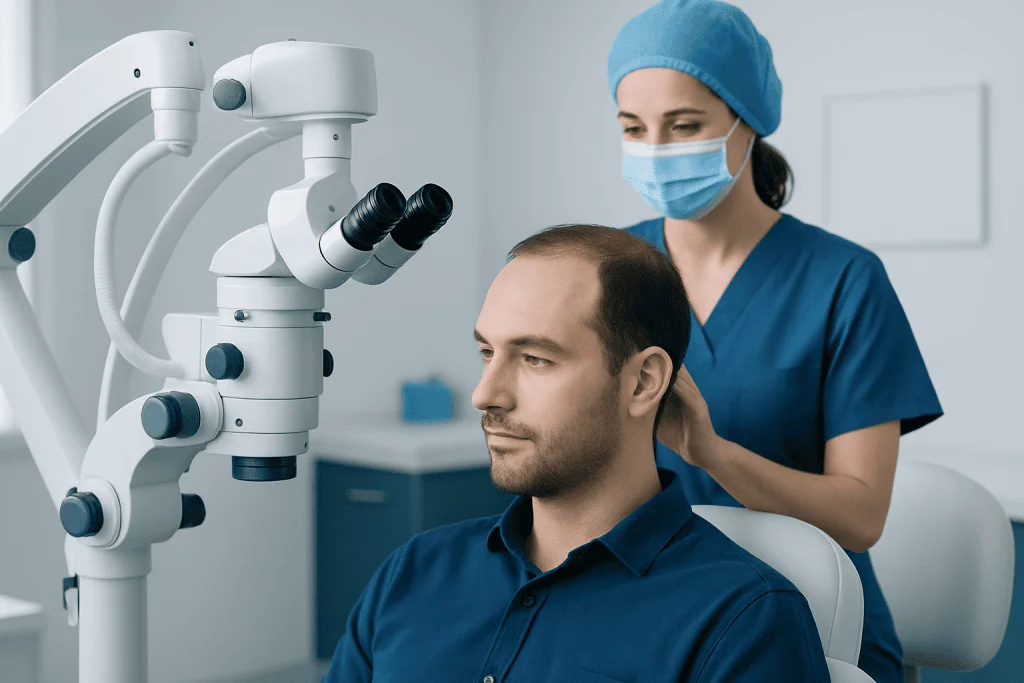
Suitable candidates usually have a clear diagnosis, adequate donor-hair density and realistic expectations about what surgery can achieve. Adults with male- or female-pattern hair loss may be considered when the pattern is reasonably predictable. For younger adults, a specialist may recommend monitoring hair loss or using medical treatment before surgery, as an early transplant can appear unnatural if surrounding hair continues to recede.
The quality and quantity of donor hair influence the plan. Curly or wavy hair, hair-to-skin contrast, scalp flexibility and the size of the thinning area can all affect the appearance of coverage. A transplant can improve density, but it may not restore the same density present before hair loss, particularly when baldness is extensive.
Assessment should also consider general health, medications, smoking, bleeding risk and previous scalp procedures. People with sudden diffuse shedding, scalp pain, redness, scaling or patchy hair loss should be assessed for causes such as alopecia areata or other dermatological conditions before considering transplantation. A surgeon may suggest blood tests or referral to a dermatologist when the diagnosis is uncertain.
- Good candidates have a healthy and sufficiently dense donor area.
- They understand that results develop gradually rather than immediately.
- They can follow aftercare instructions and attend planned follow-up.
- They accept that future hair loss may require ongoing medical management or further planning.
How Hair Transplant Surgery Is Performed
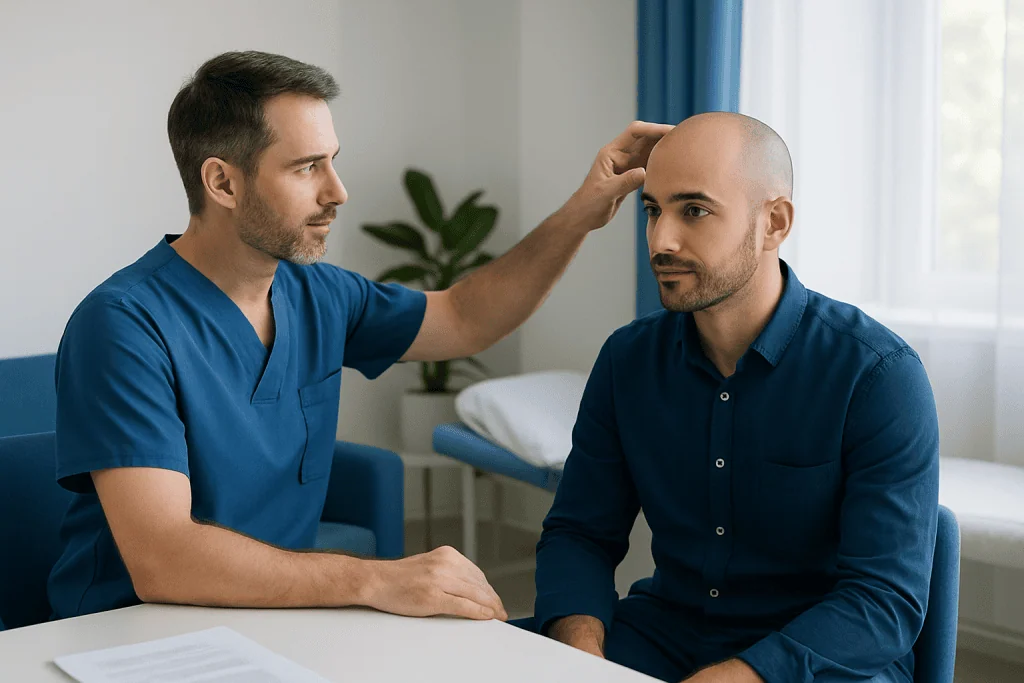
Two common harvesting methods are follicular unit extraction (FUE) and follicular unit transplantation (FUT), also called strip surgery. In FUE, individual follicular units are removed from the donor area through tiny circular openings. In FUT, a narrow strip of donor scalp is removed, and the follicular units are prepared under magnification; the donor area is then closed with stitches. Both methods can provide successful grafts when performed appropriately.
The procedure normally begins with design of the hairline and preparation of the scalp. Local anaesthetic is used so the person should not feel sharp pain during surgery, although pressure or mild discomfort can occur. Donor follicles are collected, separated into grafts and kept protected while the clinician creates recipient sites at specific angles, directions and densities.
Grafts are then placed one by one into the recipient sites. Single-hair grafts are often used at the leading edge of the hairline for a softer appearance, while grafts containing more hairs may be placed behind it for fullness. The procedure can take several hours, depending on the number of grafts and whether it is completed in one or more sessions.
People considering treatment can learn more about the clinical process through hair transplant treatment options. The safest plan is individualized rather than based only on a preferred technique or a requested number of grafts.
Recovery Timeline and Aftercare
Immediately after surgery, the scalp may feel tender or tight, and small crusts will form around the implanted follicles. Mild swelling of the forehead or upper face can occur for a short time. The clinical team provides instructions on washing, sleeping position, activity, prescribed medicines if needed and ways to protect the grafts during the first days.
During the first one to two weeks, it is important not to rub, scratch or pick at the recipient area. Strenuous exercise, swimming, direct sun exposure and activities that may cause trauma to the scalp are usually restricted temporarily. The donor area also needs gentle care while it heals. Specific instructions vary by technique, individual healing and the clinician’s protocol.
Most transplanted hair shafts shed within the first several weeks. This expected phase, sometimes called shock shedding, does not usually mean the follicles have failed. New hairs commonly begin to emerge after several months, with progressive change in texture and density over the following months. Final maturation can take about a year or longer, particularly in crown areas.
Existing, non-transplanted hair may still thin over time. Depending on the diagnosis and individual circumstances, a clinician may discuss medical approaches to support existing hair, such as topical or oral treatments. These medicines are not suitable for everyone and should only be used after professional assessment.
Benefits, Limits and Possible Risks
The principal benefit of a hair transplant is that it uses a person’s own growing follicles to provide more lasting coverage in selected areas. When the hairline, graft distribution and density are planned conservatively, the result can look natural and can be styled and washed like other hair once healing is complete. The procedure may also help some people feel more comfortable with their appearance.
However, surgery has limits. Donor hair is a finite resource, and the extent of thinning, hair characteristics and future progression of hair loss all shape what is achievable. A transplant does not stop androgenetic alopecia in untreated areas, and some people may need more than one session over time. It also cannot reliably restore a full head of hair in every case.
Possible risks include temporary swelling, bleeding, infection, numbness, itching, folliculitis, visible scarring, uneven growth, poor graft survival and an unnatural-looking hairline if planning or placement is inadequate. Temporary loss of nearby native hair can also occur. Although serious complications are uncommon with appropriate medical care, people should discuss individual risks before consenting to surgery.
Choosing a qualified medical team, ensuring that a doctor is involved in assessment and procedure planning, and following postoperative instructions help reduce avoidable risks. Patients should ask who will perform each part of the procedure, what technique is recommended and what follow-up care is available.
Planning Travel and Choosing a Hair Restoration Team
For people travelling for a hair transplant in Istanbul, planning should include more than the procedure day. They should allow time for an in-person assessment, the procedure itself and an early postoperative check when advised. Travel plans should avoid placing pressure on the scalp, and patients should be able to follow washing and wound-care instructions before returning home.
A reputable service should provide a clear clinical assessment, explain the alternatives to surgery and discuss the likely need to manage ongoing hair loss. It should also explain which healthcare professionals are responsible for donor harvesting, recipient-site creation and graft placement. Decisions should be based on safety, diagnosis and a sustainable donor-hair plan rather than promises of unusually rapid or guaranteed results.
Bring a list of medications, relevant medical records and details of past procedures or allergies. People should disclose smoking, supplements and medicines that could affect bleeding or healing. The treating clinician can advise whether any changes are needed before surgery; medications should not be stopped without guidance from the clinician who prescribed them.
Acibadem International’s multidisciplinary specialists and JCI-accredited hospitals diagnose and treat hair-loss concerns for international patients, with care plans based on individual clinical assessment.
When to Seek Medical Care
Medical assessment is advisable before booking any hair procedure, especially when hair loss is sudden, patchy, painful or accompanied by scaling, redness, pus, scarring or other skin changes. These features may point to a condition that needs medical treatment rather than transplantation. A clinician can also assess whether nutritional issues, thyroid disorders, recent illness, stress-related shedding or medication effects may be contributing.
After a transplant, contact the surgical team promptly if there is worsening pain, increasing redness or swelling, fever, persistent bleeding, foul-smelling drainage or any concern about the healing area. Early review can help identify and manage complications appropriately.
People who are distressed by hair loss, body-image concerns or uncertainty about treatment options may also benefit from speaking with a dermatologist, hair restoration surgeon or mental health professional. Supportive, informed care can help them make decisions that fit their health needs and expectations.
Frequently asked questions
How long does a hair transplant in Istanbul take?
The procedure often takes several hours, but the total time depends on the technique, the number of grafts and the size of the area being treated. Some people require more than one session to address larger areas or to preserve donor hair for future needs.
Is hair transplant surgery painful?
Local anaesthetic is commonly used during the procedure, so sharp pain should be controlled. Mild pressure, temporary discomfort, scalp tenderness or tightness can occur during recovery, and the clinical team can advise on suitable pain relief.
When will hair transplant results be visible?
Transplanted hairs often shed in the first few weeks, which is a normal part of the process. New growth commonly begins after several months and continues to mature over roughly a year or longer. Timing varies between individuals and can be slower in some scalp regions.
Are hair transplant results permanent?
Transplanted follicles from the donor area often retain their relative resistance to pattern hair loss after relocation. However, surrounding native hair can continue to thin, so a transplant does not stop the underlying hair-loss process. Long-term planning and medical treatment may be considered when appropriate.
What is the difference between FUE and FUT?
FUE removes individual follicular units from the donor area, leaving many small scars. FUT removes a narrow strip of scalp and usually leaves a linear scar. The most suitable choice depends on donor characteristics, desired hairstyle, extent of hair loss and the surgeon's clinical assessment.
Can women have a hair transplant?
Some women are suitable candidates, particularly when they have stable thinning with a sufficiently dense donor area. Because diffuse hair loss is common in women, diagnosis is especially important before surgery. A dermatologist or hair restoration specialist can determine whether transplantation or medical treatment is more appropriate.
References
- American Academy of Dermatology Association
- International Society of Hair Restoration Surgery
- National Health Service
- Mayo Clinic
This article is for general information only and is not a substitute for professional medical advice. Please consult a qualified doctor about your individual situation.
Hair transplant in Turkey — costs, graft counts & a free assessment
JCI-accredited · board-certified surgeons · reply within 24h
Add us as a Preferred Source to see more of our trusted health content across Google Search, AI Overviews and Discover.

More from the Health Library



Related Specialists
Assoc. Prof. Dr. Gökhan Karademir
Orthopedic Surgery & Traumatology
Assoc. Prof. Dr. Mustafa Özbayrak
Radiology
Assoc. Prof. Dr. Işıl Fazilet Kartaloğlu
Physical Medicine & Rehabilitation
Dr. Hasan Kamburoğlu
Anesthesiology