Heart Check-Up Tests: When to Consider Screening and What They Show

Heart check-up tests are not one-size-fits-all; doctors choose them based on symptoms and risk factors. Basic evaluation often starts with blood pressure measurement, cholesterol and blood sugar tests, and an electrocardiogram.
Key Takeaways
- Heart check-up tests are not one-size-fits-all; doctors choose them based on symptoms and risk factors.
- Basic evaluation often starts with blood pressure measurement, cholesterol and blood sugar tests, and an electrocardiogram.
- Some tests look for current heart damage, while others estimate future cardiovascular risk or assess blood flow and heart structure.
- Screening is especially important for people with diabetes, smoking history, high blood pressure, high cholesterol, or a strong family history of heart disease.
- A normal result can be reassuring, but it does not replace healthy habits or medical follow-up when symptoms are present.
Heart check-up tests are used to look for signs of heart disease, assess cardiovascular risk, and clarify the cause of symptoms such as chest discomfort, shortness of breath, or palpitations. The right tests depend on a person’s age, medical history, family history, symptoms, and overall risk profile.
Overview: What heart check-up tests are for
Heart check-up tests are used to evaluate how well the heart and blood vessels are working and to look for signs of cardiovascular disease. Some tests are designed for prevention, helping estimate a person’s future risk of heart attack or stroke. Others are used to investigate symptoms such as chest pain, dizziness, fainting, irregular heartbeat, fatigue, or breathlessness.
A heart check-up does not usually mean one single test. In most cases, it begins with a medical history, physical examination, blood pressure measurement, and routine blood tests. Depending on the findings, a doctor may recommend additional studies such as an electrocardiogram, stress test, echocardiogram, heart rhythm monitoring, or imaging of the coronary arteries.
The goal is not simply to “find disease,” but to match the right test to the right person. Someone with no symptoms may only need risk assessment and lifestyle counseling, while a person with warning signs may need more detailed evaluation. This individualized approach helps avoid unnecessary testing while still identifying problems that benefit from early care.
Who may benefit from heart screening
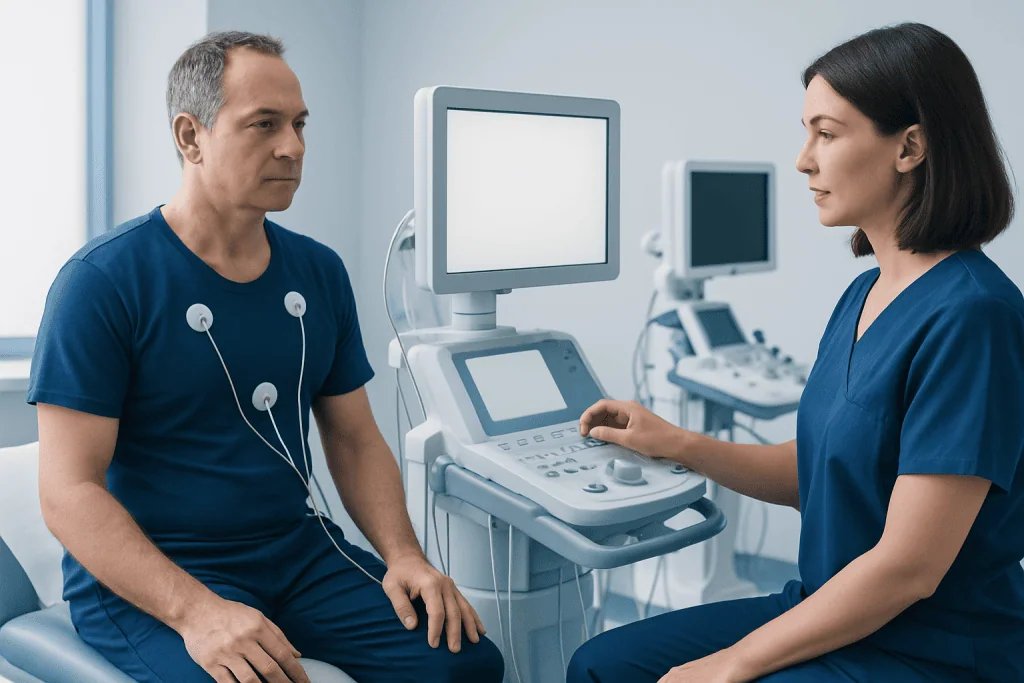
Heart screening may be considered for adults with known risk factors for cardiovascular disease, even if they feel well. These risk factors include high blood pressure, high cholesterol, diabetes, smoking, obesity, chronic kidney disease, lack of exercise, and a family history of early heart disease. Age also matters, as cardiovascular risk generally rises over time.
Screening may also be appropriate when symptoms suggest a possible heart problem. Examples include chest pressure, unexplained shortness of breath, reduced exercise tolerance, palpitations, swelling in the legs, or episodes of fainting. In these situations, testing is not just preventive; it helps guide diagnosis and treatment.
Some people seek screening before starting vigorous exercise, after a significant change in health, or before surgery. Athletes and younger adults may also be evaluated if there is a history of collapse during exercise, inherited heart conditions, or sudden cardiac death in the family. A doctor can decide whether basic screening is enough or whether more specialized tests are needed.
- Adults with multiple cardiovascular risk factors
- People with symptoms that may involve the heart
- Those with a strong family history of heart disease or sudden death
- Patients being assessed before certain surgeries or exercise programs
Common heart check-up tests and what they show

Basic heart check-up tests often include blood pressure measurement, cholesterol testing, blood sugar or HbA1c testing, kidney function tests, and a resting electrocardiogram (ECG). These help identify common contributors to heart disease and may reveal rhythm disturbances, previous heart injury, or strain on the heart. They are often the first step in a broader cardiovascular risk assessment.
An echocardiogram uses ultrasound to show the heart’s structure and movement. It can assess heart muscle function, valve disease, chamber size, and signs of heart failure. This test is especially useful when symptoms suggest structural heart disease or when an abnormal ECG, heart murmur, or swelling raises concern.
Stress testing examines how the heart responds to physical exertion or, in some cases, medication that simulates exercise. It may be combined with ECG monitoring or imaging to look for reduced blood flow to the heart muscle. Coronary CT scans, including coronary artery calcium scoring, can help estimate plaque burden in selected people, while CT angiography may provide a closer look at the coronary arteries when clinically appropriate.
For intermittent symptoms such as palpitations or unexplained dizziness, a Holter monitor or event recorder may be recommended. These devices track heart rhythm over time and can help detect rhythm disorders such as arrhythmia. In some situations, more advanced evaluation may include cardiac MRI or coronary CT angiography to provide detailed anatomical and functional information.
How doctors decide which tests are needed
Choosing the right heart check-up tests depends on the clinical question. For example, a doctor evaluating high blood pressure in an otherwise well person may focus on blood tests, risk scoring, and blood pressure monitoring. By contrast, someone with exertional chest pain may need tests that look for blocked coronary arteries or reduced blood flow to the heart.
Doctors also consider age, sex, medical history, medications, pregnancy status, exercise capacity, and whether a person can safely undergo certain tests. A test that is useful in one situation may add little value in another. This is why self-requested screening panels are not always the best approach.
Risk calculators are often used to estimate the likelihood of future cardiovascular events. These tools combine factors such as age, blood pressure, cholesterol, diabetes, and smoking status. The result can help guide decisions about preventive measures and whether further screening may be helpful, especially when the balance between low and intermediate risk is unclear.
Understanding test results
A normal result usually means no clear evidence of the specific problem the test was designed to detect. This can be reassuring, but it does not guarantee that a person has zero cardiovascular risk. Heart disease can develop over time, and no single test captures every possible issue. Ongoing risk factor control remains important even when screening results are normal.
An abnormal result does not always mean serious disease. For example, minor ECG changes may be nonspecific, and a stress test may sometimes suggest a problem that turns out not to be significant after further evaluation. Imaging tests may also identify incidental findings that need context from a cardiologist.
Results are most useful when interpreted together. Blood pressure, cholesterol, symptoms, family history, physical examination, and imaging findings all contribute to the overall picture. If needed, the next steps may include lifestyle changes, medication, follow-up testing, or referral to a specialist for conditions such as coronary artery disease or heart failure.
What happens after a heart check-up
Follow-up depends on the results and the reason for testing. If findings are normal and overall risk is low, the next step may simply be continued healthy lifestyle habits and routine medical reviews. A doctor may recommend repeating blood pressure checks, cholesterol testing, or other preventive assessments at intervals based on age and risk.
If risk factors are found, treatment often focuses first on prevention. This may include support for smoking cessation, improving diet, increasing physical activity, weight management, and treatment for high blood pressure, cholesterol, or diabetes. These steps can meaningfully lower future cardiovascular risk even before any symptoms appear.
When tests suggest a definite heart problem, additional care may be needed. Depending on the diagnosis, management can include medicines, closer rhythm monitoring, or procedures such as coronary angiography when doctors need a more direct assessment of the heart’s blood supply. The aim is to create a plan that is both evidence-based and tailored to the individual.
Prevention, self-care, and when to seek medical advice
Heart check-up tests are only one part of heart health. Everyday habits have a major influence on long-term cardiovascular risk. Not smoking, staying physically active, eating a balanced diet rich in vegetables and whole foods, sleeping well, and managing stress can all support better heart health. Regular follow-up for conditions such as diabetes or high blood pressure is equally important.
People should seek medical advice promptly if they have chest pain, sudden shortness of breath, fainting, new swelling in the legs, or rapid or irregular heartbeats that are persistent or severe. Even milder symptoms deserve medical review if they are new, recurring, or worsening over time. Early evaluation often helps clarify whether the cause is cardiac or something else.
For patients who need diagnosis or treatment planning, Acibadem International’s multidisciplinary specialists in JCI-accredited hospitals evaluate cardiovascular conditions for international patients. A qualified doctor can help decide which heart check-up tests are useful, which are unnecessary, and what the results mean in the context of the whole person.
Frequently asked questions
What is included in a routine heart check-up?
A routine heart check-up often includes a medical history, physical examination, blood pressure measurement, and blood tests such as cholesterol and glucose levels. Depending on age, symptoms, and risk factors, a doctor may also recommend an ECG or other heart screening tests.
At what age should heart screening begin?
There is no single age that applies to everyone. Basic cardiovascular risk assessment often begins in adulthood, especially if there are risk factors such as smoking, diabetes, high blood pressure, high cholesterol, or a strong family history of heart disease.
Do people without symptoms need heart check-up tests?
Some people without symptoms may benefit from screening if they have important cardiovascular risk factors. The goal is usually to estimate future risk and prevent disease, rather than to search broadly for problems when risk is low.
What is the difference between an ECG, echocardiogram, and stress test?
An ECG records the heart’s electrical activity and can show rhythm changes or signs of strain. An echocardiogram uses ultrasound to assess heart structure and pumping function. A stress test looks at how the heart performs during exercise or medication-induced stress, often to evaluate blood flow.
Can a normal heart screening result rule out all heart disease?
No single test can rule out every heart condition. A normal result is often reassuring, but it does not eliminate future risk or replace the need for healthy habits and medical follow-up when symptoms or risk factors are present.
How often should heart check-up tests be repeated?
The timing depends on the person’s age, risk profile, previous results, and whether symptoms are present. A doctor can recommend an appropriate follow-up schedule for blood pressure checks, blood tests, and any repeat cardiac testing if needed.
References
- World Health Organization
- American Heart Association
- European Society of Cardiology
- Centers for Disease Control and Prevention
- National Heart, Lung, and Blood Institute
This article is for general information only and is not a substitute for professional medical advice. Please consult a qualified doctor about your individual situation.
Heart care in Turkey — expert evaluation and treatment
JCI-accredited · board-certified surgeons · reply within 24h
Add us as a Preferred Source to see more of our trusted health content across Google Search, AI Overviews and Discover.
Check your numbers in seconds
BMI, calories, due date, blood pressure and 30+ more clinical calculators — free, instant, doctor-reviewed ranges.