

Hemifacial Spasm: Causes, Diagnosis, and When Neuromodulation May Help

Hemifacial spasm usually affects only one side of the face and often starts around the eye. A common cause is a blood vessel pressing on the facial nerve near the brainstem.
Key Takeaways
- Hemifacial spasm usually affects only one side of the face and often starts around the eye.
- A common cause is a blood vessel pressing on the facial nerve near the brainstem.
- Diagnosis is based on symptoms, neurological examination, and often MRI imaging.
- Botulinum toxin injections are a common first-line treatment for symptom relief.
- Microvascular decompression may offer long-term relief when nerve compression is confirmed.
- Neuromodulation may be considered in selected patients as part of specialist care.
Hemifacial spasm is a movement disorder that causes involuntary twitching on one side of the face. It is usually manageable, and treatment may include injections, surgery, and in selected cases, neuromodulation-based approaches for symptom control.
Overview
Hemifacial spasm is a neurological movement disorder that causes brief, repeated, involuntary contractions of muscles on one side of the face. These movements are not under the person’s control and may begin as mild twitching near the eye before gradually involving the cheek, mouth, or neck on the same side. Although the condition is usually not dangerous, it can be disruptive, tiring, and socially distressing.
The underlying problem often involves irritation of the facial nerve, also called the seventh cranial nerve. This nerve controls many of the muscles used for facial expression. When the nerve is compressed or becomes overactive, it may send abnormal signals that trigger facial spasms.
Hemifacial spasm is different from temporary eyelid twitching caused by fatigue, stress, or caffeine. It is also distinct from facial weakness disorders such as Bell's palsy, though some people may develop facial spasms after prior facial nerve injury. Because several conditions can look similar, specialist evaluation is important.
Symptoms
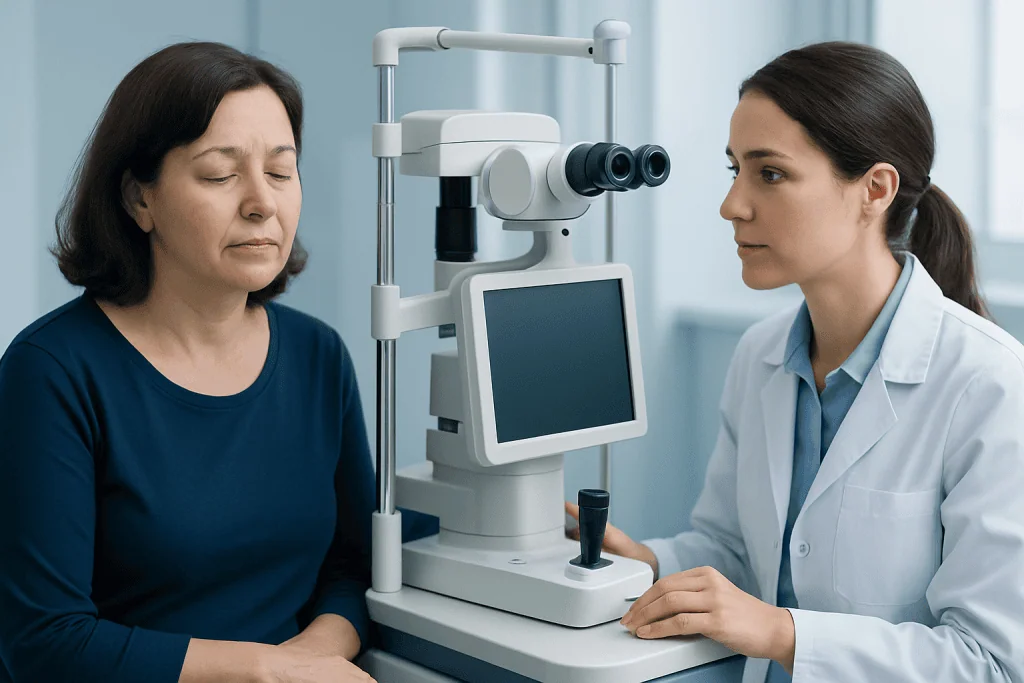
The most common early symptom is intermittent twitching around one eye. At first, the episodes may be mild and occasional. Over time, they may become more frequent, last longer, and spread downward to the cheek, corner of the mouth, jaw, or platysma muscle in the neck.
Spasms may be triggered or worsened by stress, fatigue, anxiety, or voluntary facial movement such as smiling or talking. In some people, the eye may close forcefully during a spasm, which can temporarily interfere with reading, driving, or other daily activities. Symptoms usually continue during wakefulness and may become less noticeable during sleep, though this varies.
People often describe the movements as pulling, flickering, tightening, or repeated jerking on one side of the face. Unlike many other movement disorders, hemifacial spasm is typically painless, but it may cause facial discomfort, embarrassment, eye irritation, or a sense of fatigue from repeated muscle contractions.
- Usually affects only one side of the face
- Often starts around the eyelid
- May spread to the cheek, mouth, and neck
- Can interfere with vision if the eye closes during spasms
- Often worsens with stress or tiredness
Causes and Risk Factors

The most common cause of hemifacial spasm is compression of the facial nerve by a nearby blood vessel where the nerve exits the brainstem. With each pulse, the vessel may irritate the nerve over time, making it more likely to fire abnormally. This is called primary hemifacial spasm.
Less commonly, hemifacial spasm can be secondary to another condition affecting the facial nerve. Examples include prior facial nerve injury, a history of facial paralysis, structural abnormalities, demyelinating disease, or, rarely, a tumor or other lesion pressing on the nerve. These possibilities are one reason imaging is often recommended.
The condition is more often diagnosed in middle-aged or older adults, and it may be slightly more common in women. Having facial weakness in the past, certain vascular anatomy, or disorders that affect nerves can increase the likelihood of similar symptoms, but many people have no obvious risk factor beyond the blood vessel contact seen on imaging.
How Hemifacial Spasm Is Diagnosed
Diagnosis begins with a detailed medical history and neurological examination. A clinician will ask when the twitching started, how it has changed over time, whether it affects vision or speech, and whether there is a history of facial weakness, trauma, or other neurological symptoms. Watching the movements can provide important clues.
Magnetic resonance imaging, especially MRI focused on the brain and cranial nerves, is often used to look for blood vessel compression or to rule out less common causes such as tumors or structural lesions. In some cases, additional imaging sequences help visualize the relationship between the facial nerve and nearby blood vessels more clearly.
Electrophysiological tests may occasionally support the diagnosis, especially when symptoms are atypical. The doctor may also consider conditions that can resemble hemifacial spasm, such as tics, blepharospasm, facial myokymia, synkinesis after facial nerve injury, or focal seizures. If there are unusual features, further evaluation may be needed to exclude broader neurological disease.
Treatment Options
Treatment depends on symptom severity, the likely cause, and the person’s general health and preferences. For many patients, botulinum toxin injections are the main non-surgical treatment. These injections weaken overactive facial muscles temporarily and often reduce twitching effectively. Because the effect wears off, treatment usually needs to be repeated at intervals determined by the treating specialist.
When imaging shows clear blood vessel compression and symptoms are significant, microvascular decompression may be considered. This neurosurgical procedure aims to separate the vessel from the facial nerve and reduce the irritation causing spasms. It can provide long-term relief for selected patients, but as with any surgery, the potential benefits and risks should be discussed carefully with an experienced team. Depending on the care plan, treatment discussions may include microvascular decompression and specialist neurosurgical evaluation.
Medicines taken by mouth may help some people, but they are generally less effective than injections and may cause side effects such as drowsiness. If the diagnosis is uncertain or symptoms overlap with other neurological conditions, treatment may be tailored after further assessment.
Neuromodulation may have a role in selected cases, particularly when symptoms are complex, treatment response is incomplete, or specialists are evaluating broader movement disorder pathways. This does not replace standard first-line care, but in some settings, advanced teams may consider neuromodulation approaches as part of a highly individualized plan. If facial spasm developed after another nerve disorder, clinicians may also assess related conditions such as cranial nerve disorders to guide treatment planning.
Prevention and Self-care
There is no guaranteed way to prevent hemifacial spasm, especially when it is caused by blood vessel compression of the facial nerve. However, self-care measures can sometimes reduce how noticeable or bothersome the spasms feel in daily life.
Many people find that symptoms worsen with stress, poor sleep, or fatigue. Practical steps such as maintaining regular sleep habits, limiting exhaustion, and using stress-reduction techniques may help decrease triggers. Simple eye care can also be useful if eyelid closure or frequent blinking causes irritation.
Helpful self-care steps may include:
- Getting consistent sleep and rest
- Managing stress with relaxation techniques
- Limiting personal triggers such as excess caffeine if it seems to worsen twitching
- Using lubricating eye drops if recommended by a doctor for eye irritation
- Keeping follow-up appointments to adjust treatment when needed
Self-care does not cure the condition, but it may improve comfort and support medical treatment. It is best not to start supplements or medications for twitching without professional advice, since the cause of facial movements should be clearly identified first.
When to See a Doctor
Medical evaluation is important for persistent one-sided facial twitching, especially if it is increasing, spreading beyond the eye, or interfering with vision, reading, driving, sleep, or social activities. A doctor can confirm whether the symptoms fit hemifacial spasm or another condition that requires different care.
Prompt assessment is especially important if facial twitching occurs together with facial weakness, numbness, hearing changes, severe headache, balance problems, or other new neurological symptoms. These features are not typical of uncomplicated hemifacial spasm and may point to another cause.
Specialist care may involve neurology, movement disorder experts, neuroradiology, and neurosurgery. Near the end of the care pathway, patients seeking coordinated international care may wish to know that Acibadem International’s multidisciplinary specialists and JCI-accredited hospitals diagnose and treat hemifacial spasm for international patients, using individualized plans based on symptoms, imaging, and treatment goals.
Frequently asked questions
Is hemifacial spasm dangerous?
Hemifacial spasm is usually not life-threatening, but it can significantly affect comfort, vision, and quality of life. Because similar symptoms can sometimes be caused by other neurological conditions, proper medical evaluation is important.
What is the most common cause of hemifacial spasm?
The most common cause is a small blood vessel pressing on the facial nerve near the brainstem. This repeated contact can irritate the nerve and lead to involuntary muscle contractions on one side of the face.
Can hemifacial spasm go away on its own?
It may remain mild for some people, but spontaneous complete resolution is not common. Many patients need treatment if symptoms become frequent, spread, or interfere with daily life.
Are botulinum toxin injections effective for hemifacial spasm?
Yes, botulinum toxin injections are widely used and often provide good symptom relief. The benefit is temporary, so repeat treatments are usually needed at intervals advised by the treating doctor.
When is surgery considered for hemifacial spasm?
Surgery is usually considered when symptoms are significant and imaging suggests facial nerve compression by a blood vessel. Microvascular decompression may be an option for selected patients after careful discussion of potential benefits and risks.
What does neuromodulation mean in this condition?
Neuromodulation refers to medical approaches that alter abnormal nerve circuit activity. In hemifacial spasm, it is not the standard first treatment, but specialist teams may consider it in selected, complex cases as part of individualized care.
References
- National Institute of Neurological Disorders and Stroke
- American Academy of Neurology
- National Organization for Rare Disorders
- Mayo Clinic
- Cleveland Clinic
This article is for general information only and is not a substitute for professional medical advice. Please consult a qualified doctor about your individual situation.
Neuromodulation in Turkey — costs, top hospitals & a free quote
JCI-accredited · board-certified surgeons · reply within 24h
Add us as a Preferred Source to see more of our trusted health content across Google Search, AI Overviews and Discover.

More from the Health Library



Related Specialists

Assoc. Prof. Dr. Emine Karabük
Gynecology & Obstetrics
Dr. Yasemin Dilek Soysal
Pediatric Gastroenterology
Dr. Sinem Bostan Kayaoğlu
Gynecology & Obstetrics
Prof. Dr. Burak Akan
Orthopedic Surgery & Traumatology