Hip Dysplasia in Babies: Early Signs, Ultrasound Diagnosis, and Treatment Options

Hip dysplasia in babies may cause no obvious symptoms, so newborn exams are important. Ultrasound is commonly used to assess infant hips, especially in the first months of life.
Key Takeaways
- Hip dysplasia in babies may cause no obvious symptoms, so newborn exams are important.
- Ultrasound is commonly used to assess infant hips, especially in the first months of life.
- Early treatment often involves a soft brace or harness that keeps the hips in a stable position.
- Risk factors include breech position, family history, and being female, but any baby can be affected.
- Prompt follow-up helps reduce the risk of long-term hip problems later in childhood or adulthood.
Hip dysplasia in babies is a condition in which the hip joint does not develop in the usual way. Early detection with physical examination and ultrasound can help most infants receive simple, effective treatment and support healthy hip development.
Overview of Hip Dysplasia in Babies
Hip dysplasia in babies, also called developmental dysplasia of the hip, happens when the ball-and-socket joint of the hip is too loose or does not form as expected. In a healthy hip, the top of the thigh bone fits securely inside the hip socket. With dysplasia, the socket may be shallow, the joint may be unstable, or the hip may be partly or fully out of place.
This condition can affect one or both hips, although one side is often more involved. It may be present at birth or become more noticeable during the first months of life as the hip continues to develop. Many babies with hip dysplasia seem comfortable and otherwise healthy, which is why routine newborn and infant checkups are so important.
Doctors often use the term developmental dysplasia of the hip because the problem can range from mild looseness to a dislocated hip, and because hip development changes over time. When found early, treatment is usually simpler and highly effective. If it is missed, however, the child may later develop limping, leg-length differences, pain, or early joint wear.
Early Signs and Symptoms
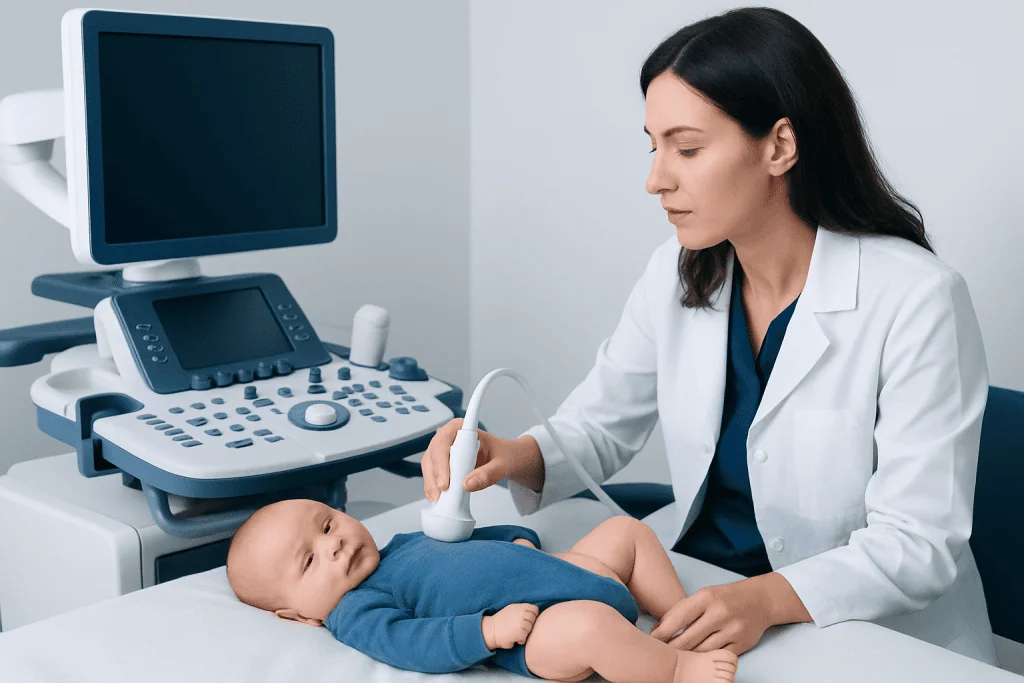
Many infants with hip dysplasia do not show clear symptoms at home. In fact, the condition is often first suspected during a routine physical examination. A doctor may notice that one hip feels less stable than the other, or that the hip moves differently during gentle testing.
When signs are present, they can be subtle. Parents or caregivers may notice that one leg seems to turn outward more than the other, the skin folds on the thighs or buttocks look uneven, or one leg appears slightly shorter. Some babies may have limited movement when the hips are opened during diaper changes.
As a child grows, untreated hip dysplasia may become more noticeable. A baby who is starting to crawl or walk may limp, sway, or favor one side. In older children, hip stiffness, reduced flexibility, or a waddling gait can appear. These signs do not always mean hip dysplasia, but they should be assessed by a qualified doctor.
- Uneven thigh or buttock folds
- One leg looking shorter
- Less movement in one hip
- A clicking or clunking sensation on examination
- Limping or unusual walking pattern in a child who has started walking
Causes and Risk Factors

Hip dysplasia in babies does not have one single cause. It is usually related to a combination of factors that affect how the hip forms before and after birth. The hip joint in newborns is naturally soft and still developing, so some infants are more likely to have instability or a shallow socket.
Several known risk factors increase the chance of developmental dysplasia of the hip. Babies in breech position, especially late in pregnancy, have a higher risk because the hips may be placed under unusual pressure. A family history of the condition also matters, suggesting a genetic tendency. Girls are affected more often than boys, likely because they may be more sensitive to maternal hormones that loosen ligaments.
Other factors can include first pregnancy, low amniotic fluid, and conditions that limit space in the womb. Some babies with foot or neck positioning conditions may also be more carefully checked because these can occur alongside hip instability. Even so, many babies with hip dysplasia have no known risk factors, which is why universal attention during early checkups remains important.
How Doctors Diagnose It
Diagnosis begins with a physical examination. Shortly after birth and at well-baby visits, a doctor gently checks the hips for stability and range of motion. Special maneuvers can help identify whether the hip can slip out of place or be guided back into the socket. These exams are done carefully and are usually quick.
If the examination suggests instability, or if the baby has important risk factors such as breech birth or a strong family history, imaging may be recommended. In very young infants, ultrasound is usually the preferred test because the hip joint is still mostly cartilage and does not show well on standard X-rays. A baby hip ultrasound allows the doctor to see the shape of the socket and how well the femoral head sits inside it.
Ultrasound is often most useful in the first months of life. As the baby grows and more bone develops, X-rays may become more helpful. The timing of imaging depends on the baby’s age, exam findings, and whether the concern is screening or confirming a diagnosis. Sometimes a mild immature hip is simply monitored with repeat exams or follow-up ultrasound to see whether it develops normally.
If the diagnosis is confirmed, the baby may be referred to a pediatric orthopedist for treatment planning. In some cases, doctors also evaluate related musculoskeletal issues to ensure a complete assessment. This may include broader review within musculoskeletal development concerns only when clinically relevant, although hip dysplasia itself is a separate condition.
Treatment Options for Infants and Young Children
Treatment depends on the baby’s age and how unstable or shallow the hip is. In many young infants, the first treatment is a soft positioning brace, often called a Pavlik harness. This device holds the hips in a flexed and gently outward position so the ball stays well seated in the socket while the joint develops. Doctors usually explain how to use it safely and how long it should be worn each day.
Regular follow-up is important during brace treatment. The doctor checks the baby’s skin, comfort, leg movement, and hip position, and may repeat ultrasound or X-rays to make sure the hip is improving. Most babies adapt well, and parents often become more confident with handling, clothing, and diapering after a little practice.
If the hip does not improve with a harness, or if the diagnosis is made later, other treatments may be needed. These can include a more rigid brace, a closed reduction in which the hip is gently placed into position under anesthesia, or a body cast to hold the hip steady during healing. Some children with more complex or persistent dysplasia may need surgery, such as hip surgery later in life, although this is not a typical treatment for babies and is generally reserved for advanced joint damage in older patients.
Specialist care matters because treatment must match the child’s age and hip anatomy. Pediatric orthopedic teams may also advise on imaging follow-up and long-term growth monitoring. In selected centers, broader orthopedics and traumatology care helps coordinate diagnosis, bracing, casting, and surgical planning when necessary.
Prevention, Self-care, and Daily Tips for Parents
There is no guaranteed way to prevent hip dysplasia in babies, but some simple habits may support healthy hip positioning. One helpful step is hip-healthy swaddling. When swaddling, the baby’s legs should be able to bend up and out naturally rather than being wrapped tightly straight down. This allows the hips to rest in a more natural position.
Parents can also choose baby carriers or slings that support the thighs and let the hips spread apart comfortably. Carriers that leave the legs dangling straight down for long periods may not provide ideal support for babies already at risk. During diapering, dressing, and feeding, gentle handling is best. Forced straightening of the legs should be avoided.
If a harness or brace is prescribed, families should follow the care instructions closely and attend all follow-up visits. Questions about bathing, skin care, sleep position, or clothing are common and should be discussed with the care team. In some situations, doctors may also involve physical therapy and rehabilitation to support movement, comfort, and developmental milestones in older infants or children.
Parents should remember that hip dysplasia is not caused by something they did wrong. Early diagnosis and steady follow-up are the most important steps. With appropriate treatment, many children go on to develop healthy, stable hips and normal activity levels.
When to See a Doctor and Long-Term Outlook
A doctor should evaluate any baby with known risk factors such as breech birth, a close family history of hip dysplasia, or abnormal findings on newborn examination. Parents should also seek medical advice if they notice uneven leg folds, one leg appearing shorter, reduced hip movement, or concerns during crawling or walking. Early assessment can make a meaningful difference in treatment choices.
The long-term outlook is generally very good when hip dysplasia in babies is found and treated early. A well-centered hip has the best chance to grow normally, reducing the risk of pain, limping, or early arthritis later in life. Some children need follow-up over months or years to confirm that the socket continues to develop well.
If diagnosis is delayed, treatment may become more involved, and the risk of future joint problems may increase. Even so, many children still do well with specialist care. Families benefit from clear guidance, regular imaging when needed, and a care plan tailored to the child’s growth.
For international patients seeking evaluation, Acibadem International’s multidisciplinary specialists in JCI-accredited hospitals diagnose and treat pediatric orthopedic conditions, including hip dysplasia, with individualized follow-up plans.
Frequently asked questions
What is hip dysplasia in babies?
Hip dysplasia in babies is a condition in which the hip joint is too loose or does not form in the usual way. The socket may be shallow, allowing the ball of the thigh bone to move abnormally or slip partly or fully out of place.
Can a baby have hip dysplasia without obvious symptoms?
Yes. Many babies with hip dysplasia seem comfortable and have no visible signs at home. That is why routine newborn and infant examinations are important, especially for babies with risk factors.
Why is ultrasound used to diagnose hip dysplasia in infants?
Ultrasound is very useful in young babies because much of the hip joint is still made of cartilage, which does not show clearly on X-rays. It helps doctors see the shape of the hip socket and whether the joint is stable.
What is a Pavlik harness, and does it hurt the baby?
A Pavlik harness is a soft brace that holds a baby's hips in a position that supports normal development. It is designed to be gentle, and most babies adjust well, but regular follow-up is needed to ensure proper fit and safe use.
Will hip dysplasia in babies always require surgery?
No. Many infants diagnosed early can be treated successfully with a harness or brace. Surgery is usually considered only when the hip does not improve with early treatment or when the diagnosis is made later.
Can hip dysplasia come back after treatment?
Some children need ongoing monitoring even after early improvement because the hip socket continues to develop as they grow. Follow-up visits and imaging help confirm that the hip remains stable and develops normally.
References
- American Academy of Pediatrics
- American Academy of Orthopaedic Surgeons
- International Hip Dysplasia Institute
- National Institute of Arthritis and Musculoskeletal and Skin Diseases
- National Health Service
This article is for general information only and is not a substitute for professional medical advice. Please consult a qualified doctor about your individual situation.
Ultrasound in Turkey — costs, top hospitals & a free quote
JCI-accredited · board-certified surgeons · reply within 24h
Add us as a Preferred Source to see more of our trusted health content across Google Search, AI Overviews and Discover.

Check-up & Preventive Medicine
Comprehensive health screenings designed for early detection and prevention.
3 specialists in this unit