Hip Opening Stretches: A Complete Medical Overview

Hip opening stretches target muscles around the hips, buttocks, thighs and pelvis rather than literally changing the hip joint. A mild pulling sensation is expected during stretching, but sharp pain, pinching, numbness or worsening symptoms are not.
Key Takeaways
- Hip opening stretches target muscles around the hips, buttocks, thighs and pelvis rather than literally changing the hip joint.
- A mild pulling sensation is expected during stretching, but sharp pain, pinching, numbness or worsening symptoms are not.
- Consistent, gentle practice is usually more helpful than forcing a deep stretch or holding painful positions.
- Hip discomfort can come from the joint, muscles, tendons, lower back or nerves, so persistent pain deserves medical assessment.
- People recovering from surgery, injury or childbirth should ask a qualified clinician which stretches are appropriate for them.
Hip opening stretches are gentle movements that take the hip through comfortable ranges of motion and lengthen or relax surrounding muscles. They may support flexibility, movement comfort and daily function, but they should not cause sharp pain or be used to push through an injury.
What are hip opening stretches?
Hip opening stretches are movements designed to improve comfort and mobility around the hip and pelvis. The phrase usually refers to positions that combine hip flexion, extension, rotation or moving the leg away from the body. These movements may gently stretch or relax the hip flexors at the front of the hip, the gluteal muscles, the inner-thigh muscles and tissues around the outer hip.
They do not “open” the bones of the hip joint. Instead, they aim to help a person move through their available range of motion with better control and less muscle guarding. For many people, regular hip mobility work can make activities such as sitting down, walking, climbing stairs, exercising or getting in and out of a car feel more comfortable.
Flexibility differs naturally between individuals. A person does not need to achieve a very deep squat, split or yoga pose to have healthy hip function. The most useful range of motion is the range needed for everyday life, work, sport and personal goals without pain or instability.
How hip mobility and tightness affect movement
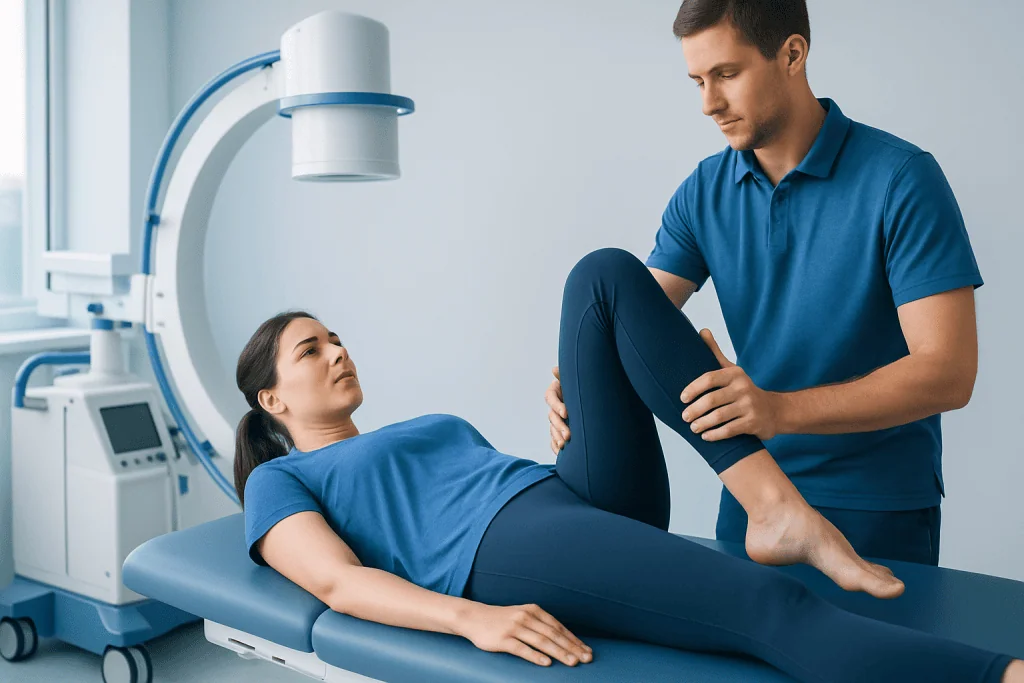
The hip is a ball-and-socket joint that allows movement in several directions. It is supported by strong muscles, tendons, ligaments and the pelvis. Hip movement also depends on the lower back, knees and ankles, which is why a sensation of hip tightness may sometimes be related to how the body is moving elsewhere.
Prolonged sitting can leave the front of the hips feeling stiff, while repetitive exercise, new training routines, muscle fatigue or limited movement after illness may also contribute to temporary tightness. Stress can increase overall muscle tension as well. Tightness does not always mean that a muscle is physically short; it can also reflect muscle soreness, protective guarding or reduced tolerance for a particular movement.
Hip opening stretches may be useful as part of a broader movement routine, particularly when paired with walking, strength training and regular position changes. Stretching alone is not a complete solution for every hip problem. If a movement consistently produces deep groin pain, catching, locking or a sense that the hip may give way, it should be assessed rather than repeatedly stretched.
Common hip opening stretches and how to perform them

A gentle routine can include several types of movement rather than one intense pose. A supported figure-four stretch is commonly used for the outer hip and buttock: lying on the back, one ankle is rested across the opposite thigh while the supporting leg is drawn in only as far as comfortable. A seated version may suit some people, although those with back or knee symptoms may find the lying version easier to control.
A half-kneeling hip-flexor stretch targets the front of the hip. With one knee on a padded surface and the other foot forward, the person gently tightens the buttock of the kneeling side and shifts the pelvis forward slightly. Keeping the trunk upright and avoiding an exaggerated arch in the lower back can make the stretch more focused and comfortable.
Other options include a butterfly stretch, in which the soles of the feet meet while sitting and the knees relax outward, and a wide-knee child’s pose if kneeling is comfortable. A 90/90 seated hip rotation position can be useful for people who want to explore internal and external rotation, but it should be modified or skipped if it causes pinching. Supporting the hips with a cushion, yoga block or folded towel can reduce strain in several positions.
- Warm up first with a few minutes of easy walking or gentle leg movements.
- Move slowly into a position and breathe normally rather than holding the breath.
- Stay in a mild-to-moderate stretch sensation, not pain, typically for a comfortable short hold.
- Come out of the position gradually and compare both sides without forcing symmetry.
Safe technique: what the body should and should not feel
During hip opening stretches, a gentle pull, warmth or mild muscular effort can be normal. The feeling should settle quickly when the position is released. Stretching should not produce sharp, stabbing or burning pain, deep joint pinching, numbness, tingling, weakness or pain that travels down the leg. These symptoms can indicate that the movement is irritating a joint, tendon or nerve.
Good alignment often matters more than depth. For example, during a hip-flexor stretch, tilting the pelvis forward and arching the low back can create the appearance of a larger stretch without actually improving hip movement. A small, controlled pelvic shift with relaxed shoulders is usually preferable. In seated stretches, sitting on a firm cushion can help keep the pelvis in a more comfortable position.
Ballistic stretching, or bouncing repeatedly at the end of a range, is generally unnecessary and can aggravate sensitive tissues. People should avoid comparing their flexibility with others, including online instructors. A safe stretch is individualized: its depth, duration and variation should match the person’s current mobility, health history and symptoms.
Who should modify hip stretches?
Hip opening stretches can often be adapted, but not every stretch suits every body. People with known hip arthritis, a labral injury, hip impingement, osteoporosis, inflammatory joint disease, hernia symptoms or significant lower-back conditions may need individualized guidance. Deep hip flexion and rotation can be uncomfortable for some joint conditions, especially if they recreate groin pinching or catching.
Following hip replacement, fracture repair, tendon surgery or another orthopedic procedure, a surgeon or physiotherapist should give specific instructions before stretching. Some movements may be temporarily restricted during healing. Pregnant people and those in the postpartum period may also need modifications because comfort, joint stability and pelvic symptoms can change; forcing a wide range is not recommended.
People with knee pain may find that positions such as pigeon pose, deep butterfly or kneeling stretches place too much pressure on the knees. Supported alternatives, including lying-down stretches and gentle active hip movements, may be better tolerated. A physiotherapist can identify appropriate modifications and help distinguish hip symptoms from conditions affecting the back or pelvis.
Building a balanced hip mobility routine
For general wellbeing, hip opening stretches are usually most effective when included in regular physical activity rather than performed only after discomfort becomes severe. A person might perform a brief mobility routine after being seated for a long period, before exercise as part of a warm-up, or after activity when gentle stretching feels pleasant. Frequency can be adjusted according to comfort, with recovery time if the muscles feel sore.
Dynamic movements are often useful before activity. Examples include slow hip circles while standing with support, controlled knee lifts, or gentle leg swings within a comfortable range. Longer static holds may feel more appropriate after exercise or during a separate flexibility session. Neither approach should cause pain, and both can be modified for balance concerns by using a chair, wall or stable countertop.
Strength is also important for hip health. Exercises that build control in the glutes, thighs and core can support the hip during walking, lifting and sport. Options may include sit-to-stands from a chair, bridges, step-ups or side-lying leg movements, depending on a person’s health and ability. Rest, sleep, gradual training progression and varied movement throughout the day are equally valuable parts of maintaining comfortable hips.
Acibadem International’s multidisciplinary specialists and JCI-accredited hospitals can assess persistent hip symptoms and develop appropriate treatment or rehabilitation plans for international patients.
When to seek medical care
A person should arrange medical assessment for hip pain that persists, returns frequently, limits normal activity or does not improve with rest and gentle self-care. Evaluation is also advisable when pain disrupts sleep, causes a limp, reduces the ability to bear weight or is associated with reduced range of motion. A clinician may consider the hip joint, surrounding soft tissues, lower back and other possible sources of symptoms.
Urgent medical care is important after a significant fall or injury, particularly if the person cannot stand or bear weight, the leg looks shortened or deformed, or pain is severe. Prompt assessment is also needed for a hot, swollen or red joint, fever with hip pain, new leg weakness, loss of bladder or bowel control, or numbness around the groin or buttocks.
Stretching should be stopped if it worsens symptoms during or after the activity. A doctor, sports medicine specialist or physiotherapist can recommend safe next steps and may advise rehabilitation, imaging or other care when clinically appropriate. Early assessment can help a person return to comfortable movement without repeatedly aggravating the area.
Frequently asked questions
How often should hip opening stretches be done?
Many people can perform gentle hip mobility exercises most days if they remain comfortable and do not cause lingering soreness. Consistency is usually more useful than intensive sessions. The frequency should be reduced or adjusted if symptoms worsen.
Can hip opening stretches relieve lower back pain?
They may help some people whose back discomfort is associated with prolonged sitting, muscle tension or limited hip movement. However, lower back pain has many possible causes, and hip stretches are not a universal treatment. Persistent, severe or radiating back pain should be assessed by a healthcare professional.
Why do hip stretches cause a pinching feeling in the groin?
A pinching sensation may occur when a position places the hip joint in a range that is not currently comfortable for that person. It should not be pushed through. Reducing the depth, changing the angle or choosing another exercise may help, but repeated groin pinching should be discussed with a clinician.
Are hip opening stretches safe before exercise?
Gentle dynamic hip movements can be a useful part of a warm-up before many activities. The warm-up should gradually raise body temperature and prepare the movements needed for the activity. Long, intense static stretching immediately before performance is not necessary for most people.
Can people with hip arthritis do hip stretches?
Some people with hip arthritis benefit from gentle, comfortable mobility work and strengthening. The exercises should be adapted to avoid sharp pain, forceful end-range movements and symptom flare-ups. A physiotherapist or doctor can provide guidance based on the severity of symptoms and overall health.
Is it normal for one hip to be tighter than the other?
Small differences in mobility and comfort between sides are common. They can reflect daily habits, previous injuries, strength differences or normal anatomy. A marked difference, pain, weakness or a new change in movement should be evaluated by a qualified healthcare professional.
This article is for general information only and is not a substitute for professional medical advice. Please consult a qualified doctor about your individual situation.
Explore treatments in Turkey — costs, top hospitals & a free quote
JCI-accredited · board-certified surgeons · reply within 24h
Add us as a Preferred Source to see more of our trusted health content across Google Search, AI Overviews and Discover.

More from the Health Library

Tea Tree Oil for Hair: What Patients Need to Know

Rose Water for Hair: What Patients Need to Know

Tingling in Face — Explained by Medical Evidence, Not Myths

Papain: An Evidence-Based Guide for Patients

Eczema Lotion: A Complete Medical Overview

Prevagen Cost: An Evidence-Based Guide for Patients
Orthopedic Surgery & Traumatology Specialists at Acibadem

Dr. Alper Gölpınar
Orthopedic Surgery & Traumatology
Prof. Dr. Alper Kaya
Orthopedic Surgery & Traumatology
Fzt. Alperen Mustafa Oğuz
Physical Medicine & Rehabilitation
Assoc. Prof. Dr. Altuğ Yücekul
Orthopedic Surgery & Traumatology