Eczema Lotion: A Complete Medical Overview

Eczema lotion supports the skin barrier and can reduce dryness, itching, and flare frequency. Fragrance-free, dye-free, and gentle formulations are usually preferred for sensitive skin.
Key Takeaways
- Eczema lotion supports the skin barrier and can reduce dryness, itching, and flare frequency.
- Fragrance-free, dye-free, and gentle formulations are usually preferred for sensitive skin.
- Lotions are lighter than creams and ointments, so some people may need a richer product for very dry eczema.
- Moisturizers work best when applied several times a day and within minutes after bathing.
- Persistent, infected, or severe eczema needs medical assessment and may require prescription treatment.
Eczema lotion is a key part of daily skin care for people with eczema because it helps repair the skin barrier, reduce water loss, and calm dryness and itching. The best choice is usually a fragrance-free, gentle product used regularly, especially after bathing and handwashing.
Overview: What eczema lotion does
Eczema lotion is a moisturizer designed to help skin affected by eczema stay hydrated and better protected. For many people, it does not treat the underlying inflammation by itself, but it plays a central role in daily care by restoring the skin barrier, reducing dryness, and helping skin hold onto water. When used consistently, it can make flares less frequent and improve comfort between flare-ups.
Eczema, often called atopic dermatitis, is linked to a weakened skin barrier. This means the skin loses moisture more easily and becomes more vulnerable to irritation from soaps, fabrics, temperature changes, and allergens. A well-chosen eczema lotion helps compensate for that barrier weakness, which is why moisturization is considered a foundation of care at every age.
Not every moisturizer works equally well for eczema-prone skin. The word “lotion” can describe many textures, but in general lotions are lighter and contain more water than creams or ointments. That lighter feel may suit people who dislike greasy products or need something easy to spread over large areas, although very dry or cracked skin often benefits from a thicker cream or ointment instead.
How to choose an eczema lotion

The most suitable eczema lotion is usually simple rather than highly fragranced or “active.” Products labeled fragrance-free, dye-free, and suitable for sensitive skin are often the safest starting point. Many dermatologists advise avoiding unnecessary botanical extracts, essential oils, strong exfoliating acids, or alcohol-heavy formulas, as these may sting or worsen irritation in vulnerable skin.
Helpful ingredients often include humectants, emollients, and occlusives. Humectants such as glycerin attract water into the outer skin layers. Emollients smooth rough skin, while occlusives help lock moisture in and reduce water loss. Some eczema moisturizers also contain ceramides, which are skin barrier lipids that may help support repair. Urea or lactic acid can sometimes help rough, thickened skin, but they may sting on inflamed or broken areas.
Texture matters as much as ingredients. A lotion may be comfortable in warm weather, on mildly dry skin, or for daytime use on visible areas such as the hands. However, if the skin is very dry, flaky, or cracked, a cream or ointment is often more effective because it forms a stronger barrier. For this reason, some people use a lighter lotion during the day and a heavier product at night.
- Look for fragrance-free and dye-free labeling.
- Choose products made for sensitive or eczema-prone skin.
- Consider ceramides, glycerin, petrolatum, or dimethicone.
- Avoid products that burn, sting, or have strong perfume.
- Patch-test a new product on a small area first when possible.
Lotion, cream, or ointment: which is best?
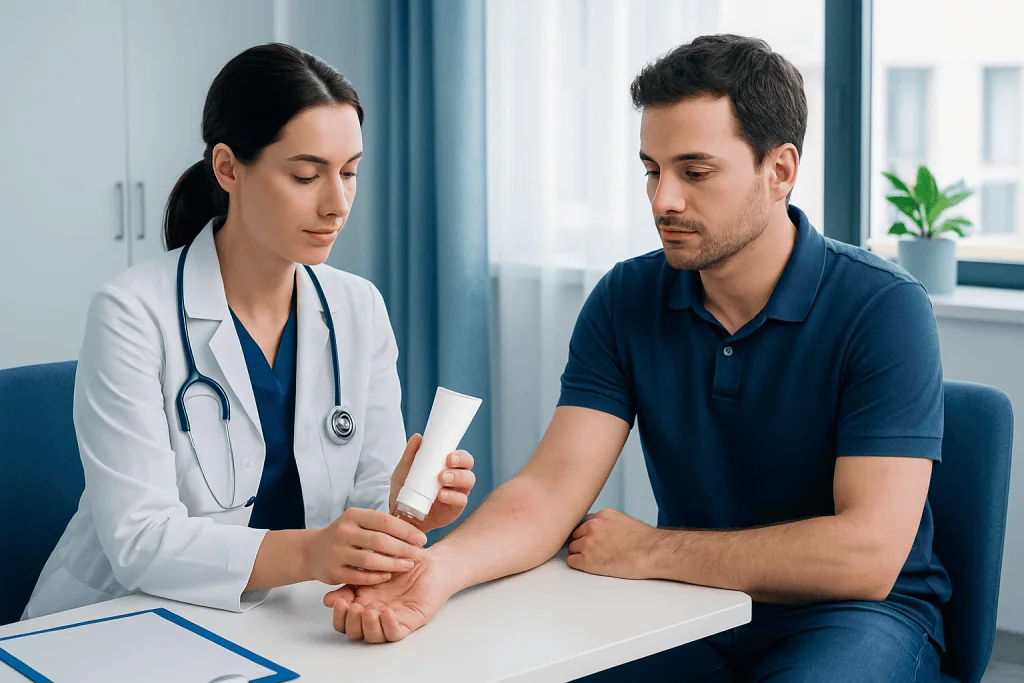
People often ask whether eczema lotion is the best option, but the answer depends on the skin’s level of dryness and the area being treated. Lotions are lighter, absorb quickly, and are often easier to use on large body areas or in humid climates. They may be enough for mild dryness or for maintenance after a flare has settled.
Creams are thicker than lotions and usually provide better hydration and barrier support. Many people with eczema find creams more helpful for regular daily use, especially on the arms, legs, and trunk. Ointments are the heaviest option and can be especially useful for very dry, cracked, or irritated skin, although some people find them too greasy for daytime use.
There is no single best texture for everyone. The product that is used consistently is often more helpful than a theoretically ideal product that feels unpleasant and is left unused. In practice, doctors may recommend selecting the thickest moisturizer a person can comfortably apply several times a day. If a lotion seems to help only briefly, switching to a cream or ointment may improve results.
How and when to apply eczema lotion
Application technique can affect how well an eczema lotion works. The most effective time to moisturize is within a few minutes after bathing, showering, or washing the hands, when the skin is still slightly damp. This helps seal in water before it evaporates. Moisturizer should then be reapplied as needed during the day, especially to dry or exposed areas.
Bathing routines matter too. Short lukewarm baths or showers are usually better tolerated than long, hot ones, which can strip natural oils from the skin. A gentle, non-soap cleanser may be used on areas that need cleaning, but over-cleansing can worsen dryness. After bathing, the skin should be patted dry rather than rubbed, then covered generously with moisturizer.
If prescription creams or ointments are also being used, the order should follow the clinician’s guidance. In many cases, a medicated anti-inflammatory treatment is applied to active eczema patches and moisturizer is used on top or on surrounding skin. People with more troublesome eczema may need broader dermatology care to identify the most suitable skin-care routine and any prescription options.
When lotion alone is not enough
Eczema lotion is important, but it may not control moderate or severe eczema by itself. During a flare, the skin becomes inflamed as well as dry, so treatment may need to address both barrier damage and inflammation. In these situations, a doctor may recommend prescription topical corticosteroids, nonsteroidal anti-inflammatory creams, wet-wrap therapy, or other treatments depending on age, severity, and affected body areas.
If eczema is widespread, frequently recurring, or interfering with sleep and daily life, the treatment plan may need to go beyond moisturizers. Some people benefit from allergy review, trigger identification, and structured skin-care education. Others may need advanced therapies supervised by specialists, especially if the condition is difficult to control or complicated by infection.
Because eczema may overlap with or be confused for other skin problems, persistent symptoms deserve proper assessment. A clinician may evaluate whether the rash is really eczema, contact dermatitis, seborrheic dermatitis, psoriasis, or another condition. For people with severe or long-standing disease, personalized evaluation through skin specialist assessment can help guide safe and effective next steps.
Common triggers and self-care habits
Using eczema lotion regularly works best when combined with trigger reduction. Common triggers include dry air, heat and sweating, harsh soaps, detergents, scented skin products, wool or rough fabrics, stress, and frequent handwashing. Some people also notice irritation after contact with household cleaning products or chlorinated water. Identifying patterns can help reduce repeat flares.
Daily habits can make a meaningful difference. Soft cotton clothing is often more comfortable than rough or tight fabrics. Nail trimming may help reduce skin damage from scratching, especially in children. A humidifier may be useful in very dry indoor environments, although it should be kept clean according to manufacturer instructions.
Good self-care does not mean trying multiple products at once. In fact, a simpler routine is often better for eczema-prone skin. If new cosmetics, exfoliants, or highly perfumed body products are introduced, they should be added cautiously. If the eczema affects the hands or face, a doctor may also consider whether irritant or allergic contact dermatitis is contributing to symptoms.
- Moisturize after every bath, shower, and handwash.
- Use lukewarm water instead of hot water.
- Choose mild cleansers and fragrance-free laundry products.
- Wear breathable fabrics such as cotton when possible.
- Track possible triggers if flares seem repetitive or seasonal.
When to seek medical care
Medical advice is important if eczema does not improve with regular moisturizing, if the rash is severe, or if symptoms are interfering with sleep, work, or school. A clinician should also review any rash that is spreading, changing quickly, or affecting sensitive areas such as the face, eyelids, genitals, or large parts of the body. Children and infants with persistent eczema should be assessed to ensure the diagnosis and treatment plan are appropriate.
Signs of possible infection need prompt attention. These can include increasing pain, warmth, swelling, yellow crusting, pus, fever, or rapidly worsening redness. Skin that is heavily scratched can become infected more easily, and infection can make eczema appear suddenly worse.
People who need frequent prescription treatment, have repeated flares, or suspect contact allergies may benefit from specialist review. Near the end of a care pathway, some patients may also need coordinated support from allergy and skin specialists. Acibadem International’s multidisciplinary specialists in JCI-accredited hospitals diagnose and treat eczema and related skin conditions for international patients, including evaluation through allergy assessment when clinically indicated.
Frequently asked questions
What is the best eczema lotion?
The best eczema lotion is usually one that is fragrance-free, gentle, and used consistently. It should support the skin barrier and not sting or irritate the skin. Some people do better with a cream or ointment if their skin is very dry.
Can eczema lotion replace prescription treatment?
Not always. Eczema lotion is a basic part of treatment, but flare-ups often involve inflammation that may need prescription medicine. A doctor can advise when moisturizers alone are enough and when additional treatment is needed.
How often should eczema lotion be applied?
Most people benefit from applying it at least twice daily and after every bath, shower, or handwash. More frequent use may be helpful during dry weather or active flare periods. The key is regular, generous application.
Why does some eczema lotion sting?
Stinging can happen when the skin barrier is very inflamed or broken. Certain ingredients, even useful ones such as acids or urea, may be uncomfortable on raw skin. If a product consistently burns, it is sensible to stop using it and seek medical advice.
Is lotion better than cream for eczema?
Lotion is lighter and may feel more comfortable for daytime use or mild dryness. Cream is usually more moisturizing and often preferred for routine eczema care. Ointment may be best for severe dryness, cracking, or overnight use.
Can children use eczema lotion every day?
Yes, daily moisturizing is a standard part of eczema care in children and infants. Products should be simple, fragrance-free, and appropriate for sensitive skin. A pediatrician or dermatologist can help if symptoms persist or if many products seem to irritate the skin.
This article is for general information only and is not a substitute for professional medical advice. Please consult a qualified doctor about your individual situation.
Eczema in Turkey — costs, top hospitals & a free quote
JCI-accredited · board-certified surgeons · reply within 24h
Add us as a Preferred Source to see more of our trusted health content across Google Search, AI Overviews and Discover.

More from the Health Library

Venous: What Patients Need to Know

Pectoral Girdle: An Evidence-Based Guide for Patients

Hypertrophic Scar: An Evidence-Based Guide for Patients

Visually Impaired — Explained by Medical Evidence, Not Myths

Sternotomy — Explained by Medical Evidence, Not Myths