HIV Test: An Evidence-Based Guide for Patients

An HIV test is the most reliable way to diagnose HIV infection. Different HIV tests detect different markers, so the best test depends partly on timing after exposure.
Key Takeaways
- An HIV test is the most reliable way to diagnose HIV infection.
- Different HIV tests detect different markers, so the best test depends partly on timing after exposure.
- A negative result may need repeat testing if it was done during the window period.
- A reactive screening result is not a final diagnosis until confirmatory testing is completed.
- Early diagnosis supports timely treatment and helps protect long-term health.
An HIV test is the only reliable way to know whether a person has HIV, and modern tests can often detect infection earlier than many people expect. Understanding which test is used, when to test, and how results are confirmed can make the process clearer and less stressful.
Overview: what an HIV test does
An HIV test checks whether a person has evidence of human immunodeficiency virus infection. Depending on the method, the test may look for antibodies made by the immune system, the p24 antigen that appears early in infection, or the virus itself through nucleic acid testing. Because symptoms alone cannot confirm or rule out HIV, testing is the only dependable way to know a person’s status.
Today’s HIV testing is more accurate and more sensitive than in the past. Many laboratories use fourth-generation blood tests that can detect both HIV antibodies and p24 antigen, helping identify infection earlier than antibody-only tests. Rapid tests and self-tests can also be useful, especially when access or privacy is a concern, but they may have different timing and follow-up needs.
Testing is used in several settings. Some people are tested as part of routine screening, while others test after a possible exposure, during pregnancy, before certain medical procedures, or because a partner has HIV. The result guides what comes next, whether that means reassurance, repeat testing at the right time, prevention planning, or prompt referral for care if HIV is confirmed.
Types of HIV tests and how they differ
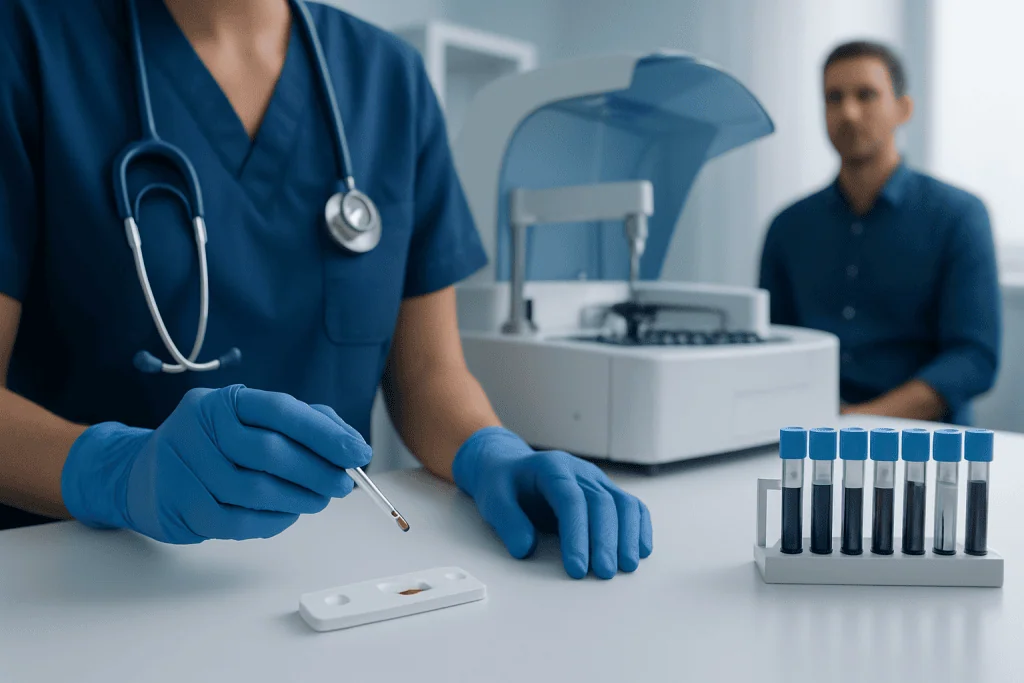
There are three main categories of HIV tests. Antibody tests look for the body’s immune response to HIV. They are commonly used in rapid tests and some self-tests, and may use blood from a finger stick or oral fluid. These tests are helpful and widely available, but they generally take longer to become positive after infection than lab-based antigen/antibody tests.
Antigen/antibody tests, especially laboratory fourth-generation tests, are now a standard approach in many healthcare settings. They detect both HIV antibodies and the p24 antigen, a viral protein that can appear before antibodies are fully measurable. For many patients, this makes them the preferred option when accuracy and early detection are priorities.
Nucleic acid tests detect the virus directly in the blood. They are not usually the first test for routine screening because they are more specialized, but they can be useful when very early infection is suspected, when someone has symptoms after a recent high-risk exposure, or when screening and confirmatory results need clarification. A doctor or infectious disease specialist can advise which test is most appropriate.
Different test types can also differ in where they are done:
- Laboratory blood tests, usually ordered in clinics or hospitals
- Rapid tests with results available the same day
- Home self-tests, often designed for privacy and convenience
When to test: timing and the window period

One of the most important ideas in HIV testing is the window period. This is the time between HIV exposure and when a test can reliably detect infection. During this period, a person may have HIV but still test negative because the marker the test looks for has not reached detectable levels yet.
The window period varies by test type. Nucleic acid tests may detect infection earliest. Laboratory antigen/antibody tests often become positive sooner than antibody-only tests. Oral fluid and some rapid antibody tests can take longer to turn positive. This is why the same negative result can mean different things depending on how soon the test was taken after a possible exposure.
If someone tests too early, a doctor may recommend repeat testing after the appropriate interval. This is not because the first result was wrong, but because the body and the virus change over time in ways that affect detectability. For people who are anxious after a recent exposure, it can help to ask not only “Was I tested?” but also “Was I tested at the right time, with the right test?”
Timing matters especially after:
- Unprotected vaginal or anal sex
- Sharing needles or other injection equipment
- Sexual assault
- A needlestick or occupational exposure
- Exposure involving a partner known to have HIV
Who should consider HIV testing
HIV testing is recommended not only when symptoms appear, but also as part of routine healthcare. Many health authorities advise that most adolescents and adults should be tested at least once, with more frequent testing for people with ongoing risk factors. This approach helps identify infection early, when treatment can begin promptly and outcomes are generally better.
More regular testing may be advised for people who have new or multiple sexual partners, men who have sex with men, people who inject drugs, those with a sexually transmitted infection, and anyone whose partner has HIV or whose partner’s HIV status is unknown. Testing during pregnancy is also an important part of prenatal care, because early diagnosis helps reduce the risk of transmission to the baby.
People may also be tested because they have symptoms that could be related to early HIV infection, such as fever, rash, sore throat, or swollen lymph nodes after a recent exposure. These symptoms are not specific to HIV and can occur with many viral illnesses, so testing is needed for clarity. In some cases, a clinician may also consider related screening for HIV and AIDS and other sexually transmitted infections, depending on the person’s history and symptoms.
Understanding HIV test results
A negative HIV test result usually means the test did not find evidence of HIV infection. However, if testing was done during the window period, the result may not fully exclude a recent infection. In that situation, a healthcare professional may recommend repeat testing after more time has passed.
A reactive or positive screening result does not automatically mean a final diagnosis has been made. HIV diagnosis follows a stepwise process. A reactive screening test is usually followed by confirmatory testing to verify whether HIV is present and, in some cases, to distinguish between HIV-1 and HIV-2. This process is important because no screening test should be interpreted in isolation.
An indeterminate or unclear result can happen occasionally, especially very early after infection or for technical reasons. When this occurs, clinicians may repeat testing, use a different test type, or order a nucleic acid test. Patients should avoid guessing based on symptoms or internet information alone; the safest approach is to review the result with a qualified doctor who can explain what it means in context.
If HIV is confirmed, the next steps usually include baseline blood work, counseling, and referral for treatment. Modern HIV care is highly structured, and early treatment can support long-term health. Patients may also receive information about partner notification, prevention strategies, and follow-up testing for associated conditions.
What happens after testing: prevention, follow-up, and treatment
After an HIV test, the next step depends on the result and the reason for testing. If the result is negative and there has been no recent risk, no immediate further action may be needed beyond routine health screening. If there has been a recent exposure, repeat testing may be planned at a time that matches the window period of the test used.
For people without HIV who have ongoing risk, preventive care may include safer sex counseling, condom use, regular screening for sexually transmitted infections, and discussion of HIV PrEP treatment. PrEP is a preventive medication strategy for people at substantial risk of HIV exposure, and it should be discussed with a qualified clinician to determine whether it is appropriate.
If a person seeks care very soon after a possible exposure, clinicians may consider HIV PEP treatment. PEP is an emergency prevention approach that needs to be started quickly after exposure, so time matters. This is one reason it is important not to delay medical advice after a high-risk event.
When HIV is confirmed, treatment usually involves antiretroviral therapy under specialist supervision. Care may include monitoring of immune health, viral load, and other infections. In some settings, a multidisciplinary team may also coordinate sexual health care, counseling, and laboratory follow-up; when appropriate, clinicians may discuss HIV treatment options as part of long-term management.
When to seek medical care
Medical advice should be sought promptly after a possible high-risk exposure to HIV, especially if it involved unprotected sex, shared needles, or an exposure to blood. Fast evaluation matters because post-exposure prevention may only be effective within a limited time frame. A clinician can also advise which HIV test is most appropriate and when repeat testing may be needed.
People should also seek medical care if they have symptoms after a recent exposure, such as fever, rash, sore throat, mouth ulcers, or swollen glands. These symptoms do not prove HIV, but they deserve proper assessment. A doctor can evaluate other possible causes, arrange testing, and explain the results clearly.
Anyone with a reactive screening result should follow up without delay for confirmatory testing and support. Anxiety is understandable, but avoiding care can delay answers and treatment if needed. Near the end of the care pathway, some patients may choose centers with multidisciplinary infectious disease specialists; Acibadem International’s JCI-accredited hospitals provide diagnosis and treatment support for international patients.
Frequently asked questions
How accurate is an HIV test?
HIV tests are highly accurate when the right test is used at the right time after exposure. Accuracy depends partly on the test type and whether the person is still in the window period. A doctor can explain whether repeat testing is needed.
Can an HIV test detect infection right away?
Not always. Every HIV test has a window period, which is the time between exposure and reliable detection. Some laboratory tests and nucleic acid tests can detect infection earlier than antibody-only tests.
Is a rapid HIV test reliable?
Rapid HIV tests are useful and generally reliable, especially for screening. However, they may not detect very recent infection as early as some laboratory-based tests. If there has been a recent exposure, follow-up testing may still be advised.
What does a negative HIV test mean?
A negative result usually means the test did not find evidence of HIV. If the test was taken too soon after exposure, it may not fully rule out infection yet. In that case, repeat testing at the recommended time is important.
Does a positive HIV screening result mean a person definitely has HIV?
No. A reactive or positive screening result needs confirmatory testing before HIV is diagnosed. This step helps ensure the result is interpreted accurately and guides the next stages of care.
Can someone use a home HIV test instead of seeing a doctor?
A home HIV test can be a practical option for screening, especially for privacy and convenience. However, any positive or unclear result should be followed by medical confirmation. A doctor can also help if the test was taken very soon after a possible exposure.
References
- World Health Organization
- Centers for Disease Control and Prevention
- National Institutes of Health
- UNAIDS
This article is for general information only and is not a substitute for professional medical advice. Please consult a qualified doctor about your individual situation.
Explore treatments in Turkey — costs, top hospitals & a free quote
JCI-accredited · board-certified surgeons · reply within 24h
Add us as a Preferred Source to see more of our trusted health content across Google Search, AI Overviews and Discover.

More from the Health Library

Albuterol Sulfate — Explained by Medical Evidence, Not Myths

Pulse Points: An Evidence-Based Guide for Patients

Stool with Slime: An Evidence-Based Guide for Patients

Calendula: A Complete Medical Overview

Stearic Acid: What Patients Need to Know

Azoospermia: An Evidence-Based Guide for Patients
Infectious Diseases & Clinical Microbiology Specialists at Acibadem

Prof. Dr. A. Çağrı Büke
Infectious Diseases & Clinical Microbiology
Dr. Ahmad Nejat Ghaffarı
Infectious Diseases & Clinical Microbiology
Assoc. Prof. Dr. Aslıhan Demirel
Infectious Diseases & Clinical Microbiology
Dr. Aytan Seydalıyeva
Infectious Diseases & Clinical Microbiology