Hospital Enema Procedure: An Evidence-Based Patient Guide

Hospital enemas may be used for severe constipation, fecal impaction, bowel preparation or selected diagnostic and treatment needs. The clinician selects the enema solution and amount based on the person's age, symptoms, medical history and reason for treatment.
Key Takeaways
- Hospital enemas may be used for severe constipation, fecal impaction, bowel preparation or selected diagnostic and treatment needs.
- The clinician selects the enema solution and amount based on the person's age, symptoms, medical history and reason for treatment.
- Most people have a bowel movement within minutes to an hour, although loose stool and urgency may continue for a short time afterward.
- Enemas can cause cramping, rectal irritation or fluid and electrolyte problems in some circumstances, so they should not be used repeatedly without medical advice.
- Severe abdominal pain, vomiting, rectal bleeding, fever, fainting or inability to pass stool or gas needs urgent medical assessment.
A hospital enema procedure involves placing a prescribed fluid into the rectum to soften and stimulate the passage of stool or prepare the lower bowel for an examination or procedure. It is usually brief, private and supervised by trained healthcare professionals, especially when constipation is severe or a person has medical risks that make home treatment unsuitable.
Overview: what a hospital enema procedure involves
A hospital enema procedure is a clinician-supervised treatment in which a liquid solution is gently introduced into the rectum through a small lubricated tube. The liquid helps soften stool, draw water into the bowel or stimulate the rectum and lower colon to empty. It may be used to manage severe constipation or fecal impaction, or to clear the lower bowel before certain examinations, operations or treatments.
For many people, the hospital enema experience is short and handled discreetly by a nurse or other trained clinician. The team explains why it is needed, checks for health conditions that could affect safety and supports the person in a private setting. An enema treats stool in the lower bowel; it does not address every cause of constipation, so ongoing or recurrent symptoms may need further evaluation.
A hospital enema is not automatically stronger than one bought for home use. The important difference is assessment and monitoring: clinicians can choose an appropriate solution, recognize warning signs of bowel obstruction or other illness, and provide other care if an enema is not suitable. Treatment for persistent constipation may also include hydration guidance, dietary changes, oral medicines or evaluation by a digestive health specialist.
Why it may be recommended: candidacy, benefits and limits
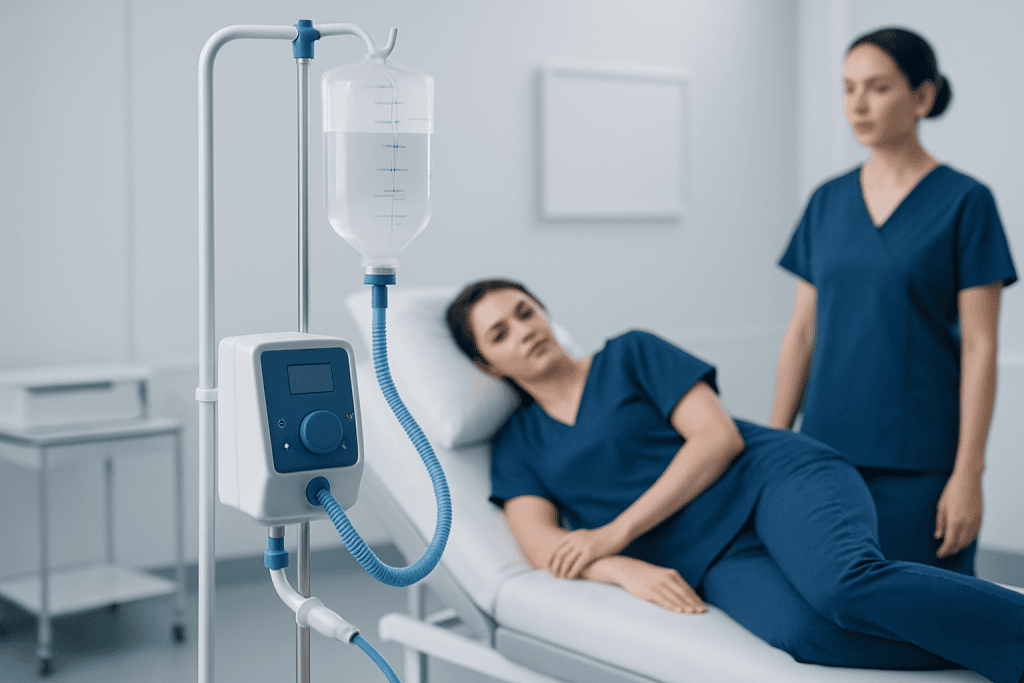
A clinician may recommend an enema when stool is retained in the rectum or lower colon and a rapid local treatment is appropriate. Common situations include significant constipation that has not improved with initial measures, suspected fecal impaction, preparation before some rectal or bowel procedures, or a need to obtain a stool sample. In hospital, the decision is based on the person’s symptoms, abdominal examination, medication use and overall health.
Potential benefits include relief of rectal fullness, reduced straining and a quicker bowel movement than some oral constipation treatments. If there is a hard stool mass in the rectum, an enema may soften it and make subsequent evacuation easier. However, an enema may not work if stool is located higher in the colon, if the bowel is obstructed, or if another condition is causing abdominal symptoms.
Enemas are not appropriate for everyone. Extra caution or a different approach may be needed for people with severe abdominal pain, vomiting, suspected bowel obstruction or perforation, active inflammatory bowel disease, recent bowel or rectal surgery, significant kidney or heart disease, dehydration, or rectal bleeding. Children, older adults and people with complex medical conditions should receive individualized advice. Constipation can occasionally be related to colon cancer or another underlying disorder, particularly when bowel habits change persistently or warning signs are present.
How is an enema procedure performed in a hospital?
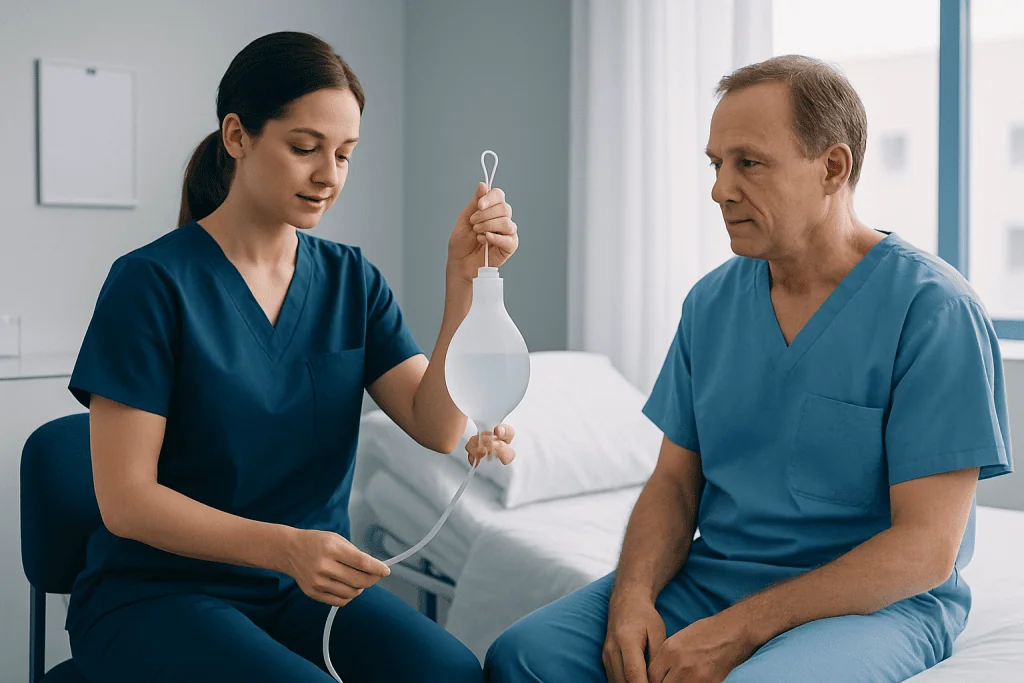
Before the procedure, the clinician reviews symptoms, allergies, medicines and relevant conditions such as kidney disease, heart failure, bowel disease or recent surgery. They may examine the abdomen and, when indicated, perform a gentle rectal examination to assess for stool in the rectum. Imaging, blood tests or specialist input may be needed if there are signs of obstruction, infection, bleeding or another serious cause of symptoms.
The person is usually asked to lie on the left side with knees gently bent, although positioning can be adapted for comfort and mobility. A clinician uses gloves and lubricant, then carefully inserts the soft enema tip only as far as needed to deliver the prescribed fluid. The solution is allowed to flow slowly; the person may be asked to take slow breaths and report pain, dizziness or severe cramping.
After the fluid is given, the tube is removed and the person is helped to a toilet, commode or bedpan when the urge occurs. Staff remain available for safety and dignity, particularly if a person is weak, unsteady or at risk of falls. If the desired result does not occur, the team reassesses rather than repeatedly administering enemas without considering the underlying cause.
A hospital enema procedure video may show general positioning and equipment, but it cannot determine whether an enema is safe for a particular person. Videos should not replace individualized instructions from a qualified clinician, especially for people with abdominal pain, chronic disease or recent surgery.
How far do you push an enema in?
The enema tip should never be forced. In a hospital, a trained clinician inserts a lubricated tip gently and only to the depth appropriate for the person and the specific device, following the product instructions and clinical protocol. The goal is to place the tip just beyond the anal opening without causing pain or injury.
There is no single depth that is safe for every person. Age, body size, rectal anatomy, prior surgery and the type of enema device all matter. For this reason, people should not estimate depth from online instructions or try to insert a device farther if it does not seem to work.
Sharp pain, resistance, bleeding, dizziness or intense cramping are not expected and should be reported immediately. The procedure should be stopped and assessed rather than continued. This is one reason a hospital enema can be preferable when constipation is severe, the person is medically vulnerable or there is uncertainty about what is causing the symptoms.
How long does poop come out after an enema?
Many people pass stool within a few minutes to about an hour after an enema, depending on the type of solution, the amount and location of retained stool, and the person’s bowel function. The first bowel movement may be accompanied by urgency, cramping and liquid stool. More than one trip to the toilet can occur as the rectum and lower bowel empty.
Loose stool or small amounts of fluid may continue for a short period afterward. Once the urgency settles, people can usually resume gentle activity, drink fluids if permitted and eat normally unless the enema was given for bowel preparation before a test or operation. Hospital staff may monitor the response, hydration and comfort, particularly in people who are frail or have heart or kidney conditions.
People should tell a clinician if no bowel movement occurs when expected, if severe pain develops, or if there is bleeding, persistent vomiting, weakness or fainting. These symptoms can indicate that constipation needs a different treatment or that another condition requires urgent assessment. Recurring constipation should be discussed with a doctor rather than managed through frequent enemas.
Why can't you use tap water for an enema?
Tap water is not recommended for unsupervised enemas because it is not a balanced medical solution and its mineral content is not standardized. Large amounts, repeated use, or retaining water for too long can allow water to be absorbed through the bowel. In rare cases, this can disturb the body’s salt balance, including sodium levels, and may be particularly risky for children, older adults and people with kidney, heart or electrolyte problems.
Water quality and temperature can also vary. Water that is too hot can burn delicate rectal tissue, while very cold water may cause uncomfortable cramping. Hospital teams use prescribed products or clinically appropriate solutions and tailor treatment to the person’s condition rather than relying on household water.
Other enema ingredients may also carry risks. Some commercially available phosphate enemas can cause serious electrolyte and kidney problems in susceptible people, especially if more than the recommended amount is used. It is important to tell the healthcare team about kidney disease, heart disease, dehydration, diuretic medicines and laxative use before an enema is given.
Risks, recovery and hospital enema versus home enema
When correctly selected and administered, an enema is commonly well tolerated. Temporary lower abdominal cramping, urgency, bloating, nausea or mild rectal irritation can occur. Less common but important complications include dehydration, electrolyte disturbances, rectal injury, bleeding or bowel perforation. Risk rises when enemas are repeated, used incorrectly, forced against resistance or given despite a possible bowel obstruction or significant bowel inflammation.
Recovery after a straightforward hospital enema is usually same-day. The person may rest until urgency has settled and should use assistance when standing if feeling lightheaded. A care team may recommend fluids, a constipation-management plan or follow-up testing based on the cause of symptoms. Frequent reliance on enemas can lead to irritation and may delay diagnosis of a bowel condition or medication-related constipation.
A hospital enema versus home enema comparison is mainly about clinical context rather than convenience. Home products may be suitable for some adults when used exactly as directed and after advice from a pharmacist or clinician. Hospital care is more appropriate when symptoms are severe, there is an elevated medical risk, initial treatment has failed, or a person cannot safely manage the procedure independently.
For international patients, Acibadem International’s multidisciplinary specialists and JCI-accredited hospitals can assess constipation and related digestive symptoms, identify contributing conditions and coordinate appropriate treatment. When longer-term evaluation is needed, colonoscopy may be recommended to examine the large bowel in selected patients.
When to seek medical care
Urgent medical assessment is needed for severe or worsening abdominal pain, a swollen abdomen, repeated vomiting, inability to pass gas, fever, fainting, confusion, black stools or visible rectal bleeding. These symptoms can occur with bowel obstruction, bleeding, infection or other problems for which an enema may be unsafe. People should not use an enema to try to manage these symptoms at home.
A doctor should also be consulted for constipation that lasts more than a short time, keeps returning, begins suddenly without an obvious explanation, or is associated with unintentional weight loss, anemia, fatigue or a persistent change in bowel habits. Evaluation is especially important for people with a family history of colorectal cancer or inflammatory bowel disease, and for those taking medicines known to slow bowel movement.
Medical care can help identify the cause and create a plan that is safer than repeated rescue treatment. Depending on symptoms, this may include review of medicines, dietary and fluid guidance, blood tests, imaging, rectal examination or referral to gastroenterology. The aim is not only to relieve the immediate discomfort but also to prevent recurrence and protect bowel health.
Frequently asked questions
Is a hospital enema procedure painful?
Most people experience pressure, fullness, urgency or brief cramping rather than significant pain. The procedure should be stopped if there is sharp pain, substantial resistance or bleeding. Clinicians use lubrication, careful positioning and slow administration to improve comfort.
How long does a hospital enema procedure take?
The fluid administration itself often takes only a few minutes, but preparation, assessment and time on the toilet make the overall visit longer. A bowel movement commonly occurs within minutes to an hour. The timing varies with the enema type and the amount and location of retained stool.
Can an enema remove all constipation?
An enema mainly empties the rectum and lower part of the colon, so it may not resolve stool located higher in the bowel. It also does not treat the underlying cause of recurrent constipation. A clinician may recommend additional treatment or testing when symptoms persist.
Can I eat and drink after an enema?
In many cases, a person can drink fluids and return to regular meals after the urgency settles. Instructions may differ if the enema was used to prepare for a test, surgery or another treatment. Hospital staff will provide specific guidance based on the reason for the procedure.
What should I tell the medical team before an enema?
People should mention severe abdominal symptoms, rectal bleeding, kidney or heart disease, bowel disease, recent abdominal or rectal surgery, pregnancy and all medicines or laxatives they use. It is also helpful to report when the last bowel movement occurred and whether gas can still be passed. This information helps the team select a safe approach.
Is it safe to have enemas frequently?
Frequent enemas are generally not recommended unless they are part of a clinician-directed plan. Repeated use can irritate the rectum, affect fluid and electrolyte balance, and mask an underlying condition. Ongoing constipation should be assessed to identify safer long-term management options.
References
- National Institute of Diabetes and Digestive and Kidney Diseases
- U.S. Food and Drug Administration
- American Society of Colon and Rectal Surgeons
- Mayo Clinic
- Merck Manual Consumer Version
This article is for general information only and is not a substitute for professional medical advice. Please consult a qualified doctor about your individual situation.
Persistent digestive symptoms? Get evaluated in Turkey
JCI-accredited · board-certified surgeons · reply within 24h
Add us as a Preferred Source to see more of our trusted health content across Google Search, AI Overviews and Discover.