How Long Can Bone Cancer Go Unnoticed?

Most bone pain is caused by injuries, overuse, arthritis, or other non-cancerous conditions. Bone cancer may initially be subtle, and symptoms can develop gradually over weeks or months.
Key Takeaways
- Most bone pain is caused by injuries, overuse, arthritis, or other non-cancerous conditions.
- Bone cancer may initially be subtle, and symptoms can develop gradually over weeks or months.
- Persistent, progressive pain, night pain, swelling, a growing lump, or an unexplained fracture warrant medical assessment.
- Doctors typically use a clinical examination, imaging, and sometimes a biopsy to diagnose or exclude bone cancer.
- Early assessment of concerning symptoms can identify both cancerous and non-cancerous bone conditions promptly.
Bone cancer can sometimes cause mild or vague symptoms for weeks or months before it is recognized, but there is no reliable timeframe. Most bone pain is not cancer; however, pain that persists, worsens, occurs at night, or is accompanied by a lump or unexplained fracture should be assessed by a doctor.
How long can bone cancer go unnoticed?
How long can you have bone cancer without knowing? Bone cancer can occasionally be present for weeks or months before it is diagnosed because early symptoms may be mild, intermittent, or mistaken for a sports injury, growing pains, arthritis, or back strain. There is no fixed timeframe: how noticeable it becomes depends on the type of tumor, its location, how quickly it grows, and whether it affects nearby nerves, joints, or bone strength.
It is important to keep this possibility in perspective. Bone pain is very common, while primary bone cancer is uncommon. In most people, pain in a bone or joint has a non-cancerous explanation, such as an injury, tendon problem, osteoarthritis, infection, or age-related changes. Still, pain that does not improve as expected or gradually becomes more persistent deserves a medical review.
Some bone tumors are found incidentally when an X-ray or scan is performed for another reason. Others become apparent when they cause ongoing pain, swelling, restricted movement, or, less commonly, a fracture after little or no injury. Seeking assessment does not mean cancer is likely; it is a sensible step to clarify the cause and receive appropriate care.
Why symptoms can be easy to miss at first
Bone cancer does not always cause a sudden or unmistakable symptom. Early discomfort may come and go, be felt only during activity, or seem related to a minor knock or exercise. A person may reasonably wait for it to settle, especially if there is a history of sport, physical work, joint disease, or recent injury.
As a tumor grows, it may irritate the tissues around the bone or weaken the bone itself. Pain may become more frequent, deeper, or less clearly connected to movement. Some people notice pain at rest or at night, although night pain alone is not proof of cancer and can occur with many benign conditions.
Location also matters. A tumor near a joint may be mistaken for joint or muscle pain. Tumors in the pelvis, spine, or shoulder can be difficult to localize, while tumors in an arm or leg may eventually cause a visible or palpable swelling. Symptoms in children and teenagers may be attributed to normal growth or sporting activity, so persistent symptoms should not simply be dismissed.
Possible symptoms and red flags

The most common symptom of primary bone cancer is persistent pain in or near a bone. The pain may gradually increase over time and may not fully settle with rest. It can be worse at night for some people, but symptom patterns vary widely and a doctor considers the full clinical picture rather than one symptom in isolation.
Other possible signs include swelling, tenderness, warmth, or a firm lump over a bone; reduced movement of a nearby joint; limping; or pain that interferes with usual work, school, sleep, or exercise. If a bone has become weakened, a fracture can occasionally occur after a minor fall or ordinary movement.
- Pain that persists beyond a few weeks or repeatedly returns without a clear explanation
- Pain that is progressively worsening, especially when resting or at night
- A new or enlarging lump, swelling, or localized tenderness
- Unexplained limping, reduced mobility, or loss of normal function
- A fracture after minimal trauma
- Unexplained fatigue, fever, or weight loss together with persistent bone symptoms
These features do not confirm bone cancer. They do, however, help identify when prompt assessment is appropriate. A clinician can check for common explanations first while arranging further tests if there are concerning findings.
What can cause persistent bone pain besides cancer?
Many conditions can cause ongoing pain that feels as though it is coming from a bone. Strains, stress injuries, fractures, tendon disorders, osteoarthritis, inflammatory arthritis, nerve irritation, and spinal conditions are common possibilities. In children and adolescents, activity-related pain is frequent, although pain that is localized, persistent, or affecting sleep should still be discussed with a healthcare professional.
Bone infections, vitamin D deficiency, osteoporosis-related fractures, and benign bone growths can also cause pain or abnormal findings on imaging. Some cancers that begin elsewhere in the body can spread to bone, particularly in adults, but this is different from primary bone cancer, which starts in bone tissue.
Because symptoms overlap, self-diagnosis is not reliable. The aim of medical assessment is not only to rule out a serious cause but also to identify treatable non-cancerous causes. Keeping a brief record of when pain occurs, what makes it better or worse, and whether there is swelling or reduced movement may help during an appointment.
How doctors investigate suspected bone cancer
A doctor will begin by asking about the pain, its duration, whether it is changing, previous injuries, medical history, and any general symptoms. They will examine the painful area, assess movement and strength, and look for swelling, tenderness, or changes in the surrounding tissues. This first assessment helps determine whether imaging or specialist referral is needed.
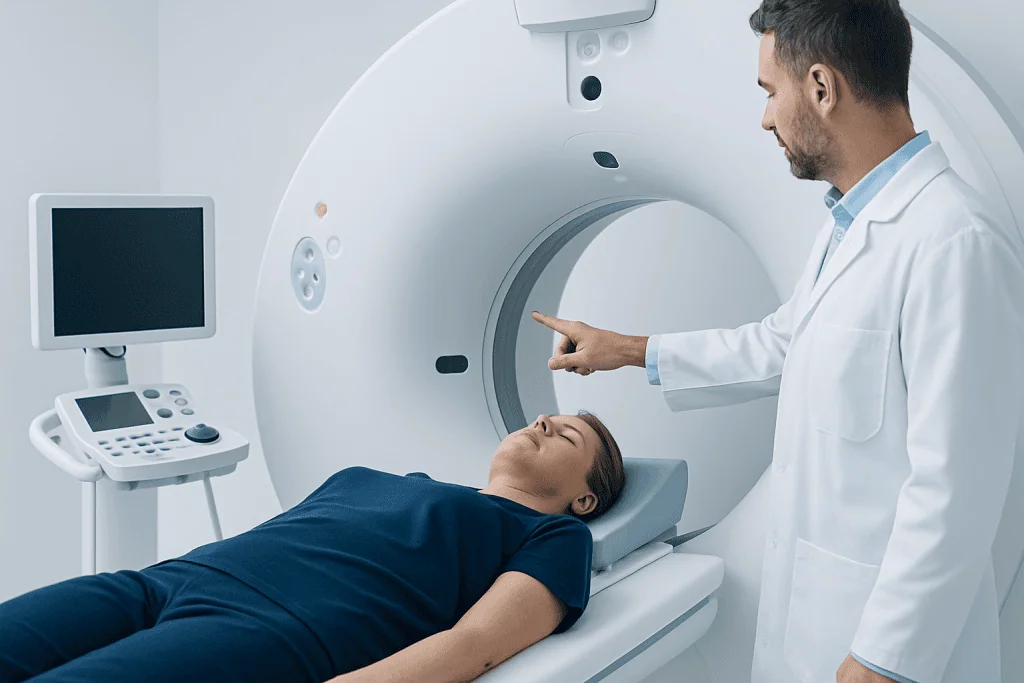
An X-ray is often an initial test for persistent or focal bone pain. Depending on the findings and the area involved, the doctor may recommend magnetic resonance imaging (MRI), computed tomography (CT), a bone scan, or other imaging. Blood tests may be used to assess general health or investigate alternative causes, but blood tests alone cannot diagnose or exclude bone cancer.
If imaging suggests a tumor, a specialist team may recommend a biopsy, in which a small sample of tissue is examined by a pathologist. Biopsy planning is important and is usually coordinated by specialists experienced in bone tumors, because the biopsy approach can affect later treatment. A diagnosis should be based on the combined results of symptoms, examination, imaging, and pathology.
Primary bone cancers include osteosarcoma, Ewing sarcoma, and chondrosarcoma, which differ by age group, typical location, and treatment approach. Specialists also distinguish malignant tumors from benign bone lesions, which may require monitoring or treatment but are not cancer.
Treatment and outlook
Treatment depends on the exact type of bone cancer, its location and size, whether it has spread, and the person’s overall health. Care is usually planned by a multidisciplinary team that may include orthopedic oncology surgeons, medical oncologists, radiation oncologists, radiologists, pathologists, rehabilitation professionals, and specialist nurses.
Common treatments include surgery to remove the tumor, chemotherapy for certain cancer types, and radiotherapy when appropriate. Surgical planning aims to remove the cancer while preserving limb function whenever safely possible, although the right approach is individual. Rehabilitation can support recovery, mobility, strength, and return to daily activities after treatment.
Outlook varies substantially between tumor types and individual circumstances. A specialist can explain what the test results mean, discuss treatment goals, and provide a personalized outlook. Timely evaluation of persistent symptoms supports earlier diagnosis of a range of conditions, including both benign disorders and cancers.
Acibadem International’s multidisciplinary specialists and JCI-accredited hospitals evaluate and treat bone tumors for international patients, with care plans based on individual diagnostic findings.
When to seek medical care
Medical care should be sought if bone or joint pain persists for several weeks, is worsening rather than improving, or cannot be explained by a clear injury. An appointment is also appropriate for a new lump or swelling, pain that regularly interrupts sleep, unexplained limping, or a noticeable reduction in movement or function.
Urgent medical assessment is needed for a suspected fracture, severe sudden pain, inability to bear weight, new weakness or numbness, or pain accompanied by significant swelling after an injury. Emergency services may be appropriate if symptoms are severe or a person cannot move the affected limb safely.
People with a previous cancer diagnosis should report new, persistent bone pain to their treating clinician, especially if it is progressive or occurs at rest. Although the cause may still be unrelated to cancer, the care team can decide whether imaging or other tests are needed.
Waiting briefly for a clearly improving minor injury is often reasonable. However, if symptoms continue, recur, or create concern, a qualified doctor can provide reassurance and arrange the right next steps.
Frequently asked questions
Can bone cancer be present without pain?
It is possible for a bone tumor to cause few or no symptoms initially, particularly if it is small or located in an area where changes are difficult to notice. However, persistent pain is the most common symptom of primary bone cancer. Some tumors are discovered incidentally during imaging performed for another reason.
How long should bone pain last before seeing a doctor?
Pain from a mild injury often improves steadily with time, rest, and appropriate self-care. If pain lasts for several weeks, keeps returning, worsens, affects sleep, or is not linked to a clear injury, it is sensible to arrange a medical assessment. Earlier review is appropriate if there is swelling, a lump, or difficulty using the limb.
Is pain at night always a sign of bone cancer?
No. Night pain can occur with many common conditions, including arthritis, muscle or tendon problems, nerve pain, and injuries. However, persistent or worsening pain that occurs at night is one reason a doctor may recommend an assessment, particularly when it occurs alongside other symptoms.
Can an X-ray detect bone cancer?
An X-ray can often show changes in a bone that need further investigation, so it is commonly used as an initial imaging test. It cannot always provide a definite diagnosis, and MRI, CT, or other scans may be required. A biopsy is generally needed to confirm the precise type of tumor when cancer is suspected.
Are bone tumors always cancerous?
No. Many bone tumors and bone lesions are benign, meaning they are not cancer. Even benign lesions may sometimes need monitoring or treatment depending on their size, location, symptoms, and effect on bone strength.
Who is most likely to develop primary bone cancer?
Primary bone cancer can occur at any age, but some types are more common in children, teenagers, and young adults, while others occur more often in older adults. It remains uncommon overall. Individual risk depends on the specific cancer type and certain uncommon medical or genetic conditions.
This article is for general information only and is not a substitute for professional medical advice. Please consult a qualified doctor about your individual situation.
Oncology care in Turkey — second opinion and treatment plan
JCI-accredited · board-certified surgeons · reply within 24h
Add us as a Preferred Source to see more of our trusted health content across Google Search, AI Overviews and Discover.

More from the Health Library

Is Pork Meat Fattening? Here Is What the Evidence Says

Why Does My Nose Get Stuffy at Night? A Doctor-Reviewed Answer

Are Scallops Healthy? Causes, Explanations, and Next Steps

Do Mushrooms Have Protein? Causes, Explanations, and Next Steps

Why Do Scabs Itch? Here Is What the Evidence Says

Does Apple Cider Vinegar Help with Bloating? A Doctor-Reviewed Answer
Orthopedic Surgery & Traumatology Specialists at Acibadem

Assoc. Prof. Dr. Bertan Cengiz
Orthopedic Surgery & Traumatology
Dr. Betül Toygar
Physical Medicine & Rehabilitation
Fzt. Beyza Nur Gündüz
Physical Medicine & Rehabilitation
Dr. Buğra Alpan
Orthopedic Surgery & Traumatology