How to Choose an Interventional Neuroradiologist for Complex Brain Vessel Care

An interventional neuroradiologist treats blood vessel conditions in the brain and spine using minimally invasive, image-guided procedures. Patients should ask about fellowship training, experience with their specific condition, and access to 24/7 emergency stroke or neurovascular care.
Key Takeaways
- An interventional neuroradiologist treats blood vessel conditions in the brain and spine using minimally invasive, image-guided procedures.
- Patients should ask about fellowship training, experience with their specific condition, and access to 24/7 emergency stroke or neurovascular care.
- A strong multidisciplinary team often improves decision-making for aneurysms, arteriovenous malformations, stroke, and related conditions.
- Hospital quality, imaging technology, intensive care support, and follow-up services are important when care is complex.
- Good communication matters: patients should understand treatment options, risks, benefits, and the plan for recovery and long-term monitoring.
Choosing an interventional neuroradiologist is an important step for people facing complex brain vessel conditions. The best choice usually combines specialist training, multidisciplinary support, modern hospital resources, and clear, patient-centered communication.
Overview
An interventional neuroradiologist is a doctor who diagnoses and treats diseases of the blood vessels in the brain, head, neck, and sometimes the spine using imaging guidance and thin catheters passed through the blood vessels. These specialists often care for people with conditions such as brain aneurysms, arteriovenous malformations, carotid artery disease, certain kinds of stroke, and other complex cerebrovascular problems.
Choosing the right specialist can feel overwhelming, especially when decisions need to be made quickly. Many patients and families are not only choosing one doctor, but also choosing a care pathway that may involve neurologists, neurosurgeons, stroke physicians, anesthesiologists, intensive care teams, and rehabilitation experts. In complex brain vessel care, the strength of the team is often just as important as the skills of the individual physician.
A thoughtful choice usually depends on several factors: the doctor’s training, experience with the specific condition, the hospital’s neurovascular resources, and the quality of communication. Patients do not need to know every technical detail, but they should feel confident that the specialist can explain the diagnosis clearly, discuss alternatives honestly, and coordinate care safely.
What an Interventional Neuroradiologist Does
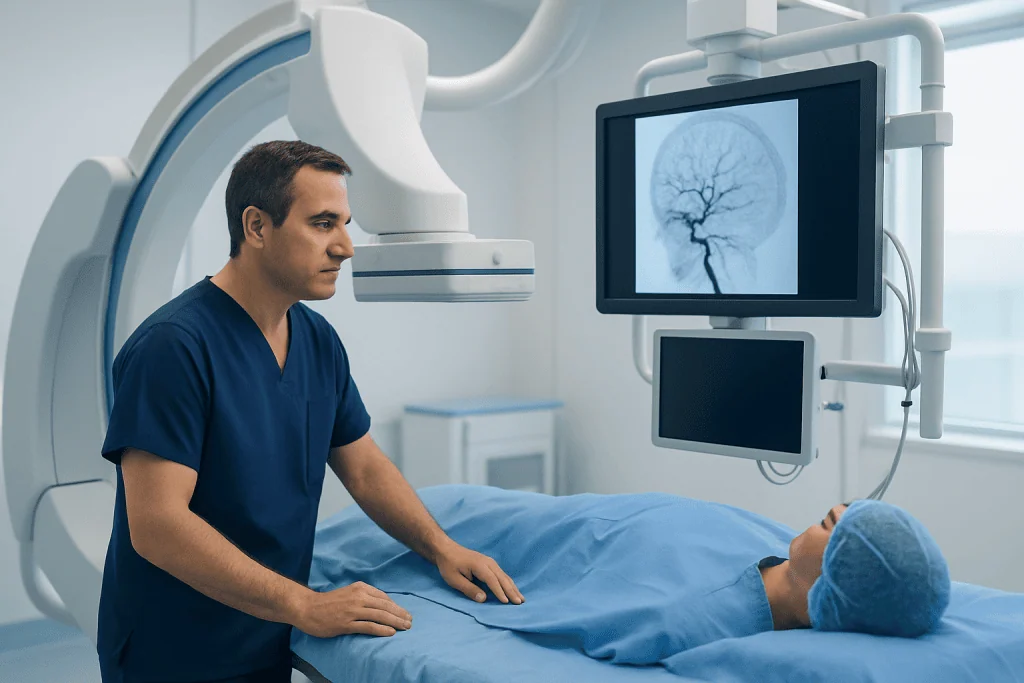
Interventional neuroradiologists use advanced imaging such as angiography to look closely at blood vessels and perform treatment from inside the body rather than through a large surgical opening. Depending on the condition, treatment may involve closing an aneurysm, removing or dissolving a clot during selected strokes, placing a stent, treating vessel narrowing, or reducing blood flow to an abnormal tangle of vessels.
Because these procedures are highly specialized, patients should make sure the doctor’s day-to-day practice includes the type of problem they have. A physician who frequently treats brain aneurysms may not have the same focus as one who more often performs emergency stroke thrombectomy or treats spinal vascular malformations. Matching the specialist’s experience to the patient’s diagnosis is an important part of choosing well.
These specialists also play a role before and after a procedure. They help confirm the diagnosis, review whether a procedure is the best option, explain expected benefits and risks, and arrange follow-up imaging. In some cases, the safest recommendation may be monitoring rather than immediate treatment, and a good specialist should be comfortable explaining why.
Qualifications and Experience to Look For

Training matters. Patients can ask whether the doctor completed formal specialty training in radiology, neurology, or neurosurgery followed by advanced fellowship training in interventional neuroradiology, endovascular surgical neuroradiology, or a closely related cerebrovascular field. Board certification and hospital credentialing can add reassurance that the physician meets recognized standards.
Experience should be considered in a specific way. Rather than asking only how many procedures a doctor has done overall, it is often more useful to ask how often the specialist treats the exact condition in question. For example, the questions may differ for someone seeking treatment for stroke, a ruptured aneurysm, carotid disease, or a vascular malformation. It is reasonable to ask whether the team manages both routine and high-complexity cases and whether difficult cases are reviewed in a multidisciplinary conference.
Patients may also ask about the doctor’s approach to complications and follow-up. No procedure is completely risk-free, so it is helpful to know how the physician monitors safety, what support is available if an urgent issue occurs, and how long-term imaging surveillance is handled. Clear answers often reflect both expertise and transparency.
- Ask about fellowship or subspecialty training in neurovascular intervention.
- Ask whether the doctor regularly treats the same condition and level of complexity.
- Ask if cases are discussed with neurosurgery, neurology, and neuroradiology colleagues.
- Ask how urgent complications, intensive care needs, and follow-up imaging are managed.
Questions About the Hospital and Care Team
Even an excellent physician needs the right hospital environment. Complex brain vessel care may require advanced angiography suites, high-quality MRI and CT imaging, neuroanesthesia, neurological intensive care, operating room backup, and inpatient rehabilitation. For emergency problems such as severe stroke or ruptured aneurysm, 24/7 availability can be essential.
Patients should also consider whether the center offers true multidisciplinary care. Some conditions can be treated in more than one way, including observation, endovascular treatment, open surgery, or radiosurgery. A team that includes interventional neuroradiology, neurosurgery, stroke neurology, and diagnostic neuroradiology is better positioned to recommend the most appropriate option instead of favoring a single technique for every patient.
It may be helpful to ask whether the hospital treats many international or complex referral patients, whether critical care services are available on-site, and how quickly second opinions can be coordinated. When care is planned, some patients may undergo detailed brain angiography or other advanced imaging before a final treatment recommendation is made. Strong institutional support can make the overall process smoother and safer.
How to Evaluate Communication and Shared Decision-Making
Technical skill is vital, but communication is equally important. Patients should feel that the doctor listens carefully, explains the diagnosis in understandable language, and welcomes questions. A good consultation should make clear what the condition is, why treatment is or is not recommended, what alternatives exist, and what recovery may involve.
Shared decision-making is especially important when more than one reasonable approach exists. For example, a small unruptured aneurysm may be monitored in some people, while others may benefit from an endovascular approach such as aneurysm treatment. The right choice depends on anatomy, symptoms, age, overall health, and personal priorities. Patients should not feel rushed into agreeing before they understand the options.
Families can also pay attention to how the team handles uncertainty. Complex vascular conditions sometimes require additional imaging, team discussion, or a staged treatment plan. Honest explanations, realistic expectations, and written instructions for follow-up are signs of patient-centered care.
Preparing for a Consultation
Preparation can help patients get the most from a specialist visit. Before the appointment, it is helpful to gather prior MRI, CT, angiography reports, discharge summaries, medication lists, and information about past procedures or bleeding and clotting problems. Bringing actual imaging files, when available, can be especially useful because treatment decisions often depend on small anatomical details.
Patients may want to write down key questions in advance. Useful examples include: What exactly is the diagnosis? Is this urgent? What are the benefits and risks of treatment versus monitoring? What type of procedure is being recommended? Who else will be involved in the decision? What kind of follow-up imaging or repeat procedures might be needed later?
It can also help to bring a family member or trusted friend. Complex information is easier to understand when another person is listening and taking notes. If a procedure such as mechanical thrombectomy is being discussed for selected stroke situations, asking about timing, expected benefit, and the rehabilitation plan can help families understand the full pathway of care.
Red Flags and Signs of High-Quality Care
Some warning signs are worth noting. Patients may want to pause and seek a second opinion if explanations are vague, questions are discouraged, follow-up plans are unclear, or treatment is recommended without a clear discussion of alternatives. Another concern is when complex care appears to depend on a single doctor without access to neurosurgery, intensive care, or stroke backup if needed.
In contrast, high-quality care usually has recognizable features. The team explains both benefits and limitations of treatment, reviews imaging carefully, and describes how decisions are tailored to the individual patient. The hospital can usually provide coordinated support from diagnosis through recovery, including rehabilitation and surveillance imaging when necessary.
Near the end of the decision process, some patients choose centers with broad neurovascular expertise under one roof. Acibadem International’s multidisciplinary specialists and JCI-accredited hospitals diagnose and treat complex brain vessel conditions for international patients, with coordinated evaluation when endovascular, surgical, and supportive options all need consideration.
When to Seek Urgent Help or a Second Opinion
Urgent medical attention is needed for sudden symptoms that may suggest a stroke or another acute brain vessel problem. These can include sudden weakness or numbness on one side, difficulty speaking, facial drooping, sudden severe headache, loss of vision, confusion, or trouble walking. Emergency evaluation should not be delayed while searching for a specialist online.
A second opinion can be very helpful in non-emergency situations, particularly when the diagnosis is uncommon, more than one treatment approach is possible, or the patient feels uncertain about the recommendation. Seeking another expert view is common in complex neurovascular care and can improve confidence in the plan.
Whether care is urgent or planned, the goal is not simply to choose the most impressive title, but to find a specialist and center that combine experience, safety, teamwork, and communication. That combination often gives patients the clearest path through diagnosis, treatment, and recovery.
Frequently asked questions
What is an interventional neuroradiologist?
An interventional neuroradiologist is a doctor who treats certain blood vessel conditions of the brain, head, neck, and spine using minimally invasive, image-guided procedures. These procedures are usually performed through a catheter placed in a blood vessel rather than through large open surgery.
How is an interventional neuroradiologist different from a neurosurgeon or neurologist?
These specialists often work together, but their roles differ. A neurologist focuses on diagnosing and medically managing nervous system disorders, a neurosurgeon performs operations on the brain and spine, and an interventional neuroradiologist uses endovascular techniques to treat vascular problems from inside the blood vessels.
What questions should patients ask at the first appointment?
Patients can ask about the exact diagnosis, whether the condition is urgent, and what treatment options are available. It is also helpful to ask about the doctor's experience with that specific condition, possible risks and benefits, and what kind of follow-up will be needed.
Is it appropriate to get a second opinion?
Yes. A second opinion is common and often helpful, especially when the condition is complex or when there is more than one reasonable treatment choice. It can help patients better understand their options and feel more confident in the final decision.
Does a higher number of procedures always mean better care?
Experience is important, but numbers alone do not tell the whole story. The best care also depends on condition-specific expertise, hospital resources, teamwork, safety practices, and how well the treatment plan fits the individual patient.
Why does the hospital matter so much in complex brain vessel care?
Complex neurovascular treatment may require advanced imaging, specialized procedure suites, neuroanesthesia, intensive care, and neurosurgical backup. A well-equipped hospital with a coordinated multidisciplinary team can support safer care before, during, and after treatment.
References
- World Health Organization
- American Heart Association
- National Institute of Neurological Disorders and Stroke
- Society of NeuroInterventional Surgery
- Radiological Society of North America
This article is for general information only and is not a substitute for professional medical advice. Please consult a qualified doctor about your individual situation.
Joint and spine care in Turkey — expert assessment & treatment
JCI-accredited · board-certified surgeons · reply within 24h
Add us as a Preferred Source to see more of our trusted health content across Google Search, AI Overviews and Discover.

Neurosurgery
Surgical treatment of the brain, spine and nervous system, including minimally invasive and functional procedures.
72 specialists in this unit