How to Relieve Sinus Pressure in Face? A Doctor-Reviewed Answer

Most sinus pressure in the face is temporary and improves with hydration, saline rinses, steam, and rest. The best way to relieve sinus pressure depends on the cause, such as a viral cold, allergies, or sinus infection.
Key Takeaways
- Most sinus pressure in the face is temporary and improves with hydration, saline rinses, steam, and rest.
- The best way to relieve sinus pressure depends on the cause, such as a viral cold, allergies, or sinus infection.
- Seek medical care sooner if there is high fever, severe swelling, vision changes, shortness of breath, or symptoms lasting more than about 10 days.
- Doctors diagnose persistent or severe sinus pressure by asking about symptoms, examining the nose and face, and sometimes using imaging or allergy testing.
- Avoid overusing decongestant nasal sprays, and ask a clinician which medicines are appropriate for individual health needs.
Facial sinus pressure is often caused by a cold, allergies, or temporary sinus irritation, and it usually improves with simple self-care. Relief depends on reducing swelling, helping mucus drain, and treating the underlying cause while watching for warning signs that need medical review.
Overview: what helps sinus pressure in the face
If someone is wondering how to relieve sinus pressure in face, the answer is usually straightforward: gentle measures that reduce swelling and help mucus drain often bring relief. For many people, saline nasal rinses, steam or humidified air, warm compresses, good fluid intake, rest, and treatment of allergies or a cold are enough to ease pressure over the cheeks, eyes, forehead, or nose.
Sinus pressure is common and is often harmless when it happens with a short-lived viral infection or seasonal allergies. The feeling may be described as fullness, heaviness, tenderness, or aching in the face, especially when bending forward. Although uncomfortable, it often settles as inflammation improves and the sinuses begin to drain more normally.
The most important point is that sinus pressure is a symptom, not a diagnosis by itself. Relief is best when the underlying trigger is identified, whether that is nasal congestion from a cold, allergic swelling inside the nose, dry indoor air, irritants such as smoke, or a true bacterial sinus infection.
Why sinus pressure happens
The sinuses are air-filled spaces in the bones around the nose, cheeks, eyes, and forehead. They connect to the nose through small openings. When the lining inside the nose and sinuses becomes inflamed, these openings can narrow. Mucus may not drain well, and pressure can build up.
This process is commonly linked to a viral upper respiratory infection, often called a cold. Allergies can cause similar swelling by triggering the immune system and increasing mucus production. Less commonly, structural issues such as a deviated nasal septum or nasal polyps may contribute to repeated blockage and pressure.
Sinus pressure can also coexist with other conditions. Some people who think they have sinus pain actually have migraine, tension headache, or dental pain. If facial discomfort keeps returning, a doctor may consider related problems such as sinusitis or other causes of facial pain and congestion.
Symptoms that often come with sinus pressure

Facial sinus pressure may be felt in different areas depending on which sinuses are involved. Pressure in the cheeks may suggest maxillary sinus involvement, while pressure in the forehead can be related to the frontal sinuses. Some people notice a feeling of fullness around the eyes or at the bridge of the nose.
Other symptoms often occur at the same time, including:
- Nasal congestion or stuffiness
- Thick or thin nasal discharge
- Reduced sense of smell
- Postnasal drip
- Mild headache or facial tenderness
- Ear pressure or popping
- Cough, especially at night
- Fatigue during a cold or allergy flare
Symptoms from viral colds and allergies often overlap. A cold may bring sore throat, cough, and body aches, while allergies more often cause sneezing, itchy eyes, and recurrent congestion. If pain becomes intense, one-sided, or associated with swelling around the eye, a person should not assume it is routine sinus pressure.
How to relieve sinus pressure in face at home
Home care can be very effective for mild to moderate symptoms. Saline nasal spray or a saline rinse can help thin mucus, wash away irritants, and improve drainage. Many people also feel better with humidified air, a warm shower, or a warm compress placed over the cheeks or forehead for short periods.
Fluids and rest matter as well. Drinking enough water helps keep mucus from becoming too thick, and resting supports recovery when a cold is the trigger. Sleeping with the head slightly elevated may reduce nighttime congestion for some people.
Medicines may also help, depending on the cause. Over-the-counter pain relievers can reduce facial discomfort, and allergy medicines may help if symptoms are driven by allergic rhinitis. Short-term use of decongestants may ease stuffiness for some adults, but they are not suitable for everyone and some nasal decongestant sprays can worsen congestion if used for too many days. It is sensible to ask a pharmacist or doctor what is safe, especially for children, older adults, pregnant people, or anyone with high blood pressure, glaucoma, or heart conditions.
Simple habits can also reduce irritation. Avoid cigarette smoke and other strong fumes, wash hands regularly during cold season, and limit known allergy triggers where possible. If symptoms keep returning, an ENT assessment may help identify whether chronic inflammation, nasal polyps, or structural blockage is contributing; treatment may range from medicines to selected procedures such as septoplasty when a deviated septum is a key factor.
When symptoms may mean more than simple congestion
Not all sinus pressure is due to uncomplicated congestion. A bacterial sinus infection is more likely when symptoms are severe, last longer than expected, or worsen again after seeming to improve. This pattern matters because most short colds do not need antibiotics, but persistent or escalating symptoms may need medical review.
Clues that can point to a more significant sinus problem include thick discolored nasal discharge together with facial pain, fever, and blockage that does not improve. Repeated episodes over time may suggest chronic sinus inflammation or an anatomical issue that affects drainage.
Some people with frequent symptoms need further evaluation for underlying nasal disease. Doctors may look for polyps, chronic inflammation, or airflow problems and, in selected cases, discuss treatments used for long-term nose and sinus obstruction such as endoscopic sinus surgery or procedures related to nasal polyps when medical treatment alone is not enough.
How a doctor diagnoses the cause
If sinus pressure is severe, keeps returning, or does not improve, a doctor usually begins with a careful history. They may ask how long symptoms have lasted, whether symptoms started like a cold, whether there are allergy triggers, whether there is fever, and whether the discomfort is worse on one side or when bending forward.
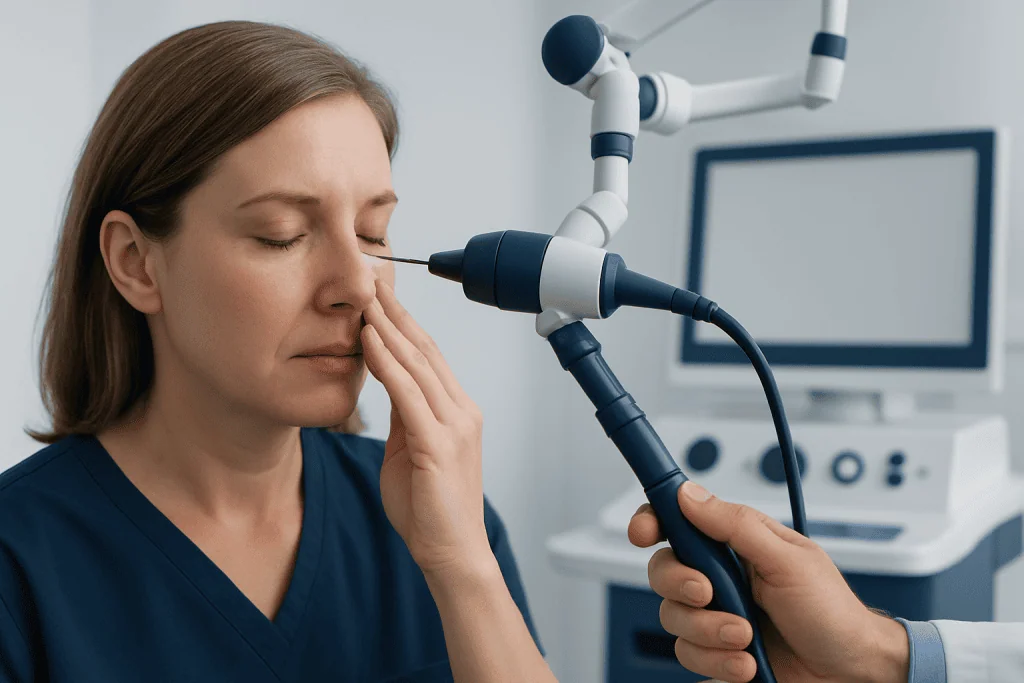
The physical examination often includes looking inside the nose, checking for swelling, discharge, polyps, and tenderness over the face. The doctor may also examine the throat and ears, because postnasal drip and congestion can affect these areas too. In some cases, an ENT specialist uses nasal endoscopy to view deeper parts of the nasal passages.
Imaging is not needed for most short-term cases, but it may be used if symptoms are persistent, complicated, or possibly related to another condition. A clinician may also consider allergy testing, dental evaluation, or assessment for headache disorders if the pattern does not fit sinus disease clearly. This step-by-step approach helps avoid unnecessary treatment and focuses care on the true cause.
Medical treatment options
Treatment depends on what is driving the pressure. Viral illnesses usually improve with supportive care rather than antibiotics. When allergies are the main issue, clinicians may recommend intranasal steroid sprays, antihistamines, saline irrigation, and strategies to reduce exposure to triggers. These approaches can lessen swelling inside the nose and improve sinus drainage over time.
If a bacterial infection is suspected, a doctor may consider prescription treatment based on the symptom pattern, overall health, and examination findings. People with chronic or recurrent symptoms may need a broader plan that addresses inflammation, structural issues, or both. In some cases, a clinician may recommend imaging or referral to an ENT specialist for further assessment.
For patients with ongoing nasal blockage from structural or chronic sinus disease, specialized treatment may be helpful. Depending on the findings, management could include medicines, office-based care, or surgery. At Acibadem International, multidisciplinary specialists in JCI-accredited hospitals diagnose and treat sinus conditions for international patients, including evaluation for related procedures such as rhinoplasty when nasal structure contributes to breathing or drainage problems.
When to seek medical care
Medical advice is important if sinus pressure is accompanied by warning signs. A person should seek prompt assessment for high fever, significant swelling around the eyes, redness around the eye, severe headache, confusion, stiff neck, double vision, reduced vision, shortness of breath, or symptoms after facial injury. These features are not typical of simple congestion and need timely evaluation.
It is also wise to see a doctor if symptoms last more than about 10 days without improvement, become worse after initial recovery, or keep coming back. Persistent one-sided symptoms, nosebleeds, severe tooth pain, or a bad smell in the nose can also point to causes that need professional assessment.
Early evaluation can be reassuring as well as helpful. Many people simply need confirmation that symptoms are due to a cold or allergies and guidance on safe symptom relief. A qualified clinician can also help distinguish sinus pressure from migraine, dental problems, or other causes of facial pain so that treatment is more effective.
Frequently asked questions
What is the fastest way to ease sinus pressure in the face?
Quick relief often comes from saline nasal irrigation, humidified air or steam, a warm compress, and resting with the head slightly elevated. These measures help reduce swelling and support drainage. If symptoms are severe or keep returning, a doctor can help identify the cause and the most appropriate treatment.
Does blowing the nose help sinus pressure?
Gentle nose blowing may help clear mucus, but forceful blowing can sometimes irritate the nasal passages and increase pressure. It is usually better to loosen mucus first with saline spray or rinses. If one side is completely blocked, repeated hard blowing is unlikely to solve the problem.
How can someone tell if sinus pressure is from allergies or an infection?
Allergies often cause sneezing, itchy eyes, clear mucus, and repeated congestion around certain triggers or seasons. A viral infection is more likely if symptoms begin with a cold, sore throat, cough, or body aches. A doctor may suspect bacterial infection when symptoms are severe, last longer than expected, or worsen after initial improvement.
Can sinus pressure cause tooth pain or ear pressure?
Yes. Pressure in the cheek sinuses can sometimes be felt in the upper teeth, and nasal congestion can affect pressure in the ears. However, dental problems themselves can also mimic sinus pain, so persistent tooth pain should not automatically be blamed on the sinuses.
Are antibiotics needed for sinus pressure?
Not usually. Most sinus pressure linked to colds is caused by viruses, and antibiotics do not help viral infections. A doctor may consider antibiotics only when the symptom pattern suggests a bacterial infection or another complication.
When should sinus pressure be checked by a doctor?
A medical review is sensible if symptoms last more than about 10 days, worsen after getting better, or keep recurring. Urgent care is needed for severe swelling around the eye, vision changes, high fever, confusion, shortness of breath, or a very severe headache. These symptoms need prompt professional assessment.
References
- American Academy of Otolaryngology–Head and Neck Surgery
- Centers for Disease Control and Prevention
- National Institute of Allergy and Infectious Diseases
- Mayo Clinic
- National Health Service
This article is for general information only and is not a substitute for professional medical advice. Please consult a qualified doctor about your individual situation.
Explore treatments in Turkey — costs, top hospitals & a free quote
JCI-accredited · board-certified surgeons · reply within 24h
Add us as a Preferred Source to see more of our trusted health content across Google Search, AI Overviews and Discover.
Check your numbers in seconds
BMI, calories, due date, blood pressure and 30+ more clinical calculators — free, instant, doctor-reviewed ranges.

More from the Health Library



Related Specialists

Prof. Dr. Arzu Ertürk
Pulmonary Medicine
Prof. Dr. Muazzez Çevik
Pediatric Surgery
Prof. Dr. Behice Kurtaran
Infectious Diseases & Clinical Microbiology
Dt. İrem Coşar Tüfekçi
Oral & Dental Health