Hypospadias Repair — Explained by Medical Evidence, Not Myths

Hypospadias is present from birth and varies widely in severity, so repair plans are individualized. The aims of surgery are usually to create a forward-directed urine stream, correct significant curvature and achieve a functional penile appearance.
Key Takeaways
- Hypospadias is present from birth and varies widely in severity, so repair plans are individualized.
- The aims of surgery are usually to create a forward-directed urine stream, correct significant curvature and achieve a functional penile appearance.
- Many repairs are performed in one operation during early childhood, but complex forms may require staged surgery.
- A catheter or small tube may be used temporarily after surgery, and careful home aftercare supports healing.
- Follow-up into later childhood or adolescence can identify urinary, cosmetic or curvature concerns as the penis grows.
Hypospadias repair is a reconstructive operation for a birth difference in which the opening of the urethra is located on the underside of the penis rather than at its tip. The planned procedure, timing and expected outcome depend on the location of the opening, penile curvature and the child’s individual anatomy.
Hypospadias Repair: What It Is and What It Can Achieve
Hypospadias repair is surgery to reconstruct the urethra, the tube that carries urine out of the body, when its opening is not at the tip of the penis. In hypospadias, the opening may be near the head of the penis, along the shaft, or closer to the scrotum. Some children also have downward curvature of the penis, called chordee, and an incomplete foreskin that is often more developed on the upper side.
The goals of repair are practical as well as anatomical. Surgery may help a child pass urine with a forward-directed stream, reduce significant curvature that could affect later sexual function, and create an appearance that is typical for that child’s anatomy. It is important to understand that hypospadias repair is not a single identical operation: pediatric urologists select techniques according to the exact location of the urethral opening, tissue quality, curvature and any previous surgery.
Not every child with hypospadias needs the same degree of treatment. Very mild forms may cause little or no functional difficulty, while more proximal forms are more likely to need reconstruction. A specialist assessment helps families make an informed decision based on anatomy, likely function and the child’s long-term needs.
How Specialists Assess Hypospadias Before Surgery
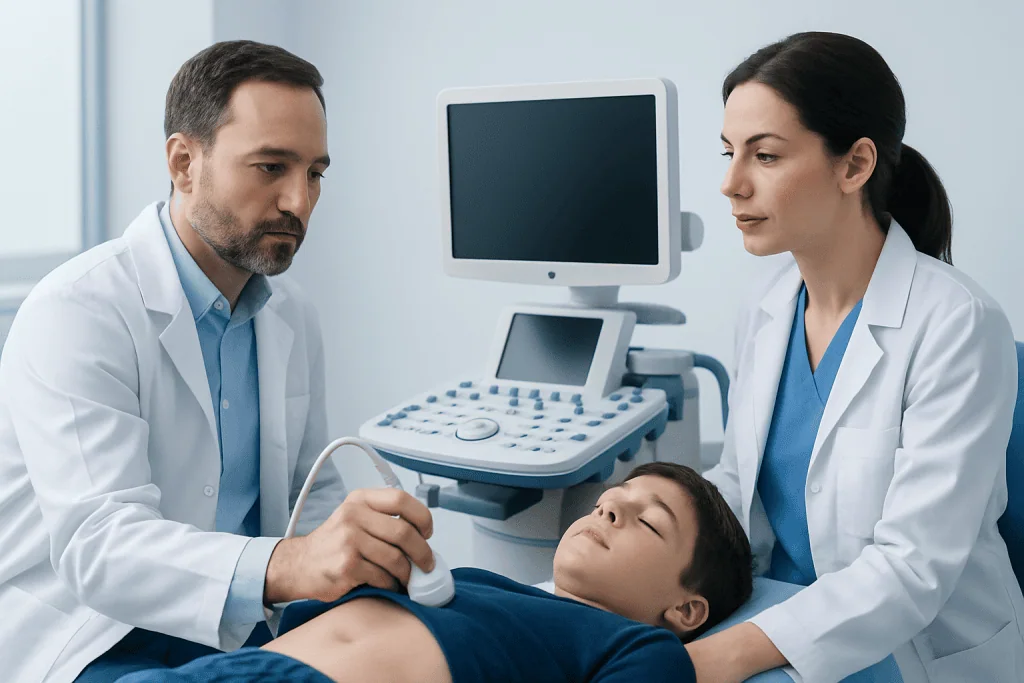
A pediatric urologist usually diagnoses hypospadias through a physical examination soon after birth or during infancy. The examination documents where the urethral opening is located, whether the penis curves when erect, how developed the foreskin is and whether both testes are present in the scrotum. These details are more informative for planning than the outward appearance alone.
Most isolated cases do not require extensive testing. However, further evaluation may be appropriate when hypospadias is severe, when one or both testes have not descended, or when there are other differences in genital development. In these situations, the care team may recommend blood tests, imaging or consultation with pediatric endocrinology or genetics to understand the child’s overall health.
Parents are generally advised not to request circumcision before a pediatric urology review. Although many modern repair techniques do not require foreskin tissue, the foreskin can be useful in some reconstructions and its presence gives the surgeon more options. The specialist can discuss whether circumcision, foreskin reconstruction or neither is appropriate at the time of repair.
Choosing Whether and When to Have Hypospadias Repair

When surgery is recommended, it is often planned between about 6 and 18 months of age, although the best timing varies. At this age, genital tissues are small but suitable for repair, and children are unlikely to retain memories of the procedure. Earlier evaluation also allows a family to plan calmly and address questions before treatment is needed.
Timing can change for medical reasons, including prematurity, other health conditions, the severity of hypospadias or the need for a staged approach. Repair can also be performed later in childhood, adolescence or adulthood when hypospadias has not previously been treated or when a person develops symptoms after an earlier operation. Older patients may have different practical and emotional considerations, which should be discussed openly with a urologist.
A common myth is that surgery is only cosmetic. Although appearance can be an important part of reconstructive care, the decision is also based on urinary function, penile curvature and the likely effect of anatomy as the child grows. Another myth is that every case is urgent; in most otherwise well newborns, hypospadias is not an emergency, but timely specialist review is still valuable.
What Happens During the Operation
Hypospadias surgery is performed under general anesthesia, meaning the child is asleep and does not feel pain during the operation. The anesthetic team may also use a regional pain-control technique to improve comfort after surgery. The operation is usually done as a day procedure, although some children may need an overnight stay depending on their age, health and the complexity of the repair.
The surgeon first evaluates and, if necessary, corrects penile curvature. They then create or reconstruct a urethral channel so urine can exit closer to or at the tip of the penis. In many distal cases, the repair can be completed in one stage using local penile tissue. In more complex proximal hypospadias or revision surgery, tissue grafts or flaps may be needed, and reconstruction may be divided into two operations separated by a healing period.
A soft catheter or stent is commonly left in place to drain urine while the new urethra heals. It may drain into a diaper or urine collection bag, depending on the child’s age and the surgical approach. The surgeon will explain how long it is expected to remain, as this varies from case to case. Families should ask about the planned technique, expected recovery, follow-up schedule and signs that should prompt a call after discharge.
Recovery and Home Care After Hypospadias Surgery
Swelling, bruising and a small amount of spotting on the dressing can be normal in the first days after repair. The penis may initially look more swollen or darker in color than parents expect; this usually improves as healing progresses. The surgical team provides individualized instructions on pain relief, bathing, diaper changes, clothing and activity, and these instructions should take priority over general advice.
If a catheter is present, it is important to keep it from becoming kinked or pulled. Parents may notice urine draining around the tube, particularly during bowel movements or bladder spasms; whether this is expected depends on the repair, so the surgical team should explain what is normal. Diapered children may have a double-diaper arrangement to separate stool from urine drainage, while older children may use a collection bag.
Children usually need quiet play for a short period and should avoid straddle toys, bicycles, rough play and activities that could put pressure on the genital area until the surgeon says healing is sufficient. Constipation can increase discomfort, so adequate fluids and the clinician’s advice about bowel care can be helpful. Follow-up appointments allow the team to remove the catheter or dressing when needed and check early healing.
Results, Possible Complications and Long-Term Follow-Up
Most children heal well after hypospadias repair, but every operation has potential risks. These include bleeding, infection, wound separation, scarring, persistent curvature and narrowing of the urethral opening. A urethrocutaneous fistula, an unintended small channel through which urine leaks from the underside of the penis, is one of the recognized complications. If it occurs, it may close on its own in some cases, but it can require a later repair.
The chance of needing another procedure depends largely on the original anatomy and complexity of the reconstruction. Distal hypospadias generally has a simpler repair than more proximal hypospadias with marked curvature, but outcomes cannot be predicted from location alone. A surgeon can provide a realistic discussion of the individual factors that may affect healing and future treatment needs.
Follow-up is valuable beyond the first postoperative visit. As toilet training begins, clinicians can assess the urine stream, including spraying, straining or deviation. Later assessment during puberty may identify curvature or concerns that become more apparent with growth. Families should feel comfortable raising questions about urinary function, appearance or emotional wellbeing at any stage.
When to Seek Medical Care
Parents should arrange a pediatric urology assessment when they notice that a newborn’s urine opening is not at the tip of the penis, the penis appears curved, or the foreskin looks incomplete or uneven. A non-urgent specialist review is usually appropriate for an otherwise well baby. Circumcision should be postponed until this review unless a clinician has advised otherwise.
After surgery, the surgical team should be contacted promptly for fever, worsening redness or swelling, persistent bleeding, foul-smelling drainage, uncontrolled pain, vomiting that prevents drinking, or a catheter that stops draining or comes out unexpectedly. Parents should also seek advice if the child seems unusually unwell or if there is any uncertainty about the dressing or urine drainage.
Urgent medical assessment is appropriate if a child cannot pass urine after catheter removal, has severe pain with a swollen bladder area, or appears seriously unwell. Acibadem International’s multidisciplinary specialists and JCI-accredited hospitals provide evaluation and treatment for pediatric urological conditions for international patients, with care plans tailored to the child and family.
Frequently asked questions
Is hypospadias repair necessary for every child?
No. The need for surgery depends on the location of the urethral opening, the presence of curvature, urinary function and family preferences. A pediatric urologist can explain whether observation or repair is most appropriate for the individual child.
At what age is hypospadias repair usually done?
When repair is planned, it is commonly performed in infancy or early toddlerhood, often between 6 and 18 months. The timing may be adjusted for the child’s health, anatomy and the complexity of the operation.
How long does hypospadias repair take to heal?
Initial healing takes several weeks, while swelling and the final appearance may continue to improve over a longer period. If a catheter is used, it is commonly removed after a period decided by the surgeon. Follow-up is important to assess urine flow and healing.
Will a child need a catheter after hypospadias surgery?
Many children have a temporary soft catheter or stent after surgery to protect the new urethra while it heals. The need for one and the duration of use depend on the repair technique and the complexity of the hypospadias.
Can hypospadias repair affect fertility later in life?
In many people, repaired hypospadias does not prevent fertility. More severe hypospadias, significant curvature or associated genital conditions may affect sexual or reproductive function in some cases. Long-term review is particularly helpful for complex cases.
Can hypospadias come back after surgery?
Hypospadias itself does not return, but complications such as urine leakage, narrowing or recurrent curvature can appear during healing or later as the penis grows. These concerns do not always require another operation, but they should be assessed by a urologist.
References
- European Association of Urology
- American Urological Association
- American Academy of Pediatrics
- National Institute of Diabetes and Digestive and Kidney Diseases
- Urology Care Foundation
This article is for general information only and is not a substitute for professional medical advice. Please consult a qualified doctor about your individual situation.
Hypospadias in Turkey — costs, top hospitals & a free quote
JCI-accredited · board-certified surgeons · reply within 24h
Add us as a Preferred Source to see more of our trusted health content across Google Search, AI Overviews and Discover.

Urology
Treatment of the urinary system and male reproductive health, including robotic and laser procedures.
60 specialists in this unitMore from the Health Library

Median Cubital Vein — Explained by Medical Evidence, Not Myths

Sacrum Coccyx: What Patients Need to Know

Herpes and Throat: An Evidence-Based Guide for Patients

White Gums — Explained by Medical Evidence, Not Myths

Strep Throat Pictures: A Complete Medical Overview