Interventional Neurology for Stroke Prevention: Which Patients May Benefit?

Interventional neurology focuses on catheter-based procedures that treat blood vessel problems linked to stroke risk. Not every person at risk of stroke needs a procedure; patient selection depends on symptoms, anatomy, imaging, and overall health.
Key Takeaways
- Interventional neurology focuses on catheter-based procedures that treat blood vessel problems linked to stroke risk.
- Not every person at risk of stroke needs a procedure; patient selection depends on symptoms, anatomy, imaging, and overall health.
- Common reasons to consider intervention include carotid artery narrowing, some brain aneurysms, and specific abnormal blood vessel conditions.
- Treatment decisions are usually made by a multidisciplinary team that may include neurologists, interventional neuroradiologists, neurosurgeons, and vascular specialists.
- Lifestyle changes and medical therapy remain essential even when a procedure is recommended.
Interventional neurology for stroke prevention uses minimally invasive, image-guided procedures to reduce the risk of stroke in carefully selected patients. It may benefit people with certain blood vessel conditions in the brain or neck, especially when medication alone may not be enough.
Overview: What Interventional Neurology Means for Stroke Prevention
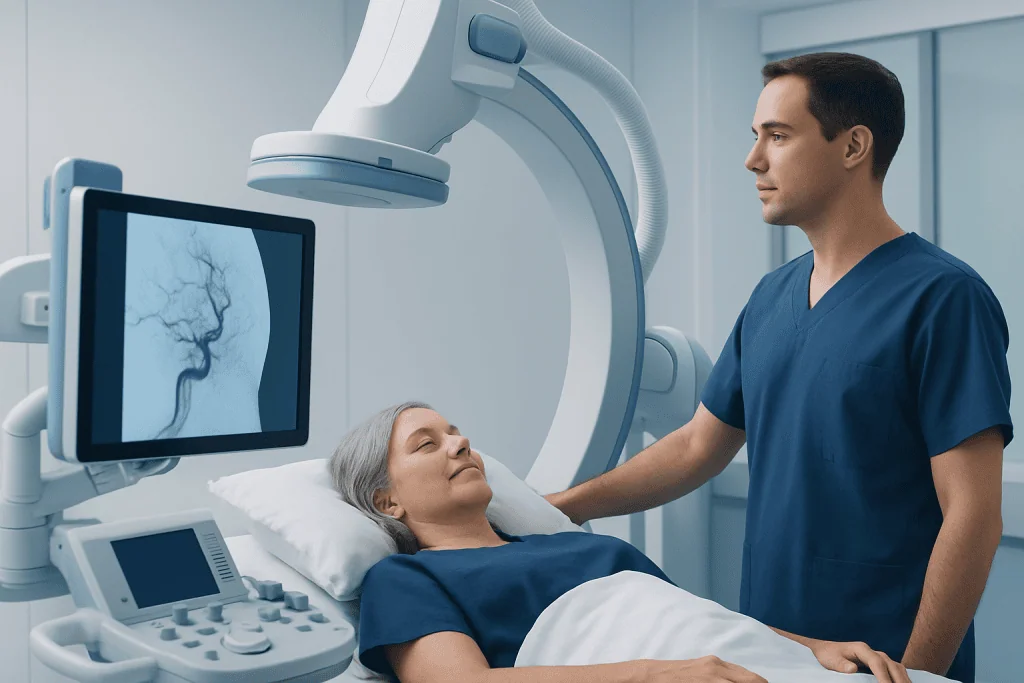
Interventional neurology for stroke prevention refers to minimally invasive procedures used to lower the chance of a future stroke in people with certain vascular conditions. Rather than using a large surgical incision, specialists guide thin catheters through blood vessels, usually starting from the wrist or groin, and use advanced imaging to reach the area that needs treatment.
These procedures are not used for every person with stroke risk. Many people can reduce their risk effectively with medicines, blood pressure control, cholesterol management, diabetes care, and healthier daily habits. Interventional treatment is typically considered when imaging shows a structural blood vessel problem or when the estimated benefit of a procedure outweighs its risks.
The main goal is prevention. In some patients, treatment can improve blood flow to the brain, reduce the chance of clots forming, or secure a weakened blood vessel before it causes bleeding. Depending on the condition, options may include carotid artery stenting, aneurysm coiling, or other endovascular procedures.
Because stroke risk can arise from several causes, a careful evaluation is important. Specialists look not only at the blood vessel problem itself, but also at age, symptoms, past stroke or transient ischemic attack, medication use, kidney function, bleeding risk, and other health conditions that can affect the safest treatment plan.
Which Patients May Benefit Most?
Patients who may benefit most from interventional neurology are those with a clearly identified blood vessel problem that is known to increase stroke risk and is treatable by catheter-based methods. One common example is narrowing of the carotid arteries, the major vessels in the neck that supply blood to the brain. When narrowing is significant, especially after symptoms such as a transient ischemic attack or minor stroke, a procedure may be considered in selected cases.
Another group includes people with certain unruptured brain aneurysms that have features associated with a higher chance of bleeding over time. In these situations, endovascular treatment may help prevent a hemorrhagic stroke by sealing the aneurysm from inside the vessel. Patients with some vascular malformations or narrowed intracranial arteries may also need specialist assessment.
Interventional treatment may also be discussed when a person has repeated symptoms despite appropriate medical therapy. For example, someone who continues to have warning signs such as temporary weakness, numbness, speech difficulty, or vision loss may need further evaluation to see whether the source is a treatable vascular lesion. In some cases, conditions related to stroke risk are found during work-up for dizziness, headaches, or incidental imaging findings.
Benefit is not based on one factor alone. Doctors weigh the severity and location of the problem, whether the patient has symptoms, the likelihood of future stroke, and the safety of the procedure. The best candidates are usually those in whom the expected reduction in stroke risk is meaningful and the anatomy is suitable for endovascular care.
Conditions Commonly Evaluated for Preventive Procedures

Several cerebrovascular conditions may lead to discussion of preventive intervention. Carotid artery stenosis is among the most recognized. Plaque buildup can narrow the artery and either reduce blood flow or release debris that travels to the brain. Depending on the degree of narrowing, symptoms, and overall surgical risk, doctors may compare medication alone with procedures such as stenting or surgery.
Unruptured intracranial aneurysms are another important condition. These are weakened areas in blood vessel walls that can bulge outward. Many never rupture and can be safely monitored, but some are more concerning because of their size, shape, location, growth, or family history. In selected patients, brain aneurysm treatment through an endovascular approach may be advised to reduce the risk of bleeding.
Some patients are assessed for intracranial atherosclerotic disease, vertebral artery disease, or abnormal artery-to-vein connections. In rare cases, blood vessel abnormalities can increase the risk of ischemic or hemorrhagic events and may call for highly specialized planning. The work-up may also explore related conditions such as brain aneurysm or other cerebrovascular disorders.
It is important to remember that not every abnormality requires intervention. Some findings are best managed with surveillance imaging and medical treatment. The role of interventional neurology is to identify which lesions are likely to cause harm and which can be watched safely over time.
How Specialists Decide: Assessment and Diagnosis
Choosing the right patients begins with a detailed diagnostic evaluation. Doctors usually start by reviewing symptoms, medical history, family history, smoking status, prior stroke or transient ischemic attack, heart rhythm problems such as atrial fibrillation, and current medicines including blood thinners. A neurological examination helps identify whether symptoms match a blood vessel-related event.
Imaging is central to decision-making. Depending on the case, tests may include carotid ultrasound, CT angiography, MR angiography, brain MRI, or catheter angiography. These studies show the shape of blood vessels, how narrow they are, whether there is plaque ulceration, how an aneurysm is structured, and whether nearby arteries make a procedure more or less feasible.
Doctors also assess overall procedural risk. Kidney function matters because some tests use contrast dye. Bleeding risk, medication tolerance, frailty, and other chronic illnesses are considered carefully. In older adults, doctors balance technical success against recovery needs and the broader health picture, especially if multiple conditions affect daily life.
Many hospitals use a multidisciplinary approach. A treatment recommendation may come after discussion among stroke neurologists, interventional neuroradiologists, neurosurgeons, vascular surgeons, cardiologists, and anesthesiology teams. This helps ensure that all reasonable options are considered, including medical management alone, close monitoring, or a procedural solution.
Treatment Options in Interventional Neurology
Interventional neurology includes several endovascular techniques. In carotid artery disease, a small mesh tube called a stent can be placed to help keep the artery open. This may be considered for selected patients, particularly when anatomy and overall risk make stenting a reasonable alternative to surgery. In other cases, surgery may still be preferred, which is why individualized assessment is so important.
For aneurysms, specialists may use coils, stents, flow-diverting devices, or a combination of methods to reduce blood flow into the aneurysm sac and promote healing of the vessel wall. The choice depends on the aneurysm’s size, neck shape, location, and rupture risk. Some patients are best managed with monitoring rather than immediate treatment.
Other procedures can target vessel malformations or high-risk lesions in the brain and neck. In selected situations, minimally invasive approaches may offer shorter recovery times than open surgery, although they still carry meaningful risks and require expert follow-up. Some patients may also undergo cerebral angiography as part of diagnosis and treatment planning.
Even when a procedure is successful, it is usually only one part of stroke prevention. Most patients still need risk-factor control, regular follow-up, and sometimes antiplatelet or other preventive medicines as directed by their doctor. The long-term plan matters just as much as the procedure itself.
Benefits, Risks, and Recovery
The potential benefit of interventional neurology is a lower chance of stroke from a specific vascular problem. For the right patient, treating a narrowed artery or securing an aneurysm may reduce future danger that cannot be addressed fully by lifestyle changes and medication alone. The minimally invasive nature of endovascular treatment can also be appealing when compared with more extensive surgery in suitable cases.
At the same time, no procedure is risk-free. Possible complications vary by treatment type but may include bleeding, vessel injury, clot formation, reaction to contrast dye, kidney strain, infection, or stroke during or after the procedure. The exact level of risk depends on the lesion being treated, the patient’s anatomy, and general health factors. This is why careful selection is so important.
Recovery is often shorter than with open surgery, but patients still need observation and follow-up. Some can go home within a day or two, while others need longer monitoring, especially if the procedure was complex or if they have other medical conditions. Follow-up imaging may be needed to confirm that the treated vessel remains stable and open.
Good communication helps patients feel more prepared. Before treatment, the care team usually explains the expected benefit, possible alternatives, and what recovery may involve. Near the end of the care journey, some international patients may choose centers such as Acibadem International, where multidisciplinary specialists in JCI-accredited hospitals diagnose and treat complex cerebrovascular conditions.
Prevention, Self-care, and When to See a Doctor
Procedures do not replace everyday stroke prevention. Whether or not a patient has intervention, healthy habits remain essential. These include controlling blood pressure, managing cholesterol and diabetes, avoiding tobacco, staying physically active within personal ability, maintaining a balanced diet, and taking prescribed medicines consistently. Regular follow-up is especially important for anyone with known vascular disease.
Patients who have been told they have carotid narrowing, an aneurysm, or another cerebrovascular finding should ask whether surveillance imaging is needed and what symptoms should prompt urgent review. Some people will benefit from periodic scans to check for changes over time. Others may need closer monitoring after a procedure to make sure the treated area remains stable.
Medical attention should be sought promptly for any possible warning signs of stroke or transient ischemic attack. These include sudden weakness or numbness on one side of the body, difficulty speaking, confusion, sudden vision loss, severe unexplained dizziness, or trouble walking. A sudden, unusually severe headache also needs urgent evaluation, especially in someone with a known aneurysm.
It is also wise to see a doctor if there are repeated brief neurological symptoms, even if they seem to resolve quickly. A transient event can be an important warning sign. Early assessment gives patients the best chance to understand whether medical therapy, monitoring, or interventional neurology offers the safest path forward.
Frequently asked questions
What is interventional neurology for stroke prevention?
It is a group of minimally invasive, image-guided procedures used to lower stroke risk in selected patients with blood vessel problems in the brain or neck. The aim is to treat a specific structural cause of stroke risk, such as severe artery narrowing or a high-risk aneurysm.
Does everyone at risk of stroke need an interventional procedure?
No. Many people can reduce stroke risk effectively with medication, blood pressure control, cholesterol treatment, diabetes management, and healthy lifestyle changes. Procedures are usually reserved for patients with certain vascular findings where the expected benefit clearly outweighs the risks.
Who might be a good candidate for carotid artery stenting?
Some patients with significant carotid artery narrowing may be considered, especially if they have had symptoms such as a transient ischemic attack or minor stroke. Suitability depends on the degree of narrowing, overall health, anatomy, and whether stenting or surgery is likely to be safer and more effective.
Can interventional neurology prevent bleeding from a brain aneurysm?
In selected cases, yes. Certain unruptured aneurysms can be treated with endovascular methods such as coiling or flow-diverting devices to reduce the chance of rupture. However, many aneurysms are low risk and are monitored rather than treated immediately.
What tests are used to decide whether a patient may benefit?
Doctors may use carotid ultrasound, CT angiography, MR angiography, brain MRI, and sometimes catheter angiography. These tests help define the blood vessel problem, estimate future stroke risk, and determine whether a procedure is technically appropriate.
Are these procedures safer than open surgery?
Not always. Endovascular procedures are less invasive, but they still carry important risks and are not automatically better for every patient. The safest option depends on the exact condition, the patient's anatomy, other health problems, and the experience of the treatment team.
What should patients do after a preventive procedure?
They should follow the care team's instructions closely, attend follow-up appointments, and take prescribed medicines as directed. Ongoing stroke prevention remains important, including blood pressure control, not smoking, healthy eating, physical activity, and monitoring of cholesterol and diabetes.
References
- World Health Organization
- American Heart Association
- National Institute of Neurological Disorders and Stroke
- European Stroke Organisation
- Society of NeuroInterventional Surgery
This article is for general information only and is not a substitute for professional medical advice. Please consult a qualified doctor about your individual situation.
Interventional Neurology in Turkey — costs, top hospitals & a free quote
JCI-accredited · board-certified surgeons · reply within 24h
Add us as a Preferred Source to see more of our trusted health content across Google Search, AI Overviews and Discover.
Check your numbers in seconds
BMI, calories, due date, blood pressure and 30+ more clinical calculators — free, instant, doctor-reviewed ranges.