Skin Cancer Types and Treatment: How It Works, Results and What to Expect

Basal cell carcinoma, squamous cell carcinoma, and melanoma are the main skin cancer types. Basal cell and squamous cell cancers are often treated successfully when diagnosed early.
Key Takeaways
- Basal cell carcinoma, squamous cell carcinoma, and melanoma are the main skin cancer types.
- Basal cell and squamous cell cancers are often treated successfully when diagnosed early.
- A skin biopsy confirms the diagnosis and helps guide the treatment plan.
- Treatment may include surgical removal, Mohs surgery, radiation therapy, topical medicines, or systemic treatments.
- A changing, bleeding, non-healing, or unusual skin lesion should be assessed promptly by a clinician.
Skin cancer types and treatment depend on the cancer cell involved, its size, location, depth, and whether it has spread. Most skin cancers are highly treatable when found early, often with a procedure that removes the cancer while preserving as much healthy skin as possible.
Skin Cancer Types and Treatment: An Overview
Skin cancer develops when abnormal skin cells grow out of control. The three most common types are basal cell carcinoma (BCC), squamous cell carcinoma (SCC), and melanoma. Skin cancer types and treatment vary because these cancers behave differently: BCC usually grows slowly, SCC may be more likely to invade deeper tissue, and melanoma can spread earlier if it is not identified and treated promptly.
For many people, treatment begins with a minor procedure to remove the lesion and a small margin of surrounding skin. The removed tissue is examined in a laboratory to confirm the diagnosis and check whether the cancer has been fully removed. More advanced cancers may require a coordinated plan involving dermatology, surgical oncology, pathology, radiation oncology, and medical oncology.
Early assessment is important, but a suspicious spot does not automatically mean cancer. Dermatologists can distinguish many benign growths from lesions that need testing. A professional examination and, when appropriate, biopsy provide the most reliable answer.
The Main Types of Skin Cancer
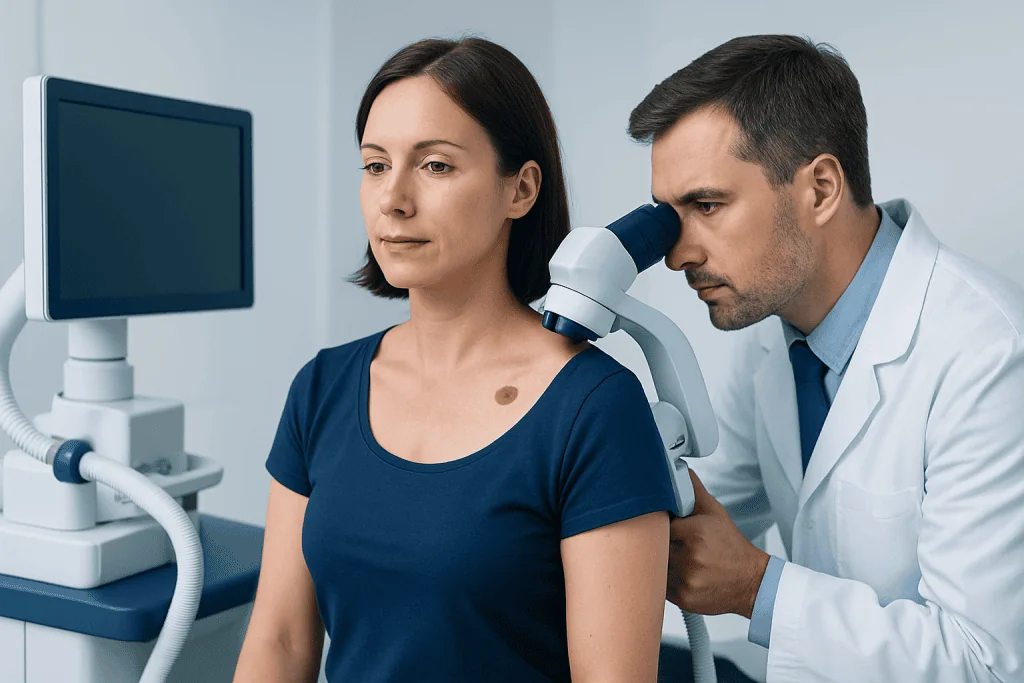
Basal cell carcinoma is the most common skin cancer. It often occurs on areas with cumulative sun exposure, such as the face, ears, scalp, neck, and upper body. It may appear as a pearly or shiny bump, a sore that heals and returns, a scar-like patch, or a pink area with visible small blood vessels. BCC rarely spreads to distant organs, but it can damage nearby skin, cartilage, bone, or nerves if left untreated.
Squamous cell carcinoma often appears as a scaly, crusted, thickened, tender, or non-healing area. It can arise on sun-exposed skin, in scars or chronic wounds, and sometimes on the lips, genital area, or inside the mouth. SCC can be more locally aggressive than BCC and, in some situations, may spread to lymph nodes or other organs.
Melanoma begins in pigment-producing cells called melanocytes. It can develop in an existing mole or as a new dark, multicolored, pink, red, or skin-colored lesion. Although less common than BCC and SCC, melanoma is more likely to spread if it grows deeper into the skin. Other uncommon skin cancers include Merkel cell carcinoma, cutaneous lymphoma, and Kaposi sarcoma, each of which needs specialist evaluation.
Which Is More Serious, Basal or Squamous?
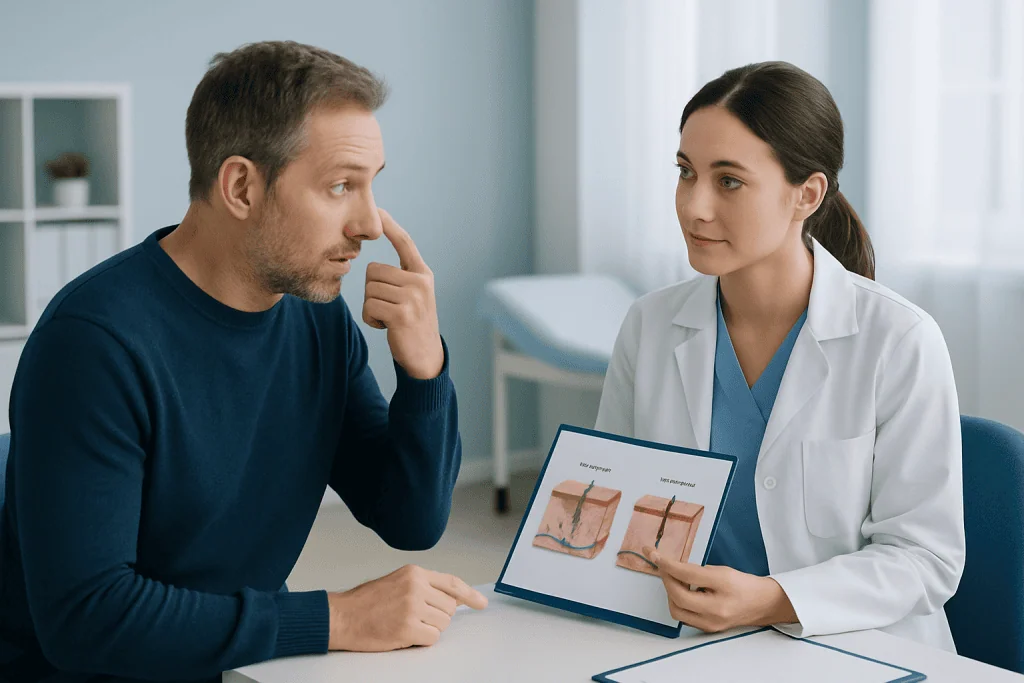
Squamous cell carcinoma is generally considered more serious than basal cell carcinoma because it has a greater potential to grow deeply and spread beyond the original skin site. The risk is still low for many SCCs that are found and treated early, particularly small lesions on lower-risk areas of the body.
However, individual risk matters more than the name alone. An SCC may need closer attention when it is large, rapidly growing, recurrent, located on the ear or lip, extends along nerves, develops in a scar or chronic wound, or occurs in a person with a weakened immune system. BCC is usually less likely to spread, but delayed treatment can still lead to significant local tissue damage, especially on the face.
A biopsy and clinical examination help the care team identify the cancer type and features that influence treatment. Follow-up is also important because a history of one skin cancer increases the chance of developing another in the future.
How Skin Cancer Is Diagnosed and Staged
A clinician begins by examining the skin, often using a handheld magnifying device called a dermatoscope. They may ask when the lesion first appeared, whether it has changed, and whether there is a personal or family history of skin cancer. A full-skin examination can help identify other concerning areas.
If a lesion is suspicious, a biopsy is usually performed. After numbing the skin, the clinician removes all or part of the lesion. A pathologist examines the sample under a microscope to determine whether cancer is present and, if so, the exact type and important features such as depth or cell pattern.
Most BCCs and SCCs do not need extensive staging tests. Imaging or lymph-node assessment may be considered when a cancer has higher-risk features or there are symptoms suggesting spread. For melanoma, thickness and ulceration in the biopsy guide staging; some patients may be advised to discuss lymph-node evaluation or imaging with a specialist.
How Skin Cancer Treatment Works
The aim of treatment is to remove or destroy the cancer while maintaining function and achieving the best possible healing outcome. The right option depends on the diagnosis, lesion size and site, biopsy findings, previous treatments, overall health, and personal preferences. A clinician can explain which approach is most appropriate for an individual lesion.
Excisional surgery removes the cancer along with a margin of normal-looking skin. The wound may be closed with stitches, allowed to heal naturally, or repaired with a skin flap or graft if needed. This is a common option for BCC, SCC, and many melanomas. For melanoma, the width of normal skin removed is planned according to the tumor depth.
Mohs micrographic surgery is especially useful for selected cancers in cosmetically or functionally important areas, such as the nose, eyelids, ears, lips, hands, or genital region. The surgeon removes thin layers of tissue and examines them during the procedure until no cancer cells remain at the edges. This tissue-sparing approach can offer high cure rates for suitable BCC and SCC lesions. Patients can discuss Mohs micrographic surgery when it is recommended for their diagnosis.
Other options may include curettage and electrodessication for carefully selected superficial lesions, cryotherapy for certain precancerous changes, photodynamic therapy, or prescription topical medicines for some superficial BCCs and SCC in situ. Radiation therapy may be an option when surgery is not suitable or after treatment of selected higher-risk cancers. Advanced melanoma, SCC, or BCC may be treated with immunotherapy, targeted therapy, or other systemic medicines under oncology supervision.
Who May Be a Candidate and What Happens During Treatment
Most people with a confirmed skin cancer are candidates for treatment, but the specific procedure is individualized. Surgery is often preferred when the cancer can be removed safely and the person is medically fit for a local anesthetic or, less commonly, a more extensive operation. Age alone does not determine eligibility; overall health, medications, immune status, and practical support during recovery are also considered.
Before the procedure, the team reviews the pathology report, examines the lesion or biopsy site, and discusses the expected scar, healing needs, and alternatives. Blood-thinning medicines and other prescriptions should never be stopped without advice from the clinician who prescribed them. People should also share any history of bleeding problems, allergies, implanted devices, or difficulties with wound healing.
For a typical local excision, the area is cleaned and numbed. The surgeon removes the lesion with a planned margin, sends tissue for laboratory analysis, controls bleeding, and closes or dresses the wound. Mohs surgery follows a similar initial process, but tissue is checked in stages while the patient waits between layers. The final wound may be repaired on the same day or, in selected cases, by another reconstructive specialist.
Recovery Timeline, Benefits and Possible Risks
After minor skin surgery, discomfort is often manageable with the aftercare plan recommended by the clinical team. A dressing may remain in place for a short period, and the area should be kept clean and protected from friction or sun exposure. Stitches, if used, are removed at a time based on the body site and wound tension. Healing may take days to weeks, while scars commonly continue to soften and fade over several months.
The main benefit of treatment is removal or control of the cancer before it causes further local damage or spreads. Most early BCC and SCC lesions can be managed effectively. For melanoma, early removal is particularly important because prognosis is closely related to how deeply the tumor has grown at diagnosis.
Possible procedural risks include bleeding, infection, pain, wound separation, delayed healing, numbness, changes in skin color, and scarring. Surgery near nerves, eyelids, lips, ears, or joints may involve additional functional considerations. Cancer can sometimes recur, and new skin cancers can develop elsewhere, which is why follow-up skin examinations remain part of care.
What Is the 2 Week Rule for Skin Cancer?
The “2 week rule” is not a universal diagnostic rule, but it is a practical reminder to seek assessment for a skin change that does not heal, continues to bleed or crust, or remains unexplained after about two weeks. It is especially relevant for a sore, scaly patch, ulcer, or raised growth that persists despite basic skin care.
Some benign skin conditions can take longer than two weeks to settle, and not every persistent spot is cancer. Still, prompt evaluation is sensible because a clinician can examine the lesion and arrange a biopsy if needed. A lesion should be assessed sooner rather than waiting two weeks if it is rapidly changing, very painful, repeatedly bleeding, or appears in a person with a previous history of skin cancer.
For moles and pigmented spots, the ABCDE approach can be helpful: asymmetry, irregular border, varied color, diameter that is increasing, and evolution or change. An “ugly duckling” spot that looks noticeably different from a person’s other moles also deserves medical attention.
Which Two Skin Cancers Are Most Curable?
Basal cell carcinoma and squamous cell carcinoma are commonly regarded as the most curable skin cancers when they are diagnosed early and treated appropriately. Many are confined to the skin and can be removed completely with surgery or treated with other localized approaches.
“Curable” does not mean that follow-up is unnecessary. A treated lesion can occasionally return, especially if it was large, recurrent, deeply invasive, or located in a higher-risk area. In addition, people who have had BCC or SCC have a higher chance of developing another skin cancer later, making regular skin checks and sun protection important.
Melanoma can also often be cured when it is identified at an early stage and removed before it spreads. The care team uses the biopsy findings to explain the likely outlook and whether further testing or treatment is appropriate.
What Is the Hardest Skin Cancer to Cure?
Melanoma and Merkel cell carcinoma are among the skin cancers that can be harder to cure when diagnosed after they have spread beyond the skin. Melanoma can travel to lymph nodes and distant organs, while Merkel cell carcinoma is rare but can behave aggressively. The outlook for either condition depends greatly on stage, tumor biology, response to treatment, and a person’s overall health.
Advanced skin cancers are not automatically untreatable. Modern care may include surgery, radiation therapy, immunotherapy, targeted medicines, or a combination of these approaches. Treatment plans are usually developed by a multidisciplinary team so that local treatment and whole-body treatment can be coordinated when necessary.
People with a confirmed melanoma may benefit from information about melanoma diagnosis and care, including staging and follow-up planning. Individual prognosis should be discussed with the treating specialist, who can interpret pathology and imaging findings in context.
Prevention, Self-Care and When to Seek Medical Care
Sun protection lowers the risk of many skin cancers. Helpful habits include seeking shade during strong sunlight, wearing protective clothing and a wide-brimmed hat, using broad-spectrum sunscreen as directed, and avoiding tanning beds. Sunscreen is useful but should be combined with clothing and shade rather than used to extend time in intense sun.
Monthly self-checks can help people become familiar with their skin. It is useful to look at the scalp, face, ears, torso, arms, palms, nails, legs, feet, soles, and between the toes; a mirror or another person can help with hard-to-see areas. People with many moles, a previous skin cancer, a family history of melanoma, or immune suppression may need a tailored schedule for professional skin examinations.
When to seek medical care: Arrange a medical review for a new or changing mole, a spot that repeatedly bleeds, a persistent sore, a rough or scaly patch that does not resolve, or a lesion that grows, changes color, or becomes painful. Earlier review is appropriate for any concerning change in a person with a history of skin cancer or a weakened immune system.
Acibadem International’s multidisciplinary specialists and JCI-accredited hospitals diagnose and treat skin cancer for international patients, with care plans based on pathology, cancer stage, and individual needs.
Frequently asked questions
What are the main skin cancer types?
The main skin cancer types are basal cell carcinoma, squamous cell carcinoma, and melanoma. Basal and squamous cell cancers are often linked to long-term ultraviolet exposure, while melanoma begins in pigment-producing cells and may develop in a mole or as a new lesion.
Can skin cancer be treated without surgery?
Some superficial or low-risk skin cancers can be treated with topical medicines, freezing, photodynamic therapy, curettage, or radiation therapy. Surgery is still commonly recommended because it can remove the cancer and provide tissue for laboratory assessment. The best option depends on the cancer type, depth, location, and individual health factors.
How long does it take to recover after skin cancer removal?
Many small surgical wounds begin to heal within one to three weeks, although healing time depends on the body location, wound size, repair method, and general health. Scars can continue to mature for months. The clinical team provides specific wound-care instructions and a plan for stitch removal when needed.
Does a skin cancer biopsy make cancer spread?
No. A properly performed skin biopsy does not cause skin cancer to spread. Biopsy is an important diagnostic step because it identifies the cancer type and provides details that help clinicians choose the most suitable treatment.
Can skin cancer come back after treatment?
Yes, some skin cancers can recur at or near the treated site, particularly if they had higher-risk features. A person who has had one skin cancer can also develop a new cancer elsewhere on the skin. Regular follow-up and skin self-checks help detect changes early.
When should a changing mole be checked?
A changing mole should be checked promptly if it becomes asymmetric, develops an irregular border, changes in color, grows, bleeds, itches persistently, or looks different from other moles. It is safer to have a clinician assess a concerning lesion than to monitor an ongoing change at home.
References
- American Academy of Dermatology
- American Cancer Society
- National Cancer Institute
- World Health Organization
- National Comprehensive Cancer Network
This article is for general information only and is not a substitute for professional medical advice. Please consult a qualified doctor about your individual situation.
Skin Cancer in Turkey — costs, top hospitals & a free quote
JCI-accredited · board-certified surgeons · reply within 24h
Add us as a Preferred Source to see more of our trusted health content across Google Search, AI Overviews and Discover.