Iris Implant Surgery: Procedure, Recovery and Results

Iris implant surgery is generally reconstructive eye surgery, not a cosmetic eye-colour procedure. An artificial iris may help reduce glare, photophobia and visual discomfort caused by iris loss or defects.
Key Takeaways
- Iris implant surgery is generally reconstructive eye surgery, not a cosmetic eye-colour procedure.
- An artificial iris may help reduce glare, photophobia and visual discomfort caused by iris loss or defects.
- The procedure is often combined with cataract surgery or intraocular lens implantation when the natural lens is also affected.
- Recovery commonly takes several weeks, while final visual results may take longer as inflammation settles and any prescription is updated.
- Possible risks include raised eye pressure, inflammation, corneal problems, implant displacement and changes in vision.
- Sudden pain, redness, reduced vision, flashes or new floaters after surgery need prompt ophthalmic assessment.
Iris implant surgery uses a custom-made artificial iris to replace or reconstruct missing or damaged iris tissue, usually after injury, congenital iris conditions or previous eye surgery. It can reduce disabling glare and light sensitivity while improving the eye’s appearance, but suitability depends on a detailed eye assessment.
Overview: What Is Iris Implant Surgery?
Iris implant surgery is a reconstructive ophthalmic procedure used to treat significant loss, absence or damage of the iris, the coloured ring of tissue around the pupil. The iris controls how much light enters the eye. When it is torn, partly missing or underdeveloped, a person may experience troublesome glare, sensitivity to light and reduced visual comfort, as well as a noticeable change in the eye’s appearance.
During surgery, an ophthalmic surgeon places a medical-grade artificial iris inside the eye. The implant is selected and sized to match the individual eye and may be positioned on its own or attached to another device, such as an intraocular lens. Intraocular lenses are commonly used when cataract removal or treatment of lens damage is also needed.
This operation is different from procedures marketed to permanently change eye colour. Artificial iris implantation is intended for carefully selected people with a medical need, such as traumatic iris loss, congenital aniridia or substantial iris defects after previous surgery. The main goals are to improve light control, relieve symptoms and reconstruct the front of the eye as safely as possible.
How the Implant Works and Who May Be a Candidate
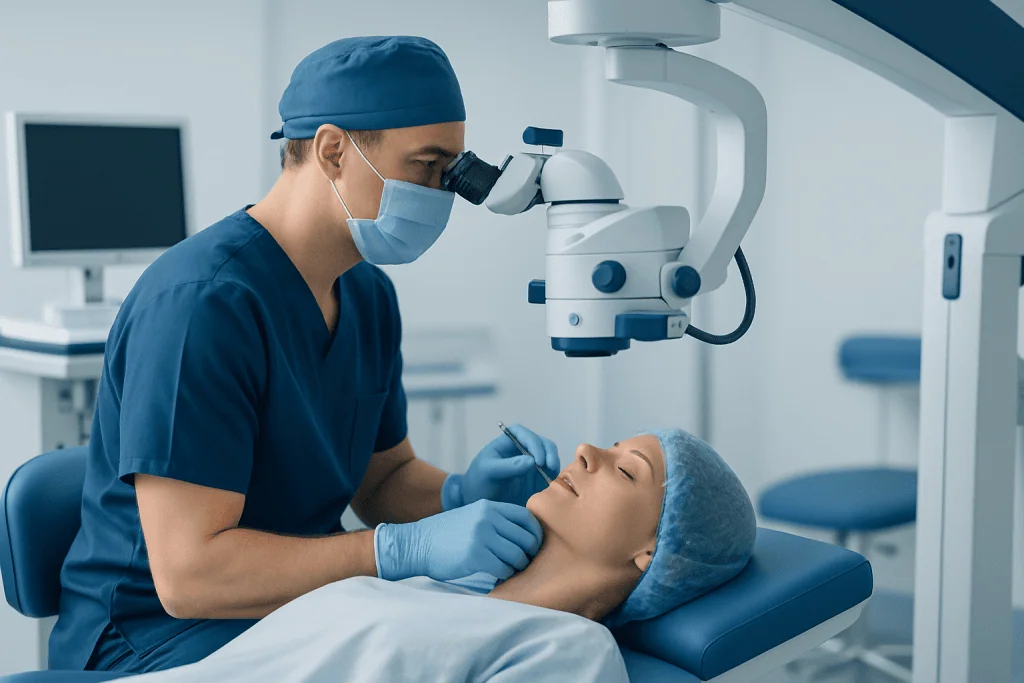
An artificial iris acts as a light-controlling diaphragm inside the eye. Its central opening functions like a pupil, limiting excess light that would otherwise reach the retina. This may reduce glare and photophobia, particularly in bright environments. The implant can also improve the cosmetic symmetry of an eye when the natural iris has a visible defect.
Possible candidates include people with an iris tear after blunt or penetrating eye trauma, partial iris removal after surgery, congenital absence or underdevelopment of the iris, or severe iris defects associated with certain eye conditions. A surgeon will assess the cornea, retina, optic nerve, eye pressure and natural lens or existing lens implant before recommending surgery.
Not everyone with an iris defect needs or benefits from an implant. Symptoms may sometimes be managed with tinted lenses, prosthetic contact lenses, spectacles, medication or treatment of another underlying problem. Surgery may be less appropriate when there is uncontrolled glaucoma, active inflammation or infection, severe corneal disease, major retinal damage, or insufficient support inside the eye for stable implant placement.
Preoperative assessment may include visual acuity testing, eye-pressure measurement, slit-lamp examination, dilated retinal examination and imaging. The surgeon also reviews previous operations, medications, allergies and general health. These findings help determine whether artificial iris reconstruction alone or combined surgery is the safer approach.
What Happens During Iris Implant Surgery?

Iris implant surgery is usually performed in an operating theatre under local anaesthesia with sedation, although general anaesthesia may be used in selected situations. The exact technique depends on the cause of iris loss, the condition of the lens and whether other structures in the eye require repair. The surgical plan is individualised rather than identical for every patient.
The surgeon makes small incisions at the edge of the cornea and prepares the artificial iris to fit the eye. The implant may be folded for insertion and then carefully positioned behind the cornea. If the natural lens is cloudy or damaged, cataract removal may be performed and an intraocular lens may be placed during the same procedure. In some eyes, the artificial iris and lens implant can be secured together or supported by sutures.
After checking the implant’s position, pupil opening and stability, the surgeon closes or seals the incisions. An eye shield may be used immediately afterwards. The operation itself may take longer when it involves scar tissue, prior trauma, lens removal, corneal repair or complex fixation techniques.
Combined surgery can be helpful because it addresses several problems in one planned operation. However, it may also make recovery and follow-up more complex. Patients should ask their surgeon which parts of the eye will be treated and what each part of the procedure is intended to achieve.
Recovery Timeline, Results and How Long Implants Last
Immediately after surgery, vision may be blurred and the eye may feel mildly scratchy, watery or sensitive to light. These symptoms often improve over the first few days. Prescribed antibiotic and anti-inflammatory eye drops are important for preventing infection and controlling inflammation. The eye should not be rubbed, and the surgical team will advise when normal washing, driving, work and exercise can safely resume.
Many people notice gradual improvement in comfort and light sensitivity over several weeks. Vision may fluctuate while the eye heals, especially if cataract surgery, corneal work or repair after trauma was performed at the same time. Follow-up appointments are essential because the surgeon needs to monitor eye pressure, inflammation, corneal clarity, wound healing and the position of the implant.
How long do iris implants last? Artificial iris implants are designed to remain in the eye long term. They do not normally need routine replacement, but their long-term success depends on stable positioning and the ongoing health of the cornea, drainage angle, retina and other eye structures. Additional treatment or surgery may occasionally be needed if complications develop or if a related eye condition progresses.
The final result may include less glare, better tolerance of bright light and improved cosmetic appearance. Visual sharpness may also improve when a cataract or lens problem has been corrected, but an artificial iris cannot reverse vision loss caused by retinal, optic-nerve or severe corneal damage. A new glasses or contact lens prescription may be needed after healing is complete.
Benefits, Risks and Important Questions About Vision
The potential benefits of iris implant surgery include better control of incoming light, less photophobia, reduced glare and a more natural-looking pupil and iris appearance. For some people, these changes improve day-to-day comfort in sunlight, while driving or when using screens. Results are influenced by the original cause of the iris damage and by the overall health of the eye.
As with any intraocular operation, there are risks. These include infection, bleeding, persistent inflammation, increased or decreased eye pressure, glaucoma, corneal swelling or cell loss, retinal swelling or detachment, implant movement, damage to surrounding structures and a need for further surgery. There may also be no improvement in vision if another part of the eye is responsible for reduced sight.
Can you still see with a torn iris? Yes, many people can still see with a torn iris, particularly when the retina, optic nerve, cornea and lens are healthy. However, an irregular or enlarged pupil can allow too much light into the eye, causing glare, double images, halos or reduced visual quality. The effect varies according to the size and location of the tear and whether other trauma occurred.
What are the risks of iris damage after cataract surgery? Iris damage after cataract surgery is uncommon but may include a small tear, pupil distortion, weakness of the iris tissue or inflammation-related changes. It can be associated with difficult surgery, previous eye trauma, certain medications, a narrow pupil or conditions such as floppy iris syndrome. A distorted pupil may not always cause symptoms, but persistent glare, discomfort or vision changes should be reviewed by an ophthalmologist.
Aftercare and When to Seek Medical Care
Recovery is supported by using eye drops exactly as prescribed, attending every follow-up visit and protecting the eye from accidental pressure or injury. Patients are commonly advised to avoid swimming, dusty environments, heavy lifting and strenuous exercise for a period specified by their surgeon. Sunglasses can improve comfort outdoors while light sensitivity settles.
How long does it take to recover from intraocular lens implant surgery? After straightforward cataract surgery with intraocular lens implantation, many people return to light daily activities within a few days, while the eye often stabilises over several weeks. Recovery can take longer when an intraocular lens is combined with artificial iris implantation, trauma repair, corneal surgery or treatment for glaucoma. The treating surgeon provides the most reliable timeline for an individual eye.
When to seek medical care: Prompt medical assessment is important for worsening pain, increasing redness, sudden reduction in vision, persistent nausea or headache, new flashes of light, a shower of floaters, a curtain-like shadow, discharge, or a new injury to the operated eye. These symptoms do not always mean a serious problem, but early examination helps protect vision.
For people travelling for specialist care, Acibadem International’s multidisciplinary ophthalmology specialists and JCI-accredited hospitals can assess complex iris defects and coordinate treatment for international patients. A consultation with a qualified ophthalmic surgeon is the appropriate next step for anyone considering iris reconstruction.
Living With an Iris Defect Before or Instead of Surgery
Not every iris defect requires surgery. For mild symptoms, practical measures may include wraparound sunglasses, a hat with a brim, anti-glare lenses and adjusting screen brightness. Some people benefit from tinted or prosthetic contact lenses designed to reduce light entering through an enlarged or irregular pupil. These options should be fitted and supervised by an eye-care professional.
It is also important to manage associated eye conditions. Dry eye, cataract, glaucoma, corneal scarring and retinal disease can each affect visual quality and may need separate treatment. Treating these conditions may improve symptoms even if iris reconstruction is not performed.
People with a history of eye injury should use protective eyewear for work, sports and activities involving flying particles or impact risk. Anyone who has had eye surgery should keep routine ophthalmology appointments, as changes in eye pressure, the cornea or the retina may be detected before they cause noticeable symptoms.
Frequently asked questions
Is iris implant surgery cosmetic or medical?
Artificial iris implantation is primarily a reconstructive medical procedure for substantial iris loss, congenital iris abnormalities or significant iris damage. It may improve the appearance of the eye, but its main purpose is often to improve light control and reduce glare. It should not be confused with cosmetic procedures intended only to change eye colour.
Can an artificial iris improve eyesight?
An artificial iris may improve visual comfort by reducing glare and excess light entering the eye. Whether it improves visual sharpness depends on the health of the cornea, lens, retina and optic nerve. It cannot restore vision lost from irreversible damage to these structures.
Is iris implant surgery combined with cataract surgery?
It can be combined with cataract surgery when the natural lens is cloudy, absent or damaged. In these cases, the surgeon may implant an intraocular lens as well as an artificial iris. Combining procedures may be practical, but the plan depends on the eye’s anatomy and surgical history.
How painful is recovery after iris implant surgery?
Most people have mild discomfort, scratchiness, watering or light sensitivity rather than severe pain after surgery. Prescribed drops and protective measures help the eye heal. Increasing pain or pain accompanied by reduced vision should be assessed urgently.
Can a damaged iris heal on its own?
A small iris injury may become stable without surgery, but torn or missing iris tissue does not usually regrow. Treatment depends on symptoms and the extent of the defect. Some people manage well with optical aids, while others may benefit from surgical reconstruction.
What follow-up is needed after an artificial iris implant?
Follow-up visits are needed soon after surgery and over the following weeks or months to check healing, pressure and implant position. Long-term eye examinations remain important because some complications, such as pressure changes or corneal problems, can develop later. The schedule is tailored to the individual procedure and eye condition.
References
- American Academy of Ophthalmology
- U.S. Food and Drug Administration
- National Eye Institute
- Royal College of Ophthalmologists
This article is for general information only and is not a substitute for professional medical advice. Please consult a qualified doctor about your individual situation.
Explore treatments in Turkey — costs, top hospitals & a free quote
JCI-accredited · board-certified surgeons · reply within 24h
Add us as a Preferred Source to see more of our trusted health content across Google Search, AI Overviews and Discover.