Is Scoliosis a Disability? Causes, Explanations, and Next Steps
Most scoliosis is mild and is not considered a disability in everyday medical terms. Scoliosis may be considered a disability when it significantly limits movement, work, self-care, or breathing.
Key Takeaways
- Most scoliosis is mild and is not considered a disability in everyday medical terms.
- Scoliosis may be considered a disability when it significantly limits movement, work, self-care, or breathing.
- Doctors assess curve size, symptoms, physical function, and sometimes imaging to understand severity.
- Treatment depends on age, curve progression, and symptoms, and may include monitoring, bracing, exercise-based rehabilitation, or surgery.
- New pain, weakness, numbness, rapid progression, or breathing difficulty should be evaluated by a doctor.
Is scoliosis a disability? In most people, no—scoliosis is often mild and does not prevent normal daily life. However, some people with severe curvature, pain, breathing problems, or major functional limits may meet a legal or medical definition of disability and should be assessed individually.
Overview: Is scoliosis a disability?
In most cases, scoliosis is not considered a disability. Many people have a mild sideways curve of the spine, live normally, and do not develop major pain or long-term limitations. For them, scoliosis is a medical finding or condition rather than a disabling one.
That said, the answer can change when scoliosis becomes more severe. If the spinal curve causes significant pain, limits walking or standing, affects balance, reduces lung function, or makes work and daily activities difficult, it may be viewed as a disability in a medical, educational, workplace, or legal setting. Whether it qualifies depends on how much the condition affects function, not simply on the word “scoliosis” alone.
This distinction is important because people often ask the question for different reasons. One person may want to know whether scoliosis is serious, while another may be asking about school accommodations, work limitations, insurance paperwork, or disability benefits. A doctor usually looks at the whole picture: symptoms, curve size, progression over time, physical examination, and how the condition affects everyday life.
Most importantly, scoliosis is often manageable. Early assessment can clarify whether the curve is mild and stable or whether it needs closer follow-up. If a person has known scoliosis, or notices shoulder imbalance, uneven hips, back pain, or posture changes, a medical review can help determine the next best step.
What scoliosis is and why severity matters
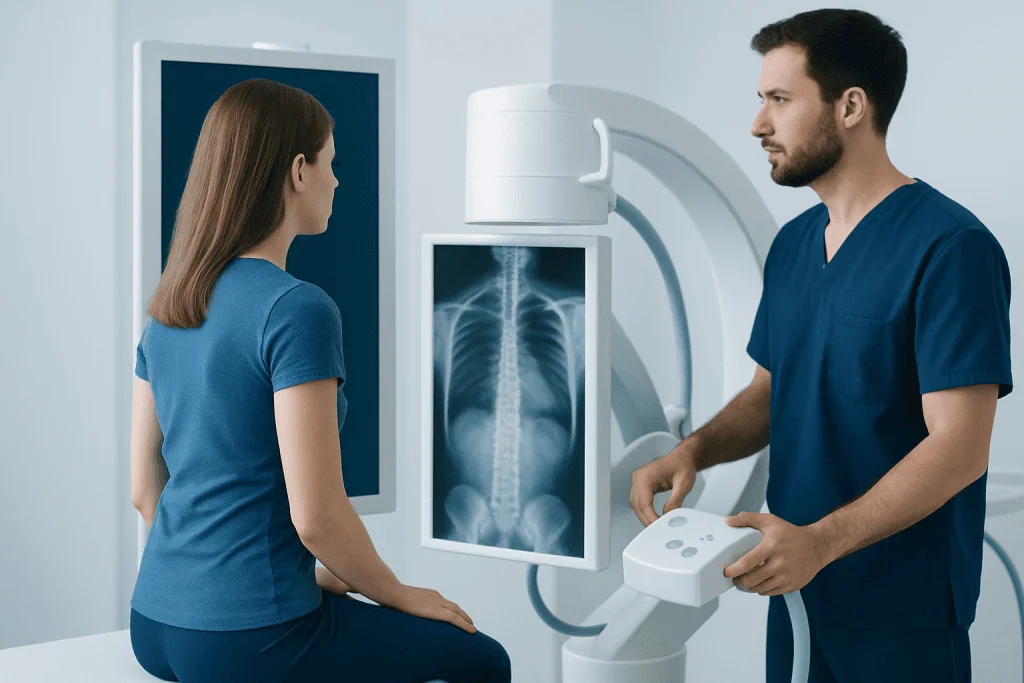
Scoliosis is a sideways curvature of the spine that may also involve some rotation of the vertebrae. It is not just “poor posture,” although posture changes may make it more noticeable. Scoliosis can occur in children, teenagers, and adults, and the causes vary by age group.
Mild scoliosis may cause little or no discomfort. It is often discovered during growth, school screening, a routine examination, or an imaging test done for another reason. In these situations, the person may never have any meaningful restriction in movement, exercise, school, or work.
More severe scoliosis can create a different experience. As the curve increases, it may place uneven strain on muscles and joints, contribute to back fatigue or pain, and in some cases affect chest space and breathing. Adults may also develop scoliosis over time due to age-related spinal wear, which can be associated with nerve compression or loss of spinal balance.
Because severity varies so widely, scoliosis is best understood as a spectrum rather than a single outcome. A mild, stable curve is very different from a rapidly progressing curve, a curve causing nerve symptoms, or one linked to another condition. For background on the condition itself, readers may find more information about scoliosis helpful.
When scoliosis may be considered disabling
Scoliosis may be considered disabling when it causes substantial, ongoing limits in daily function. Examples include difficulty standing or walking for normal periods, trouble lifting or bending, persistent pain that interferes with sleep or work, reduced endurance, or breathing problems due to significant spinal or chest wall deformity. In children and teens, disability-related concerns may also involve participation in school, sports, or self-care.
Medical and legal definitions of disability are not always the same. A doctor may describe scoliosis as severe based on examination and imaging, but eligibility for disability benefits, accommodations, or workplace support usually depends on documented functional impairment. This often includes how symptoms affect mobility, concentration, attendance, physical tasks, and independence over time.
Certain associated findings make disability more likely to be considered. These include severe pain, nerve symptoms such as numbness or weakness, balance problems, marked trunk shift, progressive deformity, or cardiopulmonary effects in advanced cases. Scoliosis linked to neuromuscular disorders, congenital spine differences, or degenerative spinal disease may also have broader functional effects than an isolated mild curve.
If questions relate to paperwork, schooling, employment, or benefits, detailed medical records are important. These may include examination findings, imaging reports, treatment history, and notes about specific limitations in daily activities. Clear documentation helps distinguish a curve that is present from one that is truly disabling.
Common causes and risk factors
The most common type is adolescent idiopathic scoliosis. “Idiopathic” means that no single clear cause is found. It often appears during growth spurts and may run in families. Many adolescents with this type feel well and have no neurologic symptoms, which is one reason scoliosis is frequently not disabling.
Other forms have more defined causes. Congenital scoliosis develops from spinal differences present at birth. Neuromuscular scoliosis is related to conditions that affect muscle control or nerve function. Adult scoliosis may be a continuation of an earlier curve or may develop later because of age-related degeneration of the spine and discs.
Risk factors for progression include younger age at diagnosis, remaining growth potential, larger curve size at the time of detection, and some curve patterns. In adults, worsening symptoms may be linked to arthritis, osteoporosis, disc degeneration, or narrowing around spinal nerves. These factors can contribute to pain or reduced mobility even when the curve itself is not very large.
While scoliosis can exist alongside other spinal problems, not all back pain means the curve is worsening. Some adults with scoliosis have mechanical back pain from muscles and joints, while others may have a separate issue such as disc disease or spinal stenosis. A careful assessment helps identify what is causing the symptoms and whether the scoliosis is the main reason for limitation.
Red flags and how doctors diagnose the cause of limitation
Because scoliosis is often harmless, doctors first look for signs that suggest a need for closer evaluation. These include a curve that appears to be progressing quickly, severe or night pain, weakness, numbness, changes in walking, bladder or bowel symptoms, shortness of breath, or scoliosis beginning very early in life. Adults should also seek review if back or leg symptoms are new, persistent, or getting worse.
The diagnostic process usually starts with a medical history and physical examination. A clinician may ask when the curve was first noticed, whether there is pain or fatigue, how daily activities are affected, and whether there is a family history. During the exam, they may assess shoulder and hip symmetry, spinal alignment, flexibility, balance, and any signs of nerve involvement.
Imaging often helps confirm the diagnosis and estimate severity. Standing spine X-rays are commonly used to measure the curve and monitor change over time. If there are neurologic symptoms, unusual findings, or concern for another structural problem, the doctor may also recommend advanced imaging such as MRI scanning or CT scanning in selected cases.
The key question is not only “How curved is the spine?” but also “How is the person functioning?” Doctors may consider pain level, endurance, mobility, school or work performance, and lung function if the curve is significant. This fuller view helps determine whether the scoliosis is mild and stable, whether it is responsible for the symptoms, and whether it could reasonably be considered disabling in practice.
Treatment options and next steps
Treatment depends on age, the degree of curvature, whether the curve is progressing, and how much it affects daily life. Mild scoliosis often needs observation only, especially if there are no symptoms and the curve is stable. Follow-up visits may be scheduled during periods of growth or if new symptoms develop.
For some children and adolescents whose curves are growing, bracing may help reduce the risk of further progression. Physical therapy and scoliosis-specific exercises may support posture, muscle balance, mobility, and symptom control, although they do not replace specialist follow-up when progression is a concern. Adults may benefit from rehabilitation, core strengthening, pain management strategies, and treatment of related degenerative spine problems.
Surgery is usually reserved for selected cases, such as severe curves, progressive deformity, or scoliosis causing major symptoms or functional compromise. When surgery is being considered, specialist assessment is important to weigh the potential benefits and risks. Some patients may undergo spine surgery after careful evaluation, especially when non-surgical care is not enough.
If scoliosis is causing nerve symptoms or advanced spinal changes, doctors may also investigate related conditions such as spinal stenosis. Near the end of the care pathway, some people seek multidisciplinary review; Acibadem International’s specialists in JCI-accredited hospitals evaluate and treat scoliosis for international patients using orthopedic, rehabilitation, imaging, and surgical expertise when needed.
Self-care, daily living, and when to seek medical care
Many people with scoliosis can stay active and maintain a good quality of life. General self-care may include regular exercise, attention to flexibility and core strength, healthy sleep habits, and avoiding long periods in one position if these trigger discomfort. A doctor or physiotherapist can suggest activities that match the person’s age, curve type, and symptom pattern.
At school or work, practical adjustments may sometimes help more than the diagnosis label itself. Examples include ergonomic seating, scheduled movement breaks, modified lifting demands, or sports guidance based on comfort and safety. If a person is seeking accommodations, documenting how symptoms affect function is usually more helpful than stating the curve size alone.
Medical care should be sought if there is new or worsening back pain, a noticeable increase in spinal curvature, uneven shoulders or hips developing over time, numbness, weakness, trouble walking, or reduced exercise tolerance. Urgent review is especially important for bowel or bladder changes, severe neurologic symptoms, chest symptoms, or breathing difficulty. These red flags do not always mean something serious is happening, but they do deserve prompt assessment.
For many families, the most reassuring next step is a structured evaluation rather than trying to decide alone whether scoliosis “counts” as a disability. A medical review can clarify whether the curve is mild and low-risk, whether monitoring is enough, or whether treatment and supportive services would be helpful.
Frequently asked questions
Is scoliosis automatically considered a disability?
No. Scoliosis by itself is not automatically a disability, because many people have mild curves without meaningful limits in daily life. It may be considered disabling only when it causes significant functional problems such as persistent pain, mobility limits, or breathing difficulties.
Can mild scoliosis qualify for disability benefits or accommodations?
Mild scoliosis usually does not qualify on its own. Decisions about benefits or accommodations are typically based on documented functional impairment, not just the diagnosis or X-ray finding. A clinician may need to record how the condition affects work, school, movement, or self-care.
What symptoms suggest scoliosis is more serious?
Symptoms that deserve medical review include worsening deformity, persistent or severe pain, numbness, weakness, balance problems, and shortness of breath. In adults, new leg pain or walking difficulty may also suggest another spinal problem along with scoliosis. These symptoms do not always mean disability, but they may indicate a need for closer evaluation.
How do doctors decide whether scoliosis is causing limitations?
Doctors consider both structure and function. They look at the spinal curve on examination and imaging, but they also ask how the condition affects daily tasks, exercise tolerance, school, work, sleep, and independence. This functional assessment is often the most important part of deciding how serious the condition is.
Can scoliosis get worse with age?
Yes, some curves can progress over time, especially during growth or with age-related spinal degeneration. Adults may also develop pain, posture changes, or nerve symptoms even if scoliosis was mild earlier in life. Regular follow-up is useful when symptoms change or the curve seems to be increasing.
If scoliosis is not a disability, does it still need treatment?
Sometimes yes, but not always. Mild, stable scoliosis may only need observation, while progressive curves or symptomatic cases may benefit from bracing, rehabilitation, or other treatment. The best plan depends on age, curve severity, symptoms, and whether the condition is changing over time.
References
- Scoliosis Research Society
- American Academy of Orthopaedic Surgeons
- National Institute of Arthritis and Musculoskeletal and Skin Diseases
- National Health Service
- American Association of Neurological Surgeons
This article is for general information only and is not a substitute for professional medical advice. Please consult a qualified doctor about your individual situation.
Joint and spine care in Turkey — expert assessment & treatment
JCI-accredited · board-certified surgeons · reply within 24h
Add us as a Preferred Source to see more of our trusted health content across Google Search, AI Overviews and Discover.