

Itchy Eye: Common Causes, Related Conditions, and When to See a Doctor

Itchy eye is usually related to allergies, dry eye, irritants, or eyelid inflammation. A single itchy eye may come from local irritation, while both eyes often suggest allergy or dryness.
Key Takeaways
- Itchy eye is usually related to allergies, dry eye, irritants, or eyelid inflammation.
- A single itchy eye may come from local irritation, while both eyes often suggest allergy or dryness.
- Redness, thick discharge, pain, light sensitivity, or blurred vision can point to a condition needing medical evaluation.
- Treatment depends on the cause and may include avoiding triggers, lubricating drops, allergy treatment, or care for the eyelids.
- Contact lens wearers should be especially cautious because itching can signal irritation, poor lens hygiene, or infection.
An itchy eye is commonly linked to allergies, dryness, or everyday irritants such as smoke, dust, or contact lenses. Most cases are mild, but persistent itching, pain, vision changes, or discharge should be assessed by an eye doctor.
Overview: What an itchy eye usually means
An itchy eye is a symptom rather than a diagnosis. In many people, it happens because the surface of the eye or the eyelids react to allergens, become too dry, or are irritated by environmental factors such as wind, smoke, cosmetics, or contact lenses. Itching is uncomfortable, but it often improves once the cause is identified and treated.
Itching can affect one eye or both. When both eyes itch at the same time, allergy or dry eye is often involved. When only one eye is affected, a local issue such as a trapped eyelash, a contact lens problem, or irritation of one eyelid may be more likely.
Although itching is usually not an emergency, it should not be ignored if it is severe, persistent, or comes with other symptoms. Eye pain, marked light sensitivity, reduced vision, swelling around the eye, or thick discharge are clues that a clinician should examine the eye more closely.
Common symptoms that can happen with an itchy eye
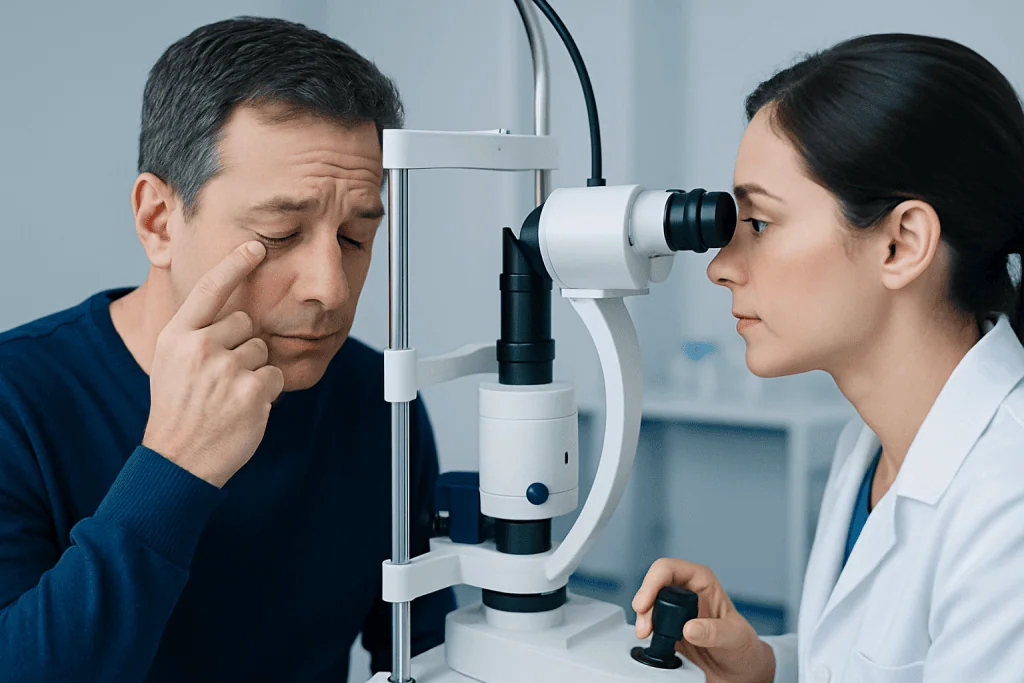
The feeling of an itchy eye can vary from mild irritation to a strong urge to rub the eyes. Many people also notice redness, watering, burning, a gritty sensation, or a feeling that something is in the eye. The eyelids may look puffy, especially when allergies are involved.
Other symptoms help suggest the underlying cause. Watery eyes and sneezing often point toward allergy. Burning, stinging, and fluctuating vision can happen with dryness. Crusting along the eyelid edges may suggest eyelid inflammation, while sticky or thick discharge can be seen with some infections.
Rubbing the eyes may briefly relieve itching, but it can worsen irritation and inflammation. In some cases, frequent rubbing can also aggravate the surface of the eye. Gentle care and finding the cause are more helpful than repeated rubbing.
- Watery, red eyes are often seen with allergies or viral irritation.
- Burning and grittiness are common in dry eye.
- Crusting or flaky eyelids can occur with blepharitis.
- Pain, blurred vision, or light sensitivity are less typical and should be assessed promptly.
Common causes and related conditions

Allergies are among the most common reasons for an itchy eye. Pollen, dust mites, pet dander, and mold can trigger the release of histamine, leading to itching, redness, and tearing. This may happen seasonally or throughout the year. Some people also react to eye makeup, facial creams, or cleaning products that come near the eyes.
Dry eye is another frequent cause. Tears do more than add moisture; they help protect and nourish the eye surface. When tears are not produced in enough quantity or are of poor quality, the eyes may burn, sting, feel tired, and sometimes itch. Dryness may become more noticeable with screen use, air conditioning, heating, age, or certain medications. People with dry eye may notice symptoms later in the day or after reading and computer work.
Eyelid and surface conditions can also lead to itching. Blepharitis, which is inflammation of the eyelid margins, often causes itchy lids, crusting, and irritation. Conjunctivitis can cause itching as well, especially when allergy is responsible; infection-related conjunctivitis may also bring discharge and redness. These problems fall under broader conditions such as eye inflammation, where the exact source of irritation needs to be clarified.
Contact lenses can contribute if they are worn too long, not cleaned properly, or no longer fit well. Less commonly, an itchy eye may be related to eczema around the eyelids, rosacea, a foreign body, or a developing infection. In children, allergic eye symptoms are common, but any persistent unilateral symptoms should be checked to rule out another local cause.
How doctors find the cause
Diagnosis starts with a careful history. A doctor usually asks when the itching began, whether one or both eyes are affected, and whether symptoms come and go with seasons, pets, cosmetics, or specific environments. Contact lens use, recent illnesses, new medications, and a history of allergies or skin conditions can all provide useful clues.
The eye examination looks at the eyelids, lashes, tear film, conjunctiva, and cornea. The doctor may check for signs of dryness, eyelid inflammation, discharge, or damage to the eye surface. Vision testing may also be done, especially if the person reports blur or discomfort.
In many cases, no complex testing is needed. When symptoms are recurrent or difficult to control, an ophthalmologist may assess tear production and tear quality, examine the meibomian glands in the eyelids, or look for signs of allergy-related changes. If there are concerning features such as pain, reduced vision, or a corneal problem, specialist evaluation becomes more important.
Treatment options depend on the cause
The best treatment for an itchy eye depends on why it is happening. If allergy is the main issue, avoiding triggers where possible and using doctor-recommended allergy eye drops may help calm itching and redness. Cool compresses can also provide relief. When dry eye is contributing, preservative-free artificial tears and attention to the environment are often useful first steps. In some cases, care may involve a formal dry eye treatment plan.
If eyelid inflammation is present, treatment often focuses on lid hygiene. Warm compresses and gentle cleansing of the eyelid margins may reduce crusting and irritation. Doctors sometimes recommend medicated treatments when blepharitis is more pronounced or linked to skin conditions such as rosacea.
Contact lens wearers may be advised to stop wearing lenses temporarily until the eye settles. Lens fit, hygiene habits, replacement schedule, and cleaning solution may all need review. If an infection is suspected, the doctor may prescribe appropriate medication; self-treating a possible infection with leftover drops is not advisable.
For persistent symptoms, ophthalmology assessment helps target the underlying problem rather than masking it. Depending on findings, a person may benefit from a comprehensive eye examination or, when surface irritation is part of a broader pattern, further ophthalmology care.
Self-care and prevention tips
Simple habits can often reduce itching and help prevent symptoms from returning. Avoid rubbing the eyes, because rubbing increases irritation and can transfer germs or allergens to the eye surface. Washing hands regularly, especially before touching the face or handling contact lenses, is also important.
When allergens are a trigger, practical measures may help. Keeping windows closed during high pollen days, showering after outdoor exposure, washing pillowcases regularly, and using air filters if appropriate can all reduce contact with irritants. For people sensitive to cosmetics or skin products, fragrance-free and ophthalmologist-tested products may be better tolerated.
Dryness can often be reduced by taking screen breaks, blinking more fully during computer use, staying hydrated, and limiting direct exposure to fans or dry air. Contact lens users should follow wear schedules carefully and never sleep in lenses unless specifically advised by their doctor. Replacing lenses and cases on time also lowers the chance of irritation and infection.
- Use clean, cool compresses for short-term comfort.
- Choose lubricating drops recommended for the eyes rather than redness-relief products used too frequently.
- Remove eye makeup fully each night.
- Seek advice before using steroid eye drops, as they are not safe for unsupervised use.
When to seek medical care
An itchy eye should be medically evaluated if symptoms do not improve, keep coming back, or interfere with daily life. It is also wise to seek care if the itching is accompanied by significant redness, swelling, crusting, or discharge, since these features may suggest an infection or notable eyelid inflammation.
Urgent assessment is important if there is eye pain, a sudden change in vision, marked sensitivity to light, injury, or a sensation of something stuck in the eye that does not go away. Contact lens wearers should be cautious because redness and discomfort can sometimes signal a more serious corneal problem.
People with chronic allergies, dry eye, eczema, or rosacea may need a longer-term management plan rather than occasional symptom relief. At Acibadem International, multidisciplinary specialists in JCI-accredited hospitals evaluate and treat eye conditions for international patients when expert assessment is needed.
Frequently asked questions
Why is only one eye itchy?
One itchy eye can happen from a local irritant such as an eyelash, dust, a contact lens problem, or irritation of one eyelid. It can also occur with a mild infection or inflammation affecting only one side. If the itching persists or comes with pain, discharge, or blurred vision, an eye exam is advisable.
Are itchy eyes usually a sign of allergy?
Allergy is one of the most common causes of itchy eyes, especially when both eyes are affected and there is sneezing or a runny nose. However, dryness, eyelid inflammation, cosmetics, and contact lens irritation can cause similar symptoms. The pattern of symptoms helps distinguish the cause.
Can dry eye make the eyes itch?
Yes. Dry eye often causes burning, stinging, grittiness, and fluctuating vision, but some people also experience itching. This happens because an unstable tear film can irritate the surface of the eye.
Is it safe to rub an itchy eye?
Rubbing may seem to help briefly, but it usually makes irritation worse. It can also introduce more allergens or germs and may aggravate the eye surface. Gentle compresses and appropriate treatment are safer ways to relieve symptoms.
When should contact lens wearers worry about an itchy eye?
Contact lens wearers should pay attention if itching comes with redness, pain, light sensitivity, discharge, or blurred vision. These symptoms may reflect more than simple dryness or allergy. Lenses should usually be removed and the eye assessed by a professional if symptoms are significant or do not settle quickly.
What kind of doctor should evaluate persistent itchy eyes?
A primary care doctor can help with straightforward allergy or irritation, but ongoing or unclear eye symptoms are best assessed by an ophthalmologist. Eye specialists can examine the tear film, eyelids, and eye surface in detail. This is especially important if vision changes, pain, or recurrent symptoms are present.
References
- American Academy of Ophthalmology
- National Eye Institute
- Centers for Disease Control and Prevention
- American College of Allergy, Asthma & Immunology
This article is for general information only and is not a substitute for professional medical advice. Please consult a qualified doctor about your individual situation.
Explore treatments in Turkey — costs, top hospitals & a free quote
JCI-accredited · board-certified surgeons · reply within 24h
Add us as a Preferred Source to see more of our trusted health content across Google Search, AI Overviews and Discover.

More from the Health Library



Related Specialists

Asst. Prof. Dr. Sibel Yıldırım Moral
Otorhinolaryngology
Dr. Nalyan Shener Gulagız
Emergency Service
Dr. Etem Aytaç Yazar
Orthopedic Surgery & Traumatology
Dr. Ercan Atilla
Psychiatry