

Jaw Cancer: Early Signs, Risk Factors, and How It Is Treated

Jaw cancer may begin in the jawbone or spread there from nearby oral cancers. Common warning signs include persistent swelling, pain, numbness, a mouth sore, or teeth becoming loose without a clear reason.
Key Takeaways
- Jaw cancer may begin in the jawbone or spread there from nearby oral cancers.
- Common warning signs include persistent swelling, pain, numbness, a mouth sore, or teeth becoming loose without a clear reason.
- Diagnosis usually involves a dental or medical exam, imaging tests, and a biopsy to confirm the exact tumor type.
- Treatment is personalized and may combine surgery, radiation therapy, chemotherapy, and reconstructive care.
- Persistent symptoms in the mouth or jaw should be assessed promptly by a qualified doctor or dentist.
Jaw cancer is a rare cancer that affects the bones or nearby tissues of the upper or lower jaw, and early signs can include swelling, pain, numbness, a mouth lump, or loose teeth. Treatment depends on the exact type, stage, and location, but often involves surgery and may also include radiation therapy, chemotherapy, or reconstruction.
Overview: what jaw cancer means
Jaw cancer is not a single disease. The term is commonly used to describe cancers that start in the jawbone itself or cancers from nearby tissues, such as the mouth, gums, or salivary glands, that grow into the jaw. Because the jaw is closely connected to the teeth, gums, tongue, and facial bones, symptoms may first seem like a dental problem rather than cancer.
In adults, many tumors involving the jaw are related to oral cancers, especially cancers of the gums, floor of the mouth, or hard palate that extend into bone. Less commonly, a tumor begins in the jawbone. Doctors need to identify exactly where the cancer started because that affects staging, treatment planning, and outlook.
The good news is that persistent symptoms can be investigated with imaging and biopsy, and treatment is often most effective when the disease is found early. A careful evaluation by dental, oral and maxillofacial, ENT, and oncology specialists can help distinguish jaw cancer from infections, cysts, or benign jaw tumors.
Early signs and symptoms of jaw cancer
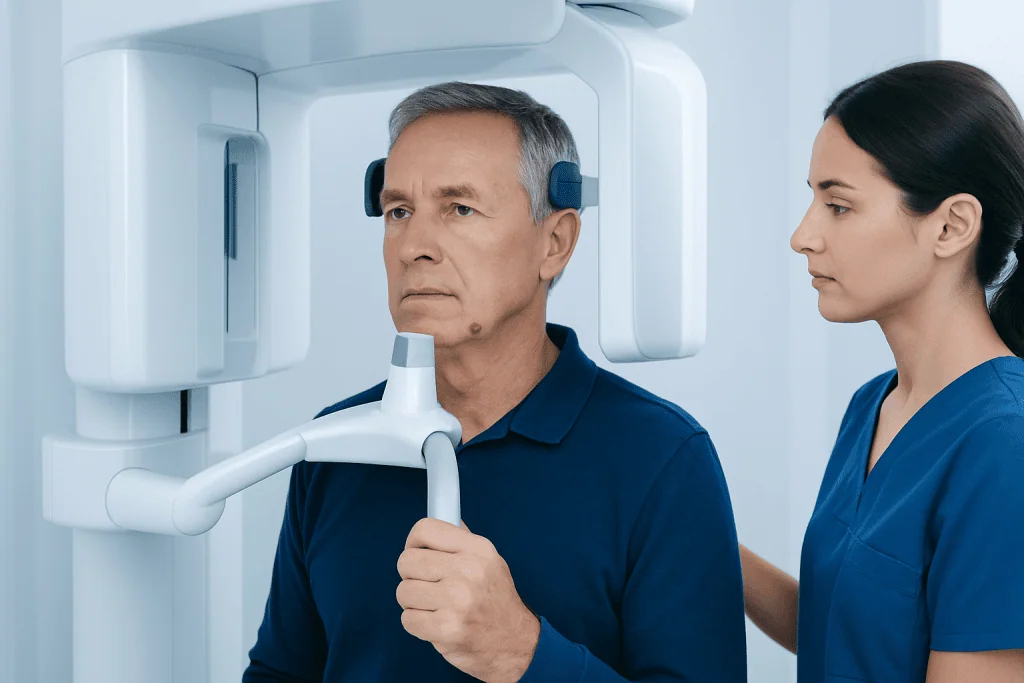
Jaw cancer symptoms can vary depending on whether the tumor affects the upper jaw, lower jaw, gums, or nearby soft tissues. Some people notice a painless swelling at first, while others develop ongoing discomfort. Symptoms that persist for more than a couple of weeks deserve medical or dental attention, especially if they are worsening.
Possible early signs include swelling in the jaw or face, a lump inside the mouth, pain when chewing, numbness of the lip or chin, unexplained loose teeth, bleeding from the gums, or trouble opening the mouth fully. Some people develop a sore in the mouth that does not heal, bad breath, dentures that no longer fit well, or changes in the bite.
Not every jaw symptom means cancer. Infections, abscesses, trauma, temporomandibular joint disorders, and benign cysts can cause similar problems. However, certain features are more concerning, such as symptoms that steadily progress, a visible or growing mass, pain with numbness, or a sore that does not improve.
- Persistent mouth or jaw swelling
- A lump on the gums, palate, or jawline
- Loose teeth without clear dental disease
- Numbness in the lower lip, chin, or face
- Mouth sores that do not heal
- Difficulty chewing, swallowing, or speaking
- Jaw pain or ear pain on one side
Causes and risk factors
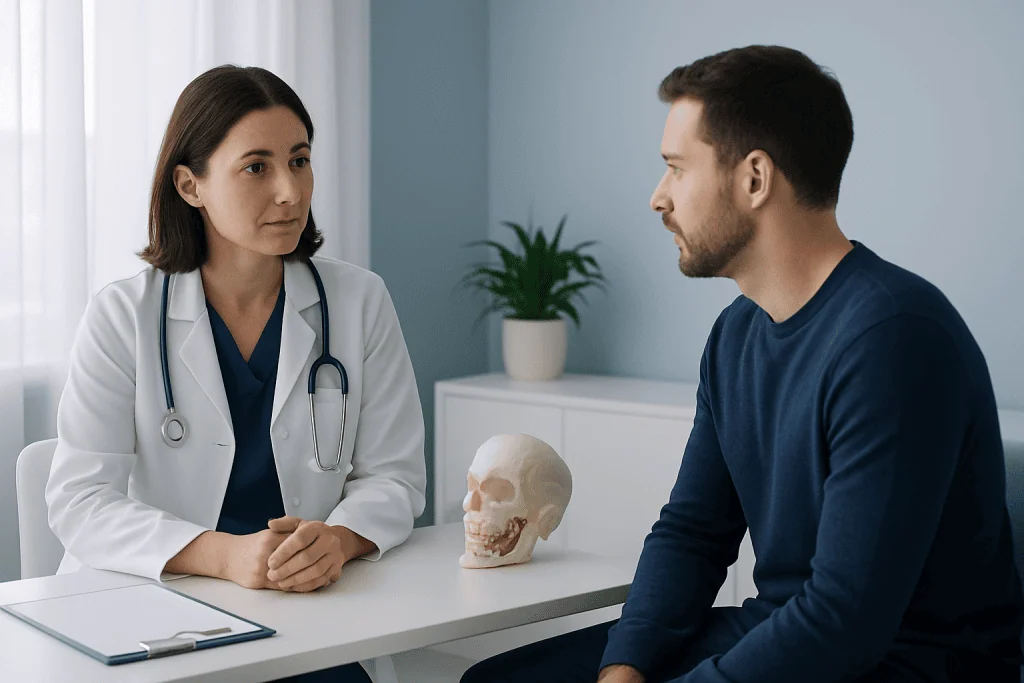
There is not one single cause of jaw cancer. As with many cancers, it develops when cells begin to grow abnormally. Risk can be influenced by lifestyle factors, age, past medical history, and the type of tissue involved. For example, cancers that start in the mouth and spread to the jaw often share the same risk factors as other oral cancers.
Tobacco use is one of the most important known risks for cancers of the mouth and nearby structures. Heavy alcohol use can also increase risk, especially when combined with tobacco. Poorly fitting dentures or chronic irritation alone are not considered direct causes, but any long-lasting mouth problem still needs assessment because it can hide a more serious condition.
Other factors may include prior radiation exposure to the head and neck, certain inherited conditions, and a history of cancers in nearby tissues. Some tumors in the jaw are related to oral cancer, while others may arise from salivary gland tissues, connective tissues, or bone. A specialist may also consider other conditions that affect the facial bones, including bone cancer, when assessing a suspicious lesion.
Risk factors can guide evaluation, but jaw cancer can occur in people without obvious risks. That is why persistent symptoms should not be ignored simply because a person does not smoke or drink.
How doctors diagnose jaw cancer
Diagnosis begins with a detailed history and physical examination. A doctor or dentist will ask about pain, numbness, loose teeth, sores, bleeding, swallowing problems, and how long the symptoms have been present. The mouth, gums, tongue, throat, neck, and jaw are then examined carefully for masses, ulcers, enlarged lymph nodes, or changes in sensation.
Imaging tests help show the size and location of the abnormal area and whether bone is involved. Depending on the case, doctors may use dental X-rays, CT scans, MRI scans, or PET-CT imaging. These tests help distinguish cancer from infection or benign growths and are important for treatment planning.
A biopsy is the key test to confirm jaw cancer. During a biopsy, a sample of tissue is removed and examined under a microscope by a pathologist. This shows the exact tumor type, which may include squamous cell carcinoma, salivary gland-related tumors, sarcomas, or other rare cancers. Accurate diagnosis matters because treatments can differ significantly between tumor types.
After cancer is confirmed, staging is used to understand how far it has spread. Staging may include additional imaging, blood tests, and evaluation of lymph nodes in the neck. In many centers, patients are reviewed by a multidisciplinary team to develop the safest and most effective plan.
Treatment options and recovery
Jaw cancer treatment depends on the type of cancer, the exact site where it started, how advanced it is, and the person’s overall health. In many cases, surgery is the main treatment, especially if the cancer is localized. The goal is to remove the tumor completely while preserving appearance, speech, swallowing, and chewing function as much as possible.
Surgical treatment may involve removing part of the affected bone or nearby soft tissue. If the cancer has spread to lymph nodes, surgery in the neck may also be recommended. In selected patients, reconstructive procedures can help restore the shape and function of the jaw and mouth after tumor removal, sometimes using bone or tissue from another part of the body.
Other treatments may be used before or after surgery, or sometimes instead of surgery, depending on the case. These can include radiation therapy to target cancer cells, chemotherapy for certain tumor types or stages, and supportive rehabilitation to improve speech and swallowing. Some people with extensive bone involvement may need coordinated care similar to maxillofacial surgery planning.
Recovery varies. Follow-up often includes pain control, nutrition support, dental care, speech or swallowing therapy, and regular checkups to watch for recurrence. Patients usually benefit from a team approach that includes head and neck surgeons, oncologists, radiologists, pathologists, dentists, and rehabilitation specialists.
Living with jaw cancer: nutrition, oral care, and self-care
Daily self-care can make a meaningful difference during treatment and recovery. Because jaw cancer and its treatment may affect eating, speaking, and mouth comfort, patients are often advised to work closely with their care team on nutrition and oral hygiene. Soft, nutrient-dense foods may be easier to manage if chewing is painful or limited.
Good oral care is important. A doctor or dentist may recommend gentle brushing, careful cleaning of dentures, and avoiding mouth irritants such as tobacco, alcohol, and very spicy foods if they worsen discomfort. Any new sore, swelling, bleeding, or change in bite should be reported rather than managed only at home.
Emotional support also matters. Changes in appearance, speech, and eating can be stressful, and many people find it helpful to involve family members, nutrition specialists, speech therapists, or counseling services during treatment. A clear follow-up plan can help patients feel more informed and reassured.
Near the end of treatment or during follow-up, some patients seek care in specialized centers. Acibadem International’s multidisciplinary specialists and JCI-accredited hospitals diagnose and treat jaw and oral cancers for international patients when advanced evaluation and coordinated care are needed.
When to seek medical care
Medical care should be sought if a mouth sore, jaw swelling, tooth loosening, facial numbness, or pain lasts more than two weeks or keeps returning. Symptoms do not need to be severe to deserve attention. A problem that seems dental can sometimes turn out to be a condition affecting the jawbone or surrounding tissues.
Prompt assessment is especially important if there is a visible lump, bleeding in the mouth, trouble swallowing, a change in the way the teeth fit together, or unexplained weight loss. People with a history of tobacco or heavy alcohol use, prior head and neck cancer, or previous radiation to the area should be particularly careful about persistent symptoms.
Emergency care may be needed for severe bleeding, rapidly worsening swelling, trouble breathing, or inability to swallow liquids. Even when the cause is not cancer, these symptoms need urgent evaluation. In non-emergency cases, an appointment with a dentist, oral and maxillofacial specialist, ENT doctor, or oncologist is a sensible next step.
Frequently asked questions
Is jaw cancer the same as oral cancer?
Not exactly. Jaw cancer may start in the jawbone itself or result from oral cancer growing into the jaw. Doctors usually try to identify the original site because that helps determine the stage and the best treatment.
Can jaw cancer feel like a tooth problem?
Yes. Early symptoms can resemble common dental issues, including tooth pain, loose teeth, gum swelling, or an ill-fitting denture. If these problems persist or do not respond as expected, further evaluation is important.
What is usually the first test for suspected jaw cancer?
The first step is usually a clinical examination by a dentist or doctor, often followed by imaging such as an X-ray or CT scan. A biopsy is then needed to confirm whether the abnormal area is cancer and to identify the exact type.
Is jaw cancer treatable?
Many cases are treatable, especially when found early and assessed by an experienced multidisciplinary team. Treatment commonly includes surgery and may also involve radiation therapy, chemotherapy, or reconstruction depending on the diagnosis and stage.
Can a non-healing mouth sore be a sign of jaw cancer?
It can be, especially if the sore lasts longer than two weeks or is associated with swelling, bleeding, numbness, or loose teeth. However, many mouth sores are not cancer, so a proper examination is needed to find the cause.
Who is more likely to develop jaw cancer?
Risk may be higher in people with tobacco use, heavy alcohol use, prior head and neck radiation, or a history of nearby oral cancers. Still, jaw cancer can occur without obvious risk factors, so symptoms should not be dismissed.
References
- National Cancer Institute
- American Cancer Society
- National Comprehensive Cancer Network
- World Health Organization
- American Dental Association
This article is for general information only and is not a substitute for professional medical advice. Please consult a qualified doctor about your individual situation.
Oncology care in Turkey — second opinion and treatment plan
JCI-accredited · board-certified surgeons · reply within 24h
Add us as a Preferred Source to see more of our trusted health content across Google Search, AI Overviews and Discover.

More from the Health Library



Related Specialists

Prof. Dr. Kenan Hizel
Infectious Diseases & Clinical Microbiology
Assoc. Prof. Dr. Mehmet Salih Söylemez
Orthopedic Surgery & Traumatology
Assoc. Prof. Dr. Bahadir Osman Bozkirli
General Surgery
Dt. Bengi Kaya Mert
Dentistry