Joint Double: What Patients Need to Know

“Joint double” most often refers to joint hypermobility, not having extra joints. Many people with hypermobile joints have no symptoms and do not need treatment.
Key Takeaways
- “Joint double” most often refers to joint hypermobility, not having extra joints.
- Many people with hypermobile joints have no symptoms and do not need treatment.
- Pain, repeated injuries, joint instability, or fatigue may suggest a hypermobility-related problem.
- Diagnosis is based on medical history, physical examination, and sometimes imaging or specialist evaluation.
- Treatment focuses on muscle strengthening, activity guidance, pain management, and protecting unstable joints.
- Medical review is important if symptoms interfere with daily life or if joints dislocate, swell, or become persistently painful.
Joint double usually means a person is “double-jointed,” a common term for joints that move farther than average because of increased flexibility in the ligaments and connective tissues. In many people this is harmless, but in others it can lead to pain, frequent sprains, joint instability, or related conditions that need medical assessment.
What “Joint Double” Usually Means
When people search for “joint double,” they are usually referring to being double-jointed. This does not mean a person has extra joints. Instead, it usually describes joints that can move beyond the typical range of motion, a feature known medically as joint hypermobility.
Joint hypermobility happens when the tissues that support a joint, especially ligaments and connective tissue, are looser or more elastic than average. Some people notice this in their fingers, elbows, knees, shoulders, or hips. For example, they may be able to bend a thumb back toward the forearm or extend the knees and elbows farther than expected.
In many cases, hypermobile joints are simply a normal body variation. Children, adolescents, dancers, gymnasts, and some families may show more flexibility without any health problem. However, when hypermobility is linked with pain, repeated injuries, or reduced function, it may need medical attention.
The key question is not whether a joint moves a lot, but whether that movement causes symptoms or instability. If hypermobility affects comfort, daily activities, exercise, or confidence in the joint, a clinician can help determine whether there is an underlying issue and what support may be useful.
Signs and Symptoms to Notice
Some people with joint hypermobility have no symptoms at all. They may simply be more flexible than others and discover it during sports, stretching, or a routine physical examination. In these cases, being “double-jointed” is often harmless.
Others may develop symptoms because the joints move beyond the range that muscles can comfortably control. Common symptoms include joint pain after activity, stiffness after rest, clicking or popping, frequent sprains, and a feeling that a joint may “give way.” Some people also report muscle fatigue because the muscles work harder to stabilize flexible joints.
More significant symptoms can include repeated subluxations or dislocations, especially in the shoulder, kneecap, jaw, or fingers. Swelling after activity, balance problems, and discomfort during prolonged standing or walking may also occur. These symptoms suggest that the issue is not just flexibility but reduced joint stability.
Symptoms may vary over time. A person can feel well for years and then notice pain or instability after rapid growth, a new sport, pregnancy, injury, or reduced physical conditioning. Persistent or worsening symptoms deserve evaluation rather than being dismissed as simply “being flexible.”
Why It Happens: Causes and Risk Factors

The most common reason for being double-jointed is natural variation in connective tissue. Ligaments, tendons, and joint capsules may be more elastic in some people, allowing greater movement at the joint. This can run in families, so more than one relative may have the same flexibility.
Age, sex, and activity level can also play a role. Children and teenagers are often more flexible than older adults. Women tend to show joint hypermobility more often than men, and people involved in activities such as dance, gymnastics, martial arts, or yoga may develop or make use of greater flexibility.
Sometimes hypermobility is part of a broader connective tissue condition. In these situations, there may be other signs such as very soft or stretchy skin, frequent dislocations, easy bruising, fatigue, or widespread pain. A clinician may consider disorders such as arthritis in the differential diagnosis when joints are painful or inflamed, though arthritis and hypermobility are not the same condition.
Joint pain is not always caused by hypermobility alone. Overuse, previous injuries, weak surrounding muscles, poor movement patterns, or unrelated orthopedic problems may contribute. This is why an individualized assessment is important, especially when symptoms affect school, work, sports, or sleep.
How Doctors Evaluate Joint Hypermobility
Diagnosis starts with a detailed conversation about symptoms, injuries, family history, and daily activities. A doctor may ask which joints feel unstable, whether pain occurs during or after movement, and whether any joints have partially or fully dislocated. It is also helpful to mention fatigue, poor balance, skin changes, or long-standing widespread pain.
A physical examination usually includes checking the range of motion in several joints and looking for signs of instability, tenderness, swelling, or muscle weakness. Clinicians may use a simple screening method, such as the Beighton score, to assess generalized joint hypermobility. This score is only one part of the evaluation and does not by itself diagnose a syndrome.
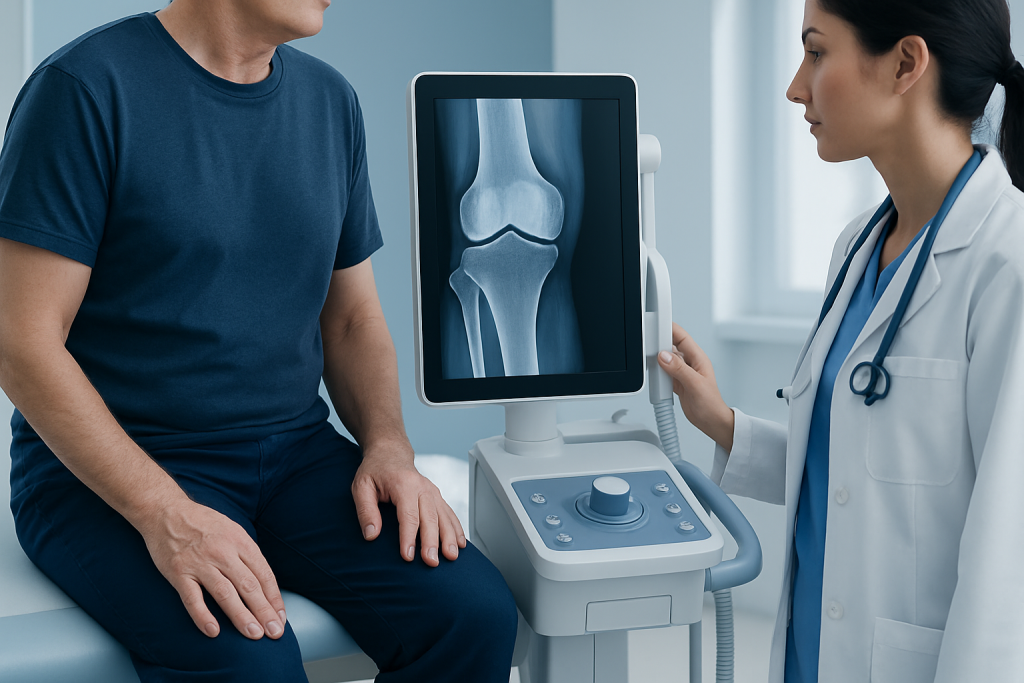
Imaging is not always needed, but it can be helpful when there is significant pain, suspected structural injury, or repeated instability. Depending on the joint and symptoms, the doctor may request X-rays, ultrasound, or MRI imaging to look at ligaments, cartilage, and surrounding soft tissues.
Some patients benefit from specialist input, especially if symptoms are complex or persistent. Assessment may involve orthopedics, physical medicine and rehabilitation, rheumatology, or physiotherapy. The goal is to understand whether the main issue is harmless flexibility, a local injury, a hypermobility spectrum disorder, or another musculoskeletal condition that needs treatment.
Treatment Options and Everyday Management
Treatment depends on whether hypermobility causes symptoms. If a person has flexible joints without pain or instability, no medical treatment may be necessary. Education about safe movement, posture, and avoiding overstretching can still be helpful, especially for athletes and children.
When symptoms are present, the main approach is usually targeted exercise. Strengthening the muscles around a joint helps improve control and reduces excess movement. A structured physical therapy and rehabilitation program may focus on strength, balance, coordination, and body awareness rather than increasing flexibility further.
Pain management may include pacing activities, heat or ice when appropriate, temporary bracing or taping for selected joints, and clinician-guided use of pain-relieving medicines. Some people also benefit from supportive footwear, ergonomic changes, or modifying sports technique. Rest alone is usually not the long-term answer, because deconditioning can worsen instability.
In a small number of cases, treatment may be needed for structural damage caused by repeated instability, such as cartilage tears or recurrent dislocations. Then a specialist may discuss orthopedic procedures or other interventions. If joint hypermobility is associated with another diagnosed condition, care is directed at both the underlying disorder and the specific painful or unstable joint.
Prevention and Self-care Strategies
People with hypermobile joints often do best when they focus on stability rather than maximum flexibility. Gentle, regular strengthening exercises are usually more useful than aggressive stretching. Building endurance gradually can help muscles support the joints more effectively during daily tasks and sports.
Good self-care also includes learning to recognize early signs of overuse. Increasing pain after activity, recurrent swelling, or a sense that a joint is slipping are signals to reduce strain and seek advice if symptoms continue. Warm-up before exercise and gradual progression in training are especially important.
Helpful daily habits may include:
- Maintaining general fitness with low-impact exercise such as walking, cycling, or swimming
- Using proper technique during sports and resistance training
- Avoiding repeated positions that push joints to their end range
- Taking breaks from prolonged standing or repetitive tasks
- Wearing supportive shoes if ankle, knee, or foot stability is a problem
People with frequent joint issues may benefit from a personalized exercise plan. In some cases, a broader musculoskeletal review can help identify related problems such as flat feet, posture changes, or recovery after injury. If there is concern about associated spinal discomfort, clinicians may also assess conditions linked with scoliosis or other alignment issues when symptoms suggest it.
When to Seek Medical Care
Medical care is worth seeking if joint flexibility is accompanied by pain, repeated sprains, swelling, locking, weakness, or a feeling that a joint is unstable. A doctor should also assess any joint that partially or fully dislocates, especially if this happens more than once. These symptoms may point to injury or a hypermobility-related disorder rather than harmless flexibility.
Prompt evaluation is important after trauma, sudden loss of movement, marked swelling, redness, fever, or severe pain. These features can suggest a fracture, acute ligament injury, infection, or inflammatory joint disease and should not be attributed to being double-jointed. If symptoms are significant, imaging and specialist review may be needed.
It is also sensible to ask for medical advice when joint symptoms begin to limit school, work, sleep, exercise, or everyday tasks. Early guidance can reduce repeated injuries and help patients build confidence in movement again. A multidisciplinary plan is often the most effective approach for ongoing symptoms.
For international patients who need assessment or coordinated care, Acibadem International’s multidisciplinary specialists and JCI-accredited hospitals diagnose and treat musculoskeletal conditions, including problems that may require orthopedic evaluation or longer-term rehabilitation support.
Frequently asked questions
Does joint double mean someone has two joints in one place?
No. “Joint double” usually means double-jointedness, which is a common way to describe joint hypermobility. The joint structure is not duplicated; it simply moves farther than usual.
Is being double-jointed dangerous?
Not usually. Many people with hypermobile joints have no pain or disability. It becomes a concern if it causes repeated injuries, instability, or ongoing pain.
Can joint hypermobility cause pain?
Yes. Pain can happen when flexible joints are not well supported by the surrounding muscles or when a joint is overused. Repeated sprains, strain, and small episodes of instability may also contribute.
How is joint hypermobility diagnosed?
A doctor usually diagnoses it through medical history and physical examination. They may assess how far certain joints move and look for signs of instability, weakness, or injury. Imaging tests are used if there is concern about structural damage or another joint problem.
Can exercise help if someone is double-jointed?
Yes, in many cases exercise is one of the most helpful treatments. The focus is usually on strength, control, and balance rather than increasing flexibility. A tailored program from a qualified physiotherapist is often best.
When should someone see a doctor for double-jointedness?
A medical review is a good idea if flexibility comes with pain, repeated sprains, swelling, dislocations, or reduced ability to do daily activities. Urgent assessment is needed after injury, severe pain, major swelling, or a sudden change in joint function.
This article is for general information only and is not a substitute for professional medical advice. Please consult a qualified doctor about your individual situation.
Joint and spine care in Turkey — expert assessment & treatment
JCI-accredited · board-certified surgeons · reply within 24h
Add us as a Preferred Source to see more of our trusted health content across Google Search, AI Overviews and Discover.

More from the Health Library

Aloe Vera for Hair — Explained by Medical Evidence, Not Myths

Pulsatile Tinnitus: What Patients Need to Know

Acidic Water: What Patients Need to Know

Dental Abfraction — Explained by Medical Evidence, Not Myths

Adaptogenic: A Complete Medical Overview

Capsaicin: What Patients Need to Know
Physical Medicine & Rehabilitation Specialists at Acibadem

Prof. Dr. Cihan Aksoy
Physical Medicine & Rehabilitation
Fzt. Cihan Seyyah
Physical Medicine & Rehabilitation
Prof. Dr. Cihangir Tetik
Orthopedic Surgery & Traumatology
Dr. Coşkun Akalın
Physical Medicine & Rehabilitation