Keloid Nose Piercing: A Complete Medical Overview

Not every bump after a nose piercing is a keloid; several common skin problems can mimic one. Keloids grow beyond the edges of the original wound and may continue enlarging over time.
Key Takeaways
- Not every bump after a nose piercing is a keloid; several common skin problems can mimic one.
- Keloids grow beyond the edges of the original wound and may continue enlarging over time.
- Self-treatment such as squeezing, cutting, or harsh topical products can worsen scarring or infection.
- Diagnosis is usually clinical, based on appearance, symptoms, and personal or family history of keloid scarring.
- Treatment may include steroid injections, silicone therapy, pressure-based approaches, cryotherapy, laser treatment, or surgery in selected cases.
- Prompt medical care is important if there is rapid growth, significant pain, drainage, fever, or uncertainty about the diagnosis.
A keloid nose piercing is an overgrowth of scar tissue that extends beyond the original piercing wound, but not every bump near a nose piercing is a keloid. Careful diagnosis matters because irritation bumps, infection, granulomas, and hypertrophic scars can look similar yet need different treatment.
Overview: what a keloid nose piercing is
A keloid nose piercing is a type of raised scar that forms when the skin produces too much collagen during healing after a nose piercing. Unlike a normal scar, a keloid grows beyond the original boundaries of the piercing site. It may feel firm, look shiny or smooth, and continue to enlarge over weeks or months.
Many people use the word “keloid” for any bump on a piercing, but this is not always accurate. Small irritation bumps, hypertrophic scars, inflamed tissue, and local infection are often mistaken for keloids. This distinction matters because the best treatment depends on the exact cause.
Keloids are not dangerous in most cases, but they can be bothersome. They may cause cosmetic concern, itching, tenderness, or discomfort when glasses, masks, or facial movements rub the area. A healthcare professional, often a dermatologist or ENT specialist, can help identify whether the bump is a true keloid or another condition such as a skin lesion that needs evaluation.
How to tell if a nose piercing bump may be a keloid
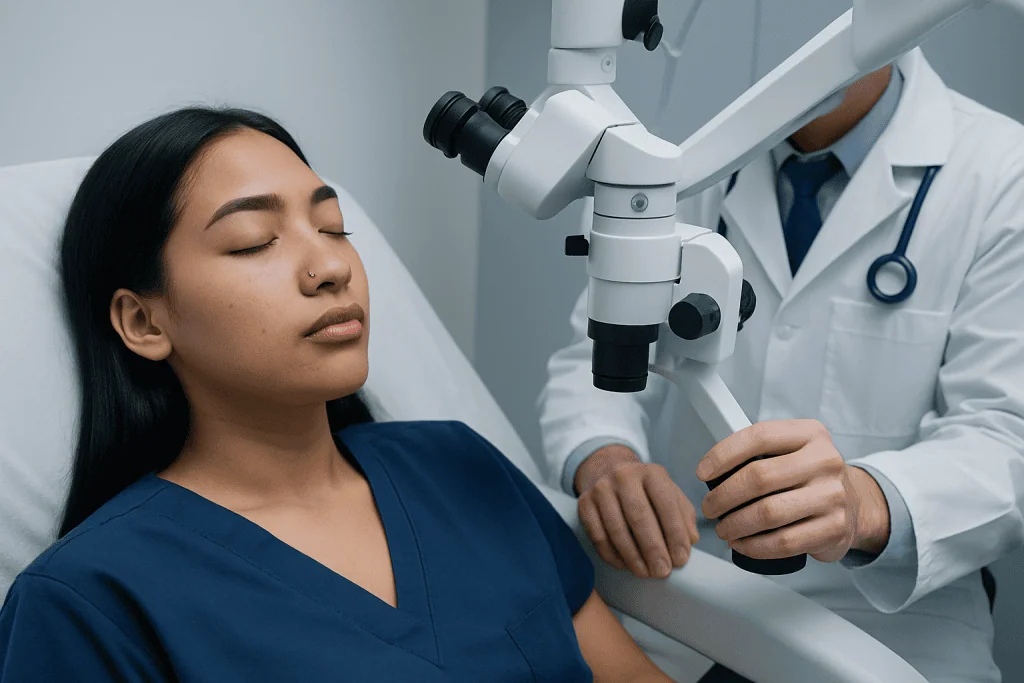
A true keloid usually appears as a thick, raised, persistent growth that extends beyond the original piercing hole. It can be pink, red, brown, or darker than the surrounding skin, depending on skin tone. Some keloids itch or feel tender, while others cause no symptoms apart from their appearance.
By contrast, a hypertrophic scar stays within the edges of the original wound. An irritation bump may be smaller, more inflamed, and linked to friction, jewelry movement, or poor-quality metal. Infection tends to cause warmth, increasing pain, pus, spreading redness, or swelling rather than a firm scar-like overgrowth.
Features that can suggest a keloid include:
- Growth that extends beyond the piercing site
- Firm, rubbery, or smooth tissue
- Persistence for months without settling
- Gradual enlargement over time
- Personal or family history of keloids
Because similar bumps can look alike, appearance alone is not always enough for self-diagnosis. If there is uncertainty, a medical review is the safest way to avoid delayed treatment or unnecessary home remedies.
Why keloids form after a nose piercing

Keloids develop when the body’s wound-healing response becomes overactive. After skin injury such as piercing, the body makes collagen to repair the tissue. In a keloid, this repair process continues longer than needed, leading to extra scar tissue that spreads beyond the initial wound.
Some people have a stronger tendency to form keloids than others. A personal history of keloids on the ears, chest, shoulders, or jawline increases the chance of developing another one. Family history also matters, which suggests a genetic tendency in some individuals.
Other factors that may contribute include repeated irritation from tight or moving jewelry, delayed healing, inflammation, and secondary infection. The nose is also a visible, mobile area that may be touched frequently during cleansing or changing jewelry, which can keep the tissue irritated.
Risk may be higher in people with darker skin tones and in those who develop exaggerated scars after acne, cuts, burns, or previous piercings. Even so, not everyone with these risk factors will develop a keloid, and some people develop one without any clear warning signs.
Diagnosis and conditions that can mimic a keloid
Diagnosis usually begins with a history and physical examination. A doctor will ask when the bump appeared, whether it is enlarging, whether there is pain or discharge, and whether the person has had keloids before. The appearance, texture, and relationship to the piercing tract help guide the diagnosis.
Common alternatives to a keloid include hypertrophic scar, irritation bump, contact dermatitis from metal, pyogenic granuloma, abscess, and chronic infection. Occasionally, another skin growth may need to be considered, especially if the lesion bleeds easily, changes color unevenly, or does not fit the typical pattern of a scar.
Tests are not always needed, but sometimes a swab or culture may be done if infection is suspected. In selected cases, a biopsy may be recommended if the diagnosis is unclear or if another skin condition needs to be ruled out. Imaging is rarely necessary for a superficial piercing-related lesion.
Specialist assessment can be helpful when the bump is persistent or recurring. Depending on the findings, treatment may involve dermatology, plastic surgery, or ENT care, particularly if scar tissue affects the nostril shape or breathing comfort.
Treatment options for keloid nose piercing
Treatment depends on whether the bump is a true keloid and how large, symptomatic, or recurrent it is. Keloids can be challenging because they may return after treatment, so doctors often use a stepwise plan and sometimes combine therapies. The goal is to flatten the scar, reduce symptoms, and lower the chance of recurrence.
Common first-line options include corticosteroid injections into the scar, which can soften and flatten keloid tissue over time. Silicone gel or silicone sheeting may also be recommended to help manage scar thickness. For some scars, cryotherapy, laser treatment, or pressure-based methods may be considered, especially when symptoms such as itching or tenderness are present.
Surgery can be useful in selected cases, but removal alone carries a risk of recurrence. For that reason, surgery is often combined with other measures such as steroid injections before or after the procedure. Patients needing procedural care may benefit from assessment for dermatology treatment or, when scar revision is appropriate, plastic and reconstructive surgery.
If the bump turns out not to be a keloid, treatment changes. An infection may require medical cleansing and prescription therapy, while an irritation bump may improve with jewelry adjustment, avoidance of trauma, and targeted skin care. This is why accurate diagnosis is more useful than trying multiple home treatments without guidance.
Self-care, piercing aftercare, and what to avoid
Gentle aftercare helps reduce irritation while the piercing heals. Hands should be washed before touching the area, and cleansing should follow the piercer’s or clinician’s instructions. Jewelry should not be changed too early, and the area should be protected from repeated friction, picking, and unnecessary pressure.
It is best to avoid squeezing, cutting, or trying to drain a bump at home. Strong antiseptics, toothpaste, alcohol, tea tree oil, and other harsh products may inflame the skin further. These approaches can worsen a simple irritation bump and may increase the risk of infection or additional scarring.
If there is a known history of keloids, it may be wise to discuss the risk with a doctor before getting any piercing. People prone to keloids may choose to avoid elective piercings in high-risk areas. If a nose piercing is already present, early review of any growing bump can allow earlier treatment and potentially better cosmetic results.
When skin symptoms are part of a broader pattern of scarring, sensitivity, or chronic inflammation, a clinician may also check for related skin issues. In some cases, persistent facial lesions can overlap with other concerns seen in acne and post-inflammatory skin changes, though a piercing-related scar has different management.
When to seek medical care
Medical advice is recommended if a nose piercing bump keeps growing, extends beyond the piercing site, or does not improve with gentle aftercare. It is also important to seek care if the area becomes increasingly painful, warm, red, or starts draining pus, as these features may suggest infection rather than a scar problem.
Urgent assessment is sensible if swelling affects breathing through the nostril, if there is fever, or if the skin around the piercing becomes rapidly inflamed. Bleeding that is recurrent, a fragile red bump, or a lesion with an unusual appearance should also be checked by a professional.
Early evaluation can prevent prolonged irritation and help avoid treatments that are not appropriate for the actual cause. Depending on the diagnosis, care may involve ENT evaluation when the inside of the nostril is involved or if structure and airflow need to be assessed.
Outlook and living with a keloid-prone skin type
The outlook is generally good, although keloids can be persistent and sometimes recur. Improvement often takes time, and repeated treatment sessions may be needed rather than a single quick fix. Patience and follow-up are important parts of care.
For people who know they are prone to keloids, prevention is often the most effective strategy. Avoiding unnecessary skin trauma, informing clinicians before procedures, and seeking early advice when a scar starts thickening can help reduce the extent of scar growth.
Living with a visible facial scar can affect confidence, especially when it follows a cosmetic piercing. Reassurance is important: many scar treatments can soften, flatten, or improve the appearance of keloids even if complete disappearance is not always possible. If specialist care is needed, Acibadem International’s multidisciplinary specialists in JCI-accredited hospitals diagnose and treat scar-related conditions for international patients.
Frequently asked questions
Is every nose piercing bump a keloid?
No. Many bumps near a nose piercing are caused by irritation, hypertrophic scarring, infection, or a small inflammatory growth rather than a true keloid. A keloid usually grows beyond the original piercing site and tends to persist or enlarge over time.
Can a keloid from a nose piercing go away on its own?
True keloids usually do not fully go away without treatment. Some smaller scar changes may soften or become less noticeable over time, but persistent enlarging tissue should be assessed by a doctor. Early treatment can sometimes improve the result.
Should the jewelry be removed if there is a suspected keloid?
This depends on the cause of the bump and should ideally be guided by a clinician. Removing jewelry too soon can sometimes trap infection or irritate the area further, while leaving problematic jewelry in place may also prolong irritation. A healthcare professional can advise the safest next step.
What is the difference between a keloid and a hypertrophic scar?
A hypertrophic scar stays within the borders of the original wound, while a keloid grows beyond those edges. Keloids are also more likely to continue enlarging and to recur after treatment. Both are forms of raised scarring, but they are managed somewhat differently.
Are home remedies safe for a keloid nose piercing?
Home remedies such as squeezing, cutting, or using harsh products are not recommended. They can worsen inflammation, increase infection risk, and lead to more noticeable scarring. Gentle cleansing and professional assessment are safer approaches.
Who is more likely to develop a keloid after a piercing?
People with a personal or family history of keloids are at higher risk. Keloids are also more common in some skin types, especially in individuals with darker skin tones. Prior exaggerated scarring after acne, cuts, burns, or other piercings can be an important clue.
This article is for general information only and is not a substitute for professional medical advice. Please consult a qualified doctor about your individual situation.
Explore treatments in Turkey — costs, top hospitals & a free quote
JCI-accredited · board-certified surgeons · reply within 24h
Add us as a Preferred Source to see more of our trusted health content across Google Search, AI Overviews and Discover.

More from the Health Library

Exfoliating Gloves: An Evidence-Based Guide for Patients

Globus Sensation: What Patients Need to Know

Tcar Procedure: An Evidence-Based Guide for Patients

Body Odor: An Evidence-Based Guide for Patients

Valacyclovir — Explained by Medical Evidence, Not Myths