Keloid Scarring From Tattoos: Risks and Prevention

A keloid is a raised scar that grows beyond the original area of skin injury. Tattooing can trigger keloids because it repeatedly punctures the skin, although most people who get tattoos do not develop them.
Key Takeaways
- A keloid is a raised scar that grows beyond the original area of skin injury.
- Tattooing can trigger keloids because it repeatedly punctures the skin, although most people who get tattoos do not develop them.
- People with previous keloids or a strong family history should discuss their risk with a dermatologist before getting tattooed.
- Keloids are not contagious and are not caused by poor hygiene, but irritation and infection can worsen scarring.
- Treatment may reduce itch, discomfort, thickness, and visibility, although keloids can recur.
Keloid scarring from tattoos can develop when the skin’s healing response produces excess scar tissue after tattoo needles create many small injuries. It is most likely in people with a personal or family history of keloids, and early assessment by a dermatologist can help distinguish it from infection, allergy, or normal healing.
What keloid scarring from tattoos means
Keloid scarring from tattoos occurs when the body makes more scar tissue than is needed after the skin is injured by tattoo needles. Unlike a typical flat scar, a keloid is firm, raised, and extends beyond the original injured area. It may develop within weeks or months of tattooing, but some keloids become noticeable later as they gradually enlarge.
A tattoo involves thousands of tiny needle punctures that place pigment in the dermis, the deeper layer of skin. For most people, these punctures heal without unusual scarring. In a person who is predisposed to keloids, however, the repair process may remain overactive, producing excess collagen and a raised scar within or around part of the tattoo.
Keloids are benign, meaning they are not cancerous. They can nevertheless be bothersome because they may itch, feel tender, become sensitive to friction, or affect the appearance of the tattoo and surrounding skin. A clinician can help confirm whether a changing tattoo-area lesion is a keloid or another skin condition.
How a tattoo keloid may look and feel
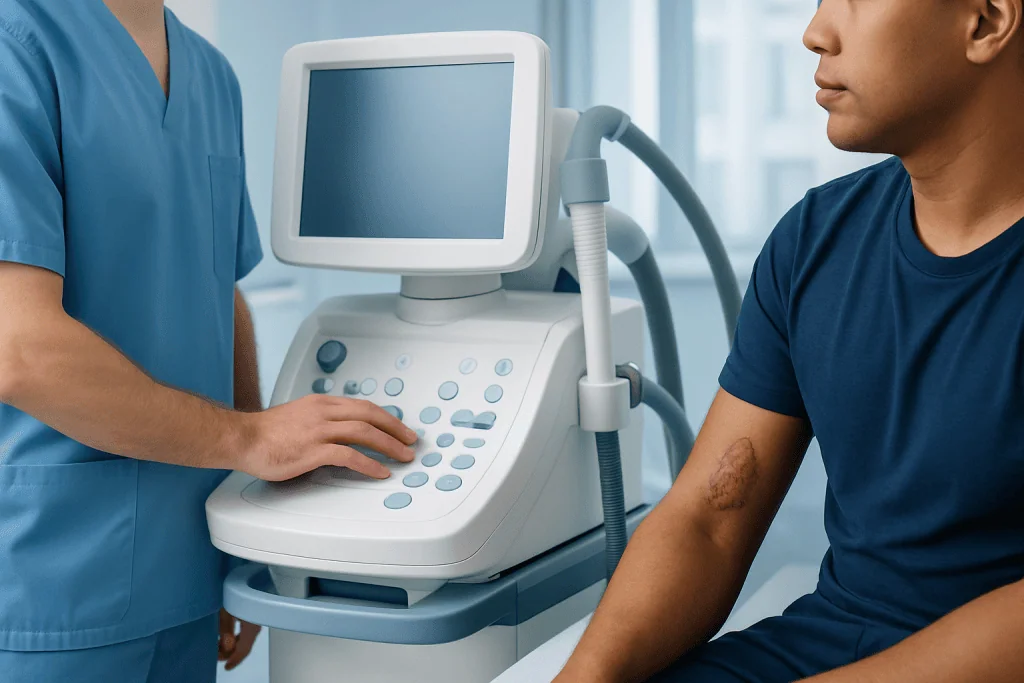
Keloids often appear as smooth, shiny, firm growths that are pink, red, brown, purple, or darker than the surrounding skin. Their color varies with skin tone and with how active or mature the scar is. They may distort tattoo lines or cover areas of pigment, and they can expand outside the outline of the tattooed design.
Symptoms can include itching, burning, tenderness, tightness, or discomfort when clothing or jewelry rubs against the area. Some keloids cause no physical symptoms and are noticed mainly because of their appearance. They are commonly seen on the chest, shoulders, upper back, neck, jawline, and earlobes, though they may form anywhere tattooing has occurred.
Not every raised area after a tattoo is a keloid. Normal healing can include temporary mild redness, flaking, and itching. A hypertrophic scar is another raised scar type, but it generally remains within the boundaries of the original injury. Allergic reactions to tattoo pigment, granulomas, infections, and inflammatory skin conditions can also cause bumps or persistent changes and need different care.
Who is at greater risk

The strongest predictor of keloid formation is a personal history of keloids. Someone who has formed a keloid after acne, ear piercing, surgery, a burn, vaccination, or another injury may be more likely to develop one after tattooing. A family history can also suggest a higher inherited tendency toward abnormal scarring.
Keloids occur more often in some populations and are more common in people with more deeply pigmented skin, although they can affect people of any skin tone. They are also seen more frequently in adolescents and young adults. These patterns do not mean a keloid is inevitable; they simply help clinicians estimate risk before an elective skin procedure.
The body site matters as well. Areas subject to movement, tension, pressure, or repeated friction may be more vulnerable. Larger tattoos, repeated tattooing over the same area, cover-up work, and tattooing over an existing scar may increase local skin trauma. Skin infection or prolonged inflammation during healing can further complicate scar formation.
- Previous keloid or hypertrophic scar
- Close relatives with keloids
- Tattooing on the chest, shoulders, upper back, neck, or earlobes
- Repeated trauma, friction, or delayed healing at the tattoo site
- Prior skin inflammation or infection in the same area
Before getting a tattoo: practical risk reduction
For a person known to form keloids, the most reliable prevention is avoiding elective skin trauma, including tattoos and piercings. This can be disappointing, but there is no method that can guarantee a tattoo will not trigger a keloid in someone who is prone to them. A consultation with a dermatologist before tattooing is particularly important for anyone with a previous keloid.
If a person still considers tattooing after understanding the risk, it is sensible to discuss the planned body area, tattoo size, previous scars, skin conditions, and current medications with a qualified clinician. A small test tattoo is sometimes considered, but it can still cause a keloid and does not reliably predict how another area will heal. It should not be viewed as a risk-free screening method.
Choosing a licensed, hygienic tattoo studio and following aftercare instructions may lower the chance of infection, but it cannot prevent a genetically driven keloid response. The skin should be clean and healthy before tattooing. Tattooing should be postponed if there is an active rash, acne flare, wound, sunburn, or infection in the intended area.
Diagnosis and how clinicians rule out other problems
Dermatologists often diagnose a keloid by examining the skin and asking about when the tattoo was done, how the area changed, and whether the person has had raised scars before. The key feature is growth of firm scar tissue beyond the original injury. Photographs taken as the area changes can sometimes help show whether a lesion is enlarging.
A clinician may consider other explanations when redness, swelling, bumps, or itching appear in a tattoo. Tattoo-pigment reactions can occur soon after tattooing or years later and may affect one color more than others. Bacterial infection can cause increasing pain, warmth, spreading redness, drainage, fever, or general illness. These concerns need timely medical evaluation.
A skin biopsy is not always needed for a typical keloid, but it may be recommended if the diagnosis is uncertain or if another skin disorder needs to be excluded. It is important not to pick, cut, inject, or attempt to remove a raised tattoo lesion at home, as additional injury can worsen scarring and introduce infection.
Treatment options for tattoo-related keloids
Treatment is individualized according to the keloid’s size, location, symptoms, skin tone, and previous treatments. The goal is usually to flatten and soften the scar, ease itch or pain, and limit further growth. Keloids can be persistent, and no single treatment prevents recurrence in every person.
Common first-line treatments include corticosteroid injections placed into the scar by a trained clinician, sometimes combined with other injected medicines. Silicone gel or silicone sheets may be recommended for selected scars, particularly as part of a wider scar-management plan. Compression therapy can help in certain locations, such as the earlobe, but is not practical for every body area.
Additional options may include cryotherapy, laser treatment, or other energy-based approaches. Surgical removal alone is generally approached cautiously because a new keloid may return or grow larger after another skin injury. When surgery is appropriate, specialists may combine it with treatments intended to lower recurrence risk. Plastic surgery consultation may be useful when a keloid is large, recurrent, or causing significant functional or emotional concerns.
Laser or pigment-targeted procedures should be evaluated carefully when a tattoo is present because they may alter tattoo colors or affect the surrounding skin. A dermatologist can explain realistic goals, possible changes to the tattoo, expected treatment course, and the importance of follow-up. Treatment planning may overlap with care for keloid scars elsewhere on the body.
Caring for the area and when to seek medical care
While waiting for assessment, gentle skin care is usually best. Avoid scratching, rubbing, picking, exfoliating, or applying unprescribed strong creams to the raised area. Loose clothing may reduce friction. Fragrance-free moisturizer can help dry or itchy surrounding skin, but it will not remove a keloid. Protecting the tattooed area from sun exposure can help limit uneven darkening of healing skin.
Medical care should be sought promptly if a tattoo area becomes increasingly painful, hot, swollen, or red; produces pus or other drainage; develops blisters; or is accompanied by fever or feeling unwell. These symptoms may indicate infection or a significant inflammatory reaction rather than uncomplicated scar formation. Urgent care is also appropriate for facial swelling, trouble breathing, or widespread hives after tattooing.
A non-urgent dermatology appointment is appropriate for a firm raised area that persists, grows beyond the tattooed skin, itches, hurts, or changes the tattoo’s appearance. People with a history of keloids should seek advice before arranging another tattoo or procedure in the same area. Acibadem International’s multidisciplinary specialists and JCI-accredited hospitals can assess and treat keloid concerns for international patients.
Frequently asked questions
Can tattoos cause keloid scars?
Yes. Tattoo needles create repeated small injuries in the skin, which can trigger excess scar formation in a person who is predisposed to keloids. However, most tattoos do not result in keloids, and risk is highest in people who have had keloids before.
How long after a tattoo can a keloid appear?
A keloid may begin to develop within weeks to months after tattooing, but it can continue to enlarge over a longer period. Any persistent or growing raised area should be examined, especially if it extends beyond the tattooed area.
Is a tattoo keloid the same as an allergic reaction?
No. A keloid is excess scar tissue, while an allergy is an immune reaction that may cause itching, redness, swelling, or bumps, sometimes focused in one pigment color. A dermatologist can distinguish these conditions because their management differs.
Can a keloid ruin a tattoo?
A keloid can change the texture and shape of the skin, which may distort tattoo lines and colors. Some treatments can also affect pigment, so treatment decisions should include discussion of both scar improvement and possible tattoo changes.
Can a tattoo keloid be removed permanently?
Treatment can often improve a keloid’s thickness, symptoms, and appearance, but recurrence is possible. Removal by surgery alone has a notable recurrence risk, so clinicians may use combined treatment approaches and continued follow-up.
Should someone with previous keloids get a tattoo?
People with previous keloids should speak with a dermatologist before getting a tattoo. Because any tattoo can trigger another keloid, avoiding elective tattooing is generally the safest approach for those with a strong tendency to form these scars.
This article is for general information only and is not a substitute for professional medical advice. Please consult a qualified doctor about your individual situation.
Explore treatments in Turkey — costs, top hospitals & a free quote
JCI-accredited · board-certified surgeons · reply within 24h
Add us as a Preferred Source to see more of our trusted health content across Google Search, AI Overviews and Discover.

More from the Health Library

Massive Breasts Milk: A Complete Medical Overview

Carbs in Heavy Whipped Cream — Explained by Medical Evidence, Not Myths

B Belly — Explained by Medical Evidence, Not Myths

Ingrown Fingernail — Explained by Medical Evidence, Not Myths

Ceramides: A Complete Medical Overview