Keratitis: Early Signs, Risk Factors, and How It Is Treated

Keratitis is corneal inflammation that may be infectious or noninfectious. Common symptoms include eye pain, redness, tearing, blurred vision, and sensitivity to light.
Key Takeaways
- Keratitis is corneal inflammation that may be infectious or noninfectious.
- Common symptoms include eye pain, redness, tearing, blurred vision, and sensitivity to light.
- Contact lens misuse is a major risk factor, especially overnight wear or poor lens hygiene.
- Diagnosis usually requires an eye examination and sometimes laboratory testing of the cornea.
- Treatment varies by cause and may include antibiotic, antiviral, or antifungal eye drops, plus supportive care.
- Sudden pain, reduced vision, or worsening symptoms should be assessed promptly by an eye doctor.
Keratitis is inflammation of the cornea, the clear front surface of the eye. It may be caused by infection or injury, and early medical care is important because treatment depends on the cause and can help prevent vision problems.
Overview: what keratitis is and why early care matters
Keratitis is inflammation of the cornea, the clear dome-shaped surface at the front of the eye. The cornea helps focus light, so even a small area of inflammation can lead to noticeable symptoms such as pain, tearing, blurred vision, or sensitivity to light. Keratitis may happen because of infection, but it can also develop after a scratch, dry eye, contact lens irritation, or exposure to ultraviolet light.
Early evaluation matters because keratitis is not one single condition. Some forms are mild and improve with simple treatment, while others can progress quickly and affect vision if not treated appropriately. The most important step is identifying the cause, since bacterial, viral, fungal, and noninfectious keratitis are managed differently.
Keratitis is sometimes discussed alongside other corneal diseases because the cornea can react to many different injuries and infections in similar ways. Although the symptoms can overlap with conjunctivitis or simple eye irritation, corneal inflammation usually needs a more targeted eye examination.
Early signs and symptoms of keratitis
The early signs of keratitis often begin in one eye, although both eyes can be affected in some situations. People may notice a red eye, discomfort that feels stronger than ordinary irritation, excessive tearing, or the feeling that something is stuck in the eye. Vision may become blurry, and bright light can feel uncomfortable.
Symptoms can vary depending on the cause. Infectious keratitis is more likely to cause increasing pain, discharge, and a more rapid change in vision. Noninfectious keratitis may follow contact lens overuse, dry eye, trauma, or UV exposure and can sometimes begin with irritation before becoming more painful.
- Eye redness
- Eye pain or aching
- Blurred or reduced vision
- Sensitivity to light
- Tearing or watery eyes
- Discharge
- A gritty or foreign-body sensation
- Difficulty keeping the eye open
Because these symptoms can overlap with other eye problems, it is helpful not to self-diagnose. Pain, light sensitivity, or any decrease in vision is especially important to have examined promptly by an eye specialist.
Causes and risk factors

Keratitis can be divided into infectious and noninfectious types. Infectious keratitis may be caused by bacteria, viruses, fungi, or parasites. Bacterial keratitis is often linked to contact lens wear. Viral keratitis may occur with herpes simplex virus or shingles affecting the eye. Fungal keratitis can follow plant-related eye injury or contamination, and parasitic keratitis, such as Acanthamoeba keratitis, has been associated with contaminated water exposure and contact lenses.
Noninfectious keratitis may develop from a scratch or other eye injury, severe dry eye, eyelid problems, chemical irritation, or ultraviolet light exposure such as welding arcs or intense sunlight reflected from snow or water. In some people, underlying immune-related conditions can also contribute to corneal inflammation.
One of the clearest risk factors is contact lens misuse. Wearing lenses longer than advised, sleeping in them, rinsing them with tap water, or swimming or showering while wearing them can all increase the chance of infection. Poor hand hygiene before handling lenses also raises risk.
- Contact lens wear, especially overnight wear
- Recent eye injury or foreign body
- Dry eye disease
- Use of steroid eye drops without supervision
- Reduced immunity or chronic illness
- Previous herpes infection affecting the eye
- Exposure to contaminated water while using contact lenses
How keratitis is diagnosed
Diagnosis begins with a careful history and an eye examination. The doctor will ask when symptoms started, whether contact lenses are used, whether there was any recent trauma, and whether symptoms involve pain, discharge, or vision change. This information helps narrow down likely causes before treatment is chosen.
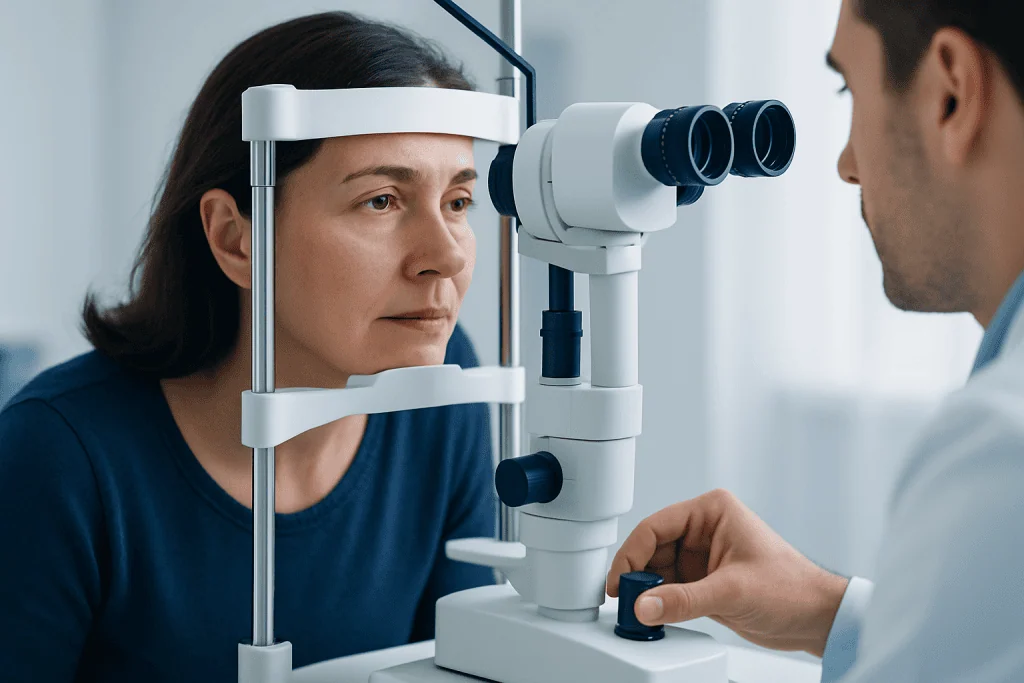
During the exam, the eye doctor checks visual acuity, the appearance of the cornea, the pupil, and the surface of the eye. A slit-lamp microscope is commonly used to examine the cornea in detail. Special dye may be placed in the eye to highlight scratches, ulcers, or areas of inflammation.
If an infection is suspected, especially if the keratitis is severe, central, or not improving, the doctor may take a sample from the cornea or contact lens case for laboratory testing. This helps identify bacteria, fungi, viruses, or parasites and guides treatment. In more complex cases, care may overlap with advanced cornea treatment services to assess the depth and extent of corneal involvement.
Treatment options for keratitis
Treatment depends on the cause, severity, and how quickly the symptoms are progressing. Noninfectious keratitis may improve with stopping contact lens use, lubricating eye drops, pain-relief measures recommended by a doctor, and treating the underlying trigger such as dry eye or eyelid inflammation. If there is a scratch or UV-related inflammation, the eye doctor may recommend close follow-up until the cornea heals.
Infectious keratitis usually requires prescription medication. Bacterial keratitis is commonly treated with antibiotic eye drops. Viral keratitis may need antiviral medication, while fungal keratitis requires antifungal treatment. Parasitic infections are less common but often need prolonged, specialized therapy. People should avoid using leftover eye drops or steroid drops unless specifically prescribed, since the wrong medicine can worsen certain infections.
When the cornea has a deeper ulcer, scarring, or persistent damage, treatment may become more specialized. Some patients may need procedures to support healing, and in severe cases of corneal scarring or structural damage, options related to corneal transplantation may be discussed. If symptoms are linked to broader eye surface or structural problems, a full eye surgery evaluation may also be part of long-term care planning.
Follow-up is an important part of treatment. The doctor may recheck the eye soon after treatment begins to confirm that the inflammation is improving and that vision is being protected. Patients should not stop medication early unless their doctor advises it.
Prevention and self-care
Many cases of keratitis can be reduced through good eye hygiene and safe contact lens habits. Contact lenses should always be cleaned and stored exactly as instructed, and they should never be rinsed with tap water. Lens cases should be replaced regularly, and lenses should not be worn longer than recommended.
It is also sensible to remove contact lenses before swimming, hot tub use, or showering unless specifically advised otherwise. Hands should be washed thoroughly before touching lenses or the eyes. If the eye becomes red or painful, lenses should be removed and not reinserted until a clinician confirms it is safe.
Protective eyewear can help prevent trauma-related keratitis during sports, yard work, or jobs involving dust, debris, or chemicals. Sunglasses that block ultraviolet light are useful in bright outdoor conditions. For people with dry eye, following a treatment plan can support the corneal surface and lower irritation-related risk. Conditions that affect the eye surface may overlap with dry eye, which can make the cornea more vulnerable.
When to seek medical care
Medical care should be sought promptly for a painful red eye, especially if there is blurred vision, light sensitivity, discharge, or contact lens use. These symptoms do not always mean a serious infection, but they do need a proper examination because delaying treatment can increase the chance of corneal damage.
Urgent assessment is particularly important if symptoms begin after an eye injury, after sleeping in contact lenses, or after exposure to water while wearing lenses. People with a history of herpes eye disease, recent eye surgery, reduced immunity, or worsening symptoms despite home care should also be evaluated promptly.
Near the end of the care pathway, some patients may need coordinated support from cornea specialists, infectious disease experts, or ocular surface teams. Acibadem International’s multidisciplinary specialists at JCI-accredited hospitals diagnose and treat keratitis for international patients when advanced evaluation or follow-up is needed.
Frequently asked questions
Is keratitis the same as conjunctivitis?
No. Conjunctivitis affects the thin membrane covering the white of the eye and inner eyelids, while keratitis affects the cornea. Both can cause redness, but keratitis is more likely to cause significant pain, light sensitivity, and vision changes.
Can keratitis go away on its own?
Some mild noninfectious irritation may improve once the trigger is removed, but true keratitis should not be assumed to resolve without assessment. Because treatment depends on the cause, an eye doctor should evaluate symptoms such as pain, blurred vision, or marked light sensitivity.
How serious is keratitis?
Keratitis ranges from mild to potentially vision-threatening. Many cases improve well with early, appropriate treatment, but delays can increase the risk of corneal scarring or other complications.
Should contact lenses be worn during keratitis?
No. Contact lenses should usually be removed as soon as symptoms begin and should not be worn again until a doctor says it is safe. Continuing to wear lenses can worsen inflammation and may increase the risk of infection.
What are the warning signs that need urgent attention?
Sudden eye pain, reduced vision, strong light sensitivity, increasing redness, or discharge should be checked promptly. These symptoms are especially important if the person wears contact lenses or recently had an eye injury.
Can keratitis affect vision permanently?
It can if inflammation is severe, deep, or not treated in time. Permanent effects are more likely when the cornea develops scarring, but early diagnosis and cause-specific treatment can lower that risk.
References
- American Academy of Ophthalmology
- National Eye Institute
- Centers for Disease Control and Prevention
- Mayo Clinic
- World Health Organization
This article is for general information only and is not a substitute for professional medical advice. Please consult a qualified doctor about your individual situation.
Explore treatments in Turkey — costs, top hospitals & a free quote
JCI-accredited · board-certified surgeons · reply within 24h
Add us as a Preferred Source to see more of our trusted health content across Google Search, AI Overviews and Discover.