Kidney Cancer Recovery Rates: An Evidence-Based Patient Guide

Kidney cancer outlook depends mainly on the stage, whether the tumor can be fully treated, its cell type, and a person’s overall health. Many people with localized kidney cancer are treated with curative intent, most often through partial or radical nephrectomy.
Key Takeaways
- Kidney cancer outlook depends mainly on the stage, whether the tumor can be fully treated, its cell type, and a person’s overall health.
- Many people with localized kidney cancer are treated with curative intent, most often through partial or radical nephrectomy.
- Hair loss is not usually caused by kidney cancer itself and is less common with modern targeted and immunotherapy treatments than with traditional chemotherapy.
- Most people can live a full life with one healthy kidney after kidney cancer surgery, with regular monitoring and kidney-protective habits.
- Follow-up care is important because it monitors kidney function, manages treatment effects, and checks for possible recurrence.
Kidney cancer recovery rates vary widely because “recovery” can mean successful treatment, no evidence of cancer after treatment, or long-term control of advanced disease. Early, localized kidney cancer is often treated successfully with surgery, while more advanced disease may require ongoing systemic treatment and follow-up.
Kidney Cancer Recovery Rates: What Do They Mean?
Kidney cancer recovery rates are generally most favorable when the cancer is discovered before it has spread beyond the kidney. However, no single number can predict an individual outcome. Doctors consider the cancer stage, tumor size and location, kidney cancer subtype, grade, treatment response, kidney function, age, and other health conditions when discussing prognosis.
For many people with a small, localized kidney tumor, treatment is planned with the aim of removing or destroying all visible cancer. When kidney cancer has spread, it may not always be considered curable, but modern treatments can often control it for meaningful periods and may help people maintain daily activities and quality of life. A care team can explain what the findings mean for the individual rather than relying only on broad population averages.
Clear cell renal cell carcinoma is the most common type of adult kidney cancer. Other subtypes can behave differently and may call for a tailored treatment plan. More background on diagnosis and disease types is available in kidney cancer information.
What Are the Odds of Recovering From Kidney Cancer?
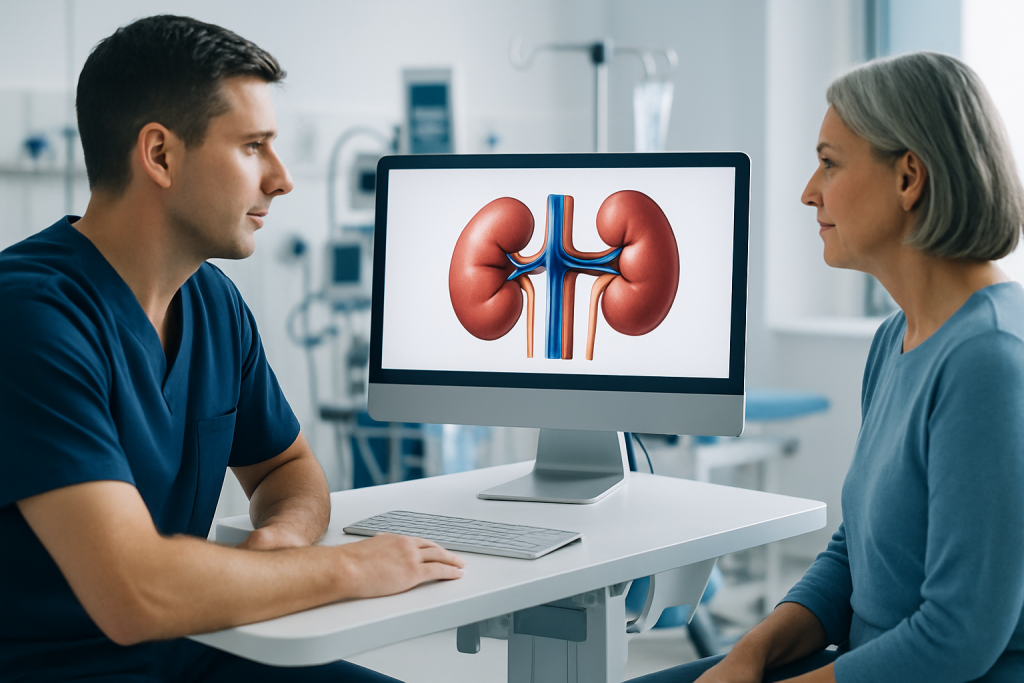
The odds of recovering from kidney cancer are usually best for tumors confined to the kidney. In this setting, surgery or, in selected cases, a kidney-sparing ablative procedure may remove the cancer completely. Some small tumors grow slowly, and active surveillance may be appropriate for carefully selected people when the likely risks of immediate treatment outweigh the expected benefit.
Outlook becomes more complex if cancer has grown into nearby tissues, lymph nodes, major blood vessels, or distant organs. Treatment may then involve surgery, immunotherapy, targeted therapy, or a combination of approaches. Even in advanced kidney cancer, treatment decisions are individualized, and new or changing treatment options may help control disease.
Doctors may use imaging, pathology findings after a biopsy or surgery, laboratory tests, and validated risk tools to discuss prognosis. Population survival information is useful for understanding broad trends, but it cannot account for each person’s tumor biology or response to treatment. It is reasonable to ask the oncology or urology team what the treatment goal is: cure, reducing recurrence risk, controlling cancer, or relieving symptoms.
- Localized disease: treatment commonly aims to cure the cancer.
- Locally advanced disease: treatment may include surgery and, for some people, additional systemic therapy.
- Metastatic disease: treatment focuses on long-term control, symptom management, and preserving quality of life.
Treatment Procedures: How Kidney Cancer Surgery Works

Surgery is the main treatment for many kidney cancers that have not spread. A partial nephrectomy removes the tumor and a margin of surrounding tissue while preserving as much healthy kidney as possible. A radical nephrectomy removes the whole affected kidney and sometimes nearby tissues when this is needed to treat the cancer safely.
Candidacy for partial nephrectomy depends on the tumor’s size, position, number of tumors, function of both kidneys, and the person’s general health. Kidney-sparing surgery is often preferred when technically appropriate because it preserves kidney tissue. However, radical nephrectomy may be the safer or more effective option for some larger or centrally located tumors.
Before surgery, the team usually reviews scans, blood and urine tests, medical history, medications, and anesthesia fitness. The procedure may be performed through open surgery or minimally invasive laparoscopic or robotic techniques. During a partial nephrectomy, the surgeon identifies the tumor, temporarily controls blood flow if needed, removes the tumor, repairs the kidney, and checks for bleeding. The removed tissue is examined by a pathologist to confirm the diagnosis and assess tumor features.
Selected patients who cannot undergo surgery, or who have certain small tumors, may be considered for thermal ablation, which uses heat or cold to destroy tumor tissue under imaging guidance. Decisions about surgery, ablation, surveillance, or systemic therapy should be made with a urologist and oncology team. Partial nephrectomy treatment may be discussed when preserving kidney tissue is feasible.
Recovery Timeline, Benefits and Possible Risks
Recovery after kidney cancer surgery differs according to the operation, surgical approach, other health conditions, and whether complications occur. Hospital recovery may be shorter after minimally invasive surgery than after open surgery, but the appropriate approach is based on medical needs rather than recovery time alone. Pain, tiredness, reduced appetite, and temporary limits on lifting or strenuous activity are common early experiences.
Many people gradually return to lighter daily activities over several weeks, while full recovery can take longer. The surgical team provides individualized guidance on wound care, driving, work, exercise, bathing, diet, and follow-up appointments. Follow-up commonly includes review of pathology results, kidney-function tests, blood pressure checks, and imaging at intervals based on recurrence risk.
The main benefit of surgery for localized cancer is the potential to remove the tumor completely. Possible risks include bleeding, infection, blood clots, urine leakage after partial nephrectomy, injury to nearby organs, anesthesia-related complications, and reduced kidney function. These risks vary between individuals and should be reviewed carefully before treatment.
Systemic therapies, including immunotherapy and targeted therapy, can also cause side effects. The care team monitors for concerns such as fatigue, skin changes, diarrhea, blood pressure changes, inflammation in organs, or laboratory abnormalities. Prompt reporting of new symptoms can allow early assessment and treatment.
Do You Lose Hair With Kidney Cancer?
Kidney cancer itself does not usually cause hair loss. Hair thinning or shedding may occur for other reasons, including stress, poor nutrition, thyroid problems, anemia, medications, or another medical condition. Anyone with new or noticeable hair loss should mention it to their healthcare professional so possible causes can be assessed.
Traditional chemotherapy, which commonly causes hair loss in some other cancers, has a limited role in most kidney cancers. Modern kidney cancer treatments such as immunotherapy and targeted therapy are less likely to cause complete hair loss, although some targeted medicines may cause hair thinning or changes in hair color or texture in certain people.
Not every treatment has the same side-effect profile. Before starting therapy, patients can ask which effects are likely, which symptoms need urgent attention, and what supportive care is available. The oncology team can help manage treatment-related hair or skin changes without compromising appropriate cancer care.
Is It Possible to Live With Only One Kidney After Cancer Surgery?
Yes. Most people can live normally with one healthy kidney after a radical nephrectomy. The remaining kidney usually adapts by increasing its filtering capacity. Before surgery, clinicians assess the function of both kidneys and consider conditions that may affect long-term kidney health, such as diabetes, high blood pressure, kidney disease, or a history of kidney injury.
After surgery, regular monitoring of blood pressure, kidney function, and urine protein is important. People are often advised to stay well hydrated unless their clinician gives different advice, avoid smoking, maintain a healthy weight, manage diabetes and blood pressure, and discuss any non-prescription medicines or supplements with their care team. Frequent or high-dose use of some anti-inflammatory pain medicines may not be suitable for people with reduced kidney reserve.
Preserving kidney tissue through partial nephrectomy may be especially valuable for people with a solitary kidney, impaired kidney function, tumors in both kidneys, or conditions that raise the risk of future kidney problems. Still, the most appropriate operation is the one that balances cancer control with kidney preservation and surgical safety.
How to Survive Kidney Cancer
Surviving kidney cancer involves more than completing a procedure or treatment course. It includes receiving an accurate diagnosis, understanding the treatment goal, attending scheduled follow-up, and addressing physical and emotional wellbeing. A multidisciplinary team may include a urologist, medical oncologist, radiologist, pathologist, nephrologist, specialist nurse, dietitian, and supportive-care professionals.
People can play an active role by keeping a list of symptoms and medicines, attending surveillance scans and blood tests, asking about the pathology report, and seeking support for fatigue, pain, anxiety, sleep difficulties, or changes in work and family life. Stopping smoking, being physically active within medical advice, eating a balanced diet, and controlling blood pressure support general and kidney health, although they do not replace medical treatment.
It is also important to discuss new treatment choices if cancer returns or progresses. Clinical circumstances can change, and second opinions may be helpful for complex decisions. Acibadem International’s multidisciplinary specialists and JCI-accredited hospitals diagnose and treat kidney cancer for international patients, with treatment planning based on individual clinical findings.
When to Seek Medical Care
Medical assessment is important for blood in the urine, persistent pain in the side or back below the ribs, an unexplained lump in the abdomen or side, unexplained weight loss, ongoing fever, or unusual fatigue. These symptoms can have many causes and do not necessarily mean kidney cancer, but they should not be ignored.
People who have been treated for kidney cancer should contact their care team promptly for new or worsening symptoms, such as persistent bone pain, breathlessness, unexplained neurological symptoms, significant swelling, or ongoing loss of appetite. These symptoms require assessment, particularly when they are new or persistent.
Urgent medical care is appropriate for heavy bleeding in the urine, inability to pass urine, severe pain, chest pain, sudden shortness of breath, fainting, or signs of a serious allergic reaction. For non-urgent questions after treatment, the urology or oncology team remains the best source of advice tailored to the person’s records and recovery.
Frequently asked questions
Can kidney cancer be cured?
Kidney cancer can often be treated with curative intent when it is confined to the kidney or nearby area and can be fully removed or destroyed. Whether a cure is possible depends on the stage, tumor biology, treatment response, and other individual factors. A treating specialist can explain the goal of care based on imaging and pathology findings.
What is the main treatment for localized kidney cancer?
Surgery is the main treatment for many localized kidney cancers. Depending on the tumor and kidney function, the surgeon may remove only the tumor and preserve the kidney, or remove the affected kidney. Some people with small tumors may be candidates for surveillance or ablation instead.
How long does recovery take after kidney cancer surgery?
Recovery varies by the type of surgery, whether it is open or minimally invasive, and a person’s general health. Light activities may resume over the following weeks, while full recovery may take longer. The surgical team provides specific activity restrictions and follow-up guidance.
Does kidney cancer always come back after surgery?
No. Many people treated for localized kidney cancer do not develop a recurrence. However, recurrence is possible, which is why planned follow-up scans and tests are important. The intensity and duration of surveillance are based on the tumor’s stage and risk features.
Can a person have a normal diet with one kidney?
Many people with one healthy kidney can follow a normal, balanced diet. Individual advice may differ if there is reduced kidney function, high blood pressure, diabetes, or another health condition. A clinician or renal dietitian can provide personalized guidance when needed.
What follow-up is needed after kidney cancer treatment?
Follow-up commonly includes medical visits, kidney-function testing, blood pressure checks, and imaging scans. The schedule depends on the type and stage of kidney cancer and the treatment received. Patients should keep all surveillance appointments even when they feel well.
References
- National Cancer Institute
- American Cancer Society
- European Association of Urology
- National Kidney Foundation
- World Health Organization
This article is for general information only and is not a substitute for professional medical advice. Please consult a qualified doctor about your individual situation.
Kidney Cancer in Turkey — costs, top hospitals & a free quote
JCI-accredited · board-certified surgeons · reply within 24h
Add us as a Preferred Source to see more of our trusted health content across Google Search, AI Overviews and Discover.

Medical Oncology Department
Medical treatment of cancer with chemotherapy, immunotherapy and targeted therapies under a multidisciplinary tumor board.
60 specialists in this unitMore from the Health Library



Related Specialists

Dr. Cem Öz
Aesthetic Plastic & Reconstructive Surgery
Prof. Dr. Çetin Karaca (m)
Gastroenterology
Dr. Gizem Akça
Gynecology & Obstetrics
Prof. Dr. Cengiz Canpolat
Pediatrics & Pediatric Oncology