

Knee Osteotomy: Who Is a Good Candidate and How Recovery Works

Knee osteotomy shifts body weight away from the worn part of the knee joint. It is usually considered when arthritis affects mainly one side of the knee.
Key Takeaways
- Knee osteotomy shifts body weight away from the worn part of the knee joint.
- It is usually considered when arthritis affects mainly one side of the knee.
- Good candidates are often active adults with knee pain, malalignment, and preserved range of motion.
- Recovery takes time and typically includes protected weight-bearing, physiotherapy, and follow-up imaging.
- The goal is pain relief, better function, and in some cases delaying knee replacement.
Knee osteotomy is a joint-preserving surgery that changes the alignment of the leg to reduce pressure on the damaged part of the knee. It may be a good option for carefully selected people with pain on one side of the knee, especially when they are active and not yet ideal candidates for knee replacement.
Overview of Knee Osteotomy
Knee osteotomy is a surgical procedure used to change the alignment of the leg when damage is affecting one side of the knee more than the other. By carefully cutting and reshaping the upper shin bone or, less commonly, the lower thigh bone, the surgeon shifts body weight toward the healthier part of the joint. This can reduce pain and improve function while preserving the person’s own knee.
The procedure is most often discussed for people with early to moderate osteoarthritis limited mainly to the inner or outer part of the knee. In many cases, the problem is linked with a bow-legged or knock-kneed alignment that places extra stress on one compartment of the joint. Correcting that alignment can help slow further wear and improve daily comfort.
Knee osteotomy is different from knee replacement surgery, which removes damaged joint surfaces and replaces them with artificial components. Osteotomy aims to preserve the natural joint, which can be especially appealing for younger or more active people. It is not the right choice for everyone, but in the right patient it can be an effective joint-sparing option.
Who Is a Good Candidate?
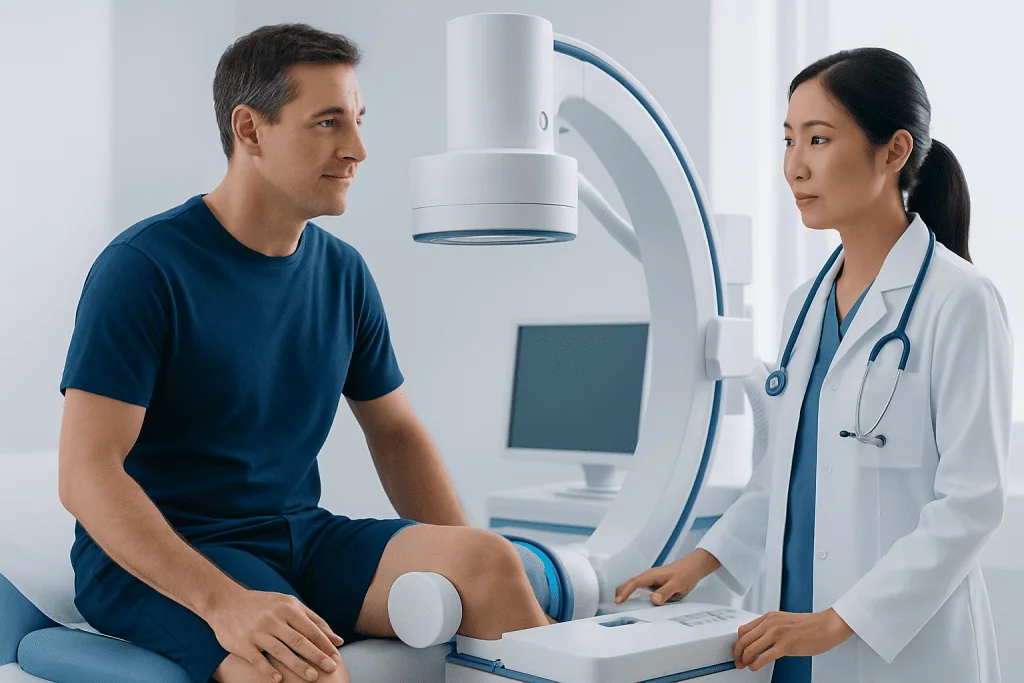
A good candidate for knee osteotomy typically has pain that comes mainly from one side of the knee, along with a leg alignment problem that increases pressure in that area. Many candidates are younger or middle-aged adults who remain active and would prefer to delay joint replacement if possible. They often have enough healthy cartilage in the other part of the knee for alignment correction to make a meaningful difference.
Doctors usually look for several features that support a better outcome. These may include a stable knee, reasonably good range of motion, and a body weight that will not place excessive strain on healing bone and cartilage. A person should also be willing to take part in rehabilitation, because recovery depends heavily on following weight-bearing restrictions and physiotherapy.
Knee osteotomy may be less suitable when arthritis affects the entire knee, pain is severe at rest, movement is very limited, or there is significant inflammatory joint disease. It may also be a less favorable option if the knee is very unstable or if the person cannot safely complete rehabilitation. In such cases, other treatments, including knee replacement, may be more appropriate.
- One-sided knee arthritis or cartilage wear
- Bow-legged or knock-kneed alignment
- Persistent pain despite non-surgical treatment
- Good knee motion and functional goals
- Desire to preserve the natural joint
Why It Is Done and What Conditions It Can Help
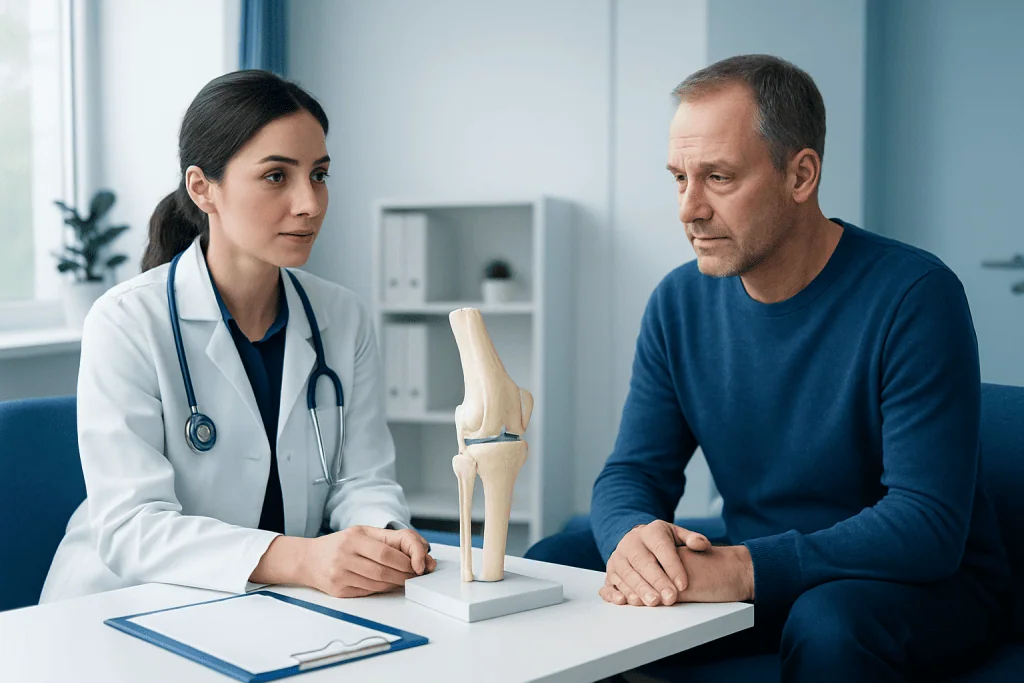
The main purpose of knee osteotomy is to unload the damaged compartment of the knee. When the inner side of the knee is worn and the leg is bowed outward, a high tibial osteotomy can shift the weight-bearing line toward the center or outer side of the joint. When the outer side is more affected, a different correction may be used to move pressure away from the injured area.
The procedure is commonly considered in people with knee osteoarthritis that is limited to a single compartment. It may also be used in selected cases of cartilage injury, meniscus loss, or instability patterns that are made worse by malalignment. Sometimes osteotomy is combined with other procedures, such as cartilage restoration or ligament surgery, to improve the overall mechanics of the knee.
Before recommending surgery, the orthopedic team usually reviews whether non-surgical care has been tried. This may include exercise therapy, activity modification, braces, anti-inflammatory medicines when appropriate, injections in selected cases, and weight management support. Osteotomy is usually considered when symptoms continue to affect quality of life despite these measures.
How Doctors Evaluate the Knee
Assessment begins with a detailed history and physical examination. The doctor asks where the pain is located, what activities make it worse, whether swelling or instability is present, and how much the symptoms interfere with work, exercise, or daily tasks. Examination focuses on alignment, walking pattern, range of motion, ligament stability, and tenderness in different parts of the knee.
Imaging is essential for planning. Weight-bearing X-rays help show how the leg is aligned and how much joint space remains in each compartment of the knee. Long-leg alignment films are often used to calculate the amount of correction needed. In some cases, MRI may help assess cartilage, meniscus, or ligament damage, especially when the surgical plan may include additional procedures.
This evaluation also helps distinguish osteotomy from other treatment paths. For example, if symptoms are more related to a localized sports injury, the care plan may involve knee arthroscopy or rehabilitation instead. If widespread joint damage is present, options may shift toward replacement surgery rather than a joint-preserving realignment procedure.
How Knee Osteotomy Is Performed
The two main types are high tibial osteotomy, performed in the upper part of the shin bone, and distal femoral osteotomy, performed in the lower thigh bone. The choice depends on where the joint damage is located and whether the leg is bow-legged or knock-kneed. The surgeon uses preoperative measurements to decide exactly how much correction is needed.
In many cases, the bone is either opened like a wedge and held in the corrected position, or a wedge of bone is removed to bring the leg into better alignment. Plates and screws are commonly used to stabilize the bone while it heals. Sometimes bone graft material is added, depending on the technique used and the size of the correction.
Because each knee is different, the procedure may be combined with other treatments when helpful. Some patients may also need attention to cartilage defects or meniscus problems, and selected cases may involve advanced knee reconstruction planning if later joint replacement is expected in the future. The orthopedic surgeon explains the intended benefits, expected limitations, and possible risks before surgery.
Recovery Timeline and Rehabilitation
Recovery from knee osteotomy is gradual and requires patience. Soon after surgery, the medical team focuses on pain control, swelling reduction, wound care, and safe movement. Crutches or a walker are usually needed at first, and weight-bearing may be limited for a period while the bone begins to heal. The exact timeline varies depending on the type of osteotomy, fixation method, and the person’s overall health.
Physiotherapy is a central part of recovery. Early goals often include regaining knee extension, gently improving bending, activating the thigh muscles, and protecting the correction. As healing progresses, exercises typically become more focused on strength, balance, walking mechanics, and returning to daily activities. Follow-up visits and repeat X-rays help confirm that the bone is healing in the planned position.
Many people can return to desk-based work sooner than to physically demanding jobs. Driving, sports, and higher-impact activities usually take longer and should only resume when the surgeon says it is safe. Full recovery may take several months, and improvement often continues over time as strength, confidence, and joint mechanics improve.
- Use walking aids exactly as instructed
- Attend all physiotherapy and follow-up appointments
- Keep the incision clean and watch for signs of infection
- Do prescribed exercises regularly, without pushing beyond advice
- Ask the care team when it is safe to drive, work, or return to sport
Benefits, Risks, and Long-Term Expectations
The main benefits of knee osteotomy are pain relief, improved function, and the possibility of delaying knee replacement. For active people, preserving the natural knee may allow a broader range of movement and activity than immediate joint replacement. When the indication is appropriate and rehabilitation is completed well, many patients report better walking tolerance and improved participation in daily life.
Like any surgery, knee osteotomy has risks. These can include infection, bleeding, blood clots, stiffness, nerve or blood vessel injury, delayed bone healing, nonunion, under-correction or over-correction, and persistent pain. In some cases, hardware can become bothersome and may later need removal. The surgeon balances these risks against the expected benefits for each individual patient.
Long-term results depend on careful patient selection, the accuracy of correction, bone healing, weight management, muscle strength, and the progression of joint wear over time. Some people do very well for years, while others may eventually need further surgery, including knee replacement. Near the end of the treatment journey, patients may also seek care in experienced centers; Acibadem International’s multidisciplinary specialists and JCI-accredited hospitals diagnose and treat knee conditions for international patients.
Self-Care and When to See a Doctor
Before surgery, self-care usually centers on staying as strong and mobile as possible. Low-impact exercise, muscle strengthening, supportive footwear, activity adjustment, and reaching a healthier weight when appropriate can all help reduce knee stress. After surgery, recovery is best supported by following the rehabilitation plan closely and avoiding unapproved high-impact activity too soon.
It is important to contact a doctor if knee pain becomes persistent, walking becomes difficult, or the knee repeatedly swells, catches, or gives way. After osteotomy, urgent medical advice is needed for increasing redness, drainage, fever, sudden calf swelling, chest pain, shortness of breath, or pain that is rapidly worsening instead of improving. These symptoms do not always mean a serious problem, but they should be assessed promptly.
Anyone considering knee osteotomy should have an individualized discussion with an orthopedic specialist. The decision depends on age, activity level, alignment, the pattern of cartilage damage, and personal goals. A tailored assessment helps determine whether osteotomy, rehabilitation, injections, or another surgical approach is the best fit.
Frequently asked questions
Is knee osteotomy the same as knee replacement?
No. Knee osteotomy preserves the natural knee joint by changing leg alignment to reduce pressure on the damaged area, while knee replacement removes worn joint surfaces and replaces them with artificial parts. Osteotomy is often considered for selected patients with one-sided knee damage who may not yet be ideal candidates for replacement.
How long does recovery from knee osteotomy take?
Recovery usually takes several months, and the exact timeline varies from person to person. Bone healing, gradual return to weight-bearing, and structured physiotherapy all influence how quickly someone returns to work, driving, and sport. Improvement often continues after the early healing phase as strength and walking mechanics improve.
Who is usually considered too advanced for knee osteotomy?
People with arthritis affecting the whole knee, severe stiffness, marked instability, or significant pain at rest may be less suitable for osteotomy. The procedure works best when there is a clear alignment problem and one compartment of the knee is still relatively healthy. An orthopedic surgeon uses examination and imaging to decide whether the likely benefit is sufficient.
Will knee osteotomy cure arthritis?
Knee osteotomy does not cure arthritis, but it can reduce symptoms by shifting weight away from the worn part of the joint. In some patients, it may slow progression and delay the need for knee replacement. The degree of benefit depends on the pattern of joint damage and how well the knee is aligned after surgery.
Can a person return to sports after knee osteotomy?
Many people can return to physical activity after recovery, especially low-impact exercise and selected sports approved by their surgeon. The timing depends on bone healing, strength, balance, and the demands of the activity. High-impact sports may not be suitable for everyone, and returning too early can affect recovery.
What are the signs of a good candidate for knee osteotomy?
A good candidate often has pain mainly on one side of the knee, an alignment issue such as bow legs or knock knees, and enough healthy cartilage in the other part of the joint. They usually have reasonable knee motion and are motivated to complete rehabilitation. The decision is individualized and based on imaging, symptoms, and personal goals.
References
- American Academy of Orthopaedic Surgeons
- National Institute for Health and Care Excellence
- National Institute of Arthritis and Musculoskeletal and Skin Diseases
- OrthoInfo
- Arthritis Foundation
This article is for general information only and is not a substitute for professional medical advice. Please consult a qualified doctor about your individual situation.
Joint and spine care in Turkey — expert assessment & treatment
JCI-accredited · board-certified surgeons · reply within 24h
Add us as a Preferred Source to see more of our trusted health content across Google Search, AI Overviews and Discover.

More from the Health Library



Related Specialists

Prof. Dr. Alp Yentür
Anesthesiology
Assoc. Prof. Dr. Yusuf Karakaş
Medical Oncology
Assoc. Prof. Dr. Erkin İsmail
General Surgery
Assoc. Prof. Dr. Arzu Yurci
Gynecology & Obstetrics