Knee Specialist vs General Orthopedist: Which Doctor Is Right for You?

A general orthopedist diagnoses and treats a wide range of bone, joint, muscle, and ligament problems. A knee specialist is an orthopedic doctor with a stronger focus on knee injuries, arthritis, alignment issues, and knee surgery.
Key Takeaways
- A general orthopedist diagnoses and treats a wide range of bone, joint, muscle, and ligament problems.
- A knee specialist is an orthopedic doctor with a stronger focus on knee injuries, arthritis, alignment issues, and knee surgery.
- Many common knee problems can start with a general orthopedist, especially after a new injury or for an initial evaluation.
- Persistent pain, repeated instability, prior failed treatment, or possible surgery may be reasons to see a knee specialist.
- The right choice also depends on the doctor’s experience, access to imaging, rehabilitation planning, and whether second opinions are needed.
Choosing between a knee specialist and a general orthopedist depends on the type of symptoms, how long they have lasted, and whether treatment may involve advanced knee-focused care. Both doctors treat musculoskeletal problems, but a knee specialist may be especially helpful for persistent, complex, or sports-related knee conditions.
Overview
When deciding between a knee specialist and a general orthopedist, it helps to know that both are qualified physicians who treat musculoskeletal conditions. Orthopedists care for bones, joints, cartilage, ligaments, tendons, and muscles. A general orthopedist may evaluate many different areas of the body, including the shoulder, hip, knee, foot, and spine.
A knee specialist is usually an orthopedic doctor who has developed deeper expertise in knee-related problems. This may include sports injuries such as ligament tears, meniscus injuries, cartilage damage, kneecap tracking problems, and degenerative conditions such as osteoarthritis. Some also focus on joint preservation, minimally invasive procedures, or knee replacement surgery.
For many people, there is no single “correct” starting point. A general orthopedist can often assess common knee pain, order imaging, begin treatment, and determine whether more specialized care is needed. A knee specialist may be the better first choice when symptoms are complex, treatment has already failed, or surgery is being considered.
What a General Orthopedist Treats
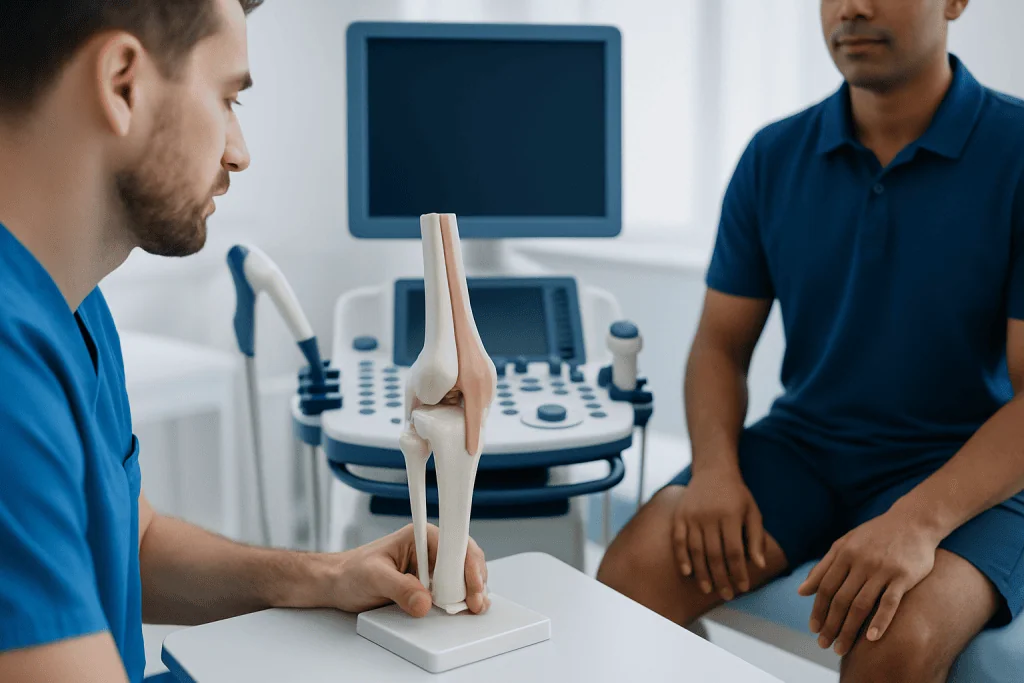
A general orthopedist is trained to diagnose and manage a broad range of orthopedic concerns. This includes fractures, sprains, tendon injuries, arthritis, overuse conditions, and joint pain affecting different parts of the body. For someone with new knee pain, swelling after activity, or an injury that has not improved, a general orthopedist can often provide a strong first evaluation.
These doctors commonly perform physical exams, review activity history, order X-rays or MRI scans when needed, and recommend initial treatment. First-line care may include rest, bracing, activity changes, physical therapy, anti-inflammatory strategies, or injections, depending on the individual case and overall health.
A general orthopedist may be especially appropriate when:
- The pain is mild to moderate and has started recently.
- There is no clear sign of major instability or a severe injury.
- The person has symptoms in more than one joint and needs broader orthopedic assessment.
- There is uncertainty about whether the problem is in the knee itself or related to the hip, back, or foot mechanics.
If the evaluation suggests a more complicated knee condition, a general orthopedist may refer the patient to a knee-focused colleague for advanced treatment planning.
What a Knee Specialist Focuses On

A knee specialist focuses more intensively on conditions that affect the knee joint. This includes the ligaments, menisci, cartilage surfaces, kneecap, alignment, and the surrounding tendons and muscles. Because they see high volumes of knee cases, these specialists may be especially familiar with subtle patterns of injury and treatment options for difficult cases.
Knee specialists often evaluate sports injuries such as ACL, PCL, or MCL tears, recurrent kneecap dislocation, complex meniscus damage, cartilage lesions, and advanced arthritis. They may also manage ongoing pain after previous treatment or surgery. In some cases, they help distinguish whether symptoms are due to a problem such as knee osteoarthritis or another condition affecting movement and joint loading.
Specialized care may also be useful when surgery is being discussed. A knee specialist may offer knee-preserving procedures, arthroscopic techniques, ligament reconstruction, or joint replacement depending on the diagnosis. When appropriate, treatment plans can include options such as knee arthroscopy or knee replacement surgery as part of a broader rehabilitation strategy.
When to Choose One Over the Other
A general orthopedist is often a practical first step for new knee symptoms. This is especially true if the pain began gradually, there has been no major trauma, and the person has not yet tried structured treatment. Many routine problems, including mild strains, early arthritis symptoms, and overuse pain, can be safely assessed this way.
A knee specialist may be more appropriate if symptoms are severe, recurring, or affecting daily function. Examples include the knee giving way, locking, repeated swelling, inability to return to sport, or pain that persists despite rest and physical therapy. A specialist can also be helpful when the diagnosis remains unclear after an initial workup.
It may be wise to seek a knee-focused opinion when:
- A sports injury is suspected, especially a ligament or meniscus tear.
- There is major swelling after a twist, fall, or impact.
- The knee feels unstable or repeatedly buckles.
- Conservative treatment has not worked after several weeks or months.
- Surgery, revision surgery, or a second opinion is being considered.
- There is significant arthritis limiting walking, sleep, or quality of life.
In practice, care is often shared. A general orthopedist may start treatment, and a knee specialist may take over if advanced imaging, procedural treatment, or surgery becomes necessary.
Common Knee Problems That May Need Specialized Care
Several knee conditions are more likely to benefit from a specialist assessment, particularly when symptoms interfere with mobility or return to exercise. These include ligament injuries, meniscus tears, cartilage damage, persistent kneecap instability, deformity, and moderate to severe arthritis. Recurrent pain after earlier treatment can also point to a problem that needs more focused review.
For younger or athletic patients, preserving knee function is often a major goal. A specialist may discuss strategies that protect cartilage, restore stability, and support safe return to activity. This can be important in injuries associated with ACL tears or other internal knee damage, where timing and rehabilitation planning may affect long-term recovery.
In older adults, specialist input may help clarify whether symptoms are due to wear-and-tear changes, inflammation, mechanical damage, or a combination of factors. This can guide choices between exercise therapy, injections, braces, arthroscopic procedures in selected cases, or surgical options such as robotic knee replacement when appropriate. Not every painful knee needs surgery, and careful evaluation helps match treatment to the person’s symptoms and goals.
How Doctors Make the Diagnosis
Whether a person sees a general orthopedist or a knee specialist, diagnosis usually begins with a detailed history and physical examination. The doctor will ask when the pain started, what activities make it better or worse, whether there was a twist or impact, and whether symptoms include swelling, locking, clicking, stiffness, or instability.
The physical exam may assess walking pattern, range of motion, tenderness, swelling, strength, alignment, and ligament stability. Simple office tests can provide useful clues about meniscus or ligament injury. The doctor may also assess the hip, ankle, or spine if symptoms could be referred or influenced by body mechanics.
Imaging is chosen based on the suspected problem. X-rays help show fractures, alignment, and arthritis changes. MRI is often used when soft tissues such as ligaments, menisci, and cartilage need closer evaluation. Ultrasound may sometimes help with tendon or fluid-related issues. The final diagnosis comes from combining symptoms, examination findings, and imaging rather than relying on one test alone.
Treatment Options and What to Expect
Treatment depends on the diagnosis, symptom severity, age, activity level, and personal goals. Many knee problems improve with conservative care. This may include temporary activity modification, weight management where relevant, muscle strengthening, stretching, supportive footwear, bracing, and guided physical therapy. Some people also benefit from injections or other non-surgical pain-management approaches.
If a structural problem is significant, procedural or surgical treatment may be considered. Arthroscopy may be used in selected cases for internal knee problems, though it is not right for every cause of knee pain. Ligament reconstruction, meniscus repair, realignment procedures, and joint replacement are considered based on the exact diagnosis and functional needs.
Recovery planning is an important part of care. A good orthopedic team will explain the likely timeline, rehabilitation steps, and realistic goals for pain relief, movement, and return to activity. Near the end of the decision process, some patients also look for centers with coordinated imaging, rehabilitation, and surgical expertise. Acibadem International’s multidisciplinary specialists in JCI-accredited hospitals diagnose and treat knee conditions for international patients when specialized evaluation is needed.
How to Choose the Right Doctor and When to Seek Care
The best choice is not only about job title. It also helps to consider the doctor’s experience with the specific knee problem, whether they regularly treat active adults or older patients with arthritis, and whether they can coordinate imaging, physical therapy, and follow-up. Patients may wish to ask how often the doctor treats similar cases and what non-surgical and surgical options they typically consider.
Prompt medical evaluation is especially important after a serious injury. A person should seek care if there is major swelling, inability to bear weight, visible deformity, fever with a hot swollen joint, a locked knee, or sudden instability after trauma. These symptoms do not always mean a severe condition, but they should not be ignored.
Even without an emergency, a doctor visit is reasonable when knee pain lasts more than a few weeks, returns repeatedly, limits work or sport, or disturbs sleep. Starting with a general orthopedist is often appropriate, while a knee specialist may be preferred for persistent, complex, or surgery-related concerns. If uncertainty remains, a second opinion can be a helpful and reassuring step.
Frequently asked questions
Is a knee specialist different from an orthopedic surgeon?
A knee specialist is usually an orthopedic doctor or surgeon with added focus on the knee joint. Not all knee specialists perform surgery, but many do evaluate both non-surgical and surgical options. The main difference is the depth of knee-specific experience.
Should someone see a general orthopedist first for knee pain?
Often, yes. A general orthopedist can assess many common causes of knee pain, order tests if needed, and begin treatment. If the problem appears complex or does not improve, referral to a knee specialist may follow.
When is a knee specialist the better first choice?
A knee specialist may be the better first choice for sports injuries, repeated instability, suspected ligament tears, complex meniscus problems, significant arthritis, or pain after prior knee surgery. They are also helpful when surgery is being considered or a second opinion is desired.
Do all knee problems need MRI or surgery?
No. Many knee problems can be diagnosed with history, physical examination, and plain X-rays, and many improve with non-surgical care. MRI and surgery are usually reserved for situations where soft-tissue injury, persistent symptoms, or treatment planning requires more detail.
Can a general orthopedist treat arthritis in the knee?
Yes. General orthopedists commonly treat knee arthritis with exercise guidance, medications, injections, and other non-surgical measures. If arthritis becomes advanced or joint replacement is being discussed, a knee specialist may provide additional expertise.
What questions are helpful to ask at the appointment?
Patients may ask what condition is most likely causing the symptoms, whether imaging is needed, and what non-surgical treatments are reasonable first steps. It is also helpful to ask about expected recovery time, activity restrictions, and when specialist referral or surgery would be considered.
References
- American Academy of Orthopaedic Surgeons
- National Institute of Arthritis and Musculoskeletal and Skin Diseases
- American Association of Hip and Knee Surgeons
- MedlinePlus
- National Health Service
This article is for general information only and is not a substitute for professional medical advice. Please consult a qualified doctor about your individual situation.
Joint and spine care in Turkey — expert assessment & treatment
JCI-accredited · board-certified surgeons · reply within 24h
Add us as a Preferred Source to see more of our trusted health content across Google Search, AI Overviews and Discover.