Laser eye surgery Recovery: Week-by-Week Timeline

Most people notice visual improvement within the first few days after LASIK, but vision can fluctuate during healing. PRK and surface laser procedures generally have a longer, more uncomfortable early recovery than LASIK or SMILE.
Key Takeaways
- Most people notice visual improvement within the first few days after LASIK, but vision can fluctuate during healing.
- PRK and surface laser procedures generally have a longer, more uncomfortable early recovery than LASIK or SMILE.
- Eye drops, avoiding eye rubbing, and attending follow-up visits are important parts of safe healing.
- Many desk-based workers return within a few days, while driving, swimming, contact sports, and dusty environments may require a longer pause.
- Increasing pain, worsening redness, a sudden drop in vision, or discharge should be assessed promptly by an eye specialist.
Laser eye surgery recovery is usually quickest after LASIK, with many people returning to routine activities within a few days, although clear and stable vision can take several weeks or longer. Recovery varies by procedure type, eye health, prescription, and how closely aftercare guidance is followed.
Laser eye surgery recovery at a glance
Laser eye surgery recovery generally begins immediately after treatment. Most people experience blurred vision, watering, light sensitivity, and a foreign-body sensation during the first hours or days. For LASIK, useful vision often returns quickly, while surface procedures such as PRK usually require more time for the surface of the eye to heal and vision to sharpen.
A week-by-week timeline is helpful, but it cannot predict every individual experience. The pace of healing depends on the procedure performed, the original prescription, corneal thickness and shape, dry-eye symptoms, general health, and adherence to prescribed aftercare. The eye surgeon provides the most appropriate timeline for returning to work, driving, exercise, and other activities.
This article focuses on the recovery process. For an overview of suitability, available techniques, and treatment planning, readers can review laser eye surgery.
How laser eye surgery works and who may be suitable
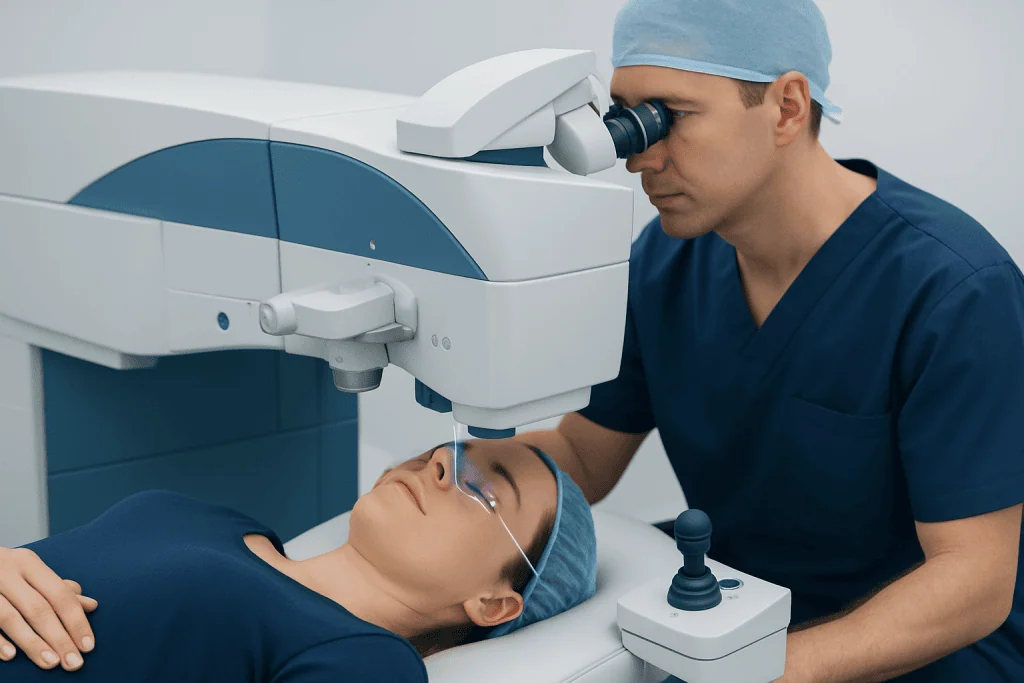
Laser vision correction reshapes the cornea, the clear front surface of the eye, so that light focuses more accurately on the retina. This can reduce dependence on glasses or contact lenses for short-sightedness, long-sightedness, and astigmatism. Common approaches include LASIK, where a thin corneal flap is created; PRK, where the surface layer is removed before laser reshaping; and SMILE, which removes a small piece of corneal tissue through a small incision.
Suitability is determined through a detailed eye examination rather than prescription alone. Candidates generally need a stable prescription, healthy corneas, and realistic expectations about outcomes. The assessment may include corneal mapping, measurements of corneal thickness, pupil size, tear production, and a review of eye and medical history.
Laser treatment may not be appropriate for everyone. Pregnancy or breastfeeding, unstable vision, certain corneal conditions, significant dry eye, uncontrolled diabetes, active eye infection, or some autoimmune disorders may affect timing or suitability. Alternatives such as glasses, contact lenses, implantable lenses, or lens-based surgery may be discussed when laser correction is not the best option.
What happens during the procedure

Laser eye surgery is usually an outpatient procedure performed with numbing eye drops. The person remains awake, lies under the laser system, and is asked to focus on a target light. An eyelid holder helps prevent blinking, and modern laser systems use tracking technology to compensate for small eye movements.
In LASIK, the surgeon creates and lifts a very thin flap, reshapes the underlying corneal tissue with an excimer laser, and returns the flap to its original position. In PRK, the corneal surface layer is removed and regrows during the first several days; a temporary bandage contact lens is commonly used. SMILE involves creating a small lenticule within the cornea and removing it through a small incision.
The laser portion itself is brief, but preparation and safety checks take longer. Vision is often hazy immediately afterward. A companion should take the person home, as driving is not appropriate on the day of surgery. The clinic will provide individual instructions about drops, protective shields, sleep, and follow-up appointments.
Laser eye surgery recovery: week-by-week timeline
Day of surgery to day 3: Rest is important. After LASIK or SMILE, mild burning, watering, scratchiness, glare, halos, and blurred vision are common early effects. Many people notice improvement by the next day, although vision may still fluctuate. After PRK, discomfort can be more noticeable for several days while the surface layer heals, and vision may remain blurred. Prescribed lubricating and medicated drops should be used exactly as directed.
Days 4 to 7: People recovering from LASIK may often resume light, screen-based work if vision is comfortable and the surgeon agrees. Dryness, variable focus, night-time glare, and light sensitivity can continue. PRK patients may have their bandage contact lens reviewed or removed once the surface has healed, but vision can still be hazy. Rubbing the eyes should be avoided after any laser procedure.
Weeks 2 to 4: Vision commonly becomes more consistent, although it may not yet be fully stable. Most people can return gradually to ordinary exercise and outdoor activity with appropriate eye protection. Contact or high-impact sports, swimming pools, hot tubs, and environments with dust or chemical exposure may need additional restrictions. The surgeon can advise when each activity is safe for the specific procedure.
One to three months and beyond: Healing and visual refinement continue. LASIK and SMILE vision may stabilize relatively quickly, while PRK can take several weeks to months to reach its best result. Dry-eye symptoms may persist temporarily and are commonly managed with preservative-free artificial tears or other treatment recommended by an eye specialist. Follow-up checks confirm healing, assess vision, and identify any need for further care.
Returning to work, driving, exercise and sport
Return to work depends on the type of work and the procedure performed. Many people with office-based jobs return after LASIK within one to a few days, provided they can see comfortably and use drops as advised. Jobs involving dust, wind, heavy lifting, machinery, chemical exposure, or a high risk of eye injury may require more time away or protective eyewear.
Driving should only resume when vision is sufficiently clear and the eye surgeon has confirmed it is safe. Night driving may feel more difficult at first because glare, halos, and reduced contrast sensitivity can occur during healing. It is sensible to arrange alternative transport until confidence and visual comfort return.
Light walking is often possible soon after surgery, but strenuous exercise should be restarted gradually. Sweat should be kept out of the eyes, and eyes should not be rubbed. Swimming, hot tubs, saunas, and water sports are commonly postponed because water exposure can increase irritation and infection risk. Protective sports goggles are particularly important for racquet sports, ball sports, and activities with a risk of facial impact.
- Use sunglasses outdoors to reduce light sensitivity and protect the eyes from wind and dust.
- Take regular screen breaks and use lubricating drops if advised, especially during computer work.
- Avoid eye makeup, creams close to the lash line, and non-prescribed eye drops until cleared by the surgeon.
- Wear the recommended protective shield while sleeping if instructed, particularly during the first week.
Benefits, expected effects and possible risks
The main potential benefit of laser eye surgery is reduced reliance on glasses or contact lenses. Many patients achieve good functional distance vision, but results vary and some people still need glasses for certain tasks. Age-related near-vision changes, known as presbyopia, can still develop or progress after laser correction, so reading glasses may eventually be needed.
Temporary dry eye, fluctuating vision, glare, halos around lights, and light sensitivity are common during recovery. These effects often improve as the cornea heals and the tear film stabilizes. Some people notice night-vision symptoms for longer, especially early after treatment.
Less common complications can include infection, inflammation, delayed healing, corneal haze after surface procedures, undercorrection or overcorrection, and the need for further treatment. Serious loss of vision is uncommon, but it is important to understand all potential benefits and risks before deciding on surgery. Careful pre-operative assessment, appropriate procedure selection, and follow-up care help support safe outcomes.
When to seek medical care
Patients should contact their eye surgeon promptly if pain becomes severe or increases rather than improves, if there is a sudden reduction in vision, marked or worsening redness, sensitivity to light that is increasing, persistent nausea with eye pain, or yellow or green discharge. These symptoms do not always mean there is a serious problem, but they require timely assessment.
It is also important to seek advice after an eye injury, accidental eye rubbing in the early recovery period, or if prescribed drops cause a concerning reaction. Do not use leftover antibiotic, steroid, redness-relief, or other eye drops unless the treating clinician specifically recommends them.
Acibadem International’s multidisciplinary eye specialists and JCI-accredited hospitals assess and treat laser vision correction concerns for international patients. Follow-up care should always be coordinated with a qualified ophthalmologist, particularly when symptoms change unexpectedly.
Frequently asked questions
How long does laser eye surgery recovery take?
Recovery time depends on the procedure. Many people have useful vision within one to several days after LASIK or SMILE, while PRK commonly requires a longer early healing period. Vision may continue to fluctuate and refine for weeks or, in some cases, several months.
When can a person return to work after laser eye surgery?
Many people with desk-based work return within a few days after LASIK if they are comfortable and their vision is adequate. PRK patients may need more time because initial discomfort and blurred vision are usually greater. Work involving dust, eye injury risk, or driving may require additional restrictions.
When is it safe to exercise after laser eye surgery?
Light activity may be possible soon after treatment, but timing should be confirmed with the surgeon. More strenuous exercise is usually resumed gradually, and swimming or hot tubs are typically delayed to reduce infection and irritation risk. Contact sports may require protective eyewear and a longer pause.
Why is vision blurry after laser eye surgery?
Blurred or fluctuating vision is a normal part of early healing as the cornea and tear film recover. Dryness, mild swelling, and adaptation of the visual system can contribute. If vision suddenly worsens or does not improve as expected, an eye specialist should be contacted.
Can a person use a phone or computer after laser eye surgery?
Screen use is usually possible when comfortable, but frequent breaks are helpful because blinking tends to decrease during screen time. Reduced blinking can worsen dryness and temporary blur. Lubricating drops should be used according to the post-operative plan.
What should be avoided after laser eye surgery?
Patients should avoid rubbing their eyes, getting non-sterile water in the eyes, and using unapproved drops or eye products during early recovery. Makeup, swimming, hot tubs, and high-risk sports may need to be postponed. The exact restrictions differ by procedure and should follow the surgeon’s instructions.
References
- American Academy of Ophthalmology
- U.S. Food and Drug Administration
- National Eye Institute
- Royal College of Ophthalmologists
This article is for general information only and is not a substitute for professional medical advice. Please consult a qualified doctor about your individual situation.
Eye Surgery in Turkey — costs, top hospitals & a free quote
JCI-accredited · board-certified surgeons · reply within 24h
Add us as a Preferred Source to see more of our trusted health content across Google Search, AI Overviews and Discover.

Ophthalmology
Comprehensive eye care from laser vision correction to retina, cornea and cataract surgery.
75 specialists in this unit