

LASIK Advertising: An Evidence-Based Patient Guide
LASIK is a laser vision-correction procedure that reshapes the cornea to reduce refractive errors. Advertising claims should be considered alongside a personalized ophthalmology assessment, not as a substitute for it.
Key Takeaways
- LASIK is a laser vision-correction procedure that reshapes the cornea to reduce refractive errors.
- Advertising claims should be considered alongside a personalized ophthalmology assessment, not as a substitute for it.
- Good candidates need stable vision, healthy corneas, and realistic expectations about reduced dependence on glasses or contacts.
- Dry eye symptoms, glare, halos, and the need for further correction are possible LASIK adverse events.
- Patient satisfaction is often linked to careful candidate selection, detailed counseling, and appropriate aftercare.
LASIK advertising may describe potential freedom from glasses or contact lenses, but it cannot determine whether the procedure is appropriate for an individual eye. A trustworthy decision requires a comprehensive eye examination, clear discussion of expected results, and balanced information about recovery, alternatives, and possible risks.
Overview: How to Read LASIK Advertising
LASIK advertising often highlights the possibility of clearer distance vision and less dependence on glasses or contact lenses. These potential benefits are real for many appropriately selected people, but no advertisement can establish candidacy or predict an individual result. The most useful approach is to treat promotional information as a starting point for questions to ask an ophthalmologist.
LASIK, short for laser-assisted in situ keratomileusis, is an elective refractive surgery. It changes the shape of the cornea, the clear front surface of the eye, so that light focuses more accurately on the retina. It may be used to correct nearsightedness, farsightedness, and astigmatism within suitable ranges.
Balanced information should explain both potential benefits and limitations. A person may see well without glasses after surgery yet still need reading glasses later in life because of presbyopia, the natural age-related loss of near focusing. Outcomes also depend on eye health, prescription stability, corneal measurements, healing, visual demands, and expectations.
Questions to Ask About Promotional Claims
Responsible LASIK advertising should not make the decision seem urgent or imply that every person with glasses is eligible. Patients can ask whether an advertised result applies to their type and degree of refractive error, whether the evaluation includes corneal thickness and shape, and what alternatives may be appropriate if LASIK is not recommended.
A lasik marketing case study may describe an individual experience, but it cannot show what outcome another person will have. Personal stories can be helpful for understanding practical issues such as recovery routines, yet they do not replace information from clinical examination, informed consent materials, and a discussion of the surgeon’s recommendations.
It is reasonable to ask for plain-language explanations of benefits, known complications, expected recovery, follow-up arrangements, and any circumstances in which glasses, contact lenses, enhancement surgery, or another procedure could still be needed. Patients should have enough time to review information, compare options, and decide without pressure.
- What refractive error and eye findings make LASIK suitable or unsuitable?
- What visual result is realistic for work, driving, sports, and night vision?
- What symptoms are common during healing, and which ones require prompt review?
- What alternatives are available if the cornea or prescription is not appropriate for LASIK?
How LASIK Works and Who May Be a Candidate
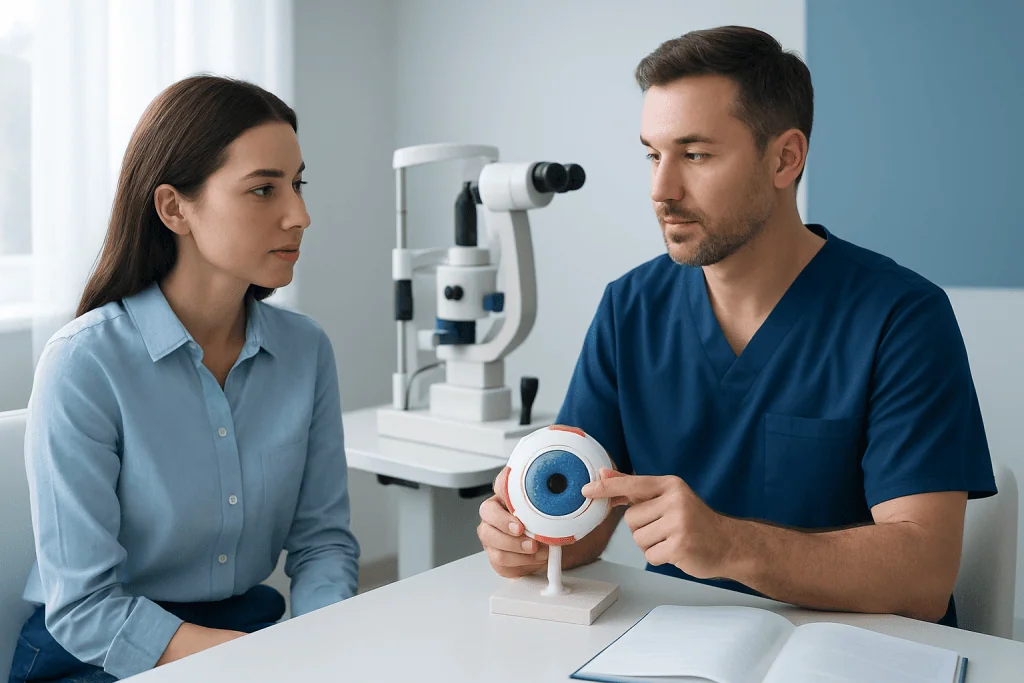
During LASIK, a surgeon creates a thin flap in the cornea using a laser or a mechanical device. The flap is lifted, and an excimer laser removes a precisely calculated amount of corneal tissue underneath. The flap is then repositioned, where it adheres naturally as the eye heals. The aim is to improve how the eye focuses light.
Assessment for laser vision correction is detailed. It commonly includes measurement of the prescription, corneal thickness and curvature, pupil size, tear-film health, eye pressure, and a dilated examination of the eyes. These tests help identify issues that can affect safety or visual quality after surgery.
Potential candidates are generally adults with a stable prescription and healthy eyes. LASIK may not be suitable for people with certain corneal disorders, significant dry eye disease, unstable refractive error, uncontrolled medical conditions affecting healing, some retinal conditions, or particular medications. Pregnancy and breastfeeding can temporarily change vision and may lead clinicians to recommend postponing assessment or treatment.
People with thin or irregular corneas may be advised to consider another approach, such as surface laser treatment, implantable lenses, or continued use of glasses or contact lenses. A recommendation against LASIK is not a failure; it is an important safety outcome of appropriate screening.
What Happens During the Procedure
Before the procedure, the eye is numbed with anesthetic drops. Patients remain awake, and the surgical team helps them maintain positioning while the laser system tracks eye movement. The treatment itself is usually brief, although preparation and safety checks take additional time.
After the corneal flap is created and lifted, the excimer laser reshapes the underlying tissue according to the planned correction. The surgeon replaces the flap and checks its position. There are typically no stitches. Vision can be blurry immediately afterward, and the eyes may feel watery, irritated, or sensitive to light for a short period.
Patients should arrange transport home and follow all instructions for eye drops, protective shields, rubbing avoidance, bathing, exercise, screen use, and follow-up appointments. LASIK eye surgery should always include an individualized preoperative discussion, because the exact plan depends on the patient’s eye measurements and visual needs.
Benefits, Recovery, and LASIK Patient Satisfaction
For suitable candidates, LASIK can reduce dependence on glasses or contact lenses and may improve convenience for daily activities. Some people achieve excellent uncorrected distance vision, while others may still prefer or need glasses for certain tasks. Results should be viewed as a range of possibilities rather than a guaranteed outcome.
Recovery is often rapid, with many people noticing improved vision within the first days. However, visual clarity can fluctuate while the cornea and tear film stabilize. Follow-up visits allow the clinician to monitor healing, assess vision, and address symptoms such as dryness or light sensitivity. Final stabilization may take longer for some individuals.
LASIK patient satisfaction is influenced by more than a vision-chart result. Clear preoperative counseling, realistic expectations, comfort during recovery, management of dry eye, and understanding of age-related changes in near vision all matter. Discussing night driving, computer work, outdoor activity, and occupational requirements before surgery can help align the treatment plan with daily life.
Even after successful surgery, routine eye care remains important. LASIK does not prevent cataracts, glaucoma, retinal disease, or other eye conditions that may occur independently of refractive error.
Risks and LASIK Adverse Events
Like all surgery, LASIK has risks. Common temporary effects can include dry eye symptoms, fluctuating vision, glare, halos around lights, starbursts, and increased sensitivity to light. These effects often improve during healing, but they can persist in some people and may be more noticeable during night driving or in dim environments.
Less common complications include undercorrection, overcorrection, irregular astigmatism, flap-related problems, infection, inflammation, corneal weakening, or a reduction in best-corrected visual quality. In some cases, additional treatment, glasses, contact lenses, or another procedure may be considered. Severe vision-threatening complications are uncommon, but they are an essential part of informed consent.
Reports of LASIK adverse events should be understood in context: an individual symptom does not predict another person’s experience, and risk varies according to baseline eye health, corneal characteristics, prescription, surgical technique, and postoperative care. Patients should openly share a history of dry eye, contact lens discomfort, eye injury, autoimmune disease, medication use, and visual symptoms.
A careful assessment is designed to reduce avoidable risk, not to eliminate it entirely. The best choice may be LASIK, a different vision-correction procedure, or no surgery, depending on the balance of potential benefits and risks for that person.
When to Seek Medical Care
Anyone considering LASIK should schedule a comprehensive assessment with a qualified ophthalmologist rather than relying only on advertising or online screening tools. A prompt eye examination is especially important for sudden vision changes, persistent eye pain, marked redness, flashes of light, many new floaters, discharge, or a sensation of a curtain or shadow in the visual field.
After laser vision correction, patients should contact their surgical team promptly if pain worsens rather than improves, vision suddenly decreases, significant redness develops, or there is discharge or injury to the eye. These symptoms do not always indicate a serious problem, but early review is important.
Acibadem International’s multidisciplinary specialists and JCI-accredited hospitals provide assessment and treatment for international patients considering laser vision correction. A consultation can help patients compare LASIK with other appropriate options and make an informed decision based on their eye health.
Frequently asked questions
Can LASIK advertising tell someone if they are eligible?
No. Advertising can describe the procedure and may identify broad eligibility factors, but only a comprehensive eye examination can determine whether LASIK is appropriate. Corneal shape and thickness, prescription stability, tear-film health, and overall eye health all need assessment.
Is it realistic to expect never to need glasses after LASIK?
LASIK can reduce dependence on glasses or contact lenses, especially for distance vision, but it does not guarantee lifelong freedom from eyewear. Many people develop presbyopia with age and may need reading glasses, while some may need glasses for particular activities.
How long does LASIK recovery take?
Many people notice improved vision within the first few days, although blurry or fluctuating vision can occur initially. Eye comfort and visual stability continue to improve over time, and follow-up appointments are important to monitor recovery.
What are the most common LASIK adverse events?
Dry eye symptoms, glare, halos, starbursts, and temporary visual fluctuation are among the better-known effects after LASIK. Most improve as healing progresses, but some can last longer and may affect activities such as night driving.
Does a positive LASIK patient satisfaction story predict an individual result?
No. A personal account can provide perspective, but each person's outcome depends on their prescription, corneal measurements, eye health, healing response, and visual needs. A clinician can explain what results are realistic in an individual case.
What should a patient ask at a LASIK consultation?
Patients may ask whether they are a suitable candidate, what results are likely for their prescription, and which alternatives are available. They should also ask about recovery, possible complications, follow-up care, and the likelihood of needing glasses, contacts, or further treatment.
References
- U.S. Food and Drug Administration
- American Academy of Ophthalmology
- National Eye Institute
- Royal College of Ophthalmologists
This article is for general information only and is not a substitute for professional medical advice. Please consult a qualified doctor about your individual situation.
LASIK in Turkey — costs, top hospitals & a free quote
JCI-accredited · board-certified surgeons · reply within 24h
Add us as a Preferred Source to see more of our trusted health content across Google Search, AI Overviews and Discover.

More from the Health Library


Related Specialists
Prof. Dr. İsmet Tamer
Check Up & Wellness Center
Dr. Meltem Hüner
Infectious Diseases & Clinical Microbiology
Dr. Mehmet Tam
Emergency Service
Dr. Şirin Efe
Clinical Laboratory