

Lateral Recess Stenosis: Symptoms, Causes, and Treatment Options

Lateral recess stenosis is narrowing in a specific part of the spine that can press on a nerve root. Common symptoms include back pain, radiating leg pain, numbness, tingling, and sometimes weakness.
Key Takeaways
- Lateral recess stenosis is narrowing in a specific part of the spine that can press on a nerve root.
- Common symptoms include back pain, radiating leg pain, numbness, tingling, and sometimes weakness.
- Age-related wear, disc bulges, arthritis, and thickened spinal tissues are common causes.
- Diagnosis usually combines a physical examination with imaging such as MRI or CT scans.
- Many people improve with activity changes, physical therapy, and pain-relieving treatments, while surgery is reserved for selected cases.
Lateral recess stenosis is a type of spinal narrowing that affects the space where a nerve root travels before leaving the spinal canal. It can lead to lower back pain, leg pain, numbness, tingling, or weakness, and treatment depends on how severe the nerve compression is and how much it affects daily life.
Overview: what lateral recess stenosis means
Lateral recess stenosis is a narrowing of the part of the spinal canal where a nerve root travels before it exits the spine. This narrowing most often happens in the lower back, where it may irritate or compress the nerve and cause pain that travels into the buttock or leg. In simple terms, it is a specific form of spinal stenosis, but the pressure is focused on the side channel of the spine rather than the central canal alone.
The condition often develops gradually as the spine changes with age. A bulging disc, enlarged joints, thickened ligaments, or bone spurs can all reduce the available space for the nerve. Some people have imaging findings without symptoms, while others develop clear nerve-related complaints that affect walking, standing, sleep, or daily activities.
Because symptoms can overlap with other spine problems, it is helpful to distinguish lateral recess stenosis from broader spinal stenosis and from common causes of radiating leg pain such as sciatica. The exact location of narrowing matters because it can shape both symptoms and treatment choices.
How symptoms usually feel
The symptoms of lateral recess stenosis depend on which nerve root is affected and how much pressure is placed on it. Many people notice lower back pain together with pain that travels down one leg. The leg pain may feel sharp, burning, aching, or electric, and it may worsen with standing, walking, or twisting.
Numbness and tingling are also common. Some people describe a “pins and needles” sensation in the thigh, calf, or foot. Others notice heaviness in the leg or feel less steady on stairs. Symptoms may come and go at first, then become more frequent if the narrowing progresses.
When nerve compression is more significant, weakness can occur. This may show up as difficulty lifting the front of the foot, pushing off when walking, or standing from a chair. In many cases, bending forward or sitting provides some relief because these positions can reduce pressure inside the spinal canal.
- Lower back pain
- Pain radiating into the buttock or leg
- Numbness or tingling in the leg or foot
- Leg weakness or fatigue
- Symptoms that worsen with standing or walking and ease with sitting
Why it happens: causes and risk factors
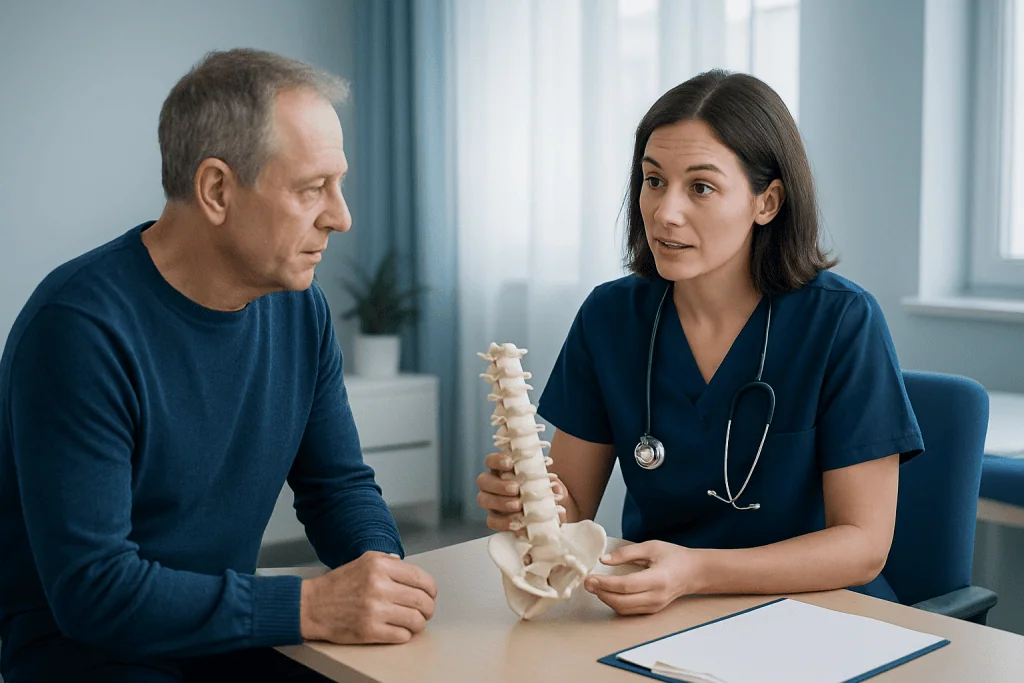
The most common cause of lateral recess stenosis is degenerative change in the spine over time. The spinal discs can lose height and bulge outward, the facet joints can become enlarged from arthritis, and ligaments can thicken. Each of these changes can narrow the side recess where the nerve root passes.
Sometimes more than one factor is present at the same spinal level. For example, a person may have a disc bulge together with facet joint overgrowth and mild vertebral slippage. This combination can make symptoms more noticeable. Previous spine injury or surgery can also change the anatomy and contribute to nerve compression in some patients.
Risk tends to increase with age, but lateral recess stenosis is not limited to older adults. Repetitive spinal loading, heavy physical work, obesity, smoking, poor core strength, and inherited differences in spinal shape may all play a role. The condition is especially relevant when a person already has related disorders such as a herniated disc or long-standing degenerative spine disease.
How doctors diagnose lateral recess stenosis
Diagnosis begins with a careful medical history and physical examination. A doctor asks where the pain starts, where it travels, what makes it better or worse, and whether numbness, weakness, or walking difficulty is present. The examination may include posture assessment, walking evaluation, tests of strength and sensation, and checks of reflexes.
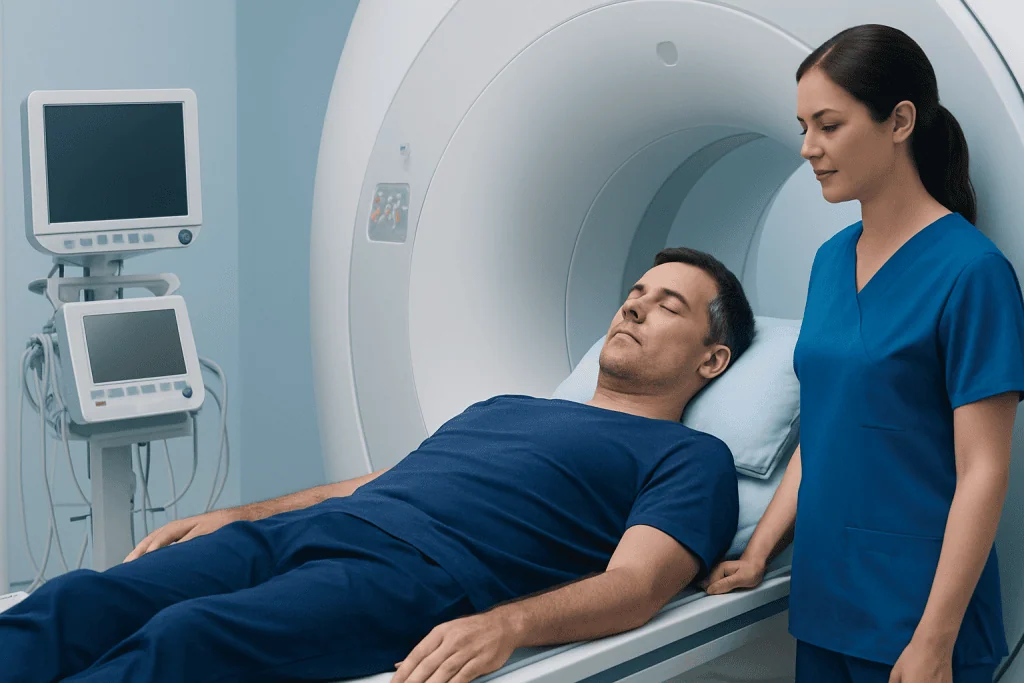
Imaging helps confirm the diagnosis and identify the exact site of narrowing. MRI is often the main test because it shows discs, nerves, ligaments, and the degree of compression in detail. CT scans can be helpful when MRI is not suitable or when bone anatomy needs closer review. In selected cases, doctors may also use X-rays to look at alignment or instability.
Not every abnormality seen on imaging is the true source of pain, so doctors match scan findings with the person’s symptoms and examination results. When the diagnosis remains uncertain, additional studies such as nerve conduction testing or electromyography may help distinguish spinal nerve compression from peripheral nerve disorders.
Treatment options and when surgery is considered
Treatment depends on symptom severity, the degree of nerve involvement, and the person’s overall health and goals. Many people start with conservative care. This often includes relative rest from aggravating activities, guided exercise, physical therapy, posture training, and medicines to ease pain or inflammation. Some people also benefit from targeted spinal injections, which may reduce irritation around the affected nerve root for a period of time.
Rehabilitation aims to improve spinal support, flexibility, and movement patterns while helping the person stay active. A structured program may focus on core strength, walking tolerance, and positions that reduce nerve pressure. When pain is persistent despite self-care, a specialist may recommend physical therapy and rehabilitation as part of a broader treatment plan.
Surgery may be considered when symptoms remain limiting after nonsurgical treatment, when walking function declines, or when there is progressive weakness or significant nerve compression. The goal is to create more room for the nerve and relieve pressure. Depending on the anatomy, this may involve spine surgery such as decompression, and in selected patients the care pathway may also involve neurosurgical evaluation when the compression pattern is complex. Decisions about surgery are individualized and are usually based on symptoms, examination findings, and imaging together.
Prevention and self-care for daily life
It is not always possible to prevent lateral recess stenosis, especially when age-related changes are the main cause. Still, spine-friendly habits can lower strain and may help reduce symptom flare-ups. Regular low-impact activity, healthy body mechanics, and maintaining a weight that supports joint health are practical steps.
Many people do best when they avoid long periods in one position. Short walking sessions, changing posture regularly, and using supportive seating can help. A clinician or therapist may teach specific stretching and strengthening exercises, especially for the core, hips, and lower back. Any exercise plan should be tailored to symptoms rather than pushed through severe pain.
Stopping smoking, staying physically active, and treating related conditions such as osteoporosis or generalized arthritis may also support spine health. If pain repeatedly interrupts sleep, walking, or work, self-care alone may not be enough, and a medical review is appropriate.
Near the end of the care journey, some international patients seek coordinated assessment at centers with spine, neurology, rehabilitation, and imaging expertise. Acibadem International’s multidisciplinary specialists in JCI-accredited hospitals evaluate and treat spine conditions for international patients when more advanced diagnosis or treatment is needed.
When to seek medical care
Medical advice is appropriate if back and leg symptoms last more than a few weeks, keep returning, or start interfering with walking, work, exercise, or sleep. It is also sensible to seek care if numbness, tingling, or weakness is becoming more noticeable, since these may suggest ongoing nerve irritation.
Urgent medical attention is needed for red-flag symptoms such as new loss of bladder or bowel control, numbness in the groin or saddle area, sudden significant leg weakness, or severe pain after a fall or injury. These symptoms can have several causes, but they should always be assessed promptly.
Even when symptoms are not urgent, an early evaluation can be helpful. Timely diagnosis may clarify whether the problem is lateral recess stenosis or another condition and can help guide the safest next steps for treatment and recovery.
Frequently asked questions
Is lateral recess stenosis the same as spinal stenosis?
Lateral recess stenosis is a specific type of spinal stenosis. Spinal stenosis is a broad term for narrowing in the spine, while lateral recess stenosis refers to narrowing in the side channel where a nerve root travels.
Can lateral recess stenosis cause sciatica-like pain?
Yes. When the narrowed space irritates a nerve root in the lower back, it can cause pain that radiates into the buttock, thigh, calf, or foot, similar to sciatica. The exact pattern depends on which nerve is affected.
Does lateral recess stenosis always need surgery?
No. Many people are treated successfully with nonsurgical measures such as physical therapy, activity modification, pain-relieving medicines, and sometimes injections. Surgery is usually considered when symptoms remain severe, function worsens, or weakness progresses.
What is the best scan for lateral recess stenosis?
MRI is often the most useful imaging test because it shows the nerves, discs, ligaments, and degree of narrowing clearly. In some situations, CT or X-rays may also be used to better assess bone changes or spinal alignment.
Can exercise help lateral recess stenosis?
Yes, in many cases a structured and symptom-guided exercise program can help improve mobility, core support, and walking tolerance. Exercises should be selected with professional guidance, especially if pain radiates down the leg or weakness is present.
Can lateral recess stenosis get worse over time?
It can progress, especially if the underlying cause is degenerative spine change. However, symptoms do not always worsen steadily, and many people have periods of improvement with the right treatment and self-care. Regular follow-up is important if symptoms change.
References
- National Institute of Arthritis and Musculoskeletal and Skin Diseases
- National Institute of Neurological Disorders and Stroke
- American Academy of Orthopaedic Surgeons
- North American Spine Society
- American Association of Neurological Surgeons
This article is for general information only and is not a substitute for professional medical advice. Please consult a qualified doctor about your individual situation.
Joint and spine care in Turkey — expert assessment & treatment
JCI-accredited · board-certified surgeons · reply within 24h
Add us as a Preferred Source to see more of our trusted health content across Google Search, AI Overviews and Discover.

More from the Health Library



Related Specialists

Dr. Engin Altunkaya
General Surgery
Dr. Özgür Yaşar
Internal Medicine
Prof. Dr. Ahmet Tulga Ulus
Cardiovascular Surgery
Prof. Dr. Kerim Sarıyılmaz
Orthopedic Surgery & Traumatology