Lazy Eye: A Complete Medical Overview

Lazy eye is a brain-and-vision development problem, not simply a weak eye muscle. It often starts in early childhood and may affect one eye more than the other.
Key Takeaways
- Lazy eye is a brain-and-vision development problem, not simply a weak eye muscle.
- It often starts in early childhood and may affect one eye more than the other.
- Common causes include crossed eyes, unequal refractive errors, or anything that blocks clear vision.
- Early diagnosis gives the best chance of improving vision and depth perception.
- Treatment may include glasses, patching, eye drops, or treatment of the underlying eye problem.
- Children with any concern about vision, eye alignment, or family history should have a professional eye examination.
Lazy eye, also called amblyopia, is a vision development problem in which one eye sends a weaker image to the brain, so the brain gradually relies more on the stronger eye. It is most often diagnosed in childhood, and early treatment can improve visual development and help protect long-term sight.
Overview: what lazy eye means
Lazy eye is the everyday term for amblyopia, a condition in which vision does not develop normally in one eye because the brain prefers the image coming from the other eye. Over time, the brain may begin to ignore the blurrier or misaligned eye, which can reduce visual sharpness and depth perception. This problem usually begins in infancy or early childhood, when the visual system is still developing.
Although many people think lazy eye is simply an eye that drifts or turns, the condition is more specific than that. Some children with lazy eye have visibly misaligned eyes, while others do not. In many cases, the weaker vision is only found during an eye exam because a child may not realize one eye sees less clearly.
Lazy eye can affect school-age children, but its origins typically start much earlier. Because the brain’s visual pathways are especially adaptable in the first years of life, prompt treatment matters. The goal is not only to help the weaker eye see better, but also to support healthy communication between the eyes and the brain.
Signs and symptoms of lazy eye
Lazy eye may be difficult to notice at home, especially if only one eye is affected and the stronger eye sees well. A child may seem to function normally because the brain is compensating. For this reason, routine eye screening and full eye examinations are important.
Possible signs and symptoms can include an eye that wanders inward or outward, squinting, closing one eye in bright light, tilting the head, poor depth perception, or trouble with tasks that require careful visual judgment. Some children may rub their eyes often, lose interest in close work, or seem clumsy when reaching for objects.
In older children, symptoms may include blurred vision in one eye, difficulty catching a ball, or complaints that reading feels tiring. However, many children have no clear symptoms at all. Parents and caregivers should not wait for obvious complaints if they notice unusual eye alignment or if a child has risk factors for vision problems.
- One eye turns in, out, up, or down
- Frequent squinting or head tilting
- Poor hand-eye coordination or depth perception
- Blurred vision in one eye
- Difficulty focusing or visual fatigue
Causes and risk factors

Lazy eye develops when the brain receives a clearer or more usable image from one eye than the other. The brain then favors that eye, and the weaker eye’s visual pathway does not develop normally. There are three main patterns that commonly lead to amblyopia: strabismic amblyopia, refractive amblyopia, and deprivation amblyopia.
Strabismic amblyopia happens when the eyes are not properly aligned. To avoid double vision, the brain may suppress the image from one eye. Refractive amblyopia occurs when one eye is much more farsighted, nearsighted, or astigmatic than the other, so the brain consistently receives an uneven image. Deprivation amblyopia is less common but more urgent; it can happen when something blocks light from entering the eye clearly, such as a congenital cataract or a drooping eyelid.
Risk factors include a family history of amblyopia or strabismus, premature birth, low birth weight, developmental conditions, and significant refractive errors. Conditions such as eye disorders that affect visual clarity early in life may also increase risk. Some children also have strabismus, which is a common underlying cause and may need separate evaluation and treatment.
How lazy eye is diagnosed
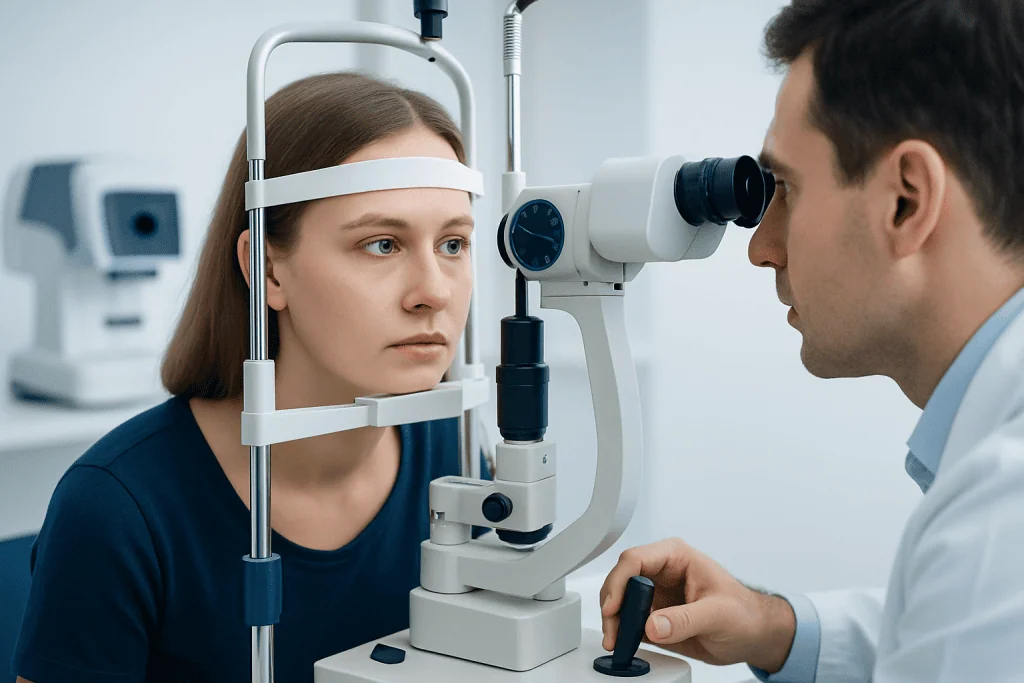
Diagnosis begins with a detailed eye examination by an eye specialist or pediatric eye care professional. The doctor checks visual acuity in each eye, how the eyes move and work together, whether there is a refractive error, and whether any part of the eye is preventing a clear image from forming. In young children, age-appropriate methods are used to assess vision even before they can read letters.
Eye alignment is carefully evaluated because an eye turn may be obvious, subtle, or only appear under certain conditions. The doctor may also place drops in the eyes to widen the pupils and measure the true focusing power of each eye. This helps identify significant differences between the eyes that can contribute to amblyopia.
Diagnosis is not only about confirming lazy eye, but also about finding the reason it developed. The treatment plan depends on whether the main issue is misalignment, a need for glasses, or an obstruction to vision. For that reason, a complete examination is important rather than relying on simple screening alone.
Treatment options and what improvement can look like
Treatment for lazy eye aims to give the weaker eye a fair chance to develop and to correct the underlying reason the brain has been favoring the stronger eye. The first step is often correcting blurred vision with glasses or contact lenses when needed. In some children, vision improves significantly with proper optical correction alone.
If one eye still lags behind, the stronger eye may be temporarily blurred or covered so the brain is encouraged to use the weaker eye. This can be done with patching or with special eye drops, depending on the child’s age, needs, and the doctor’s recommendation. Families are often reassured to learn that treatment is usually gradual and monitored over time with repeat exams.
When lazy eye is linked to eye misalignment or a structural problem, treatment may also include addressing that underlying condition. For example, some children may need evaluation for strabismus surgery if the eyes do not align well, or cataract surgery if a cataract is blocking normal visual development. In selected cases, care from a pediatric ophthalmology team and eye surgery services may be part of a broader plan.
The best results are usually seen when treatment starts early, but improvement is still possible in older children and sometimes in teenagers. Progress varies from person to person and depends on the cause, severity, age at diagnosis, and how consistently treatment is followed. Regular follow-up is essential because treatment may need adjustment and some children require monitoring for recurrence.
Prevention, screening, and self-care at home
Lazy eye cannot always be prevented, but early screening can help detect problems before vision loss becomes more established. Children should have age-appropriate vision checks during routine health visits, and a full eye examination is especially important if there is a family history of amblyopia, strabismus, strong glasses prescriptions, or early eye disease.
At home, parents can support treatment by making glasses, patching, or prescribed drops part of a steady routine. Encouragement matters. Children often adapt better when treatment is explained calmly and when visual activities such as drawing, puzzles, reading, or age-appropriate hand-eye games are done during patching, if recommended by the doctor.
Self-care does not replace professional treatment. Eye exercises alone are not a standard substitute for medical evaluation when a child has reduced vision in one eye. Parents should also avoid assuming a child will simply outgrow an eye turn or a difference in seeing, because delayed care can make improvement more difficult.
When to seek medical care
Medical care should be sought if a baby or child has an eye that constantly turns, seems unable to fix and follow normally, or appears to favor one eye. An urgent eye assessment is especially important if a child has a white pupil, a drooping eyelid that covers the pupil, sudden vision changes, or a noticeable problem after an eye injury.
Parents should also arrange an eye examination if a child complains of blurred vision, headaches during close work, double vision, or difficulty judging distance. Even mild concerns can be worth checking, because lazy eye may be present without dramatic symptoms. Early assessment helps identify whether the issue is amblyopia, refractive error, or another eye condition.
For international patients who need assessment and treatment planning, Acibadem International’s multidisciplinary specialists and JCI-accredited hospitals provide evaluation and care for pediatric and adult eye conditions. A tailored treatment plan is based on the cause of the vision problem, the age of the patient, and the findings of a full eye examination.
Frequently asked questions
Is lazy eye the same as a crossed eye?
No. A crossed eye, or strabismus, is an eye alignment problem, while lazy eye is reduced vision development in one eye because the brain favors the other. Strabismus can cause lazy eye, but not every person with strabismus has amblyopia, and not every person with amblyopia has a visible eye turn.
Can lazy eye happen in adults?
Lazy eye usually begins in childhood, but some adults are only diagnosed later because the problem was missed when they were young. Treatment is generally most effective in children, though some older children, teenagers, and adults may still benefit from evaluation and selected therapies.
Does lazy eye go away on its own?
Usually not. Without treatment, the brain may continue to rely on the stronger eye, and the weaker eye's vision may remain reduced. Early professional care gives the best chance of improvement.
What age is best for treating lazy eye?
Treatment is usually most successful when started early in childhood, while the visual system is still developing. That said, older children can still improve, and a doctor can advise whether treatment may help based on the individual's age and eye findings.
Will glasses alone fix lazy eye?
Sometimes glasses alone improve vision, especially when a difference in focusing power between the eyes is the main cause. However, many children also need patching, eye drops, or treatment for another eye problem such as misalignment or a cataract.
How long does treatment take?
Treatment length varies from person to person. Some children improve within months, while others need longer-term follow-up to strengthen vision and reduce the chance that the problem returns. Regular eye exams are important throughout treatment.
References
- American Academy of Ophthalmology
- American Association for Pediatric Ophthalmology and Strabismus
- National Eye Institute
- Mayo Clinic
- World Health Organization
This article is for general information only and is not a substitute for professional medical advice. Please consult a qualified doctor about your individual situation.
Explore treatments in Turkey — costs, top hospitals & a free quote
JCI-accredited · board-certified surgeons · reply within 24h
Add us as a Preferred Source to see more of our trusted health content across Google Search, AI Overviews and Discover.

More from the Health Library

Dilation Chart: An Evidence-Based Guide for Patients

Antrum — Explained by Medical Evidence, Not Myths

Radioactive Iodine — Explained by Medical Evidence, Not Myths

Itching at Foot — Explained by Medical Evidence, Not Myths

Allergic Skin Eruptions: What Patients Need to Know