Left Eyes Hurts: What Patients Need to Know

Pain in the left eye can come from the eye itself or from nearby structures such as the sinuses, nerves, or head. Common causes include dry eye, eye strain, allergies, conjunctivitis, corneal irritation, and contact lens problems.
Key Takeaways
- Pain in the left eye can come from the eye itself or from nearby structures such as the sinuses, nerves, or head.
- Common causes include dry eye, eye strain, allergies, conjunctivitis, corneal irritation, and contact lens problems.
- Urgent medical care is needed for sudden severe pain, vision loss, eye injury, chemical exposure, or pain with nausea and halos around lights.
- Doctors diagnose the cause by asking about symptoms, checking vision, examining the eye surface, and measuring eye pressure when needed.
- Treatment depends on the cause and may range from rest and lubricating drops to prescription medicines or emergency care.
If left eyes hurts, the cause may be minor, such as dryness or eye strain, but one-sided eye pain can also signal infection, inflammation, migraine, or an eye emergency. The best next step depends on whether the pain is mild and temporary or sudden, severe, and accompanied by symptoms such as vision changes, redness, or light sensitivity.
Overview: what it means when the left eye hurts
When a person says left eyes hurts, it usually means there is pain, pressure, burning, aching, or irritation affecting the left eye or the area around it. This symptom is common and often has a straightforward explanation, such as dry eye, eye strain from screens, an irritated contact lens, or a mild surface infection. In many cases, the discomfort improves once the underlying trigger is addressed.
However, eye pain should not be dismissed if it is severe, sudden, or different from usual discomfort. Pain in one eye may arise from the clear front surface of the eye, the eyelid, deeper structures inside the eye, or even nearby areas such as the sinuses, forehead, or nerves. Because the eye is sensitive, the exact cause is not always obvious without an examination.
A helpful way to think about one-sided eye pain is to notice how it feels and what comes with it. Burning and grittiness often suggest dryness or irritation. Sharp pain can occur with a scratch on the eye surface. Deep aching pain with blurred vision, redness, or nausea is more concerning and should be assessed promptly.
Common symptoms that can happen with left eye pain
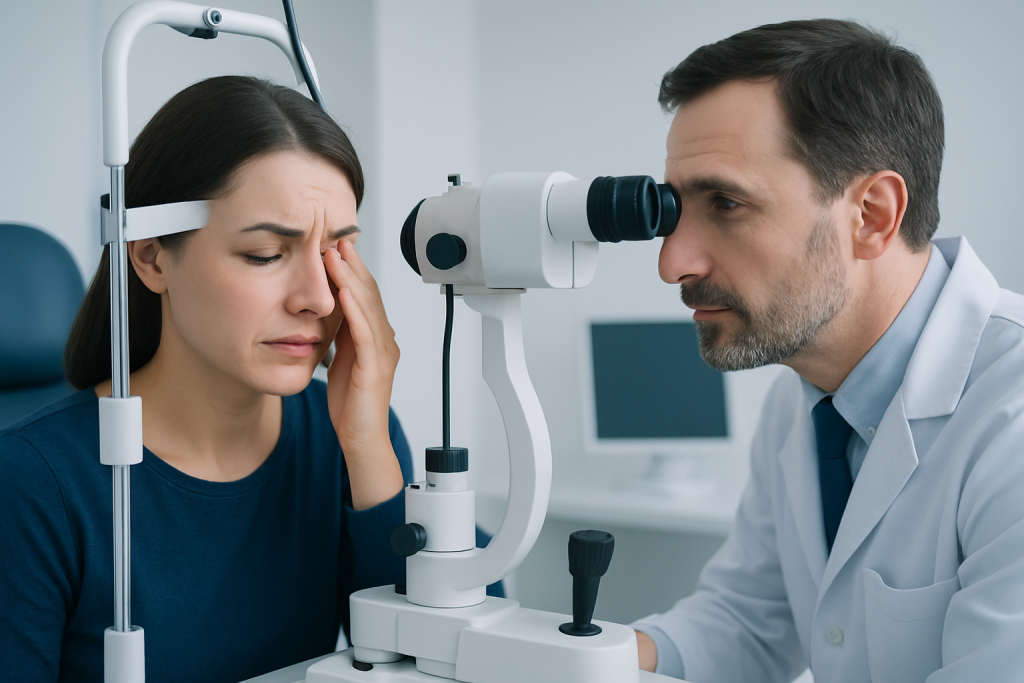
Eye pain can feel different from person to person. Some people notice a mild ache behind the eye, while others describe stinging, throbbing, pressure, or the feeling that something is stuck in the eye. The quality of the pain can offer clues, but related symptoms are often just as important.
Symptoms that may occur alongside pain include redness, tearing, discharge, itching, swelling of the eyelid, blurry vision, double vision, sensitivity to light, or the sensation of a foreign body. A headache, sinus pressure, nausea, or pain that worsens with eye movement may suggest that the source is not only the eye surface.
A clinician will often ask whether the pain started suddenly or gradually, whether the person wears contact lenses, and whether there has been recent trauma, chemical exposure, illness, or prolonged screen use. It can also help to note whether vision changes are present, since pain without vision changes is often less urgent than pain with reduced vision.
- Mild burning or grittiness may point to dry eye or irritation.
- Itching is more common with allergies.
- Sticky discharge can occur with conjunctivitis.
- Pain with bright light may suggest corneal irritation or inflammation.
- Deep pain with halos around lights may require urgent evaluation.
Possible causes and risk factors

Many everyday problems can make the left eye hurt. Dry eye is a very common cause, especially in people who spend long hours on screens, work in air-conditioned environments, or are exposed to wind, smoke, or low humidity. Eye strain can also cause aching around one or both eyes after reading, driving, or computer work, particularly if glasses or contact lenses are not the right prescription.
Another group of causes involves irritation or infection of the eye surface. These include conjunctivitis, a corneal scratch, a foreign body such as dust, and contact lens-related irritation. Problems of the eyelid, such as a stye, can cause localized tenderness and swelling. Allergy-related inflammation may produce itching, watery eyes, and discomfort rather than true deep pain.
Some causes are more serious and need prompt medical attention. These include corneal ulcers, inflammation inside the eye, optic nerve problems, and angle-closure glaucoma, which can cause severe eye pain, blurred vision, headache, nausea, and halos around lights. Pain around the eye may also come from sinus inflammation, migraine, cluster headache, or nerve-related conditions. In some cases, one-sided eye pain can be associated with glaucoma or other vision-threatening disorders that require fast assessment.
Risk factors depend on the cause but commonly include contact lens wear, poor lens hygiene, recent eye injury, allergies, recent cold or sinus infection, heavy screen use, autoimmune disease, and a history of migraine. People who have had previous eye surgery or who use certain medications may also be more prone to dryness or inflammation. If symptoms persist or the cause is unclear, an eye specialist may recommend a full eye examination to identify the source.
How doctors diagnose one-sided eye pain
Diagnosis starts with a careful history. A doctor will ask where the pain is felt, how severe it is, how long it has been present, and whether there are triggers such as contact lenses, injury, or screen use. Symptoms such as light sensitivity, discharge, fever, headache, nausea, or vision changes help narrow the possibilities.
The examination usually includes checking visual acuity, looking at the eyelids and eye surface, assessing the pupils, and examining eye movements. Special dye may be placed in the eye to look for scratches or ulcers on the cornea. In some situations, the doctor measures eye pressure, especially if glaucoma is a concern.
If the pain seems to come from outside the eye, the evaluation may also include the sinuses, facial nerves, and neurological symptoms. Imaging is not always needed, but it may be ordered if there is suspected injury, deeper infection, or a problem behind the eye. Depending on the findings, a patient may be referred for ophthalmology care or, if headaches are suspected, assessment for migraine or other neurological causes.
Treatment options depend on the cause
There is no single treatment for left eye pain because management depends on why the eye hurts. For dry eye or mild irritation, doctors may suggest preservative-free lubricating drops, regular breaks from screens, more frequent blinking, and avoiding smoke or strong airflow. If eye strain is contributing, updating glasses and improving lighting may help.
When infection or inflammation is present, prescription treatment may be needed. This could include antibiotic, antiviral, or anti-inflammatory eye drops, depending on the diagnosis. Contact lens users are often advised to stop wearing lenses until the eye has healed and the cause has been clarified. A stye may improve with warm compresses, while an eyelid infection may need medical treatment.
More urgent conditions require faster and more specific care. Corneal ulcers, severe inflammation, chemical injuries, and glaucoma should be treated promptly to protect vision. Some people may need procedures, pressure-lowering treatment, or close follow-up with an eye specialist. If a refractive problem or chronic surface irritation is part of the picture, a doctor may also discuss longer-term eye care options, including laser eye surgery in carefully selected patients, though this is not a treatment for sudden eye pain itself.
It is generally safest to avoid using leftover prescription eye drops or over-the-counter redness-relief drops without medical advice. These products may mask symptoms or worsen certain conditions. Pain relief should always be guided by the underlying cause rather than by symptoms alone.
Self-care and prevention
Many minor causes of one-sided eye discomfort can be reduced with simple self-care. Good eye hygiene, regular handwashing, and careful contact lens use are especially important. Anyone who wears contact lenses should follow cleaning instructions closely, avoid sleeping in lenses unless specifically advised, and never use water to clean or store them.
For people whose symptoms are linked to dryness or digital eye strain, practical changes often make a difference. Taking regular screen breaks, blinking more often, adjusting monitor height, and using artificial tears can reduce strain on the eye surface. Humidifying dry indoor air may also help.
Prevention also includes protecting the eyes from injury. Safety glasses should be used during activities that create dust, debris, or chemical splash risk. Sunglasses can help reduce wind and bright-light irritation outdoors. People with allergies may benefit from limiting exposure to triggers and discussing suitable treatment with a doctor.
If eye pain happens repeatedly, keeping a brief symptom diary can be useful. Noting when it occurs, how long it lasts, and whether it comes with headaches, contact lens wear, or screen time may help the doctor identify patterns and guide prevention strategies.
When to seek medical care
Medical assessment is recommended if the pain does not improve, keeps returning, or is associated with redness, discharge, swelling, fever, or worsening light sensitivity. It is also wise to seek care if the person wears contact lenses and develops significant pain, since contact lens-related corneal problems may progress quickly.
Urgent care is important if there is sudden severe eye pain, loss of vision, a new blind spot, halos around lights, nausea, vomiting, chemical exposure, or trauma to the eye. Pain after an injury, or pain with a visible foreign body, should not be managed at home. These features can point to a condition that needs rapid treatment to protect sight.
If the source of the pain is unclear, a qualified eye doctor can help determine whether the problem is on the eye surface, inside the eye, or coming from another area such as the sinuses or nerves. Near the end of the care pathway, patients seeking international evaluation may also find support through Acibadem International, where multidisciplinary specialists in JCI-accredited hospitals assess and treat eye conditions for international patients.
Frequently asked questions
Why does only my left eye hurt and not the right?
Pain in just one eye can happen when the problem is local, such as dryness, a scratch, contact lens irritation, a stye, or an infection affecting one side. It can also come from nearby causes, including sinus pressure, migraine, or nerve-related pain. A medical exam may be needed if the reason is not clear.
Can screen time make the left eye hurt?
Yes. Long periods of screen use can reduce blinking and dry the eye surface, causing burning, aching, and a gritty feeling that may affect one eye more than the other. Taking regular breaks, blinking often, and using lubricating drops may help.
Is left eye pain ever an emergency?
Yes. Sudden severe pain, eye injury, chemical exposure, vision loss, halos around lights, or pain with nausea and vomiting should be assessed urgently. These symptoms can be linked to serious eye conditions that need prompt treatment.
Should a person use eye drops if the left eye hurts?
Lubricating artificial tears may help if the cause is dryness or mild irritation. However, prescription drops, leftover drops, or redness-relief drops should not be used without medical advice because they can hide important symptoms or worsen certain conditions.
Can a sinus infection cause pain in the left eye?
It can. Sinus inflammation can create pressure around one eye, especially near the forehead or inner corner. If eye pain is accompanied by fever, facial swelling, or vision changes, prompt medical assessment is important.
How is eye pain different from a headache behind the eye?
True eye pain often comes with surface symptoms such as redness, tearing, light sensitivity, or the feeling of something in the eye. Pain behind the eye may be related to migraine, sinus disease, or other causes outside the eye itself. Because these symptoms can overlap, evaluation may be needed if pain persists.
This article is for general information only and is not a substitute for professional medical advice. Please consult a qualified doctor about your individual situation.
Explore treatments in Turkey — costs, top hospitals & a free quote
JCI-accredited · board-certified surgeons · reply within 24h
Add us as a Preferred Source to see more of our trusted health content across Google Search, AI Overviews and Discover.

More from the Health Library

Red Blood Cells: What Patients Need to Know
Folate Deficiency — Explained by Medical Evidence, Not Myths

Conditioner Shampoo First: A Complete Medical Overview

Mallory Weiss Tear: A Complete Medical Overview

Sugar Free Gummy Bears: A Complete Medical Overview