Ligament: An Evidence-Based Guide for Patients

Ligaments connect bones and support joint stability during movement. Ligament injuries range from mild stretching to complete tears.
Key Takeaways
- Ligaments connect bones and support joint stability during movement.
- Ligament injuries range from mild stretching to complete tears.
- Common signs include pain, swelling, bruising, and joint instability.
- Diagnosis may involve a physical exam and imaging such as MRI or ultrasound.
- Treatment depends on the severity and may include rest, bracing, physical therapy, or surgery.
- Early evaluation is important if a joint cannot bear weight, feels unstable, or looks deformed.
A ligament is a tough band of connective tissue that links one bone to another and helps keep a joint stable. When a ligament is stretched or torn, it can cause pain, swelling, bruising, and a feeling that the joint may give way, but diagnosis and treatment are often straightforward with medical guidance.
Overview: what a ligament is and why it matters
A ligament is a strong, fibrous band of connective tissue that connects bone to bone. Its main job is to support and stabilize joints, helping them move in the intended direction while limiting excessive motion. In simple terms, ligaments act like natural joint restraints that work together with muscles, tendons, cartilage, and bone.
Ligaments are found throughout the body, including the knee, ankle, shoulder, wrist, elbow, thumb, and spine. Some of the best-known examples are the anterior cruciate ligament (ACL) in the knee and the ligaments that support the outer side of the ankle. Because they are involved in movement and balance, ligaments can be injured during sports, exercise, falls, sudden twisting, or daily activities.
Patients often hear the terms “sprain” and “tear” and wonder whether they mean the same thing. A sprain refers to a ligament injury and may range from mild stretching to a complete tear. The severity of the injury usually determines symptoms, treatment choices, and recovery time.
How ligaments work in the body
Ligaments are made largely of collagen fibers arranged to provide strength and controlled flexibility. Unlike muscles, ligaments do not actively contract. Instead, they provide passive stability, guiding how a joint moves and helping prevent movement beyond a safe range.
Healthy ligaments are important for coordination and confidence in movement. They contain nerve endings that help the body sense joint position, which supports balance and protective reflexes. This is one reason a damaged ligament can make a joint feel weak, loose, or unreliable even when pain begins to improve.
Ligaments are different from tendons, although the two are commonly confused. A tendon connects muscle to bone and helps create movement, while a ligament connects bone to bone and mainly supports the joint. Injury patterns, treatment plans, and rehabilitation goals may differ depending on which structure is involved.
- Ligament: connects bone to bone
- Tendon: connects muscle to bone
- Cartilage: cushions and supports joint surfaces
- Muscle: produces movement and contributes to stability
Symptoms of a ligament injury

Symptoms vary depending on which ligament is injured and how severe the injury is. A mild sprain may cause localized pain and slight swelling, while a more serious tear can lead to marked swelling, bruising, reduced motion, and difficulty using the joint normally. Some people notice a popping sensation at the time of injury, especially in the knee or ankle.
Common symptoms include pain when moving or touching the area, swelling around the joint, bruising, stiffness, and weakness. A joint may also feel unstable, as though it might buckle or give way. In some cases, walking, gripping, reaching, or changing direction becomes difficult.
Not every painful joint problem is a ligament injury. Similar symptoms can occur with fractures, tendon injuries, muscle strains, dislocations, and cartilage damage. For that reason, persistent or significant symptoms should be assessed by a qualified clinician rather than self-diagnosed.
Causes, risk factors, and common types of ligament damage
Most ligament injuries happen when a joint is forced beyond its normal range. This may occur during sudden twisting, a direct blow, awkward landing, rapid change of direction, or a fall. Contact sports, running on uneven ground, and repeated high-impact movement can all increase risk.
Risk factors include previous injury, poor conditioning, muscle weakness, reduced balance, joint laxity, improper footwear, and inadequate warm-up. Fatigue can also contribute because it may affect coordination and increase the chance of a misstep or awkward movement. In older adults, reduced strength and balance may increase the risk of falls and sprains.
Doctors often grade ligament injuries by severity. A grade 1 injury involves stretching with microscopic damage, grade 2 means a partial tear, and grade 3 is a complete tear. Common examples include ankle sprains, knee ligament injuries such as ACL tear, wrist sprains, thumb ligament injuries, and shoulder injuries associated with instability or shoulder dislocation.
Some ligament injuries happen suddenly, but others develop from repeated strain over time. While ligaments are less commonly affected by overuse than tendons, repeated stress can still contribute to looseness, irritation, or delayed healing, especially if a person returns to full activity too soon after a previous injury.
How doctors diagnose ligament problems
Diagnosis usually begins with a careful history and physical examination. The doctor will ask how the injury happened, where the pain is felt, whether the joint feels unstable, and whether the person could continue activity afterward. They may also compare both sides of the body and test the joint’s range of motion, tenderness, strength, and stability.
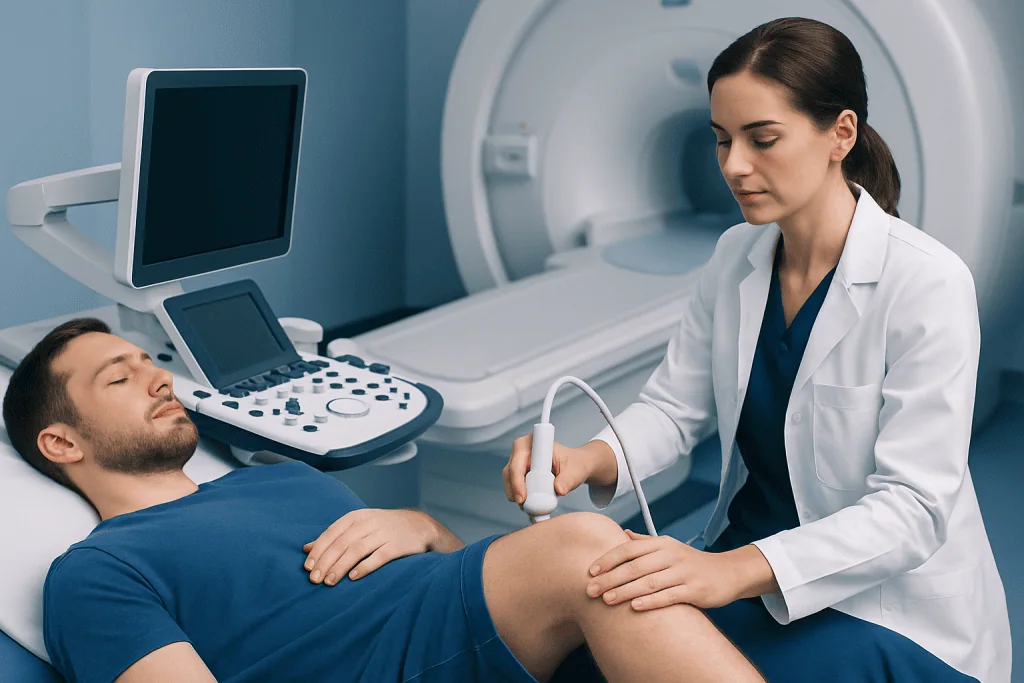
Imaging may be recommended when the diagnosis is uncertain, symptoms are significant, or there is concern about associated injuries. X-rays do not show ligaments directly, but they can help identify fractures or changes in joint alignment. Ultrasound may be useful in some areas, and MRI is often the most informative test for assessing soft tissues such as ligaments, tendons, cartilage, and menisci.
In some cases, a ligament injury occurs together with damage to other structures. For example, a knee injury may involve cartilage or meniscal tissue, and an ankle sprain may be associated with a small fracture. A clear diagnosis helps guide decisions about bracing, rehabilitation, activity restriction, and whether surgical review is needed.
Treatment options and recovery
Treatment depends on the ligament involved, the degree of injury, the person’s activity level, and whether the joint is unstable. Many mild to moderate sprains improve with conservative care. This often includes temporary rest from aggravating activity, ice, compression, elevation, and short-term support such as a brace or wrap. A clinician may also suggest pain relief measures that are appropriate for the individual.
Rehabilitation is a central part of recovery. Physical therapy aims to restore range of motion, improve strength, support balance, and retrain the body’s sense of joint position. This step is important because pain may settle before stability and control are fully restored. For some patients, structured physical therapy and rehabilitation is the main treatment that helps them return safely to work, exercise, or sport.
More severe injuries, complete tears, or persistent instability may require specialist assessment. In selected cases, surgery may be advised, particularly when a ligament is completely torn, when the joint remains unstable despite rehabilitation, or when multiple structures are injured. Depending on the area involved, this may include orthopedic surgery or minimally invasive arthroscopy to assess and repair joint damage.
Recovery time varies widely. A mild sprain may improve over days to weeks, while a significant tear can take months to recover fully, especially if surgery and rehabilitation are needed. Returning to sports or demanding activity too early can increase the risk of re-injury, so patients are usually advised to follow a clinician’s timeline rather than pain alone.
Prevention, self-care, and when to seek medical care
Not every ligament injury can be prevented, but practical steps can reduce risk. Strengthening the muscles around a joint, improving balance, warming up before exercise, wearing appropriate footwear, and progressing training gradually may all help support joint control. People with previous sprains may benefit from targeted rehabilitation, taping, or bracing during higher-risk activities.
At home, self-care is most appropriate for minor symptoms that improve steadily. Protecting the joint, limiting painful movement, and allowing time for healing can be helpful. However, complete rest for too long may lead to stiffness and weakness, so guided return to movement is usually important once serious injury has been excluded.
Medical care should be sought promptly if there is severe pain, rapid swelling, inability to bear weight, visible deformity, numbness, a cold or pale limb, or a joint that repeatedly gives way. Assessment is also important if symptoms do not begin to improve within a few days, if swelling is significant, or if the injury occurred with a high-impact event. In complex cases, multidisciplinary specialists at Acibadem International and its JCI-accredited hospitals evaluate ligament injuries for international patients and provide coordinated care when needed.
People with recurring sprains or ongoing instability should not ignore the problem. Repeated ligament injuries may change how a joint moves and can increase the chance of long-term pain or additional damage. Early diagnosis and a tailored recovery plan often provide the safest route back to normal activity.
Frequently asked questions
What does a ligament do?
A ligament connects one bone to another and helps keep a joint stable. It guides normal movement and helps prevent the joint from moving too far in the wrong direction.
How is a ligament injury different from a tendon injury?
A ligament injury affects the tissue that connects bone to bone, while a tendon injury affects the tissue that connects muscle to bone. Both can cause pain and weakness, but they involve different structures and may need different rehabilitation plans.
Can a torn ligament heal without surgery?
Some torn ligaments can improve with bracing and rehabilitation, especially if the joint remains stable and daily function returns. Others may need surgery if the tear is complete, the joint is unstable, or the person has high activity demands.
How long does a ligament take to heal?
Healing time depends on the location and severity of the injury. Mild sprains may improve within a few weeks, while more serious tears can take several months, especially if surgery or prolonged rehabilitation is required.
Should swelling after a ligament injury always be checked by a doctor?
Mild swelling after a minor sprain is common, but large or rapidly increasing swelling should be assessed. Medical review is also important if swelling comes with severe pain, inability to bear weight, or a feeling that the joint is unstable.
Is it safe to exercise with a ligament injury?
That depends on the severity of the injury and the joint involved. Continuing activity too early can worsen the damage, so exercise should usually be modified until a clinician or physical therapist advises a safe return plan.
References
- American Academy of Orthopaedic Surgeons
- National Institute of Arthritis and Musculoskeletal and Skin Diseases
- MedlinePlus
- Mayo Clinic
- National Health Service
This article is for general information only and is not a substitute for professional medical advice. Please consult a qualified doctor about your individual situation.
Joint and spine care in Turkey — expert assessment & treatment
JCI-accredited · board-certified surgeons · reply within 24h
Add us as a Preferred Source to see more of our trusted health content across Google Search, AI Overviews and Discover.