Little League Elbow Treatment: How It Works, Results and What to Expect
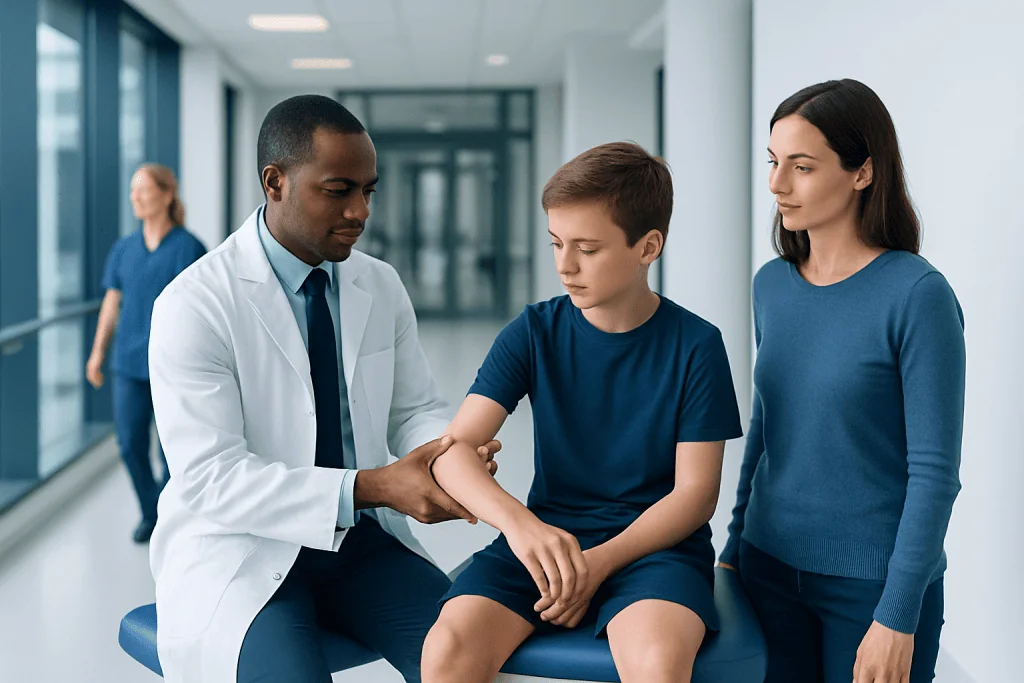
Little League elbow is an overuse injury affecting the growth area on the inner side of a young athlete’s elbow. Rest from throwing is the foundation of treatment; playing through pain can worsen growth-plate stress.
Key Takeaways
- Little League elbow is an overuse injury affecting the growth area on the inner side of a young athlete’s elbow.
- Rest from throwing is the foundation of treatment; playing through pain can worsen growth-plate stress.
- Rehabilitation focuses on shoulder, arm and core strength, flexibility, and safer throwing mechanics.
- Return to sport should be gradual and guided by symptoms, examination findings and a structured throwing plan.
- Persistent pain, swelling, loss of motion or a sudden pop during a throw requires prompt medical assessment.
Little League elbow treatment usually starts with stopping painful throwing, allowing the growth area on the inner elbow to heal, and rebuilding strength and throwing mechanics through supervised rehabilitation. Most children recover well with early care, but continued throwing through pain can lead to more significant injury.
Overview: What Little League Elbow Treatment Involves
Little League elbow treatment is a stepwise plan that reduces stress on the inner elbow, supports healing and helps a young athlete return to throwing safely. It commonly involves a temporary break from throwing, pain management, targeted physiotherapy and a progressive return-to-throwing program. Surgery is uncommon, but may be considered if there is a displaced bone fragment, ligament injury or another severe complication.
The condition is also called medial epicondyle apophysitis. It develops when repeated throwing pulls on the developing bone and growth area at the inside of the elbow. It is most often seen in children and adolescents who pitch or play other throwing sports, because their growth plates are still open and more vulnerable than mature bone.
Assessment by a clinician familiar with youth sports injuries helps distinguish Little League elbow from other causes of elbow pain, such as tendon problems, stress injury or a fracture. Early treatment is important because children should not be expected to throw through pain.
How Little League Elbow Treatment Works
During throwing, the elbow experiences a pulling force on its inner side and a compressive force on its outer side. In a growing athlete, the muscles and ligaments attached near the medial epicondyle can repeatedly tug at the growth area. Reducing or stopping throwing removes the ongoing stress that prevents normal recovery.
Treatment also addresses factors that may have contributed to the injury. These can include too many throws, year-round participation without adequate rest, sudden increases in training, fatigue, poor throwing mechanics, limited shoulder mobility or reduced strength in the shoulder blade, trunk and hips. A rehabilitation program therefore looks beyond the elbow itself.
Once pain settles and movement has returned, exercises can build flexibility, strength and coordination. A clinician or physiotherapist may then prescribe a graduated throwing program. This reintroduces throwing in planned stages, beginning with shorter distances and lower effort before progressing toward sport-specific activity.
Who May Need Treatment and How Diagnosis Is Made

Little League elbow should be considered in a child or teenager with pain or tenderness on the inside of the elbow that occurs during or after throwing. The athlete may notice reduced throwing speed or control, stiffness, swelling, or pain when gripping or straightening the arm. Symptoms can begin gradually, although an acute worsening can occur after one hard throw.
A doctor will ask about the sport, positions played, recent changes in training and whether pain occurs during daily activities. The examination may assess tenderness around the medial epicondyle, elbow stability, range of motion, strength, shoulder movement and throwing-related mechanics. Comparing both arms can be helpful in growing athletes.
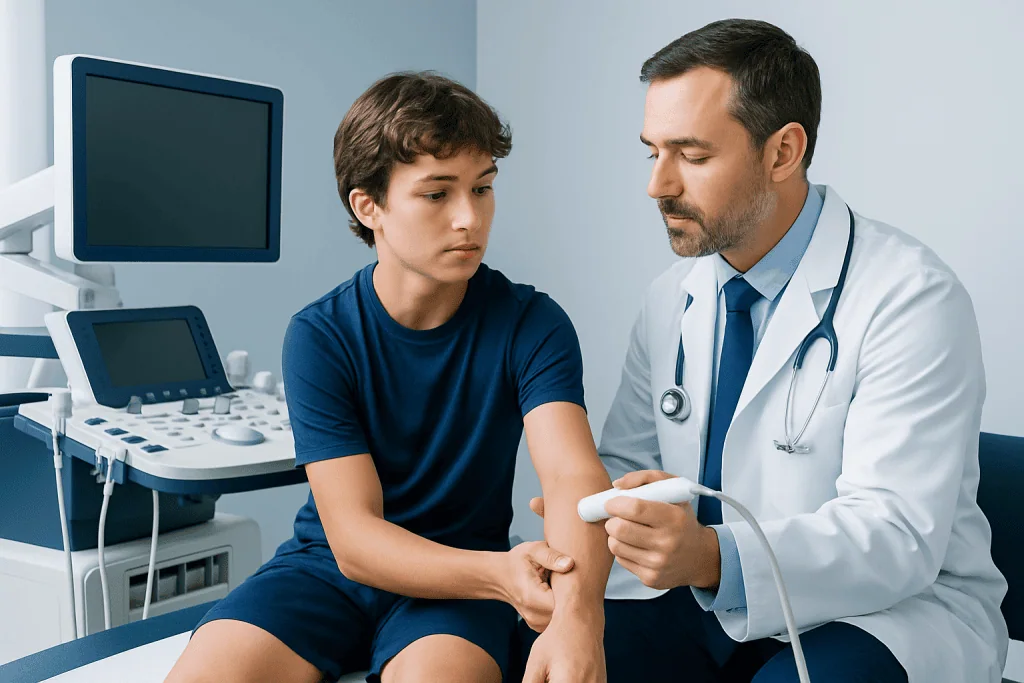
X-rays may be recommended to assess the growth area and look for widening, fragmentation or avulsion, where a piece of bone is pulled away. Further imaging, such as MRI, may be used when symptoms are severe, when an X-ray does not explain ongoing pain, or when an associated ligament, cartilage or stress injury is suspected. Similar overuse concerns may occur elsewhere in young athletes, including Little League shoulder.
Step-by-Step Little League Elbow Treatment
First, the athlete stops pitching and other painful throwing activities. The duration of rest depends on symptoms and examination findings. A clinician may also advise avoiding movements that reproduce pain, while keeping the hand, wrist, shoulder and general fitness active as appropriate. Ice may help short-term discomfort after activity, but it does not replace rest from the aggravating motion.
Next, rehabilitation begins when pain is improving. A physiotherapist may guide gentle range-of-motion work, followed by strengthening for the forearm, shoulder, shoulder blade, core and lower body. The aim is to restore efficient movement throughout the throwing chain rather than relying excessively on the elbow. Physical therapy and rehabilitation can be tailored to the child’s sport, age and stage of recovery.
When the child is pain-free in everyday life, has full or near-full motion and has regained appropriate strength, the clinician may clear a structured return to throwing. The program usually increases distance, number of throws and intensity gradually. If pain returns, throwing should stop and the athlete should be reassessed rather than trying to progress through symptoms.
A small number of children need specialist treatment for a displaced medial epicondyle avulsion fracture, loose body, instability or symptoms that do not improve with appropriate non-surgical care. In these situations, orthopedic surgery may be discussed to restore stability or alignment, followed by protected rehabilitation.
Benefits, Risks and What to Expect During Recovery
The main benefit of timely treatment is that it allows the irritated growth area to recover while lowering the chance of more serious elbow damage. It can also identify modifiable issues, such as throwing volume, inadequate rest, fatigue or technique problems. Most young athletes can return to their sport when recovery is complete and their progression is well managed.
The main risk comes from returning too soon or continuing to throw through pain. Ongoing stress can contribute to a more severe growth-plate injury, an avulsion fracture, loss of elbow motion or ulnar collateral ligament problems. Rehabilitation exercises themselves should not cause sharp elbow pain; discomfort, swelling or worsening symptoms should be reported to the treating clinician.
Families should expect treatment to be active rather than limited to waiting. The child may need to modify sports participation, attend rehabilitation sessions, perform home exercises and follow a return-to-throwing plan. Communication between the family, coach, clinician and therapist can help ensure that training expectations match the recovery stage.
How Long Does It Take for a Little League Elbow to Heal?
Healing time varies with the severity of the injury, the child’s age, how long symptoms have been present and whether there is any associated bone or ligament damage. For uncomplicated Little League elbow, athletes often need several weeks away from painful throwing before beginning rehabilitation and a gradual throwing progression. A full return to pitching may take a few months rather than just a few days.
The child should not return based only on a calendar date. Before resuming a throwing program, they should be free of elbow pain in normal activities, have regained comfortable movement and strength, and be assessed by a qualified clinician when recommended. More serious injuries, including avulsion fractures, may take longer and need individualized guidance.
Progress is usually safest when each stage is symptom-free. If pain develops during throwing or lasts afterward, the athlete should stop, rest and contact the treating team for advice. Slowing down at this stage can prevent a longer interruption later.
Do Kids Grow Out of Little League Elbows?
Children do not simply grow out of Little League elbow if the repeated throwing stress continues. Growth plates eventually close during adolescence, but the developing elbow still needs time and protection to heal. Ignoring pain can allow a manageable overuse injury to become more serious.
The encouraging news is that many children recover fully with appropriate rest, rehabilitation and safer training habits. Preventive measures include following age-appropriate pitch-count and rest guidance, avoiding pitching when tired or sore, taking regular breaks from overhead sports and avoiding early sport specialization where possible.
Coaches and families can help by treating pain as useful information, not a sign that an athlete needs to be tougher. A child who reports inner-elbow pain should stop throwing and be evaluated if symptoms persist, recur or affect performance.
How Long Does It Take for Tennis Elbow Therapies to Work?
Tennis elbow is a different condition from Little League elbow. It usually affects adults and involves tendon irritation on the outside of the elbow, whereas Little League elbow affects the inside of a growing child’s elbow. The therapies and recovery timelines should therefore not be used interchangeably.
For tennis elbow, improvement from activity modification, exercise-based rehabilitation and other non-surgical treatments is commonly gradual and may take weeks to months. The pace depends on the severity of symptoms, work or sport demands, adherence to rehabilitation and individual healing factors. A clinician can help confirm the diagnosis and recommend an appropriate plan.
For a young throwing athlete, the key issue is not how quickly adult tennis elbow treatment works, but whether the elbow growth area has recovered sufficiently to tolerate a progressive return to throwing. Persistent pain should always prompt reassessment.
How Serious Is Little League Elbow and When to Seek Medical Care?
Little League elbow is often treatable without surgery when it is recognized early, but it should be taken seriously because it affects a developing part of the elbow. The condition can become more severe if a child continues throwing through pain. Prompt evaluation supports a safe return to sport and helps identify injuries that need closer monitoring.
Medical care should be sought promptly if a child has a sudden pop during a throw, severe pain, visible swelling or deformity, bruising, inability to fully bend or straighten the elbow, numbness or tingling in the hand, or substantial loss of throwing ability. These symptoms may indicate a fracture, nerve irritation or another injury requiring urgent assessment.
An appointment is also appropriate for pain that lasts more than a few days, returns each time the child throws, occurs at rest or interferes with normal activities. Acibadem International’s multidisciplinary orthopedic, sports medicine and rehabilitation specialists at JCI-accredited hospitals can assess and treat youth throwing injuries for international patients.
Frequently asked questions
What is the first treatment for Little League elbow?
The first step is to stop pitching and other throwing activities that cause pain. A medical assessment can confirm the cause of the pain and determine whether imaging, rehabilitation or a longer period of rest is needed.
Can a child play another position with Little League elbow?
This depends on whether the position requires throwing and whether activity causes pain. A clinician may permit selected pain-free activities, but the child should avoid any throwing that stresses the injured elbow during the healing phase.
Does Little League elbow require surgery?
Most cases improve without surgery through rest, rehabilitation and a gradual return to throwing. Surgery is usually reserved for uncommon complications such as a significantly displaced avulsion fracture, persistent instability or certain associated injuries.
Can Little League elbow come back after treatment?
Yes, it can recur if the athlete returns too quickly, throws while sore or resumes excessive throwing volume. Following a gradual return plan, using proper mechanics and taking regular rest periods can reduce the risk of recurrence.
Should a child use pain medicine to keep playing?
Pain medicine should not be used to mask throwing pain and continue participation. A child with elbow pain during throwing should stop the aggravating activity and seek advice from a qualified healthcare professional.
What sports can cause Little League elbow?
Baseball pitching is a common cause, but any repetitive overhead throwing sport may contribute. This can include softball, cricket, javelin and some racket or overhead activities, especially when training volume increases quickly.
References
- American Academy of Orthopaedic Surgeons
- American Academy of Pediatrics
- American Medical Society for Sports Medicine
- American Orthopaedic Society for Sports Medicine
- National Institutes of Health
This article is for general information only and is not a substitute for professional medical advice. Please consult a qualified doctor about your individual situation.
Explore treatments in Turkey — costs, top hospitals & a free quote
JCI-accredited · board-certified surgeons · reply within 24h
Add us as a Preferred Source to see more of our trusted health content across Google Search, AI Overviews and Discover.