Long Bones — Explained by Medical Evidence, Not Myths

Long bones are defined by shape, not simply by being the biggest bones in the body. They include bones such as the femur, tibia, fibula, humerus, radius, ulna, metacarpals, metatarsals, and phalanges.
Key Takeaways
- Long bones are defined by shape, not simply by being the biggest bones in the body.
- They include bones such as the femur, tibia, fibula, humerus, radius, ulna, metacarpals, metatarsals, and phalanges.
- A long bone has several parts, including the shaft, ends, outer cortex, inner marrow cavity, and in children, growth plates.
- Long bones support movement, store minerals, and produce blood cells through bone marrow.
- Injuries, osteoporosis, infections, and tumors can affect long bones and may need medical evaluation.
Long bones are the elongated bones of the arms, legs, fingers, and toes. They help the body move, bear weight, protect bone marrow, and grow during childhood through specialized areas called growth plates.
Overview: what long bones are
Long bones are bones that are longer than they are wide. In simple terms, they form many of the strong, straight structures in the arms, legs, hands, and feet, and they are designed to support body weight, create movement, and provide leverage for muscles.
The term does not only refer to the very largest bones. It is a shape-based anatomical term. For example, the femur in the thigh is a long bone, but so are the small bones in the fingers and toes. By contrast, bones such as the wrist bones are classified as short bones, and the skull bones are generally classified as flat bones.
Long bones are important throughout life. In childhood and adolescence, they contain growth plates that allow bones to lengthen. In adulthood, they continue to provide stability, protect marrow, and act as key structures in everyday activities such as standing, walking, lifting, reaching, and gripping.
Which bones are considered long bones
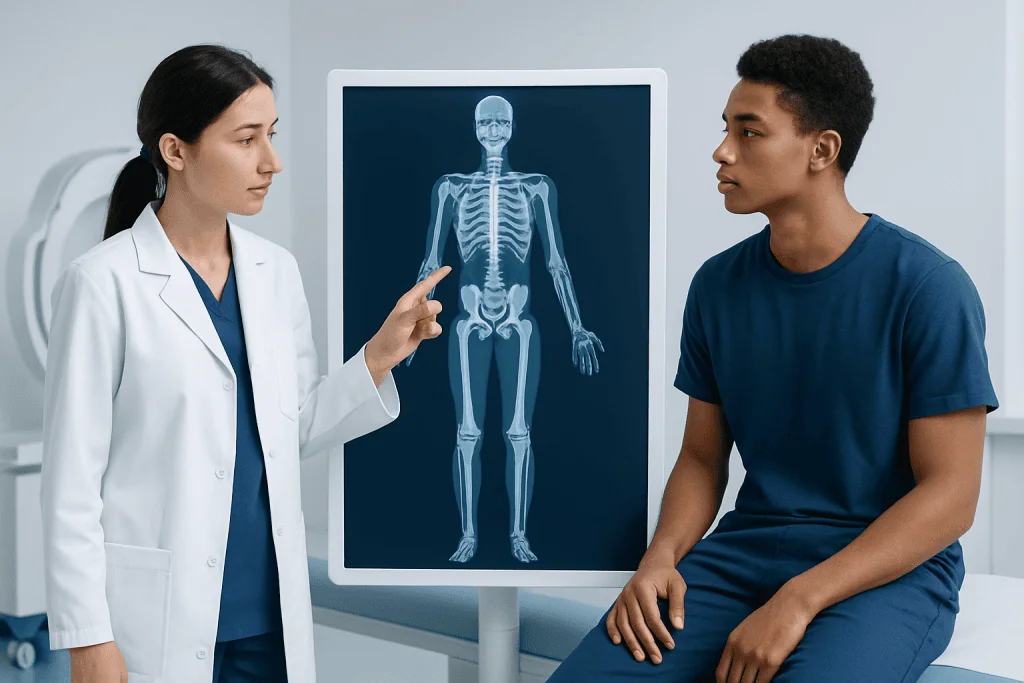
Long bones are found mainly in the limbs. The best-known examples are the femur, tibia, fibula, humerus, radius, and ulna. These are the major long bones of the arms and legs. Smaller long bones include the metacarpals in the hands, the metatarsals in the feet, and the phalanges of the fingers and toes.
Some people assume that all limb bones are long bones, but this is not always the case. For example, the patella, or kneecap, is a sesamoid bone rather than a long bone. This distinction matters in anatomy because different bone types have different shapes, roles, and patterns of disease or injury.
- Upper limb long bones: humerus, radius, ulna, metacarpals, phalanges
- Lower limb long bones: femur, tibia, fibula, metatarsals, phalanges
- Not long bones: patella, wrist carpals, ankle tarsals, skull bones, vertebrae
Understanding which bones are long bones helps explain why injuries in these areas can affect walking, lifting, sports, and growth in children.
Long bone anatomy and how these bones work
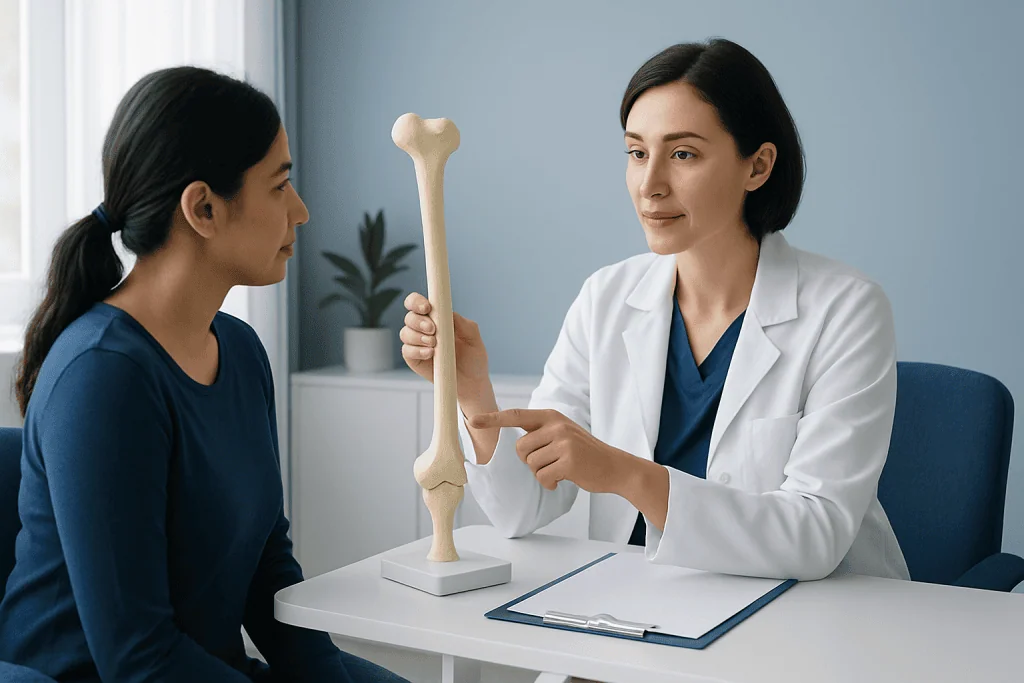
Each long bone has a characteristic structure. The central shaft is called the diaphysis. It is made mostly of dense cortical bone, which gives strength and stiffness. The wider ends are called the epiphyses, which help form joints and are covered with articular cartilage where bones meet.
Between the shaft and the ends lies the metaphysis. In children and teenagers, this region contains the growth plate, also called the physis. The growth plate is where bone lengthening occurs. Once growth is complete, the plate closes and becomes a solid line of bone.
Inside many long bones is the medullary cavity, which contains bone marrow. Marrow has important functions, including blood cell production. The outer surface of the bone is covered by the periosteum, a thin but highly active layer that contains blood vessels, nerves, and cells involved in bone repair.
Long bones work as biological levers. Muscles attach to them through tendons, and when muscles contract, the bones move at the joints. This design allows efficient motion while also providing strength for weight-bearing and daily activity.
Functions of long bones beyond support and movement
Although support and movement are the most visible roles of long bones, they do much more. They help maintain posture and balance, transmit force during walking and running, and absorb stress through their shape and internal architecture.
Long bones also play a major metabolic role. Bone tissue stores minerals, especially calcium and phosphorus, which the body uses for nerve function, muscle contraction, and many cellular processes. Bone is a living tissue that is constantly remodeled, meaning it is broken down and rebuilt over time.
Another vital function is blood cell production. Bone marrow within long bones contributes to the formation of red blood cells, white blood cells, and platelets. This makes bone health relevant not only to movement but also to overall health.
In children, long bones are central to normal growth. Because growth plates are softer and more vulnerable than mature bone, injuries in these areas need careful medical assessment to reduce the risk of future growth problems.
Common conditions and injuries that affect long bones
Long bones can be affected by trauma, overuse, metabolic bone disease, infection, and less commonly tumors. Fractures are among the most common problems. They may happen after a fall, sports injury, road accident, or repetitive stress. Depending on the bone involved, treatment can range from rest and immobilization to surgery such as orthopedic surgery.
Bone density loss can also affect long bones. In osteoporosis, bones become weaker and more likely to break. This may lead to fractures after minor trauma, especially in older adults. Long bones can also develop stress fractures in athletes or people who suddenly increase physical activity.
Children may experience growth plate injuries, which deserve special attention because they can influence future bone development. Infections of bone, called osteomyelitis, may cause pain, swelling, and fever and need prompt treatment. Certain symptoms may also overlap with other bone disorders, including osteoporosis and rare bone tumors.
Joint-related conditions can also affect how long bones function, especially near their ends where joints are formed. For example, pain around the knee, hip, shoulder, or wrist may arise from both bone and joint structures, including arthritis. Medical evaluation helps identify the exact source of symptoms.
How doctors evaluate long bone problems
Assessment usually begins with a medical history and physical examination. A doctor may ask when the pain started, whether there was an injury, where symptoms are felt, and whether there is swelling, weakness, numbness, fever, or difficulty using the limb.
Imaging tests are often important. Standard X-rays are commonly used to detect fractures, changes in alignment, growth plate injuries, and some bone diseases. In more complex cases, doctors may recommend advanced imaging such as MRI or CT scan to look at bone detail, surrounding soft tissues, or subtle injuries not clearly visible on X-ray.
Blood tests may be used when infection, inflammation, vitamin deficiency, or metabolic bone disease is suspected. In selected cases, bone density testing, ultrasound, or referral to an orthopedic, pediatric, rheumatology, or oncology specialist may be appropriate.
An accurate diagnosis matters because treatment differs widely. A simple bruise, a stress fracture, a growth plate injury, and a bone infection can all cause pain in a long bone area, but they are managed in very different ways.
Treatment, bone health, and self-care
Treatment depends on the cause. Minor injuries may improve with rest, activity modification, ice, elevation, and short-term support such as splinting or bracing. Fractures may require casting, realignment, physical therapy, or surgery. Infections are typically treated with targeted medication, while chronic bone conditions need long-term management plans.
Supporting long bone health involves general bone care at every age. Adequate calcium and vitamin D, regular weight-bearing exercise, good nutrition, and avoiding smoking all help maintain bone strength. Falls prevention is especially important for older adults, as it lowers fracture risk.
Children and adolescents benefit from prompt review of significant limb injuries, especially when pain is near a joint or growth plate. Adults with persistent bone pain, repeated stress injuries, or a history suggesting fragile bones may need evaluation for underlying conditions.
For patients who need specialist care, Acibadem International’s multidisciplinary teams in JCI-accredited hospitals diagnose and treat bone and joint conditions for international patients, including advanced imaging, fracture care, and rehabilitation when needed.
When to seek medical care
Medical advice should be sought if there is severe pain, obvious deformity, inability to bear weight, marked swelling, or loss of function after an injury. These features may suggest a fracture or joint injury that needs prompt assessment.
It is also important to seek care for bone pain that does not improve, pain at night, repeated injuries, or symptoms such as fever, redness, warmth, or unexplained swelling. In children, any suspected growth plate injury should be evaluated without delay.
Urgent assessment is advisable if there is numbness, pale or cold skin below an injury, open wounds over bone, or signs of infection. Early diagnosis can improve healing and help protect long-term bone function.
Frequently asked questions
What is the definition of a long bone?
A long bone is a bone that is longer than it is wide. The name refers to its shape rather than simply its size, which is why both the femur and finger bones are considered long bones.
Are the fingers and toes made of long bones?
Yes. The phalanges in the fingers and toes are classified as long bones because of their structure. The metacarpals and metatarsals are also long bones.
What is the longest long bone in the body?
The femur, or thigh bone, is the longest and strongest long bone in the human body. It plays a central role in standing, walking, and transferring body weight.
Do long bones grow after adulthood?
Long bones lengthen during childhood and adolescence through growth plates. After the growth plates close in adulthood, bones no longer grow longer, although bone tissue continues to remodel throughout life.
What causes pain in a long bone?
Long bone pain can result from injury, stress fracture, overuse, infection, inflammation, or underlying bone weakness. Persistent or unexplained pain should be assessed by a qualified doctor, especially if it affects walking, arm use, or sleep.
Can long bones heal after a fracture?
Yes, many long bone fractures heal well with proper treatment. Healing depends on the type of fracture, the person's age and overall health, and whether the bone is kept in good alignment during recovery.
References
- National Institute of Arthritis and Musculoskeletal and Skin Diseases
- American Academy of Orthopaedic Surgeons
- MedlinePlus
- Mayo Clinic
- Cleveland Clinic
This article is for general information only and is not a substitute for professional medical advice. Please consult a qualified doctor about your individual situation.
Explore treatments in Turkey — costs, top hospitals & a free quote
JCI-accredited · board-certified surgeons · reply within 24h
Add us as a Preferred Source to see more of our trusted health content across Google Search, AI Overviews and Discover.